With technology and innovation shaping today’s world, healthcare is now depending on data analytics to guide key decisions. The role of analytics in healthcare is expanding to improve care for patients, make workflows more efficient, and save money. The market was valued at US$36.29 billion in 2023 and is projected to reach US$133.19 billion by 2029, with a CAGR of 24.3%. The worldwide healthcare industry is experiencing a rise in demand, higher daily expenses, and the need for improved patient care. As a result, healthcare organizations are turning to healthcare data analytics for helpful insights.
With 2025 approaching, AI, ML, and the analysis of real-time data are playing a significant role in healthcare analytics. Instead of focusing on past information, healthcare providers are now able to make decisions in advance to predict conditions, prevent diseases, and provide individualized treatment to many patients. This blog examines some of the key applications of healthcare analytics and explores the changes brought by modern technology to data analytics in healthcare.
The Role of Data Analytics in Modern Healthcare
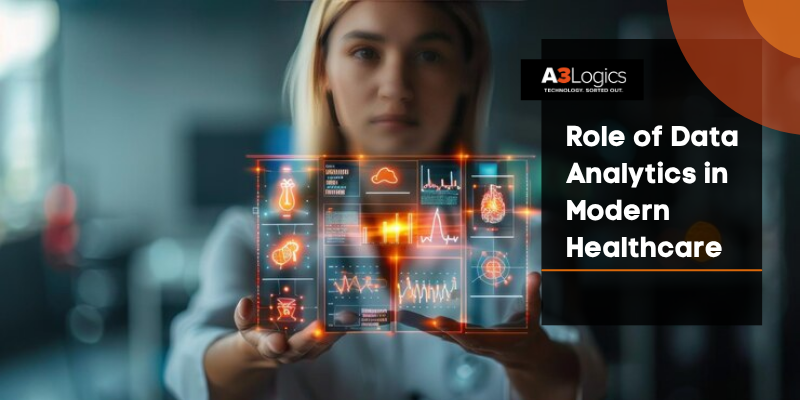
Data analytics in healthcare is no longer optional—it’s essential. It allows stakeholders to make decisions that benefit patients, save money and improve how the hospital operates. Let’s look at how analytics is bringing new changes to healthcare:
1. Transforming Patient Care
With analytics, providers can give personal and prompt treatments. When clinicians review patients’ histories, genetic profiles and live vitals, they can enhance their diagnoses, match treatments to needs and anticipate severe complications.
2. Enhancing Operational Efficiency
Analytics in hospitals helps manage staff, decrease waiting times and maximize the use of resources. It helps locate problems with the workflow, improves the way appointments are set up and supports the prediction of demand to ensure care does not cost too much.
3. Guiding Strategic Decision-Making
Healthcare data analytics is used by leaders to guide major decisions such as expanding services and shaping the budget. Analytics help create strategies for the future, ensure compliance with regulations and provide a basis for comparing the performance of departments or care facilities.
4. Improving Population Health Management
Using risk factors, analytics helps identify patients who need preventive care. It allows for finding new health patterns, monitoring infectious diseases and planning ways to improve health in communities, leading to a decrease in chronic conditions and hospital readmissions.
5. Supporting Clinical Decision-Making
The use of real-time data and predictive analytics in healthcare enhances doctors’ ability to diagnose and choose treatment options. Such systems help identify any issue or potential problem, lowering the risk of medical errors and helping patients recover better.
6. Facilitating Value-Based Care Models
When shifting to value-based care, analytics allows for the measurement of how well treatments work, patient experience, and the cost of care. As a result, healthcare providers are encouraged to focus on quality instead of how many patients they see.
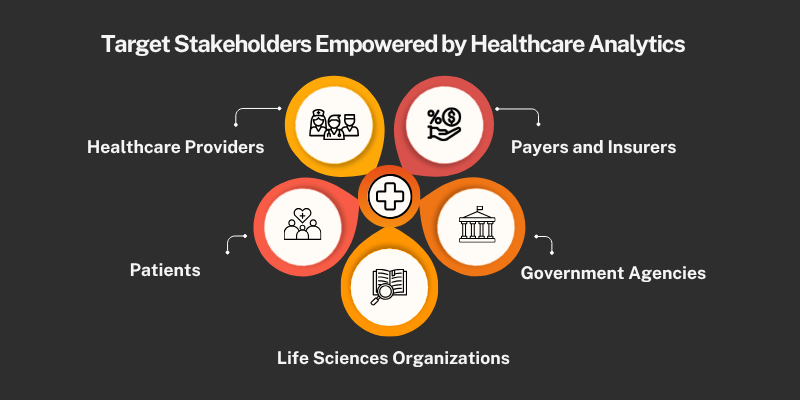
Key stakeholders benefiting from healthcare data analytics include
1. Healthcare Providers
By using healthcare data analytics, doctors, nurses and hospital administrators can decide on better treatments, diagnose patients more accurately, create better treatment plans and observe patient results right away, which leads to safer and more personal care.
2. Payers and Insurers
Data analytics helps insurance companies in healthcare to evaluate risk, catch fraudulent insurance claims, customize policies and improve how claims are processed. As a result, the operation becomes more efficient and customers are satisfied with the service.
3. Patients
People benefit from better diagnosis, customized medical plans and active care. Using healthcare data analytics, patients can monitor their health more easily and better manage their health-related activities.
4. Regulatory Bodies and Government Agencies
Regulators rely on healthcare analytics use cases to make sure rules are followed, examine health trends in the population, ensure standards are met, and guide efforts in public health. They play a role in creating better laws and guarantee that healthcare is safe, of high qualit,y and equitable.
5. Researchers and Life Sciences Organizations
Healthcare analytics is used by clinical researchers and pharmaceutical businesses for researching drugs, running clinical trials and reviewing disease statistics. Advanced analytics speed up the process of creating and bringing new therapies and vaccines to the market.
Types of Healthcare Analytics and Their Applications
Healthcare organizations rely on the 4 types of data analytics—descriptive, diagnostic, predictive, and prescriptive—to improve decision-making, enhance patient outcomes, and streamline operations. Here is an explanation of each type and how it impacts healthcare:
1. Descriptive Analytics: Resource Planning & Historical Insights
Descriptive analytics in healthcare is concerned with studying past data to see what happened. It allows healthcare providers to observe changes in the number of incoming patients, treatment results, efficiency of employees and use of resources. Using descriptive analytics, one can better plan for the future and handle daily tasks. With this information, hospitals may prepare for higher demand, arrange staff accordingly and check their progress compared to earlier years.
2. Diagnostic Analytics: Root Cause Analysis for Better Decision-Making
Diagnostic analytics in healthcare helps explain the reasons behind any previous abnormalities or results. If there is an increase in readmissions among patients or treatment outcomes are worse than usual, diagnostic analytics finds out why. It can uncover patterns that would have been difficult to observe, such as delayed patient discharge or not following treatment plans. As a result, hospitals can make improvements, develop updated clinical standards and avoid similar problems in the future.
3. Predictive Analytics: Early Diagnosis and Risk Stratification
Predictive analytics in healthcare relies on previous data, machine learning, and AI to anticipate future events and what will happen to patients. It helps identify diseases early, spot patients who are at greater risk, and plan early care for them. For example, using predictive models, doctors can identify patients who may develop chronic diseases such as diabetes or heart disease early on. It is an important tool for managing population health, helping patients receive better care and avoiding costly and unnecessary hospital visits.
4. Prescriptive Analytics: Optimizing Patient Outcomes
The goal of prescriptive analytics in healthcare is to suggest improvements that have the most positive effects. It compares several situations and determines which treatment, use of resources or decision would be best. Examining both present and past data, prescriptive tools select the best course of action for each patient, reduce waiting times, and help cut treatment costs. It helps hospitals manage different types of cases, coordinate care for patients, and improve the efficiency of both clinical and administrative services.
Top 10 Use Cases of Healthcare Analytics in 2025
1. Driving Innovation in Therapies and Disease Control
By using healthcare analytics, researchers can analyze complicated datasets related to genomics, clinical trials, and epidemiology to boost innovation in drug development. Scientists rely on predictive analytics in healthcare to detect disease-related genes, predict how a disease will progress, and test the effectiveness of drugs in simulation, before testing them on people. As a result, it saves time in development, cuts research expenses, and improves the effectiveness of treatment methods.
Applications of healthcare analytics also help public health agencies track outbreaks of diseases and plan suitable actions to deal with them. Instant data from EHRs, mobile apps for health and social media help identify developing health issues. Thanks to this, authorities are able to respond rapidly, manage possible epidemics and make good use of resources.
2. Optimizing Prescription and Medication Management
Incorrect medication and patients not following their prescriptions affect the healthcare industry, leading to more problems, longer hospitalizations and higher treatment expenses. Electronic prescribing systems that use decision support algorithms are among the tools that help avoid these issues. They study a patient’s medical history, allergies, medicines and lab findings to identify possible harmful reactions, offer suitable alternatives and highlight risky prescriptions instantly.
Furthermore, using descriptive analytics in healthcare, it is possible to follow prescription trends among different healthcare providers and look for patterns of over-prescribing or not using certain medications enough. Prescriptive analytics in healthcare may provide individual dosage suggestions by considering a patient’s age, weight, metabolism and genes. With more focus on data, providers can ensure medicines are safe and prescribed in the best way possible.
3. Delivering Personalized Healthcare Experiences
The move to personalized medicine is bringing major changes to the industry. Data collected from wearables, genetic tests, electronic health records, concierge medicine software and what patients report can help healthcare providers make individualized care plans. In healthcare models, predictive analytics determine possible health problems ahead of time and suggest both general and specialized measures to prevent them.
Studies also show that using healthcare analytics for personalization leads to better experiences for patients. Taking a person’s lifestyle and day-to-day habits into account can help them follow through with the plan and be satisfied. Machine learning can forecast how involved patients are and select the best channels for interaction or learning.
4. Enabling Early Detection and Timely Intervention
Clinicians are able to spot early signs of sepsis, cancer or heart disease, thanks to the use of predictive analytics in healthcare. If a patient’s data, including recent test results and medical history, shows abnormalities, analytics platforms can highlight the situation. With alerts, the care team is notified so they can act before the patient’s situation gets worse.
In 2025, there is a growing use of AI and ML in everyday health care. In some cases, wearable technology equipped with smart algorithms can observe vital signs and send alerts to doctors if intervention needs to happen. Thanks to these capabilities, admissions to the hospital are lower, chances of survival increase and costs of care decrease, proving that early intervention with healthcare data analytics is extremely valuable.
5. Real-time Monitoring for Operational Efficiency
If a hospital is not operated efficiently, it can cause valuable resources to be wasted, patients to feel frustrated, and staff to feel overworked. With descriptive analytics healthcare dashboards, you can easily see the current status of patient wait times, delays in testing, and room reservations. Using these insights, administrators discover where the system is slowed down and are able to shift resources to improve the service without spending more.
If the emergency department is too busy, data can send alerts that redirect minor cases elsewhere. These use cases of data analytics in healthcare not only improve operational decision-making but also enhance the overall patient experience by reducing delays and optimizing throughput. In 2025, using real-time monitoring systems will help healthcare operations adjust quickly to new demands.
6. Streamlining Supply Chain and Inventory Management
Proper management of medical inventory is necessary for controlling costs and ensuring patient safety. A shortage or surplus of supplies can cause difficulties in providing care. Healthcare data analytics platforms keep an eye on how many people use services, their seasonal patterns and historical consumption to expect future demand. As a result, ventilators, PPE and medications are always ready when they are required.
Implementing prescriptive analytics in healthcare can help organizations handle orders automatically, secure better deals from vendors and improve storage. Using advanced algorithms, supply managers can estimate the extra stock that will be needed during flu season and health emergencies. These improvements help reduce costs and allow doctors and nurses to provide continuous care.
7. Building Insurance Claims and KPI Dashboards
For insurance to operate smoothly, data should be accurate, fast and compliant. Healthcare analytics are commonly used to automate the process of checking and approving claims, as well as monitoring results. Diagnostic analytics examples enable the discovery of mistakes in claims, including upcoding, claims that are submitted twice and missing or incorrect documents. These techniques help prevent fraud and also make the approval process faster and more accurate.
Additionally, custom KPI dashboards meant for payers and providers include all the information needed about finances, how patients are satisfied and how effective treatments are. With these approaches, organizations can determine the average period a patient is hospitalized, the cost related to each case and the rate of denied health insurance claims. Findings from these dashboards help make decisions based on data, improve hospital operations and ensure compliance with both government and value-based care rules.
8. Enhancing Financial Risk Management
Ensuring financial stability is a serious challenge for all healthcare providers. Since prices are going up and reimbursement isn’t always certain, it’s important to plan and reduce risks. Predictive and prescriptive analytics services in healthcare can simulate financial plans, assess policy impacts, and optimize resource management to prevent financial shortages.
Furthermore, with these tools, providers can manage money flows, spot weak areas among their services and streamline bill collection. Healthcare organizations use various insights to handle financial risks and decide on better investments. A finance strategy based on numbers is necessary for an organization to do well in a competitive and value-focused market.
9. Reducing Inpatient Readmissions
Often, frequent hospital readmissions lead to avoidable costs. Predictive analytics in healthcare helps doctors identify patients at high risk of readmission within 30 days of discharge. Having learned this, care managers can plan discharges that include visits to the home, consultations over the phone or support with medication.
A decrease in readmissions improves the outcomes for patients and prevents hospitals from facing penalties. Having real-time alerts means that any further treatments or sessions can be arranged as soon as needed. This shows how data analytics plays a role in encouraging preventive care that benefits the community.
10. Improving Bed Utilization and Patient Throughput
Good bed management improves patient satisfaction, reduces emergency department crowding, and boosts hospital earnings through efficient resource use. Descriptive analytics tools track bed availability, occupancy changes, and upcoming discharges in real time. With this data, hospitals better manage admissions, reduce patient wait times, and maintain care quality without expanding facilities.
During pandemics or patient surges, these tools quickly distribute resources. Prescriptive analytics in healthcare guides medical staff on which patients to transfer or discharge. By improving hospital flow, it ensures more patients receive safe and efficient care.
How A3Logics Helps You Harness Healthcare Data Analytics
A3Logics offers end-to-end data analytics services tailored specifically for the healthcare data analytics ecosystem. With the help of cutting-edge technologies and strong domain knowledge, we help healthcare organizations find important insights and make valuable improvements.
1. Custom-Built Healthcare BI Dashboards
A3Logics builds custom dashboards showing key work areas, patient data, finances, and compliance updates in real time. These dashboards allow executives and care teams to access essential, multi-source data easily from one centralized location.
2. Predictive Modeling Solutions
Our team develops advanced predictive analytics in healthcare models that identify at-risk patients, forecast disease progression, and predict resource demand. These models help healthcare organizations plan better, reduce readmissions, and use resources wisely to improve care and efficiency.
3. AI-Powered Diagnostic and Imaging Analytics
Using AI and ML, A3Logics offers intelligent analysis of radiology images, pathology samples and patient information. With these tools, physicians can diagnose patients more accurately and quickly and can also identify common trends that help find disease early and choose the right treatment.
4. Cloud-Based Data Integration Platforms
We provide secure systems that are HIPAA-compliant and combine data from EHRs, wearables, laboratory systems and insurance claims. With this approach, all data is shared and accessible, so everyone can use the same information easily and quickly.
5. Real-Time Alerts and Patient Engagement Tools
A3Logics combines prescriptive analytics in healthcare with smart alerts that notifies healthcare teams when there are critical events, medication mistakes or abnormal vital signs. Also, when patients have personalized tools, it helps them stick to their care plan, feel happier and get better results due to regular and prompt assistance.
Conclusion
The landscape of data analytics in healthcare industry is evolving at breakneck speed. From early diagnosis to operational excellence, the potential of healthcare analytics use cases in 2025 is immense. By embracing the applications of healthcare analytics, organizations can improve patient care, cut costs, and remain competitive in an increasingly data-driven world. A strategic investment in data analytics services today will determine your organization’s success tomorrow.