In the current dynamic work sector, a competitive salary is no longer sufficient to attract and retain the best talent. Employees are now demanding strong benefits packages that maintain their health, financial stability and general well-being. 62% of employees would accept a job with lower pay but better benefits, compared to 53% in 2023. Nevertheless, the administration of employee benefits is more than merely providing them, it is a disciplined and strategic process.
Such a process results in efficient delivery of benefits, their regulatory compliance, and ensuring that they meet the needs of the employees and the organizational objectives.
What Is Administration of Employee Benefits?
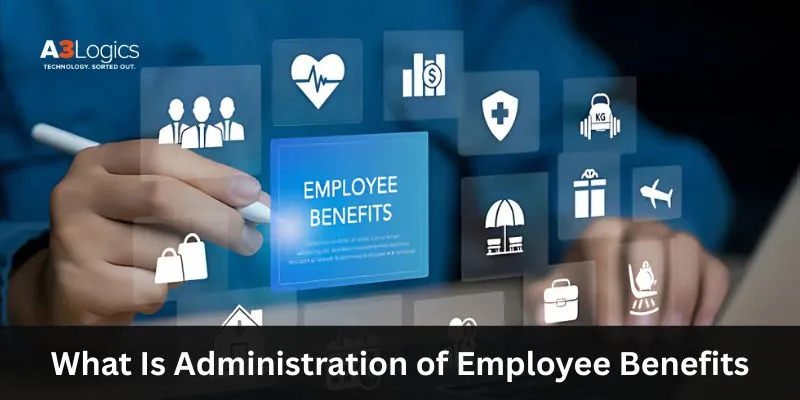
Employee benefits administration can be defined as the complete process of managing workplace benefits offered to employees, including health insurance, retirement, paid time off and wellness programs. It includes the choice of plans, enrollments, communication with employees, compliance with legal requirements, processing of claims, and tracking of costs.
A successful employee benefits administration provides the employees with ease of access and comprehension of their benefits as well as assisting employers to remain compliant, minimize risk, and improve job satisfaction rates.
What Does Employee Benefits Administration Mean in 2025?
In 2025, employee benefits administration has become a data-informed, technology-powered process focusing on personalization, compliance, and the employee experience. Having diverse, remote, multi-generational workforces, businesses are now turning to integrated platforms and employee benefits administration software to automate various tasks, gain real-time insights, and improve decision-making. Administration is now smarter, faster, and more strategic than it has ever been with the use of digital self-service tools and AI-driven support.
Key Components of Employee Benefits Administration
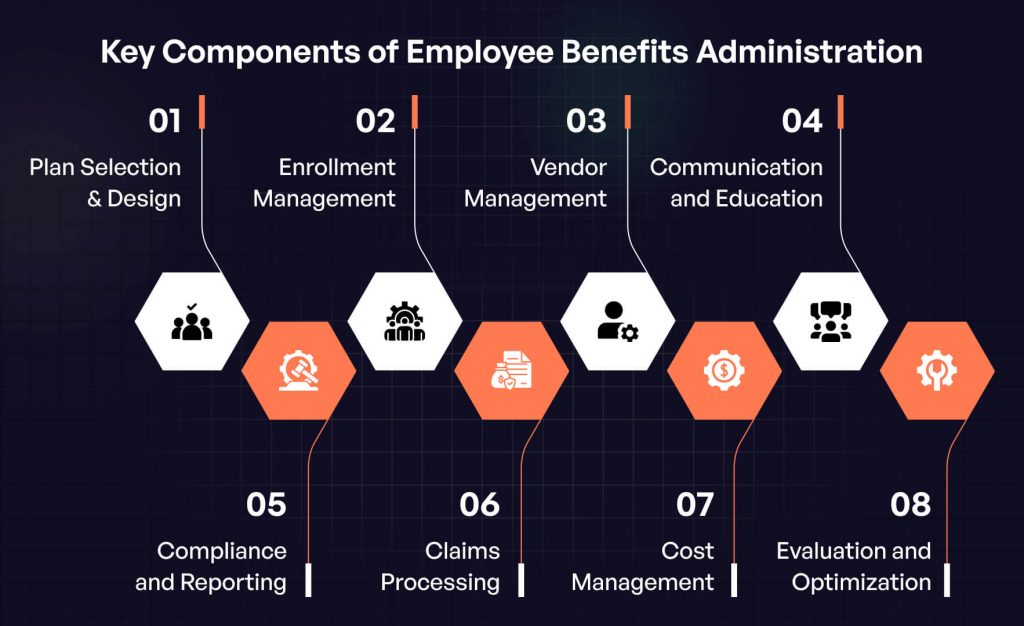
Effective management of employee benefits entails more than just providing a list of perks. It needs to have a comprehensive and integrated system, whereby benefits are in line with business goals, regulatory needs, and staff expectations. The following are the core elements of an efficient employee benefits administration system.
1. Plan Selection & Design
This entails selecting the proper combination of benefits depending on the needs of the organization and the employees. It requires reviewing the plan options, carrier offerings, costing and employee demographics in order to have competitive and relevant benefits. A well-considered plan design can enhance employee satisfaction as well as meet budget and compliance requirements of the company.
2. Enrollment Management
Enrollment management includes the ways of enrolling employees in the benefit plans throughout the open enrollment and qualifying life events. This involves development of enrollment timelines, digital form management and proper data collection. Employee benefits administration software helps organizations to simplify this procedure, cut down on paperwork, and minimize mistakes.
3. Vendor Management
Organizations tend to cooperate with several third-party vendors, such as insurance carriers, retirement fund providers, and wellness platforms. Vendor management is the process of negotiating contracts, sustaining relationships, addressing service problems, and monitoring performance. Appropriate monitoring makes sure that vendors provide the services that are agreed upon, operate within the regulations, and are in tandem with the values of the company.
4. Communication and Education
Effective and open communication enables employees to comprehend, value and utilize their benefits. This involves developing resources such as benefits guides, FAQs, videos and webinars or Q&As sessions. Education will enable the employees to make informed decisions and enhance engagement. When the workforce is well-informed, the support problems will be reduced, and the satisfaction with the employee benefits administration process will be increased.
5. Compliance and Reporting
Compliance helps benefits programs to adhere to legislations like ACA, ERISA, HIPAA, COBRA, and IRS regulations. Non-compliance may lead to large fines and loss of reputation. Employee benefits administration software can be used to track changes in the law, automate the filing of reports, and ensure audit-ready records to achieve total alignment with regulations.
6. Claims Processing
Although claims are usually managed by insurers, the HR and benefits personnel can help employees with appeals, documentation and questionnaires. A good claims processing will guarantee timely reimbursements and employee benefits trust. The administrators should also be observant of the claim trends to identify any fraud or abuse. An efficient, hassle-free claims process indicates the proper control of the administration of employee benefits and is part of general employee satisfaction.
7. Cost Management
Benefits cost management includes planning, projections and tracking usage rates. It involves negotiating prices with providers, evaluating claims data, and modifying services to focus on the value of affordability. Through good analytics and financial management, HR departments can regulate rising costs and still maintain strong benefits. Effective cost management provides long-term sustainability and improved ROI in the administration of employee benefits.
8. Evaluation and Optimization
This includes continued evaluation of benefits utilization, employee satisfaction and plan effectiveness. Optimization involves updating plan offerings, promoting communication, and renegotiating the vendor terms using data-driven ideas. Through constant upgrading of the program, organizations can make sure that the program suits the evolving employee needs and market requirements. Periodic review makes employee benefits administration a dynamic and strategic process as opposed to static.
Employee Benefits Administration Process Lifecycle
Proper employee benefits administration is not just about selecting the plan or an open enrollment. It is an ongoing and iterative process that keeps evolving as per the needs of the workforce, changes in regulations and business objectives. The following is a detailed explanation of every step in the benefits administration lifecycle, starting with planning and proceeding through offboarding.
1. Planning & Strategy
i. Assess Business & Employee Needs
Companies start by studying their employee profile, industry norms and employee preferences. This makes the benefit offerings to be strategic and customized. Some companies also consider the benefits administration software development as part of a long-term plan so that they can future-proof their technology infrastructure and tailor the platforms that suit the changing employee expectations.
ii. Define Benefits Budget
Setting a defined budget will be financially sustainable and provide competitive benefits. Organizations need to take into consideration the direct cost (such as premiums) and indirect costs (such as administrative time). Budgeting also entails future adjustment forecasting, cost-sharing model assessment, and contribution determination to make the plan affordable to the employer and employees.
iii. Select Benefit Plans
Depending on needs assessment and budget, HR teams select core (health insurance, retirement) and optional (wellness programs, tuition reimbursement) benefits. Selection also involves plan tier evaluation, deductibles, and value-added services. This step is essential in addressing various needs among employees without being non-compliant and expensive.
iv. Choose Administration Model
Businesses have to determine the approach to benefits management, i.e., in-house, outsourced, or a combination thereof. This decision will be based on size, complexity, capability and technology infrastructure of the company. Many prefer using employee benefits administration software to facilitate work, minimize errors when working manually, and stay compliant.
2. Implementation & Enrollment
i. Negotiate with Vendors/Carriers
After the selection of plans, HR teams start negotiating with insurance and other providers to obtain favorable rates and services. This takes place through the reviewing of contract terms, establishment of service expectations, and SLAs. Proper negotiation can save cost, enhance the quality of service, and make it consistent with organizational objectives.
ii. Set Up Systems & Technology
In this step, employee benefits administration software is configured or upgraded to administer enrollment, eligibility and reporting. Seamless flow of data requires integration with current HR, payroll and finance systems. The right system configuration reduces mistakes, improves the experience of employees, and facilitates the automation of repetitive processes.
iii. Employee Communication & Education
Open communication fosters well-informed decisions among the employees. Benefit guides, webinars, frequently asked questions, and decision support tools are offered to explain the plan options, cost, and deadlines. Training employees increases participation, minimizes misunderstanding and makes sure that benefits are maximized and valued.
iv. Open Enrollment Management
Technology, communication, and support need to be coordinated in managing open enrollment. HR should make sure that each employee has access to the system, knows what options are available, and has time to make elections. This stage can also involve document submission and live response to questions or problems.
3. Ongoing Administration
i. Eligibility Tracking & Updates
Monitoring of eligibility will help in covering only eligible employees and dependents. This involves managing new employees, firing, promotions, and qualifying life events. Automated tracking in employee benefits administration software assists in compliance with the plan rules and avoids expensive errors or fraud.
ii. Payroll Deductions & Billing
Payroll deductions regarding benefits should be made correctly and in a timely manner. The HR and payroll systems should be in harmony to reflect employee elections, modifications, and levels of contribution. At the same time, organizations need to match invoices from suppliers to prevent overpayments or coverage gaps.
iii. Compliance Monitoring
It is essential to remain in compliance with laws such as ACA, HIPAA, COBRA, and ERISA. This entails monitoring eligibility, record keeping, making reports and doing internal audits. Non-compliance might lead to legal reprimand and reputation loss, so being proactive in monitoring is a key HR requirement.
iv. Employee Support
Often, employees require assistance in comprehending their benefits or in their accessibility. Continuous training can be done via HR teams, help desks or digital programs such as chatbots. A good support increases employee satisfaction, minimizes errors, and controls the use of benefits.
4. Evaluation & Optimization
i. Usage Analytics & Feedback
Examining data on benefit utilization will assist organizations in determining what is working and what should be changed. This involves analyzing enrollment data, claims and employee surveys. The aim is to maximize services according to the real consumption and satisfaction, so that the benefits are worth it and valuable.
ii. Audit & Compliance Checks
Frequent internal audits will identify the eligibility, billing, and documentation discrepancies. The compliance checks also help to ensure that all legal requirements are fulfilled by the organization to minimize the chances of incurring regulatory fines. Such reviews also establish confidence between the employees and stakeholders through demonstration of integrity and transparency.
iii. Renewal & Adjustments
After the completion of the plan year, the HR teams evaluate the performance of the plans, the relationship with vendors, and the impacts on the budget. It can mean that they can change plan designs based on insights, contract renegotiation, or offering something new. This will guarantee perpetual enhancement and maintain the benefits program in line with business and employee requirements.
5. Offboarding & Termination
i. COBRA Administration
Upon leaving the jobs, employees can qualify to get continued health coverage through COBRA. The process of administering COBRA involves the delivery of timely notices, the election periods, and the payment. Managed benefits services are used by many businesses to complete COBRA work with no wasted resources and within full compliance of the law.
ii. Retirement Plan Rollovers
When employees leave the firm, they might wish to move their 401(k) or pension into an IRA or the plan of a new employer. HR should make sure that it is correctly handled and meet IRS regulations. It is also the step that would contribute to long-term financial welfare of former employees, which would speak well of the employer.
iii. Exit Surveys
Exit interviews or surveys are effective ways of obtaining details about the perception of employees on their benefits. The received feedback can reveal what is wrong, how the future offerings can be enhanced, and how effective the benefits administration is in retention. It plays an important role in the loop of the benefits lifecycle.
Why is Employee Benefits Administration Important for Businesses?
1. Attracts and Retains Top Talent
A well-managed benefits program is an effective recruitment and retention tool. Clear and competitive benefits enable the company to stand out in the job market and make its employees feel appreciated. Effective administration of employee benefits means that benefits are not only available, but also on time and in line with the changing workforce expectations.
2. Boosts Employee Productivity and Satisfaction
With simple and easily comprehensible benefits, employees are less stressed and feel more satisfied. Simplified employee benefits management reduces misunderstanding and enables employees to concentrate on their jobs. When employees are happy and healthy, they are more engaged than ever resulting in direct increase in productivity, group morale and overall organizational performance.
3. Ensures Legal and Regulatory Compliance
Benefits programs are governed by complicated rules such as ACA, COBRA, HIPAA, and ERISA. Effective administration of employee benefits provides proper documentation, reporting, and tracking of eligibility, lowering the probability of an audit, fines, and lawsuits. Remaining compliant will also enable one to gain trust among employees, investors and regulatory bodies.
4. Controls Costs and Maximizes ROI
Proper management of employee benefits assists in monitoring the usage of benefits, reducing waste and finding areas of cost savings. Organizations are able to analyze what is working and what is not, renegotiate vendor agreements and cut down on underutilized services. This data-driven model means that each dollar of investment is used to generate maximum value to the company and the employees.
5. Enhances Employer Brand and Reputation
The way an organization administers and provides the employee benefits portrays its values. An open and accountable management of employee benefits demonstrates a concern about employee welfare. This will not only improve the internal culture but will also improve the employer brand in the market which makes the company more appealing to the best talent.
6. Supports Remote and Diverse Workforces
The current workforce is more dispersed, mobile, and diverse than before. The use of digital employee benefits administration software allows employees, irrespective of location or background, to have access and manage their employee benefits with ease. The contemporary workplace culture is also associated with customized services and inclusiveness of policy.
7. Mitigates Risks
Ineffective benefits programs may result in violation of compliance, financial mistakes, and dissatisfaction of the employees. One of the ways of reducing such risks is having an effective employee benefits administration system to automate key processes, keep proper records and act promptly in case of any problem. Risk mitigation saves the finances, as well as the reputation of the company.
How A3Logics Can Help with Benefits Administration
In the field of HR, which is becoming more and more complicated and digital, A3Logics is a reliable partner that can help you simplify and modernize the process of managing employee benefits. By integrating the most advanced technology, professional consulting and custom-developed solutions, A3Logics streamlines all functions of the benefits lifecycle.
1. Customizable Benefits Portals
A3Logics offers branded and easy-to-use portals customized to the needs of your company. The portals have central access to all information on benefits, enrollment choices and plan documents. Employees find it easy to browse through their options, and the HR teams can access enrollment data and employee engagement in real-time.
2. Real-Time Analytics and Reporting
A3Logics enables HR teams to monitor benefit utilization, employee engagement and cost trends on a real-time basis with built-in analytics dashboards. Such insights are useful to make data-informed decisions, budget predictions, and highlight underutilized or high-impact benefits to optimize your offerings better.
3. Automated Compliance Tracking
A3Logics assists you in being ahead of the legal requirements since it automates legal compliance functions like ACA reporting, COBRA notifications, eligibility monitoring, and document management. This greatly minimizes the chances of fines and audit failures, providing peace of mind alongside full compliance of your benefits program.
4. Expert Consulting and Support Services
In addition to software products, A3Logics provides professional consultation to assist you in plans selection, communication strategy enhancement, or cost-saving possibility assessment. The support staff will also offer technical assistance and compliance advice, which will make your employee benefits administration efficient and strategic.
Final Thought
Employee benefits administration is no longer a back-office HR practice; it has become a key pillar of workforce management as well as business success. With the changing workforces, shifting regulations, and increasing employee expectations, effective administration of employee benefits is a must.
With the use of the proper tools, professional collaborators, and the employment of data-driven procedures, companies can not only achieve compliance but also minimize the cost and provide an excellent employee experience that will lead to long-term growth.