Did you know – As much as 74% of insurers still rely on legacy systems or old tech to complete core insurance tasks. And, up to 70% of their annual IT budget is spent on maintaining outdated technology.
Let’s have a look at why this is an issue. Outdated systems slow everything down, from claim processing to inconsistent customer interactions. That’s where legacy system modernization in insurance steps in, giving insurers the technology foundation needed to transform old, outdated systems to those that can help them stand the competition.
AI and Cloud Migration for Insurers help move data from slow, outdated systems into fast cloud platforms, so that insurers can access information instantly without having to depend on manual processes or wait for legacy systems to respond.
Stats Demonstrating The Importance of Legacy System Modernization in Insurance
- Insurers with modern technologies can achieve a 40% higher productivity.
- By 2027, the insurance industry will spend $15.9 billion on new software improvements.
- Only 10% of the 10 large insurance providers have modernized more than half of their systems.
- 68% of insurers plan to increase investments in application modernization to address challenges with outdated systems.
- Modernizing legacy systems can reduce IT costs per policy by 41%
What is Legacy System Modernization in Insurance?
1. Definition and purpose of Legacy System Modernization in Insurance
Legacy System modernization is the process of upgrading and transforming outdated systems into modern systems. Its purpose is to align legacy software applications and systems with evolving business needs and current industry standards. Although existing systems remain functional, their reliance on obsolete technologies, outdated architecture, and integration difficulties can hamper operational efficiency.
2. What makes systems “legacy”?
Systems are considered legacy since they rely on outdated or aging infrastructure. These systems no longer meet modern performance, security, and scalability needs. They typically run on on-premise architecture. This implies that organizations must maintain hardware, physical servers, and software environments that aren’t just difficult to upgrade but also costly.
Their design also limits integration; older technologies aren’t built to connect seamlessly with modern APIs, cloud platforms, or digital tools. As a result, legacy systems increase operational risk and also pave the way for inefficiencies.
The State of Legacy Systems in the Insurance Industry
Common pain points with legacy insurance systems:
1. Manual claims handling and paper-heavy workflows
Legacy system rely on manual review; physical documents, and repetitive entries. These slow down claim decisions, increase errors, and create long turnaround times.
2. Fragmented databases across policy, claims, and customer systems
In legacy systems; data lives in disconnected systems. This creates duplicate records and inconsistencies and impacts customer service.
3. Slow product innovation due to rigid architectures
Systems that haven’t been updated can’t adapt to evolving market demands. Also, launching or updating legacy products takes months; delaying revenue opportunities.
4. Security risks and compliance hurdles
They can’t quickly adapt to changing market demands. Also; launching or updating legacy products takes months; delaying revenue opportunities.
5. Real-world implication: Insurers lose agility, revenue, and customer trust
Legacy systems slow insurers down. That’s because; when processes depend on outdated technology, teams take longer to respond. This cuts down on revenue because insurers cannot introduce new products. Additonally; customers also lose trust when claims take too long, or, data isn’t accurate, or service feels inconsistent.
Why Legacy System Modernization Crucial for the Insurance Industry?
1. Claim Processing
One of the reasons why legacy System modernization is crucial is because legacy systems force manual checks. These cause unnecessary delays and open the scope for errors. On the other hand; modern AI-driven platforms automate the various insurance-related tasks such as claim intake, verifying documents, fraud detection, etc. This results in faster claim settlements and high customer satisfaction.
2. Personalized Customer Experience
Data analytics in the legacy system upgrade in insurance lets insurers combine customer information from multiple systems. Using this data; they can analyze risk patterns, customer behavior and coverage gaps. They can further design precise; need-based products. AI chatbots and digital self-service portals enhance convenience by offering instant answers – 24/7 support, and quick policy actions.
3. Policy Administration
Legacy System Modernization in the insurance industry simplifies policy administration by moving all policy data into one central platform. Through cloud migration for insurers, this data is shifted from old on-premise systems to secure, scalable cloud environments. Once modernized, the system automates tasks such as renewals, compliance notifications, and payment schedules.
4. Underwriting
Outdated underwriting depends on manual reviews and limited data. Modern platforms use AI to analyze risk instantly, blending customer data, market insights, and third-party sources. Predictive analytics refine pricing models and improve risk accuracy. This speeds decisions, minimizes errors, and strengthens portfolio profitability.
5. Documentation and Reporting
Legacy documentation depends on paper files, manual typing, and slow, error-prone reporting. With modernization, OCR and NLP convert documents into clean digital data, removing duplication and human mistakes. Advanced reporting tools then produce regulatory, audit, and financial reports instantly and accurately. The result is faster compliance; greater transparency, and significantly reduced operational effort.
The Role of AI in Legacy System Modernization
1. Intelligent Process Automation
AI in insurance modernization automates time-consuming and tedious tasks; such as data migration, code refactoring, and system testing. It converts outdated systems into smart, adaptive environments that can analyze data, automate complex workflows, and learn patterns. In insurance, AI-enabled legacy System modernization lets systems automatically read documents, assess claims, verify policy data, flag anomalies, and automate tasks.
2. AI-Powered Data Migration
Through legacy System modernization in insurance; companies can transform data from legacy systems into more modern, structured formats. AI extracts, cleans, and maps policy, agent, claims, and business rules with high accuracy. In the process, it reduces manual errors and efforts. Following a clear cutover plan ensures smooth, reliable, and compliant data migration to the new system.
3. NLP and OCR for Document Intelligence
AI in insurance modernization uses NLP and OCR as a part of legacy System modernization to convert paper-heavy, outdated workflows into intelligent digital processes. For example; OCR scans handwritten hospital bills or old claim forms and converts them into digital text. NLP helps interpret the text and extracts fields like policy number, diagnosis, and even flags anomalies.
4. Predictive Analytics for Decision Making
Predictive analytics, when combined with machine learning; helps underwriters in multiple ways. It lets them project claim trends and develop proactive coverage solutions accordingly. With the help of modern insurance platforms; AI can suggest premium adjustments based on telematics data – such as speed, braking patterns, cornering, and night-driving behavior. Underwriters can use these insights to assess risk profiles better and refine policy terms.
5. Generative AI and LLMs in Insurance
Generative AI and LLMs individually accelerate insurance legacy System modernization. It converts old policy documents, forms, and business rules into digital formats. It automatically generates coverage variations, policy drafts, and product documents. LLMs (Large Language Models), on the other hand, interpret decades-old unstructured data and manual logic. They even help map legacy data fields during migration.
Legacy System Modernization Framework: A Step-by-Step Roadmap for Insurers
1. Assess Current Legacy Ecosystem
Insurers comprehensively examine the legacy system. They examine its current features; integration gaps, and technical limits. Insurers analyze how it supports processes such as claims or underwriting and identify risks such as data issues. This step helps determine the exact level of modernization needed to enhance reliability and efficiency.
2. Define Strategic Goals
Understand your business goals before starting modernization. These could include; improving customer experience, increasing efficiency, or meeting regulatory needs. By knowing these goals; you can design a process that stays effective; ensuring that the modern insurance platforms you have implemented deliver results that align with your strategy.
3. Select Modernization Approach
In this stage of the legacy System modernization framework, when you seek insurance system integration services, select the most optimal approach to upgrading your old systems. These can include tasks such as architecting, rehosting, replatforming, refactoring, or replacing the entire system. Ensure you measure the benefits and challenges of each approach, taking into account resources, business goals, cost, and time.
4. Data Strategy and Migration
Considering that data is a critical aspect of business, ensure that you have a detailed plan for migrating data safely and efficiently. Migrate in phased steps, validate every dataset, and maintain strict security throughout before loading data into the new environment.
5. Integration and API Enablement
Integration and API enablement in a legacy System modernization framework ensure that legacy systems work smoothly with data sources and other applications; whether within or outside the organization. Leverage APIs, to enable real-time communication between; claims, policy, billing, and customer systems. The connectivity supports ensures smooth operations, and allows the addition of new digital services.
6. Cloud and Infrastructure Modernization
This step involves updating legacy insurance systems and IT setups to modern; cloud-based platforms. Execute cloud migration for insurers by assessing current systems, identifying workloads to move, planning a phased migration, and re-architecting applications if needed. Implement and monitor backups to ensure smooth and integrated operations.
7. Security and Regulatory Compliance
Insurance software modernization is incomplete without robust security and regulatory compliance. It is important that you implement multi-factor authentication, audit trails, and role-based access controls. Ensure strict adherence to global regulations like HIPAA, GDPR, and local insurance authority standards. In addition to these, continuously perform penetration testing, vulnerability assessments, and security monitoring to protect sensitive customer and business data.
8. Change Management and Workforce Enablement
As part of insurance digital transformation, prepare all your employees for new systems and processes. This will first require clear communication as to what the systems will be all about. Next, provide them with comprehensive training so they can easily understand the new systems’ workflows. Encourage collaboration between business and IT teams and empower staff to leverage modern tools.
9. Continuous Testing and Optimization
Implement continuous testing and quality assurance throughout the Insurance legacy System modernization process. Ensure every system component; from customer portals and billing to agent platforms and risk management, functions correctly and meets performance standards. Use testing to quickly identify and fix errors. Ensure all processes run smoothly, supporting efficient operations.
Key Benefits of Insurance Legacy System Modernization
1. Efficiency and Agility
Modern insurance platforms help insurers improve efficiency by upgrading outdated legacy systems into faster, more reliable, and scalable environments. With this, they can process claims and policies faster and lower operational costs. Since modernization automates routine tasks, teams can focus on higher-value work, thereby improving overall turnaround time.
2. Enhanced Customer Experience
Legacy System modernization in insurance enhances customer experience by transforming outdated systems into modern insurance platforms that support omnichannel platforms and personalized digital interactions. Through these, customers can switch between mobile, web, and chat. With AI in insurance modernization, insurers can provide more accurate responses.
3. Data-Driven Intelligence
Insurance legacy system modernization uses advanced data analytics tools to help insurers gain actionable insights. These insights can help insurers in risk assessment. They can make data-driven decisions, which helps them enhance operations and serve customers better.
4. Improved Security and Compliance
Unlike outdated systems; modern insurance platforms have features such as role-based access, military-grade encryption, real-time alerts, and automated audits. They reduce risk exposure by ensuring the protection of sensitive client data.
5. Cost Optimization
Modern systems reduce operational expenses through insurance legacy system modernization in insurance. They eliminate processes, cut infrastructure costs, and lower maintenance effort. After modernizing core platforms, insurers can apply AI in Insurance to further reduce error-related losses.
6. Continuous Innovation
Unlike outdated systems, legacy system modernization in insurance helps insurers build new products faster. These products are easy to improve because modern platforms use APIs and modular designs. Modernized systems also connect with new technologies quickly; helping insurers innovate, adapt to market changes; offering modern insurance models.
Real-World Example
Here’s an example of how legacy System modernization in insurance helped Carlyle Insurers overcome manual workflows that caused prolonged claim settlements; higher operational costs, and frustrated customers, ultimately reducing churn.
Before legacy System modernization; Carlyle Insurers relied on manual evaluations that were slow and prone to inconsistencies.Claims often took weeks to process since investigators were overwhelmed with manual assessments. This further hampered their ability to prioritize complex cases. As a result not only did this cost them time and money but also frustrated their customers. Not to mention, they were falling behind competitors who had already embraced technology.
Carlyle Insurers partnered with A3Logics; a seasoned AI development company.
They developed a scalable and user-friendly application; powered by Flask and Docker. The modernized app also integrated AI damage assessment algorithms; helping it automate claims processing.
The result; automation reduced settlement times by 50% and claim handling costs by 20%, improved operational efficiency, and enabled real-time data exchange. To know more about how A3Logics modernized Carlyle Insurers’ claims operations using advanced technologies, you can check out the complete case study here.
Challenges in Insurance IT Modernization and How to Overcome Them
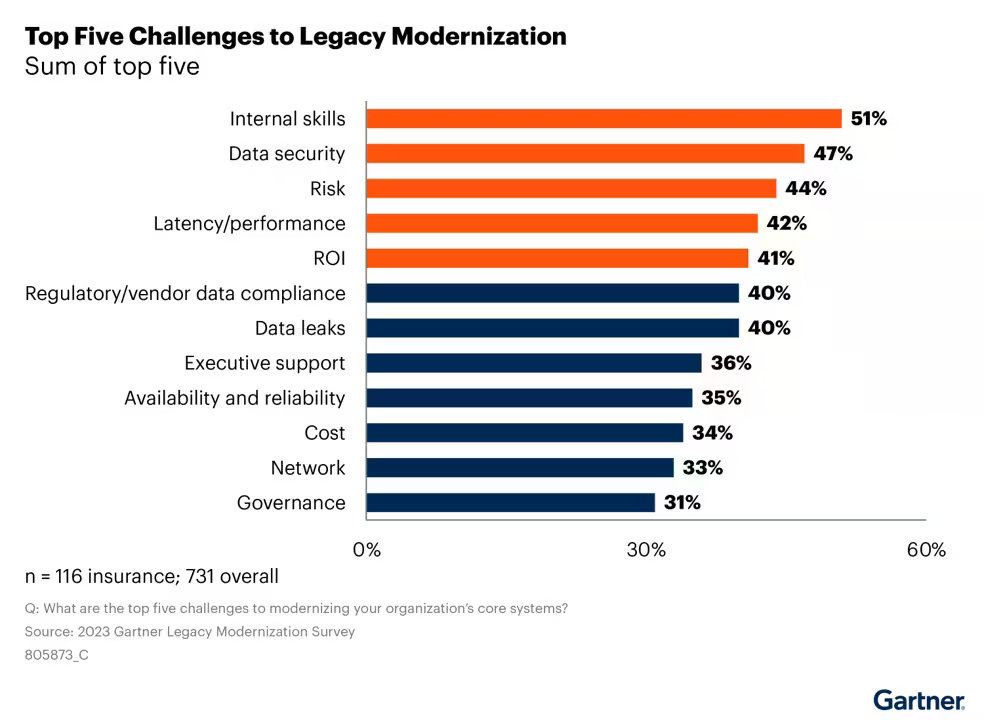
1. Integration Complexity
Legacy systems often make it challenging to; connect policy, claims, billing, and customer platforms without data conflicts. You can resolve this by using insurance system integration services that introduce API middleware and microservices, enabling smooth, secure, and real-time data exchange across all systems.
2. Cost & Risk Concerns
Insurers hesitate to modernize because large-scale transformation feels expensive and risky, especially when critical operations run on old systems. You can reduce these concerns through phased modernization and pilot testing; under a legacy System modernization in insurance approach, allowing controlled rollouts, predictable budgets, and minimal business disruption.
3. Data Integrity
Old systems store inconsistent data; creating major challenges during migration and increasing the risk of operational errors. Solve this by using AI-powered validation and cleansing tools that standardize datasets, remove inaccuracies, and ensure the new system receives clean, reliable information.
4. Change Resistance
Employees that are used to working with legacy workflows often don’t want to use new tools; fearing disruption to their routine tasks. Address this challenge through structured workshops; hands-on training sessions, and clear internal communication programs that build confidence, encourage adoption, and create a smooth transition to modern systems.

How A3Logics Empowers Insurance Companies with Modernization?
Partner with A3Logics to modernize intelligently. We upgrade your core systems; integrate AI, streamline workflows, and enable cloud-ready architectures that unlock speed in insurance.
1. Custom Insurance Software Development
A3Logics builds custom platforms that fit each insurer’s workflow and long-term goals. Through custom insurance software development; we develop advanced policy administration, claims, and underwriting systems. With microservices, APIs, and Cloud Migration for Insurers, we ensure scalable, high-performance solutions that grow effortlessly with evolving business needs.
2. Legacy System Modernization
A3Logics evaluates outdated insurance systems and transforms them for higher performance, reliability, and security. We rehost, refactor, or fully rebuild applications with embedded AI, automation, and compliance-ready design. Our AI-assisted modernization pipelines guarantee smooth transitions; zero data loss, and minimal business disruption while upgrading systems to future-ready standards.
3. System Integration Services
At A3Logics; we seamlessly integrate insurers’ core systems with CRMs, analytics platforms, payment gateways, and third-party InsurTech tools.We facilitate real-time data flow through API-driven interoperability. Policy, claims, billing, and customer operations are connected into one unified ecosystem, reducing silos and enabling faster, smarter decision-making across the insurance value chain.
4. AI & Automation Solutions for Insurers
We implement AI-driven underwriting, automated claims decisions, and fraud analytics to reduce claim handling time. Using NLP and OCR; we automate tasks such as document intake, classification, and compliance reporting. Predictive and generative AI further enhance forecasting, customer interactions, and operational efficiency across all insurance processes.

Conclusion
As an insurance company whose growth depends on; fast, accurate, and customer-ready operations, the need of the hour is to embrace legacy system modernization. In this guide; we have covered the key areas that will help you replace outdated systems, streamline processes, and adopt AI-driven efficiencies.
If you are ready to take your technology landscape to the next level you can partner with A3Logics and modernize with confidence. Not only will you witness measurable improvements in speed, accuracy, and cost efficiency; but you will also be able to serve your customers with far more personalization, transparency, and trust.