
The legal industry is moving at light speed.
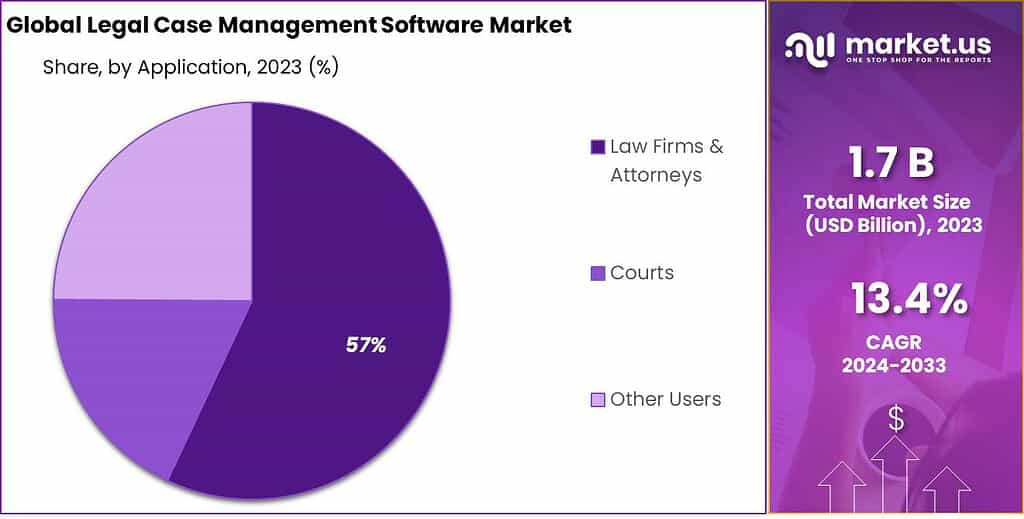
The global market for legal case management is going to reach $5.9 billion by 2033, as reported in industry research.
Historically, traditional case tracking applications have been used simply to maintain records and not to provide intelligence. Consequently, attorneys are spending too much of their time on administrative coordination and not enough time doing substantive legal work.
This productivity gap has contributed to the rapid growth of artificial intelligence (AI)-enabled legal case management.
Thomson Reuters reports that individual lawyers may save approximately 240 hours per year using AI legal case management solutions. This will reduce the amount of time spent on legal research, document preparation, and administrative follow-up activities.
In this blog, we will explore how these platforms work, what defines enterprise-grade platforms, and provide examples of real-world use cases. Let’s begin.
What Is AI Legal Case Management Software?
AI legal case management software represents an advanced form of the old-style legal case management systems used for decades. Legacy legal case management platforms stored case documents, notes, and deadlines; AI platforms use this data for interpretation and action.
Functionally, AI-powered case management software provides a single location for storing all structured and unstructured case-related data. The AI then processes this data to automatically determine relevant facts and create insights that would have required hours or days of manual review of the same case-related data.
How AI Legal Case Management Systems Work?
AI legal case management systems function in layers.
- All relevant case information is stored within one centralized location.
- Scanned documents are converted by optical character recognition (OCR) software into searchable text.
- Natural Language Processing (NLP) identifies “entities” from the searchable text (i.e., dates, parties involved, jurisdictions, and obligations).
- Historical and current data related to cases is analyzed by machine learning algorithms to identify patterns, correlations, and anomalies.
- Litigation analytics software packages (e.g., Lex Machina) have demonstrated how AI can examine correlations. These interactions are between judges’ behavior and motions being granted or denied, as well as the amount of damages awarded, across thousands of individual cases.
- Similarly, within a specific law firm’s database, AI for case management applies this same analytical process to the firm’s historical case data.
- Workflow automation engines make decisions based on data analysis regarding tasks to be performed in relation to each case.
- Alerts are generated when deviations occur in the workflow of a case.
- Attorneys interact with the AI-based system via web-based dashboards, where they can check case status or generate document summaries.
Key Components of an AI-Powered Legal Case Management Platform
1. Centralized Case Database
The central database in an AI legal case management system is where all relevant information for each case is stored and indexed. Each document added and every communication regarding a case is stored as a single unit within the same case database.
A centralized system allows AI for legal case management to analyze current open cases against past closed cases and identify correlations between them.
2. AI-Driven Document Management
Documents continue to be one of the greatest time-wasters in the litigation process. Through automated classification, semantic searching, and summarization, AI-powered document organization makes case files easier to manage.
AI legal case management software identifies key terms and sections within documents (pleadings and discovery) and provides concise summaries of lengthy documents. This has strong ties to legal document automation by creating efficiencies and increasing review speed.
3. Workflow Automation Tools
Adaptive process engines tranDynamic and intelligent workflow systems replace static task lists. In addition, the system assigns tasks based on predetermined rules and previously identified trends. As a result, it proactively generates alerts whenever tasks are delayed or missed.
Research has shown that integrating automation into AI for case management processes significantly reduces missed deadline occurrences.
4. Real-Time Analytics Dashboard
AI legal case management can include an analytics dashboard that provides real-time information on how cases are progressing. Unlike traditional reporting methods, which focus on past events, an analytics dashboard will update in real time as data is entered into the system.
5. Client Communication Portal
The AI-powered client portal can automatically give updates on a case’s status and alert clients about upcoming deadlines. It also enables regular chats between lawyers and their clients using chat features.
6. Integration with Legal Research Tools and Billing Systems
For an AI legal case management platform to be effective, it is essential for such a system to seamlessly integrate with timekeeping, accounting, and legal research systems. This integration enables data to be consistent from one system to another. This connection allows AI case law analysis to be fed directly into active matters without requiring duplicate data entry.
Core Features of AI Legal Case Management Software
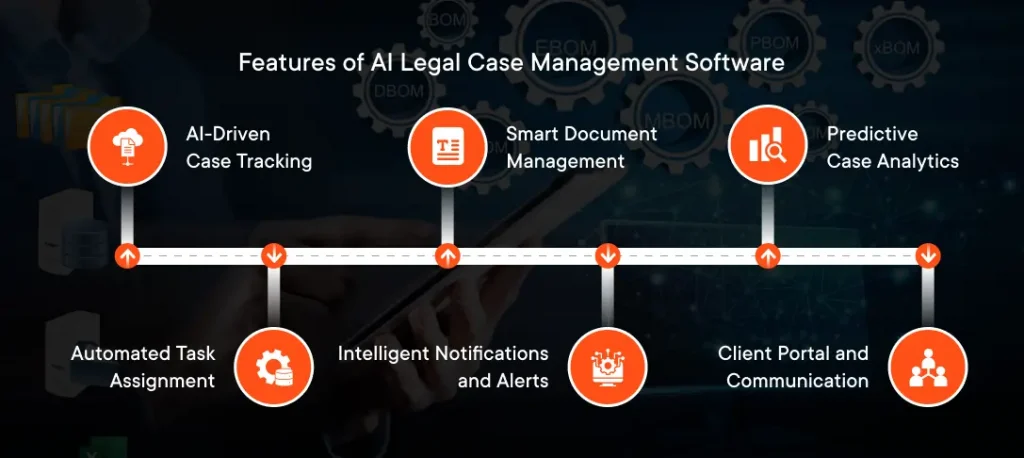
1. AI-Driven Case Tracking
AI-based monitoring systems monitor all aspects of a case (status, due dates, etc.) and dependencies. By allowing attorneys to ask questions in a conversational manner, the amount of time it takes attorneys to navigate through an interface is greatly reduced.
2. Smart Document Management
Intelligent document management enables attorneys to search documents through a semantic search engine. Moreover, the system automatically tags documents and scores them by relevance. As a result, attorneys can quickly and efficiently find relevant evidence or correspondence, even within large and complex datasets of information.
3. Predictive Case Analytics
Predictive analysis uses past case data to provide litigation teams with predictive insight into potential case outcomes, timelines, and costs. Increasingly, litigation teams are utilizing this type of information to determine whether to settle cases or allocate resources.
This is one of the most strategic applications of AI for legal case management.
4. Automated Task Assignment
Smart work distribution is when tasks are distributed based upon role, time available to complete tasks, and the degree of urgency associated with each task. In this way, smart work distribution helps keep workloads in balance at all times.
5. Intelligent Notifications and Alerts
Notifications help employees identify the most important, high-risk, and high-urgency tasks that require immediate attention. Furthermore, smart notifications reduce alert fatigue and, at the same time, ensure that teams address the most critical issues without delay.
6. Client Portal and Communication
Client portals provide a central location for all client communications to occur (reducing paperwork and the number of follow-up requests made by staff). It offers an easy way for clients to communicate directly with the firm.
Use Cases of AI Case Management Software for Modern Law Firms

1. Intelligent Case Intake and Matter Classification
By using AI along with submitted documents and metadata, legal teams automate matter classification and intake. As a result, this approach significantly speeds up the onboarding process and, from the outset, ensures that teams route new matters correctly.
2. Automated Case Prioritization and Task Management
AI legal case management platforms analyze deadlines, complexity, and required resources to determine matter priority based on urgency timelines. This allows firms to apply their efforts as needed.
3. AI-Driven Document Organization and Retrieval
Search engines utilizing AI enable lawyers to locate relevant documentation (i.e., “key evidence”) using search terms. These terms are based on the context of the information they wish to find rather than simply the document name, which reduces preparation time for discovery.
4. Litigation Strategy and Case Outcome Prediction
Litigation strategy typically relies on experience and the attorney’s “gut” feel for how a case will proceed. AI legal case management systems change that process by providing data-driven decisions as opposed to purely subjective ones. They use historical case outcome data to estimate what is likely to occur in a given case or litigation.
5. Evidence and Discovery Management
The discovery phase of litigation is often the most resource-intensive (time-consuming) part of the litigation process. Automated processes like indexing, entity identification, and relevance assessment enable quick searches through large quantities of documents. This allows attorneys to analyze deposition transcripts, emails, and exhibits much faster.
6. Compliance Monitoring and Risk Assessment
Compliance and risk assessments related to procedural compliance have been identified as major causes of delays and sanctions in litigation. AI-enabled platforms can monitor all actions taken in a case to ensure that those actions comply with all relevant procedures.
7. Workflow Automation Across Case Lifecycles
Workflow automation spans every stage of the lifecycle of a legal case. The end-to-end workflow of legal cases (from intake to disposition) includes all phases that trigger predefined tasks and documentation. AI adapts workflows based on the complexity of the case, jurisdiction, or past performance of the case.
8. Multi-Jurisdictional and Cross-Border Case Management
AI-driven legal case management solutions provide cross-border legal case management and accommodate jurisdiction-specific rules. A single, unified case framework brings all procedures and timeframes together. Consequently, this structure provides consistent support, especially when multiple jurisdictions are involved in a legal case.
9. Knowledge Management and Legal Intelligence
As each legal case concludes, it generates valuable institutional knowledge. Subsequently, AI transforms this knowledge into reusable intelligence and systematically organizes it by outcome, legal argument, and procedural strategy.
AI legal case management solutions also provide an opportunity for attorneys to utilize AI for legal research and retrieval of previously filed arguments.
10. Cost Forecasting and Budget Control
AI enables attorneys to anticipate and manage costs associated with their legal cases. It uses historical billing data and matter timelines to create forecasts of future spending and alert attorneys to possible cost overruns. AI for legal case management solutions provides attorneys with the ability to take early action to prevent unnecessary spending.

Benefits of AI Legal Case Management for Modern Law Firms
1. Increased Productivity
Productivity is the area where benefits are most commonly reported as a result of the use of AI case management systems. The efficiency of attorneys using AI case management software can be attributed to the automation of tracking, document processing, and task coordination. This allows them to spend more time on substantive legal work instead of operational overhead.
2. Improved Accuracy
Automation eliminates the possibility of human error and helps minimize the inconsistencies that arise when using manual methods. The use of AI in validating documents is beneficial in ensuring that filings and other procedural requirements are completed on time and consistently.
3. Better Decision-Making
Anecdotal judgments give way to data-driven decisions that rely on predictive analytics and historical benchmarks. Legal teams use these insights to inform strategic litigation decisions, evaluate settlements, and allocate resources effectively.
4. Cost Savings
Automation of tasks will also benefit your bottom line by saving you money. Automation will allow you to forecast your needs better so you do not waste resources. Additionally, it will assist you in being less likely to incur penalties from non-compliance with regulations and laws.
5. Enhanced Client Satisfaction
Clients want to know what is happening with their file, when they can expect updates, and how much it will cost. An AI-powered portal that provides clients with access to their information and allows them to receive real-time updates greatly increases client satisfaction.
Best AI Tools for Litigation Case Management
1. Clio (Clio Duo)

Clio is an AI-enabled litigation case management tool that enables litigators to have AI-enabled assistance with document summarization, conversational searches, and insights on their active cases.
2. Filevine

Filevine is also an AI-enabled litigation case management tool that enables litigators to use AI for document review, demand generation, and deposition analysis. It demonstrates the ability of AI to be used throughout the litigation workflow to improve efficiency.
3. Darrow

Darrow utilizes AI to help lawyers discover new cases and evaluate the merits of class actions. This is done using large-scale data analysis to identify potential high-value litigation opportunities.
4. Lex Machina

Lex Machina uses litigation analytics and provides litigators with data about judges, venues, and outcomes to assist in developing data-driven litigation strategies.
5. Everlaw

Everlaw is an all-in-one litigation case management tool that combines electronic discovery, litigation analytics, and collaborative document review capabilities. It is designed to provide scalability and advanced document intelligence.
Custom AI Legal Case Management Development vs Off-the-Shelf Solutions
Off-the-shelf platforms have the advantages of quick rollouts and pre-set (predictable) monthly costs. They are generally best suited for firms that want to rapidly improve operations by making minor changes to an existing system.
Custom legal case management AI development offers firms total control over workflow, data governance, and model training. Most firms with highly customized business processes and strict compliance and regulatory requirements will invest in a custom solution to create long-term strategic flexibility and competitive advantage.
The decision between ready-made solutions and custom legal case management AI development depends on whether a firm wants to quickly benefit from a new technology or can take more time to build long-term strategic skills.
How to Choose the Right AI Legal Case Management Software?
1. Scalability
AI legal case management software needs to be able to grow as your client base increases and as you expand into new markets (jurisdictions) without negatively affecting performance.
2. Ease of Use
Attorneys will not use AI legal case management software that is difficult to learn or has a user experience that does not fit their work style. It should have an excellent user experience so users can adopt it faster.
3. Integration Capabilities
AI legal case management software that integrates well with other tools used in a law practice. It can be billing software, calendar systems, and research platforms that help maintain day-to-day operations.
4. Customization Options
Legal workflow configuration options enable a law firm to customize the system to meet its unique business requirements.
5. Vendor Support and Expertise
Vendor support in terms of training, industry knowledge, and long-term product development roadmaps are important factors when evaluating AI legal case management vendors.
Why Choose A3Logics for AI Legal Case Management Software Development?
As a company with 20+ years of experience developing large-scale enterprise software, we have an in-depth knowledge of how legal departments work under real-world conditions.
Through focused legal case management software development services and tailored AI development services, A3Logics delivers comprehensive solutions for the legal industry.
We use this methodology to integrate legal analytics, automation, and intelligence directly into your legal department’s daily workflow. As a result, you gain a scalable, compliant case management platform that meets the needs of your law firm.

Conclusion
AI legal case management is now at a point in time, moving on from an experimental tools phase to a core platform for delivering high-value service to clients.
The next step for firms looking to transform their case management practices will depend on the type of legal software development company they work with. Working with a legal software development firm that understands legal workflows as well as long-term technology evolution will make the difference between incremental change and fundamental change.
A3Logics brings the experience, technical understanding, and practical perspective required to assist law firms. We develop and implement AI-enabled case management platforms aligned with the firm’s current processes and where the firm wants to be in the future.