Let’s be real for a minute, shopping online can be overwhelming. You went online to search for a specific piece of clothing or accessory, and before you know it, you are clicking through so many options for random accessories and pieces of clothing you are not even sure will work well together. That’s where the magic of the AI outfit generator comes in. As per Hightouch, platforms with AI look generators boosted user retention and engagement by 400%.
The virtual fashion experience is getting a glow-up, from flat product pages to interactive, AI-based styling tools that don’t just suggest individual products, but put together entire outfits specifically for you.
And here’s the scoop: it’s not only about looks. It’s about ease, personalization, and making fashion enjoyable again.
In this blog, we’ll examine how AI outfit generators work, why they are the future of e-commerce, and how you can use them to change the buying experience of your customers.
What is an AI Outfit Generator?
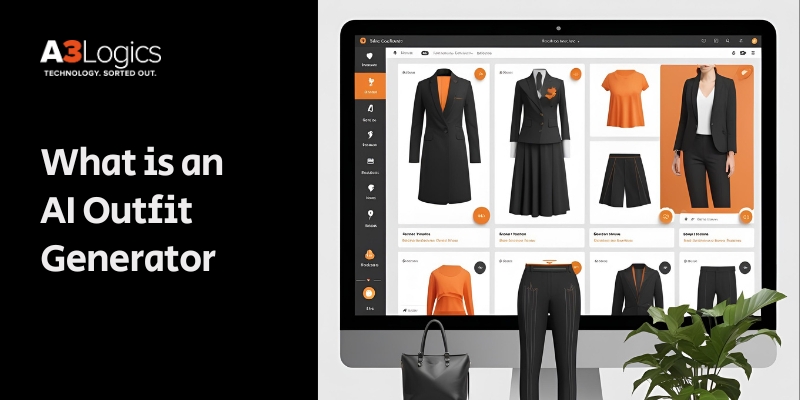
An AI outfit generator is an intelligent styling solution that employs artificial intelligence to propose full-outfit sets rather than single products.
Imagine your own personal online stylist who is available 24/7 and looks at your style tendencies, size, the season, and even previous purchases to create outfits you’ll actually want to wear.
Using machine learning, computer vision, and personalization algorithms, it is able to:
- Recognize clothing categories and styles in your product catalogue.
- Like similar items based on colour, cut, and style trends.
- Compile outfits that go together that are cohesive and engage your brand.
It’s not just, “Here’s this shirt.” It’s, “Here’s this shirt, with those pants, plus this jacket, and here’s why you will love it.”
How They Differ from Traditional Fashion Recommendation Engines?
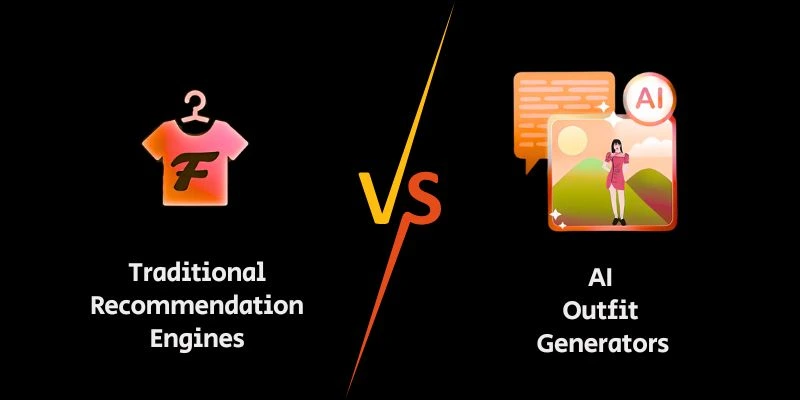
| Traditional Recommendation Engines | AI Outfit Generators |
| Filter-based: Users apply filters to find single products. | Predictive styling: Generates full outfits in real time. |
| Works on “people who bought this also bought…” logic. | Works on “this specific shopper will like this look” logic. |
| Static suggestions that don’t change unless filters do. | Dynamic combinations that adapt to user behavior and trends. |
| Suggests individual items. | Suggests coordinated, multi-item outfits. |
AI Outfit Generator Technology Stack
AI outfit generators apply NLP to translate style text input and image recognition to analyze clothing visuals, allowing them to provide accurate, customized outfit suggestions.
1. NLP & Image Recognition for Style Interpretation
Natural Language Processing (NLP) extracts product descriptions to recognize important information like fabric, cut, style, etc., and image recognition is employed to recognize features such as color, pattern, and shape.
Combine these, and you get an Artificial Intelligence outfit generator that distinguishes between a bohemian maxi dress and a corporate sheath dress.
2. Deep Learning for Outfit Coordination and Color Harmony
Deep learning algorithms learn the basic notions of what “looks good” in terms of both past trends and existing aesthetics in order to algorithmically create both visually pleasing and coherent-looking outfits.
It’s basically learning the style rules so that the AI can then break them ever-so-gently in order to keep things fresh.
3. User Behavior & Demographic Data for Personalized Recommendations
Your viewing history, past shopping, favorite colors, sizes, and even your local weather patterns all come into play in how an AI wardrobe generator provides suggestions specifically for you.
It is why two individuals shopping at the very same store can view entirely different outfits.
4. Virtual Try-On and AR Integration Potential
The Future? Seeing outfits on yourself prior to buying.
AR tech is being combined with Artificial Inteliigence outfit generator logic so consumers can try on products suggested by the AI engine virtually, either in-app or desktop, cutting down on guesswork and return rate.
AI Styling at Scale, Personalized Outfits for Every Shopper
AI styling tools can make outfit suggestions at scale because they don’t only appeal to some generic, one-size-fits-all “average customer.”
Rather, they consider a variety of inputs such as:
- Gender, physical build, and stature
- Desired fit (narrow, loose, large, etc.)
- Local climate (winter jackets vs. summer tops, say)
- Special occasions (formal events, business wear, casual Fridays, etc.)
- The latest fashion trends
Micro-segmentation using a mix of all these inputs enables brands to offer hundreds of highly individualized garment combinations to thousands of customers, all automatically.
AI-Driven Styling off the Product Page, Integrated Outfit Discovery
Why limit styling and outfit discovery to just one page, when you can provide outfit inspiration to consumers at every interaction?
AI outfit builders can be implemented across:
- Homepages – Make the seasonal fashion on homepage to establish the tone.
- Product Listing Pages (PLPs) – Feature outfits around trending items.
- Product Detail Pages (PDPs) – “Complete the look” immediately below the product.
- Emails – Take consumers on handpicked outfit experiences from their abandoned carts, wishlists, etc.
The outcome? Add-to-cart gets increased as well as the basket sizes.
Imagine walking into a store, scanning a dress with your phone, and instantly seeing three AI-generated outfits for purchase.
AI for Omnichannel Styling , Connecting Apps, Stores & Social
Suppose you are on Instagram and tapping on a “shop the look” post that brings you straight to a pre-styled shopping cart. The power of omnichannel styling.
Retailers are already testing:
- Smart mirrors in stores that offer real-time outfit suggestions
- Styling features in mobile apps that integrate with online wishlists.
- Social commerce integrations that convert likes to buys.
- Enhancing Customer Experience via Outfit Visualization
- AI-powered outfit visualization gives online shoppers a fun and engaging experience.
Improving Customer Experience via Outfit Visualization
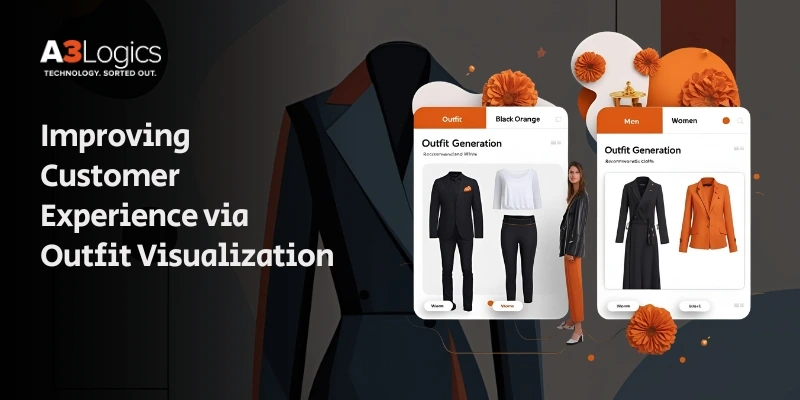
One thing is sure, customers can no longer be left to guess how items will look together, so they look to get to see instantly curated combinations.
This builds confidence, reduces returns, and allows for styling exploration, and it keeps the shopping experience personalized, creative, and exciting!
1. AI-Based Lookbooks and Style Boards
An AI clothing generator can build dynamic lookbooks that update every day, featuring ensembles based on the latest fashion, regional weather, and inventory levels.
This automation not only keeps your catalog updated but also frees your creative team from hours of laborious work so customers always receive inspiring, current ensemble suggestions.
2. Ensemble Curation Driven by the Season and Trends
AI can provide recommendations dependent on the season and trending styles, showcasing spring florals, summer linens, autumn layers, or winter wear.
By showing the correct looks at the correct time to the consumer, the system can continue to inspire shoppers to make purchase choices based on what they have in their closet.
3. Weather-Aware and Geographic-Based Styling
AI can determine up-to-date weather and location to encourage users to receive suggested clothing that is applicable to their personal requirements.
For instance, when rain is predicted, the device can light up raincoats, waterproof boots, and also umbrellas, making a very practical and custom-fit shopping experience that provides actual value to each shopping choice.
Challenges to Creating and Scaling AI Outfit Generator
Creating a successful AI apparel outfit generator will involve reconciling the technical aspect and speed, variety, and comfort of apparel to capture the shopper’s attention.
1. Apparel Data Quality and Labelling
Quality, reliably labeled product photos are critical. Low-quality or infrequently labeled data leads to misaligned outfits with poor style suggestions that will anger shoppers.
2. Diversity and Inclusion in AI-Generated Appearances
AI should be capable of providing every body type, every skin color, and every style preference so that each customer will feel recognized, represented, and energized by the proposed outfits.
3. Handling Fast-Moving Fashion Trends
Fashion is fast-moving, and therefore AI models will frequently have to be retrained in order to keep pace with new trends or face stale, out-of-fashion suggestions.
4. Optimization for mobile UX performance
If outfitting tools take ages to load, consumers will leave the brand. Speed optimization and prioritization of mobile-first performance is essential to deliver a frictionless and delightful styling experience anywhere.
5. Outfit-as-a-Service is Now Available for Fashion Brands
With Outfit-as-a-Service available, fashion brands will not need to spend millions of dollars and years building their own AI styling tool.
Real-World Uses and Industry Examples
AI dress-up generators are not something of the future; they’re revolutionizing brand-to-customer interaction.
With AI styling, hyper-personalization, and so much more, cutting-edge brands are leveraging AI styling tools to boost sales, enhance brand affinity, and fashion shopping experience engagement. Here are a mere handful of examples of what some pioneers are up to.
1. DRESSX, Virtual clothing pairings
DRESSX is a digital fashion company that uses AI to match virtual garments with real outfits.
They allow customers to visualize how products interact with each other without having to wear them, and that makes shopping in the future.
The practice promotes sustainability, reduces returns, and utilizes the idea of the metaverse-ready wardrobe, where your virtual world meets fashion innovation.
2. Weshop, Hyper-Personalized Daily Looks
With Weshop, a shopping personalization experience is elevated to the next level by delivering daily dressing advice through weather, occasion, and fashion-based AI calculations.
The platform starts learning from every user and applies that to make recommendations thereafter.
This type of hyper-personalization not only generates more interactions but also more intention to buy, and makes every shopping experience akin to having a personal fashion stylist in your pocket.
3. Stylitics: Data-Driven Outfit Curation for Leading Retailers
Stylitics works with leading retailers worldwide to enable AI-based outfit suggestions via massive sets of customer behaviour and product match data.
Their tech suggests entire ensembles to go with each item in a customer’s basket, allowing retailers to successfully cross-sell.
With the power of real-time data, Stylitics closes the gap between browse and buy, and along with it, styles become a powerful driver of sales.
4. AI Styling Widgets in Fashion Marketplaces
Fashion marketplaces are now placing AI styling widgets directly onto product pages.
The AI recommends overall looks immediately, so consumers can easily complete looks in one visit.
This pairing enhances the user experience and also increases average order value.
From boutiques to international platforms, AI styling widgets are emerging as the secret ingredient for conversion rates higher than ever.
Future of AI in Styling
AI will transform personal fashion, bringing together predictive suggestions, conversational interfaces, and creative generation to provide fashion advice that is as if coming from a reliable human stylist.
1. Predictive garment generation based on events on the calendar
Think of AI knowing that you have a wedding to go to next Saturday or a business outing in fourteen days, and recommending perfect outfits for each, saving time and keeping you forever impressed.
2. Conversational AI stylists for voice assistants and chatbots
Ask your voice assistant, “What do I wear for dinner tonight?” and get personalized recommendations within seconds.
Outfit suggestions through conversational AI are intuitive, immersive, and always available whenever you need them.
3. Generative AI Constructing Outfits from Text Descriptions
Tell them to, “Give me a Paris street style,” and watch AI create a whole outfit, layering textures, colours, and accessories, to purchase. It’s unbridled creativity, to your very mood.
Why Choose A3Logics to Create Your AI Outfit Generator?
At A3Logics, we do not merely develop AI tools; we design custom fashion experiences that return clients to us again and again.
Our experts at our AI Development Company combine advanced Artificial Intelligence & Machine Learning capabilities with deep eCommerce knowledge, offering AI consulting services to develop styling solutions that resonate with your brand.
Whether you want to provide an experience for online shopping, mobile shopping, or in-store experiences, we deliver a simple, scalable and conversion-focused solution.
Every piece from AI-enabled model training to user friendly front end UX has been designed to boost sales, enhance loyalty, and differentiate your brand from the competitive fashion landscape.
- AI & ML capabilities for eCommerce personalization.
- Custom training on your product catalog and style guidelines.
- Cloud-based, API-first architecture for web, mobile, and in-store.
- Engagement and conversion-led UX/UI design.
With A3Logics, your AI outfit generator is more than just a feature; it is a styling, loyalty, and sales solution.
Conclusion: AI Outfit Generator
The AI fashion outfit generator is revolutionizing online shopping as an interactive, styled-up fashion experience by converting boring product pages into dynamic, curated fashion experiences.
Rather than leaving customers to wonder what goes together, it provides highly personal style suggestions that feel like having a personal stylist at their fingertips.
Whether you are a rising star or a global leader in retail, now is the time to invest in the styling technology that engages shoppers, increases order value, and creates lifelong customers.
With a perfect partner, you can turn your store into a seamless “browse and buy” experience, or even better “style and sold’’ experience that inspires engagement, sales and brings customers back.