
The worldwide banking sector is rapidly approaching complete digitization. The traditional banking methods are changing quickly as the customers are more and more inclined towards mobile, first financial services. Digital banking platforms have made it possible for the users to do practically every financial activity through their smartphones, thus dispensing with the need to go to the physical branch.
The use of mobile banking has been on the rise substantially in the last few years. In recent studies, over 2. 5 billion people all over the world use mobile banking services, and the number keeps growing in line with the growing penetration of smartphones and the adoption of digital payments. Customers now require the banking experience to be quick, safe, and personalized, and accessible at any time and from any place.
Therefore, banks and fintech firms are pouring huge amounts of money into digital platforms that offer perfect mobile experiences. Top financial institutions are turning themselves into digital, first ecosystems where customers can do things like account management, fund transfers, expense tracking, and financial insight access using very user- friendly mobile apps.
A great example of this change is the mobile banking platform of NatWest Group. The application is a great example of how contemporary banking software can offer a great user experience by integrating top-notch security, versatile financial capabilities, and user- friendly design. Read more to understand how to build a banking app like NatWest
What is the NatWest Mobile Banking App?
1. Overview of the NatWest Banking App
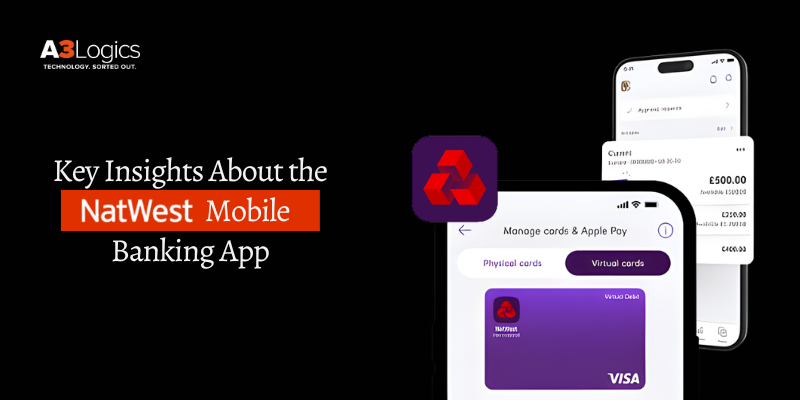
NatWest’s mobile app lets you manage money on the go. No need to visit a branch. You can check balances, pay bills, and transfer funds. It is simple and quick. Just open the app. Most tasks take just a few taps. The experience feels smooth. You probably won’t miss any features. Now, you’re always in control.
Millions of customers rely on the app to monitor accounts, make payments, track spending patterns, and manage financial goals. By presenting a very safe yet easy to handle interface; the platform makes financial acts more comfortable and enhances customer’s meeting convenience.
The system can be seen as an all round digital banking platform that allows its users to receive live updates of their financial information.
Customers are able to: make money transfers, manage payment reminders, be alerted to transactions, and view financial analytics, all on one platform.
2. Key Capabilities of the NatWest App
a. Secure Digital Banking Services
One of the most remarkable features of the NatWest banking app development is that it offers a long list of digital banking functions with the goal of helping users more easily and fully understand finance by means of increasing the level of intuitiveness.
b. Real-Time Financial Insights
The security factor is fundamental to the platform. The application uses multiple layers of authentication and encryption to ensure safe financial transactions.
c. Simple Money Transfers and Bill Payments
Customers have the option to effortlessly transfer money between their accounts, make payments to others, and even set up recurring bill payments all through the app.
d. Customized Financial Management Tools
The app dives into the analysis of transaction records to offer personalized financial advice. The users can keep an eye on their spending habits and get suggestions for bettering their financial well, being.
e. Secure Authentication and Fraud Protection
Biometric methods of authentication like fingerprint scanning and facial recognition provide a further layer of security in protecting user accounts.
Why NatWest Is a Benchmark for Digital Banking Apps
NatWest’s mobile banking platform has set the bar for digital banking apps in the modern world for several reasons.
1. Strong user experience
A great user experience is one of the main strengths of this app. The look and feel of the NatWest banking app development are – straightforward, user friendly, and geared towards helping users complete complicated financial tasks with ease.
2. Advanced security architecture
The platform also incorporates cutting-edge security infrastructure to safeguard highly sensitive financial data and curb fraudulent activities.
3. AI-powered financial insights
Moreover, the use of AI in banking applications to offer financial insights and personalized suggestions is another major feature.
4. Seamless mobile banking experience
Lastly, the app provides an effortless mobile banking experience with rapid performance, real time updating and simple navigation.
Market Demand for Mobile Banking Apps
1. Growing demand for digital banking services
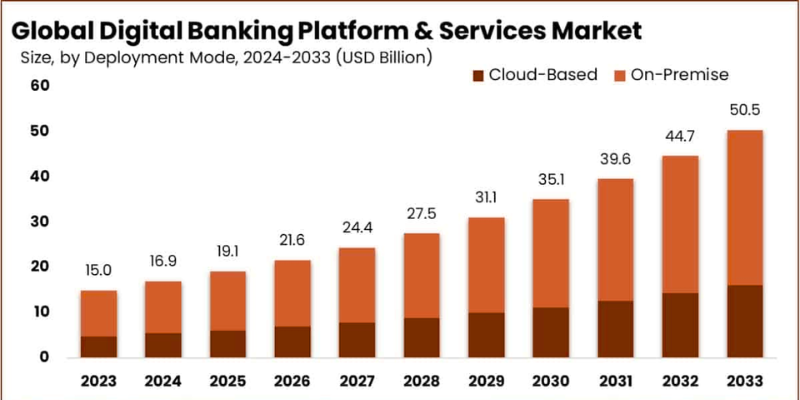
The demand for digital banking apps is rising rapidly mainly because people are going mobile, first with their financial services.
2. Rise of fintech startups and neobanks
Firstly, fintech companies and neobanks have come up with new digital banking models and are even challenging big banks.
3. Increasing smartphone penetration and digital payments
Secondly, more and more people in the world have smartphones and digital payment systems, so mobile banking is becoming very easy.
4. Customer preference for convenient and remote banking
Thirdly, many people nowadays want only remote banking services that give them control of their accounts without leaving the house.
Key Industry Statistics
Reports from the industry say the worldwide digital banking market will hit a transaction value of over $20 trillion by 2030. Mobile banking applications are playing a central role in this transformation. Financial institutions now see digital banking platforms as critical tools for improving customer engagement and delivering modern financial services.
Essential Features of a Banking App Like NatWest
A good digital bank needs basic banking tools, smooth user features, and strong enterprise skills.
1. Core Banking Features
Core features form the foundation of a banking app and are essential to build a banking app like NatWest.
- User Registration and secure Login: People need to sign up and log in safely. Options include – passwords, one, time codes, or fingerprint checks.
- Biometric Authentication: Biometric technologies like – fingerprint scanning and facial recognition improve both security and convenience.
- Account Dashboard: You see a quick look at your account, how much you’ve got, and what’s been going on recently.
- Transaction History: Check every single payment, move, or deposit you’ve made, all in detail.
- Fund Transfers: Send money from one of your accounts or to another person easily.
- Bill Payments: Pay your electricity, phone bills, or credit card dues on time.
- Push Notifications and Alerts: Get alerts right away when something happens, like a payment, login, or change.
2. Advanced Banking Features
Extra features help to build a banking app like NatWest that works better and feels smoother for you.
- Multi Factor Authentication: More safety layers kick in when you log in or do a transfer.
- Card Management: Change your card status, freeze or unfreeze if you think its been hacked.
- Spending Analytics: The app sorts your spending into groups and shows what you spend on.
- Personalized Financial Insights: It watches your habits and gives tips that fit your real life.
- QR Code Payments: Scan a code to send money fast and simple.
- In, App Customer Support: Chat live with someone who can help fix problems right away.
- Budget Management Tools: Set – spending limits, plan what you want to save, and watch how you’re doing.
3. Enterprise-Level Features
Large-scale banking platforms incorporate advanced capabilities to deliver a superior digital banking experience.
- AI-Powered Financial Assistants: AI-powered assistants help customers analyze – spending patterns, predict expenses, and receive financial advice.
- Voice Banking: Voice banking enables users to accomplish a variety of tasks through voice commands.
- Real-Time Fraud Detection: Using machine learning, transactions are continually scanned, and any unusual activities can be identified immediately.
- Multi-Currency Transactions: Through global banking – users are able to handle different currencies and carry out foreign exchange transactions.
- Open Banking API Integrations: With open banking, a customer safely shares their financial data with third party providers for feature enhancement.
- Smart Savings and Investment Tools: With sophisticated finance features – customers are able to invest, save, and control their wealth through the banking app.
Step-by-Step Process to Build a Banking App Like NatWest
Let’s take a look at the various processes that are required to build a banking app like NatWest.
Step 1: Market Research and Product Strategy
This introductory phase is all about figuring out who the product is for and what it can do in the market. The company must – review competitor offerings, craft a product vision, and develop a plan that highlights major features and development timeline.
Step 2: UI/UX Design and Prototyping
User experience is critical for banking applications. A well-designed interface improves customer satisfaction and engagement.
Design teams create wireframes, map user journeys, and develop interactive prototypes to test usability before development begins.
Step 3: Choosing the Right Technology Stack
Selecting the right technology stack for NatWest banking app development ensures scalability and performance.
- Swift works well for iOS apps.
- Kotlin fits Android perfectly.
- Flutter lets you build on both platforms at once.
- React Native mixes native and web features.
- Node.js, Python, and Java power the backend.
- Amazon Web Services, Google Cloud, and Microsoft Azure handle the cloud side.
A smart design helps the bank serve millions at once.
Step 4: Backend Development and Core Banking Integration
The backend runs the whole banking system. It handles logins, money moves, secure connections, databases, and payments.
Most banks now use small, separate systems. This lets each part run alone and grow as needed.
Step 5: Implementing Advanced Security
Security matters most in fintech.
Key parts: end to end encryption, two-factor login, secure tokens, fingerprints, fraud checks, safe data storage.
Periodic checks keep it legal and safe from rules.
Step 6: Third Party Integrations
Mobile banking calls outside services often.
Common ones: payment tools, identity checks, bank links, fraud tools, analytics. These links boost what the app can do and how it works.
Step 7: Testing and Quality Assurance
When you build a banking app like NatWest testing ensures the application performs reliably under real-world conditions.
Important testing processes include functional testing, security testing, performance testing, compliance testing, and user experience testing.
This phase ensures that the banking platform operates securely and efficiently.
Step 8: Launch and Deployment of the Application
Once the testing phase is over, the application gets deployed to the production environments.
The deployment stage includes making the app live in the app stores, setting up production servers, keeping track of system performance, and carrying out updates as and when required.

Technology Architecture of a Banking App
A leading, edge digital banking platform often relies on a layered architecture in terms of technology.
i. Mobile application (Android and iOS)
A mobile app whether iOS or Android the key interface through which users get to see and use the platform.
ii. Backend servers and APIs
Back end servers and the APIs take care of most of the data processing, user verification, and financial transactions.
iii. Database systems
Database management systems are used to store the account information, transaction history, and other user data securely.
iv. Cloud infrastructure
Cloud services give the bank app a means to expand their capabilities, at the same time maintaining a high level of performance and making sure that the system is always up and running.
v. Security and encryption systems
Security frameworks safeguard confidential financial information by employing encryption and authentication methods.
vi. Integration layers for third-party services
Integration layers help the banking platform communicate with third party services like: payment gateways, identity verification systems, and financial analytics tools.
This design makes it possible for the banking platform to manage very large numbers of transactions – and at the same time – keeps security and performance at very high levels.
Cost to build a banking app like NatWest
The cost to build a banking app like NatWest is very expensive; mainly depending on what features it has, the technology used, how secure it is, and where the development team is located.
- A simple version with basic tools usually runs between $80k and $150k.
- One with more features, like budgeting, analytics, or links to other apps; might hit $150k to $300k.
- Top tier platforms using AI, voice commands, or strong fraud checks can go past $500k.
These numbers cover design, coding, testing, launch, and first, year support. Working with a skilled fintech software development company helps cut costs and still deliver good results.
Factors Affecting Banking App Development Cost
Several factors influence the cost to build a banking app like NatWest.
1. App Complexity
App complexity plays a major role. Applications with more features require longer development cycles.
2. Security Infrastructure
Security infrastructure significantly impacts development costs because financial applications must meet strict security standards.
3. Third-Party Integrations
Third-party integrations such as: KYC verification, payment gateways, and open banking APIs also increase complexity.
4. Platform Selection
Platform selection affects development time. Businesses must decide whether to build native apps for – Android and iOS or use cross-platform frameworks.
5. Development Team Location
Finally, the development team location impacts hourly development rates.
Challenges in Banking App Development
To build a banking app like NatWest is not without its technical and regulatory hurdles.
- Strict regulatory compliance requirements: As a matter of fact, financial apps have to be in line with the stringent regulations concerning data security and financial transactions.
- Integration with legacy banking systems: Integration with legacy banking systems can be tricky because many traditional banks still use old systems for their operations.
- Data security and fraud prevention: Providing top notch security and fraud prevention is a must for the mobile banking platform; to keep not only the customer data but the financial transactions as well, safe and secure.
- High scalability requirements: Scalability is a huge concern as banking applications need to be capable of handling millions of users as well as the high transaction volumes.
- Ensuring seamless user experience: Developers also need to consider a great user experience in terms of both the design and the ease of use.
Future Trends in Mobile Banking Apps
Digital banking keeps getting better with fresh ideas showing up all the time.
- Artificial intelligence for financial insights: AI now helps people see their money smarter and guess what might happen next.
- Blockchain for secure transactions: Blockchains make payments safer and easier to check.
- Voice-based banking services: You can talk to banks using your voice now, no typing needed.
- Embedded finance platforms: Simple tools let other apps offer money features right inside them.
- Open banking ecosystems: Open banking lets banks and tech firms work together better.
All this changes how banking looks today.
How can A3Logics help build a bank app like NatWest?
Making a new banking app needs real skill and smart understanding of the field. A3Logics a leading mobile app development company builds custom fintech apps to help banks make safe, strong digital services.
We offer:
- Custom mobile banking apps
- Fintech platform building
- Digital wallets and payments
- Core banking software
- AI, powered financial tools
We mix in smart tech, like AI, blockchains, cloud, and open banking tools. These improve safety, grow faster, and give better money insights.
Why Choose A3Logics
A3Logics has an experienced fintech development team capable of building secure and scalable banking platforms.
The experts at A3Logics offer custom fintech app development services, that are crafted to meet the particular needs of the business. It handles the entire range of development services – right from the formulation of strategy, designing, and implementation to offering support constantly after the deployment.
Conclusion
Nowadays, mobile banking apps have become an essential element of the financial sector. For example, NatWest’s operations show that how digital banking solutions can offer safe, convenient, and tailor, made financial experiences. If a company is willing to create a banking application like NatWest, then they have to focus on implementing strong security measures, designing a user, friendly interface, developing a scalable architecture, and including high, level financial features.
Through the use of recent technologies like AI, cloud computing, and open banking APIs, companies are capable of developing robust digital banking ecosystems which not only satisfy but in fact exceed the changing requirements of customers. One way of ensuring that businesses make proper designs, successful development, and launching of the secure banking platforms that will be capable of supporting their future growth in the digital finance landscape is to collaborate with a fintech software development company that has extensive experience.