Data analysis in the car industry is what is causing big changes right now. Most people think that revolutionary change will happen when advanced technologies like electrification, AI, sensors, computer vision, and Advanced Driver Assistance Systems (ADAS) come together. That’s true, but it’s all about the data.
Despite the problems that plague the industry, automakers are using important information gained from analyzing large amounts of data to save costs while coming up with new ideas, improving automobile and business operations, and staying competitive. It even goes as far as sales and marketing, customer service, and the consumer experience.
The global vehicle analytics market size was USD 3.44 Billion in 2023 and is expected to grow from USD 4.27 billion in 2024 to USD 27.73 billion by 2032, exhibiting a CAGR of 26.3% during the forecast period. These ever growing numbers are a testament to the demand for integrating data analytics in the automotive sector. In this blog we have taken a deep dive into the role of data analytics in the automotive industry – understanding the use cases of data analytics in the automotive industry, deciphering future automotive data analytics trends and how and why implementation of data analytics is important for the automotive industry.
What is Data Analytics in the Automotive Industry?
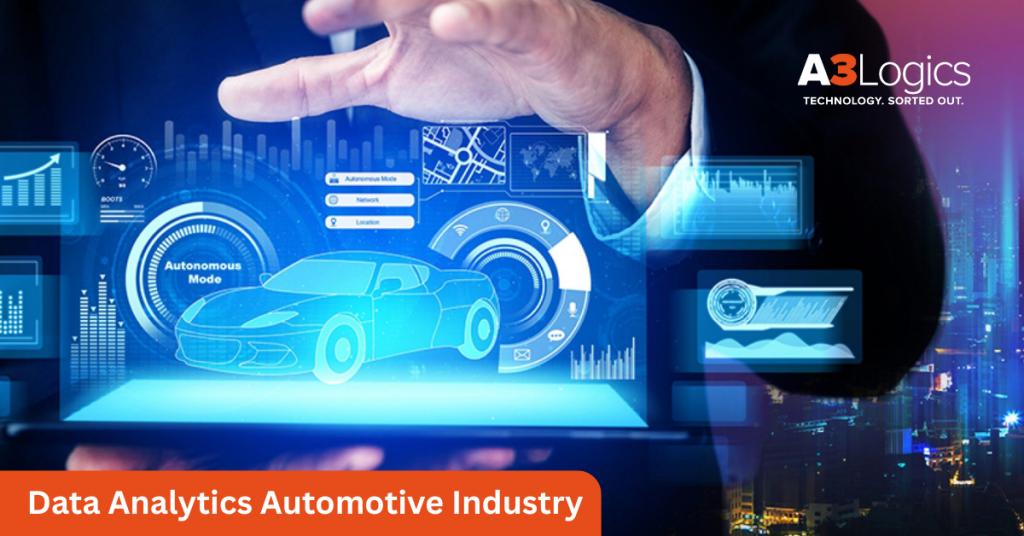
The automotive sector is undergoing rapid revolutions and facing new problems, such as developing flexible global supply chains, transitioning production to autonomous and electric vehicles, and expanding connectivity in vehicles and industrial equipment. To remain competitive in a dynamic market, organizations must understand how to modify their operations. And data analytics in the automotive sector can assist them with this endeavor.
Data analytics refers to the process of gathering, organizing, processing, and evaluating data. It is used in science and business to establish conclusions, make educated decisions, and uncover new knowledge.
Automotive organizations are particularly positioned to implement data analytics since they generate massive amounts of data on a regular basis. Automotive manufacturers and tier 1 and tier 2 suppliers incorporate numerous IoT sensors into their manufacturing equipment to track procurement, production, and shipment. Vehicle vendors keep track of all sales and marketing activities. Vehicles equipped with even the most basic advanced driver assistance systems (ADAS) collect data on driving behaviors, road conditions, and performance.
Key Use Cases of Automotive Data Analytics
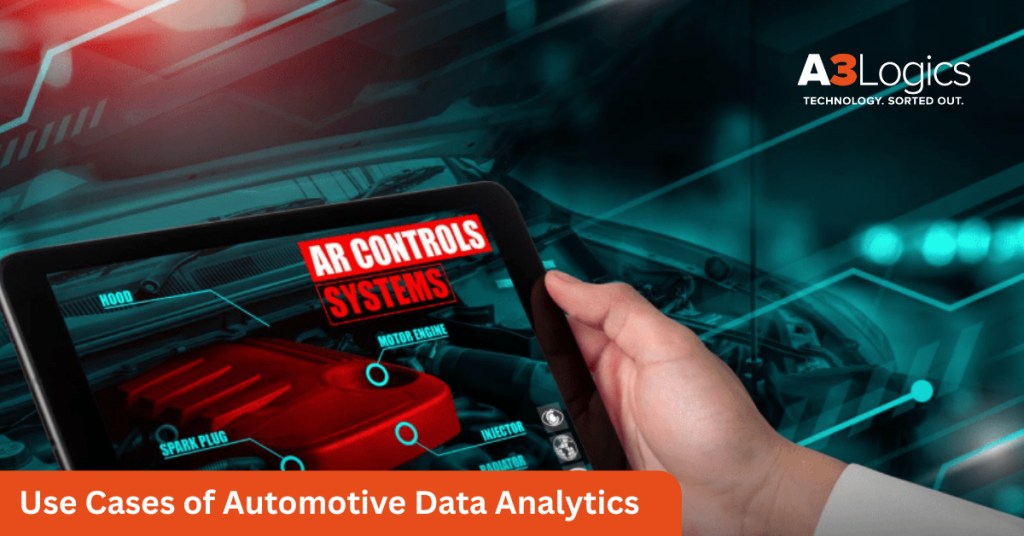
Data analytics has been playing a key role in transforming the automotive industry by simplifying the operations and processes. Let’s take a look at the key Automotive analytics use cases:
> Supply Chain & Inventory Management
Predictive analytics allows producers to properly estimate material requirements, lowering the risk of stockouts and excess inventory. Manufacturers may ensure a flawless supply chain by examining historical trends, market data, and supplier performance before making decisions regarding order quantities and scheduling. BMW used data analytics, AI, and blockchain technology to create a flexible and secure supply chain platform that enables the corporation to reduce waste.
Data Analytics in the automotive also aids supplier relationship management. Manufacturers may find trusted partners and deal with underperforming suppliers by assessing important parameters such as lead times, defect rates, and cost efficiency. Analytics tools can also predict supply chain risks, such as supplier insolvency or seasonal variations.
> Predictive Maintenance
Predictive maintenance uses data analytics to monitor equipment and vehicle health, predicting problems and minimizing unexpected downtime. This strategy is particularly useful in automobile manufacturing and fleet management, where operational continuity is crucial.
Predictive maintenance systems use IoT sensors put on machinery or vehicles to collect data on characteristics such as temperature, vibration, and pressure. Predictive maintenance in car manufacturing improves production schedules by eliminating unexpected equipment breakdowns. For example, General Motors uses predictive analytics to monitor its assembly lines, ensuring that machinery runs at top performance. This not only lowers maintenance costs, but also eliminates waste generated by poor production runs.
Furthermore, predictive maintenance improves vehicle safety by addressing possible problems before they worsen. Advanced analytics can detect anomalous tire wear on automobiles, resulting in early replacements and preventing accidents. This proactive approach boosts reliability and customer satisfaction while lowering warranty claims.
> Vehicle Design & Performance Optimization
Data analytics enables automakers to develop safer and more efficient vehicles. By studying consumer comments, sensor data, driving patterns, and other data, manufacturers acquire significant insights about user preferences and vehicle performance in real-world scenarios. BMW uses analytics to examine how its vehicles perform in adverse weather situations, then incorporates this information into the design process to improve vehicle durability and reliability.
Furthermore, data Analytics in the automotive industry enables manufacturers to optimize fuel consumption in internal combustion engines and energy usage in electric vehicles. Analysis of driver behavior, vehicle performance under various conditions, the effect of certain parts on vehicle behavior, and other parameters can provide automotive designers with insights and ideas for novel fuel and energy optimization strategies.
> Fleet Management
The primary use case for data analytics in fleet management is route optimization. Analytics software can use real-time traffic data and historical patterns to discover the most effective delivery or service routes, lowering fuel usage and trip time. UPS, for example, uses advanced analytics to reduce left turns, saving 10 million gallons of gasoline every year.
Fleet managers can use driver behavior analysis to discover risky driving patterns and develop tailored training programs for their drivers. They can use data from vehicle sensors, GPS systems, and road accident recordings to evaluate and visualize.
Fleet managers can utilize data analytics to examine fuel and energy consumption patterns and discover cost-cutting options. For example, electric and hybrid vehicle fleets can optimize charging schedules based on consumption patterns and energy costs in various nations and regions, as well as at different times of day.
> Sales & Marketing Insights
Analyzing customer behavior, industry trends, and historical sales data can assist an automotive company in developing targeted marketing and finding a balance between manufacturing and customer expectations. Automotive firms use predictive analytics based on sales data and industry trends to forecast market demand and justify pricing, inventories, and new introductions. Several data analytics strategies can help with automotive sales and marketing.
Client segmentation enables businesses to identify client groupings and personalize marketing messaging to each segment. Customers’ purchasing history, demographic information, and online behavior are commonly used to segment them.
Sentiment research, which looks at social media posts and customer reviews, can assist a firm understand how its audience perceives the brand and what has to be done to modify its image. Automotive firms can use this technique to respond to negative feedback, showcase their strengths, and improve marketing strategies.
Real-time campaign performance tracking and visualization enable marketers to evaluate the efficacy of their efforts, alter strategy, and more efficiently allocate resources.
Data analytics in the automotive industry helps leading vehicle manufacturers improve their sales and marketing efforts. For example, General Motors works with Adobe to generate real-time tailored marketing campaigns that target unique client preferences and conversion rates. Tesla examines social media to determine the company’s public image. They also review user input via the Tesla app and forum and make recommended modifications.
As data analytics advances and becomes more reliant on novel technology such as AI, it will find new applications in the automotive industry. Some patterns and forthcoming changes are already predictable.

How Data Analytics Works in the Automotive Sector?
The application of data analytics in the automotive industry follows a structured process that transforms raw, often chaotic data into actionable intelligence. Here’s a breakdown of how this process typically works:
1. Data Collection
The first and foundational step in automotive analytics is collecting relevant data from a variety of sources. In the modern automotive ecosystem, data originates from:
- Connected Vehicles: Real-time telemetry such as engine diagnostics, fuel usage, speed, braking patterns, GPS location, and driver behavior.
- Manufacturing Systems: Sensor data from production lines, robotics, and IoT-enabled machinery.
- Dealerships and Service Centers: Sales transactions, vehicle servicing history, warranty claims, and parts usage.
- Customer Interactions: CRM systems, websites, mobile apps, and customer feedback.
- External Data Sources: Traffic data, weather conditions, fuel prices, and regulatory information.
This massive data influx needs to be securely stored and routed to processing systems. Cloud platforms and data lakes are often used for scalable, centralized data storage.
2. Data Preparation
Raw automotive data is typically unstructured or semi-structured and needs to be cleaned and organized before analysis. This stage includes:
- Data Cleaning: Removing duplicates, correcting errors, and filtering out irrelevant or corrupted data.
- Normalization and Formatting: Ensuring data consistency across sources and converting formats (e.g., CSV, JSON, XML).
- Data Integration: Merging data from various departments (R&D, manufacturing, sales) into a unified structure.
- Anonymization & Compliance: Especially crucial when working with customer or driver data to meet regulations like GDPR and India’s DPDP Act.
Effective data preparation improves the quality of insights derived and ensures that analysis is accurate and reliable.
3. Data Analysis
Once the data is prepared, it is analyzed using statistical tools, AI models, and machine learning algorithms. In the automotive domain, this stage can be applied to numerous objectives:
- Predictive Analysis: Forecasting demand for spare parts, predicting vehicle failures, or estimating market trends.
- Prescriptive Analysis: Recommending optimal production schedules or supply chain adjustments.
- Root Cause Analysis: Identifying factors behind assembly defects, quality issues, or safety incidents.
- Behavioral Analysis: Understanding driver patterns, vehicle usage, or customer preferences to tailor products and services.
Advanced analytics platforms such as Apache Spark, SAS, Python-based frameworks, and cloud-native services (AWS, Azure ML) are often used here.
4. Data Visualization
Raw analytics, even when insightful, may be difficult to interpret without proper visualization. This step translates complex data into easy-to-understand charts, dashboards, and reports. Visualization serves several key functions in the automotive sector:
- Executive Dashboards: Provide real-time KPIs (e.g., production efficiency, delivery timelines, inventory levels) to management.
- Maintenance Alerts: Visual indicators for predictive maintenance in fleet management platforms.
- Customer Insights: Graphs showcasing sales performance, market trends, or satisfaction scores.
- Simulation Models: 3D visualizations for vehicle crash testing data or design optimization.
Tools like Power BI, Tableau, QlikView, and embedded analytics in custom automotive dashboards are widely used.
Emerging Trends in Automotive Data Analytics
Automotive data analytics trends coincide with changes in the automotive industry. Here are the significant developments you should expect in the coming years:
1. Rise of Connected Vehicles and Real-Time Telemetry
Connected vehicles are equipped with IoT sensors and communication modules that transmit real-time data to centralized systems. These vehicles continuously send telemetry data such as:
- Engine performance
- Tire pressure
- Brake wear
- Battery levels
- GPS location
- Driver behavior
Automotive companies use this data for predictive maintenance, fleet optimization, real-time diagnostics, and even over-the-air (OTA) updates. For instance, fleet managers can detect early signs of engine trouble and proactively schedule servicing, reducing downtime and cost. Connected vehicle data is also used for insurance telematics and dynamic route optimization in logistics.
2. Adoption of Digital Twins in Vehicle Development
A Digital Twin is a virtual replica of a physical product or process—in this case, a vehicle or a component. It mirrors real-world data from sensors and systems, allowing engineers to:
- Simulate different driving scenarios
- Test component durability
- Predict maintenance needs
- Improve safety features
By combining sensor data, AI, and advanced simulation, automotive companies can accelerate R&D cycles, reduce physical prototyping costs, and ensure higher vehicle reliability. Digital Twins are especially powerful in electric vehicle (EV) development, where battery performance and thermal management can be closely monitored in virtual environments before real-world testing.
3. Personalized Driving Experiences through AI-Powered Insights
Modern consumers demand more from their vehicles than ever before. With AI and data analytics, automotive brands are creating highly personalized in-car experiences based on user behavior and preferences. This includes:
- Adjusting seat and mirror positions automatically
- Personalized entertainment and navigation recommendations
- Voice-controlled assistants adapting to individual speaking patterns
- Dynamic driving modes based on route or driver profile
OEMs (Original Equipment Manufacturers) and Tier-1 suppliers use customer data collected via infotainment systems, mobile apps, and connected services to tailor features. This enhances brand loyalty, customer satisfaction, and user engagement over time.
4. Increased Focus on Data Security and Compliance
As vehicles become more connected and data-driven, they also become vulnerable to cybersecurity threats. Ensuring the safety and integrity of vehicle data is a top priority. With regulations such as:
- India’s Digital Personal Data Protection (DPDP) Act
- GDPR in Europe
- ISO/SAE 21434 for cybersecurity in automotive systems
Automotive firms are under pressure to comply with strict standards. Companies are investing heavily in:
- End-to-end encryption for in-vehicle communication
- Access control protocols
- Real-time threat detection and response systems
- Data anonymization for ethical use of personal information
Proactive data security not only helps in avoiding legal trouble but also strengthens consumer trust in connected automotive technologies.
Key Challenges in Implementing Automotive Data Analytics
Though data analytics in the automotive industry offers vast opportunities in the automobile industry, its execution is not without challenges. Let us discuss a few of the major challenges manufacturers, suppliers, and mobility providers face:
> Handling Large Volumes & Diverse Data Sources
New cars produce terabytes of data each day from sensors, GPS, entertainment systems, and the outside world. Handling this massive and diverse set of data—structured and unstructured—is an imperative challenge. It calls for scalable architectures and efficient data pipelines to process the gamut from engine performance metrics to patterns of driver behavior.
> Providing Efficient Data Management Infrastructure
To gain useful insights, enterprises need to build strong data infrastructure, such as data lakes, cloud platforms, edge computing, and high-speed networks. Most traditional auto companies lack the ability to implement such systems because of excessive costs, lack of in-house technical skills, or obsolescent IT infrastructures.
> Compliance with Regulations & Cybersecurity Norms
Automotive data contains personally identifiable information (PII) and sensitive operational information. Complying with data privacy regulations such as GDPR, DPDP Act (India), and ISO/SAE 21434 is challenging. Moreover, applying end-to-end cybersecurity to avoid data breaches is an increasing requirement.
> Processing Real-Time Data at Scale
Real-time applications such as autonomous driving, fleet tracking, and predictive maintenance require low-latency analytics. Real-time processing of large data streams rapidly and at scale is a technical constraint, particularly for those businesses that do not have edge computing or distributed analytics capabilities.
> Integration with Legacy Systems & Production Tools
Most car companies run legacy ERP, PLM, and MES systems that were not designed with today’s analytics in mind. Plugging advanced analytics platforms into these older systems usually involves custom APIs, middleware, and data harmonization efforts that take a lot of time.
> Making Data Actionable into Business Insight
It’s not merely about gathering and graphing data—organizations need to take analytics and turn it into strategic decisions. This needs a data-literate workforce, natural-language dashboards, and tools that converge with business KPIs. If not interpreted properly, even the most sophisticated analytics do not create business value.
Develop a Customized Data Analytics Solution with A3Logics
At A3Logics, we provide end-to-end data analytics services customized especially for the automotive sector. We enable OEMs, suppliers, and mobility startups to leverage the potential of automotive data through the design, production, and service life cycle. This is why you can choose to trust A3Logics as your data analytics service provider:
- Experience You Can Trust: Decades of experience in collaboration with automotive businesses operating in international markets.
- Tailor-Made Analytics Solutions: No one-size-fits-all here—we create scalable, secure solutions with your business objectives in mind.
- Support for Integration: Integrations with your existing tools—ERP, PLM, CRM, and production systems—are seamless.
- End-to-End Service Delivery: Data pipeline setup, model building, visualization, and support are all taken care of.
- Focus on Compliance & Security: We maintain data privacy, governance, and cybersecurity in all our analytics implementations.
- Agile & Scalable Engagements: Be it a POC or business transformation of your enterprise systems, our scalable engagement models enable you to innovate at lightning speed.
Engaging with A3Logics is about bringing raw data into actionable insights and competitive edge.
Conclusion
Data analytics is transforming the automotive sector by changing the way cars are designed, manufactured, marketed, and serviced. From predictive maintenance and connected mobility to customized driving experiences and real-time fleet monitoring, analytics enables automotive organizations to remain responsive and customer-focused in a changing world.
But to unlock the full value, automotive companies need to get past data silos, infrastructure deficiencies, and integration challenges. With the correct strategy, technologies, and know-how—particularly from a seasoned analytics partner such as A3Logics—these challenges can be made into stepping stones toward innovation, productivity, and expansion.
With the auto industry moving toward electrification, autonomy, and connectivity, the driving force of change will be data analytics. Begin your transformation journey today with a partner who knows the direction.