Not long ago, employee benefits were simple: health insurance, a retirement plan, maybe a few days off. However, the workplace—and what people expect from it—has undergone significant changes. As employees seek more flexibility, purpose, and personal support, companies are rethinking how they design and deliver benefits. In this piece, we explore the most relevant employee benefits trends shaping 2025, the technology behind them, and why staying ahead of these shifts is no longer a choice but a necessity for businesses that want to grow and retain great talent.
Key Employee Benefits Administration Stats
- A number of employees think that non-salary benefits are as important as their salary. For instance, 88% workers believe that wellness is as important as their salary.
- HR teams can save up to 12% of their administrative time by automating employment benefits processes.
- The benefit administration software market is estimated to be worth $1.81 billion in 2025 and is expected to reach $2.94 billion by 2030.
- 90% workers believe professional development is important.
- 37% of employees value paid time off over pay raises.
What Is Employee Benefits Administration?
Before exploring the latest trends in employee benefits, it’s important to understand what employee benefits administration means. Knowing this helps make sense of how and why the trends are evolving.
Employee benefits administration is the process of determining and managing the benefits offered to a company’s employees. These include non-salary compensation or benefits, such as health insurance, paid time off, retirement plans (e.g., 401(k)), wellness programs, financial support, and flexible work arrangements, among others.
Why You Should Keep Up With The Latest Employee Benefits Trends?

Here’s why it is important to keep up with the latest employee benefits trends –
1. Employee Expectations are Changing
For employees, working at a workplace these days isn’t just about getting paid. They expect benefits with which they can support their lifestyle, career growth, and well-being. Keeping up with employee benefits trends helps align offerings with what employees truly value.
2. Attracting and Retaining Top Talent
To attract and retain new and existing talent, it is essential to offer benefits that align with modern lifestyles. This can only happen if you, as an employer, are aware of the current employee benefit trends. This way, you will only attract high-quality candidates and retain valuable employees who will feel cared for and supported.
3. Enhancing Employee Well-being and Satisfaction
When employees receive valuable and relevant benefits, they feel more motivated, satisfied, and connected to the company. This leads to lower absenteeism, higher engagement, and a stronger sense of loyalty. This benefits both overall team productivity and individual performance.
4. Improving Business Performance/ Overall Productivity
Employees dealing with poor health, financial stress, or work-life imbalance often struggle to stay productive. Updated benefits that address these areas can improve focus, reduce stress, and create a healthier and more energised team that will perform better in the long run.
5. Support a Diverse and Modern Workforce
Considering that today’s generation comprises diverse generations, workstyles, and personal needs, new trends enable companies to offer flexible and inclusive benefits, such as mental health resources, remote work support, or financial wellness programs. These trends resonate with a broader and more diverse group of employees.
Types of Employee Benefits
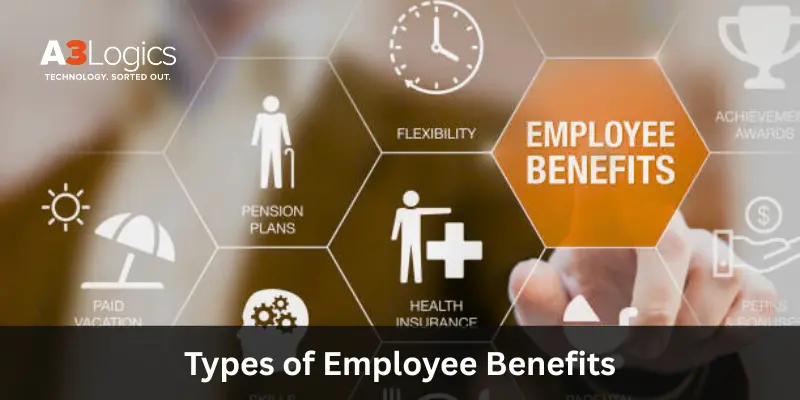
Employee benefits come in many forms, each designed to support different aspects of an employee’s life. In this section, we’ll explore the main types of benefits that organizations commonly offer. From health and financial perks to career growth and lifestyle support, each plays a vital role. Understanding these helps employers build well-rounded packages that attract and retain top talent.
1. Health Benefits
Health benefits are among the most essential employee perks, covering medical expenses such as hospital stays, prescription medications, and preventive care. Many employers also offer vision and dental coverage, along with wellness programs and mental health support. These benefits aim to help employees stay healthy, reduce financial stress related to healthcare, and feel supported by their employer.
2. Financial Benefits
Financial benefits go beyond regular salaries and help employees build long-term financial security. These can include retirement plans like 401(k)s, bonuses, stock options, student loan assistance, and financial education programs. Such benefits help employees manage money better, plan for the future, and handle life’s expenses.
They also reduce financial stress, which can affect job performance. When a company invests in employees’ financial well-being, it builds trust, increases loyalty, and stands out as a thoughtful, future-focused employer.
3. Leave Benefits
Leave benefits give employees paid or unpaid time off from work for various personal or family needs. This includes vacation days, sick leave, parental leave, and bereavement leave.
Such policies enable employees to recharge, prioritize their health, or manage life events without compromising their income or job security. Leave benefits indicate that a company values a work-life balance and supports employees beyond the office. They’re also vital for employee retention, morale, and maintaining a healthy, focused workforce.
4. Work-life Balance Benefits
Work-life balance benefits are designed to help employees manage their personal and professional lives more comfortably. These may include flexible working hours, remote work options, compressed workweeks, or sabbaticals. By offering this flexibility, companies show they trust their employees and respect their time outside of work. These benefits help reduce burnout, improve mental health, and increase job satisfaction.
Especially in modern workplaces, promoting balance is crucial to maintaining employee motivation, loyalty, and engagement.
5. Career Development Benefits
Career development benefits focus on helping employees grow professionally through learning and development. They can include training programs, upskilling opportunities, tuition reimbursement, certifications, and mentorship. These benefits demonstrate that the company is committed to employees’ long-term success, not just their current role.
Employees gain valuable skills, stay updated with industry changes, and feel more confident in their future. This not only boosts individual performance but also creates a more skilled, future-ready workforce.
6. Lifestyle & Additional Perks
Lifestyle benefits cover a wide range of perks that make day-to-day life easier or more enjoyable. These can include pet-friendly policies, gym memberships, childcare support, transportation help, or employee discounts. Such perks might seem small, but they have a big impact on how employees feel about their workplace.
These benefits enhance convenience, alleviate everyday stress, and foster a positive and engaging company culture. They also help attract younger, experience-focused talent who value more than just traditional benefits.

Top Employee Benefit Trends 2025
In today’s fast-changing workplace, where employees are expected to perform, adapt, and deliver results, employees also expect meaningful benefits that can support their well-being and growth. It is, therefore, essential for employers to stay current with the latest employee benefits trends. This way, companies can create a workplace where employees can thrive. In this section, we’ll discuss some of the game-changing trends in employee benefits –
1. Healthcare Affordability
With healthcare costs rising steadily, healthcare affordability is one of the growing employee benefits trends. To improve healthcare affordability, employers are exploring several ways. For instance, they provide health savings accounts or flexible spending accounts, using which employees can save on healthcare expenses.
Furthermore, various employers introduce wellness incentives focusing on preventive care, such as mental health resources and fitness benefits.
2. Personalized Benefits
To retain talent, employers offer employees benefits that cater to their unique needs and lifestyle. From offering flexible work schedules that allow employees to choose between remote work, hybrid schedules, or compressed workweeks, to providing employees with the freedom to invest in what matters most, employers are making a conscious shift toward more meaningful and customizable benefits that truly support their employees’ well-being, both at work and in life.
3. Financial Wellness, Financial Security, Retirement Security
Financial stress impacts employee focus and well-being, which is why financial wellness has become a major trend in employee benefits administration. Companies are going beyond basic 401(k)s by offering budgeting support, retirement planning help, emergency savings programs, student loan assistance, and financial counseling. These benefits help employees feel more secure, reduce stress, and improve productivity, creating a healthier, more focused, and loyal workforce.
4. Upskilling/ Professional Development
Upskilling is becoming a popular employee benefit, as employees increasingly expect career growth. Companies now offer online courses, training programs, or access to learning platforms to help employees learn new skills and stay relevant. This keeps employees motivated, as it demonstrates that the company values their long-term growth.
5. Family-friendly Benefits
Family-friendly benefits are becoming an increasingly important trend in employee benefits, as more people seek genuine support in balancing work and family life. Companies now offer paid parental leave, flexible working hours, and assistance with childcare or elder care. These benefits help lower stress and demonstrate that family matters, leading to happier employees and improved retention over time.
6. Pet-friendly Benefits
Employers who support their employees in caring for pets, in a way, support their mental health, emotional well-being and work-life balance. In the competitive talent market, pet-friendly benefits such as pet insurance coverage, pet bereavement leave, pet adoption support, discounts and perks for pet care can be a big differentiator in a competitive talent market.
Latest Employee Benefits Technology Trends To Look For
1. AI Technology In Employee Benefits
AI or Artificial Intelligence helps analyze employee preferences and usage patterns to recommend the most suitable plan. One of the variants of AI, AI-powered chatbots, assist with benefit-related queries, while predictive analytics can identify trends, such as rising healthcare costs. Employers leverage AI to detect errors, automate enrollment processes, and enhance communication.
2. Robotic Process Automation (RPA)
One of the growing trends in employee benefits technology is RPA, or Robotic Process Automation. It is used to automate repetitive, rule-based tasks such as eligibility checks, benefits enrollment, claims processing, and data entry. It helps teams streamline administrative workflows, reduce errors, and enhance accuracy in benefits updates.
3. Manage Benefits via the Mobile App
Another emerging rather existent employee benefits technology trend is the use of mobile apps to manage benefits. It provides employees with convenient, on-the-go access to information and services. Employees can access and manage their benefits from anywhere. Furthermore, apps facilitate faster communication, allowing employees to obtain approvals more quickly.
4. Use of Benefits Administration Software Powered with EDI
Benefits administration software combined with EDI is a growing tech trend because it automates the exchange of employee benefits data between employers and insurance carriers. When an employee enrolls, updates coverage, or leaves the company, the software uses EDI files (like 834 for enrollment) to send that information directly to providers.
This eliminates manual data entry, speeds up processing, ensures compliance, and reduces costly errors in benefits administration. To understand what makes such software effective, explore the essential features every benefits administration platform should have.
Why Embrace the Future of Employee Benefits with A3Logics?
A3Logics offers custom benefits administration software development solutions for improved management. We design scalable and compliant solutions that streamline enrollment, employment, boost employee satisfaction and reduce administrative burden. Here are some of our offerings –
- Automate the employee eligibility for benefits based on factors like job position, employment status, and roles
- Comply with regulations like COBRA
- Integrate your custom benefits systems with existing payroll applications, HR systems, and insurance vendors
- Maintenance and support
- 24/7 access to benefits via mobile apps
Apart from custom benefits administration software development, we also offer managed benefits services, where our experts utilize data-driven methods and cutting-edge technologies to simplify benefits management. With our host of services, we –
- Ensure employee data is accurate and up to date
- Streamline open enrollment with an intuitive benefit management service platform
- Outsource end-to-end benefits administration to us
- Provide claims assistance for benefits claims
- Ensure compliance and regulatory support – meet federal and state mandates such as HIPAA, ACA, ERISA, etc.

Conclusion
Staying updated on employee benefits trends isn’t just about offering perks—it’s about meeting evolving employee expectations and staying competitive. As workplaces transform, benefits play a key role in retention, satisfaction, and productivity. By keeping a close eye on these trends, employers can build a stronger, future-ready workforce that feels valued, supported, and motivated to grow with the company.