Food delivery apps have made lives so simple. Just when you crave your favorite food, all you have to do is open a food delivery app, and with a few taps, you can get your favorite dish right at your doorstep in a matter of minutes. But, think from a business perspective—is speedy food delivery the only winning aspect, or does integrating technologies like IoT in food delivery app solutions unlock greater potential for those planning to venture into the food delivery market?
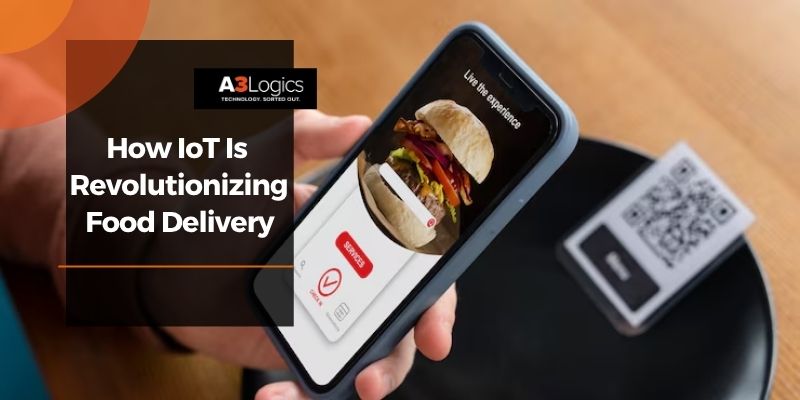
In today’s food delivery landscape, speed alone isn’t enough. While apps enable quick service, businesses now need greater control. That’s where IoT in food delivery apps becomes essential. Platforms managing food preparation and delivery must adopt smarter systems to track orders in real time, monitor food quality, manage inventory levels, and detect equipment issues before they escalate.
In this post, we’ll explore how IoT in food delivery apps is transforming the entire journey, from smart kitchens and real-time delivery tracking to better customer experiences and business growth.
What is IoT and How It connect to Food Delivery?
IoT stands for Internet of Things. It is a network of interconnected devices that can collect and exchange data. The devices are embedded with software, sensors, and other technologies that allow them to collect and exchange data.
In the context of IoT in food delivery apps, multiple technologies can enhance food delivery operations. Smart sensors actively track temperature, ingredient freshness, and stock levels in real time. Additionally, GPS trackers help optimize delivery routes. Using cellular networks, businesses ensure faster, more efficient deliveries by monitoring locations and adjusting routes instantly.
Smart payment terminals use Bluetooth and NFC to enable contactless payments through smartphones, smartwatches, cards, and more. Additionally, these technologies ensure faster, secure transactions and enhance the overall customer experience. Establishments can also utilize IoT waste bins to measure and report the type and quantity of food waste generated.
Other IoT-based systems, such as voice assistants, allow users to place orders quickly using voice commands. Additionally, businesses use delivery drones and robots, which require minimal human help. These devices navigate remote or crowded areas with ease to deliver food efficiently.
Why IoT Matters in Today’s Food Tech Ecosystem
The food tech ecosystem is complex. It starts with sourcing ingredients, managing inventory, and preparing food. It’s also needed to package the food items, conduct timely deliveries, and receive payments.
How do you, as a business, intend to manage all this in a way that quality is maintained and customers are satisfied? By integrating IoT in food delivery and gaining a grasp of each of the processes mentioned above.
Let’s quickly have a look at why IoT matters in today’s food tech ecosystems –
- Prevents wastage by monitoring inventory automatically.
- Tracks food freshness from the kitchen to the customers’ doorstep.
- Smart kitchen monitoring systems ensure hygiene.
- Automate quality checks without slowing down delivery.
- Provide live updates to customers on food delivery.
- Help scale operations with full process visibility.
Market Trends in IoT-Powered Food Delivery
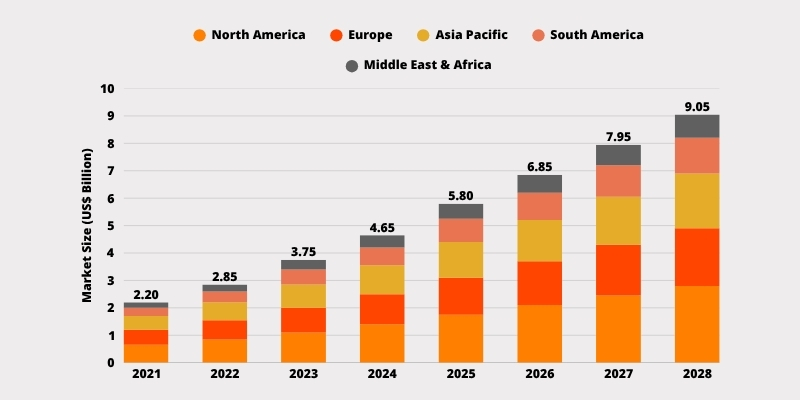
- The Growing Adoption of IoT in Food Delivery
- The online food delivery market is projected to reach $1.40 trillion in 2025.
- IoT in the food market is expected to reach $10.74 billion by 2028.
- IoT-powered logistics are set to reach $125.9 billion by 2031.
- Major food delivery platforms, including Uber Eats, DoorDash, Grubhub, Zomato, Swiggy, and Foodpanda, have begun integrating IoT sensors into their apps to streamline operations and improve the customer experience.
- One Pizza Hut franchisee, American West Restaurant Group (AWRG), reported an 18% reduction in monthly energy usage by using IoT technology.
- Evolution of Smart Restaurants and Cloud Kitchens
In the past, customers and food service staff hovered near the counter, constantly checking if the food was ready to serve.
The advent of IoT in food industry, with tech like smart buzzers, location-based alerts, and others, has streamlined every task under the restaurant’s roof. There are even restaurants that provide real-time alerts on customers’ wearable devices or mobile notifications about their order, thanks to the integration of IoT in food delivery apps.
There is another sector of food delivery that IoT is transforming, and that is the cloud kitchens. Owners, with the help of smart food delivery apps synced with IoT, can track humidity levels in freezers and fridges, temperature, etc and alert the staff when conditions deviate from set parameters.
1. Emerging Technologies Powering Delivery
Below is a list of some of the emerging technologies that are revolutionizing the delivery industry.
- Artificial Intelligence – AI-based algorithms help optimize delivery routes for faster and more efficient delivery. They can help forecast demand, optimize inventory levels, and anticipate potential disruptions.
- Automated Drones – Many large companies have begun delivering packages using drones. They can navigate autonomously using GPS. Once they have picked up the delivery package and arrived at the delivery location, they descend, release the package, and return to their designated landing spot.
- Robotics and Automation – In urban areas, businesses now deploy robots to manage last-mile delivery. Best of all, they program robots and automated guided vehicles to deliver packages directly to designated locations.
- Autonomous Vehicles – Bikes, trucks, vans, and other vehicles equipped with autonomous driving technology can transport goods over long distances, potentially reducing costs and delivery times.
- Blockchain – Blockchain provides a secure and transparent platform for managing transactions, tracking goods, and ensuring the authenticity of products.
Check out this post to learn more about the role of technology in food delivery apps.
IoT-Powered Food App Features
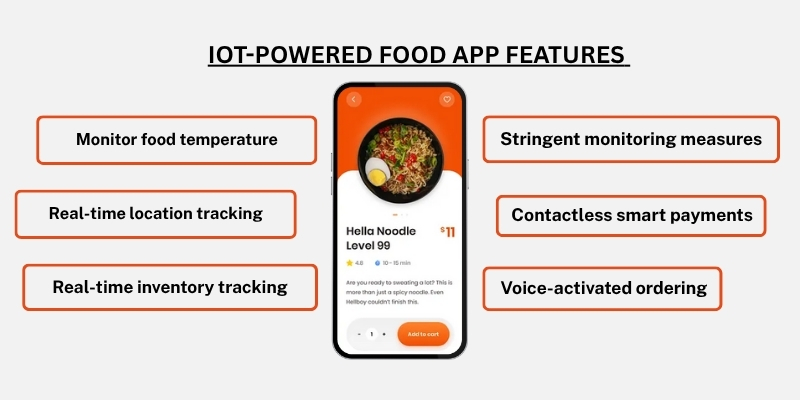
With the growing need for IoT in food industry, food delivery app development company is shifting toward smarter, data-driven features. This table highlights key IoT-powered features—from real-time tracking to automated deliveries. Such features help businesses build faster, safer, and more reliable customer experiences.
| Feature | IoT Implementation | Business Benefit |
| Monitor food temperature | Temperature sensors are used to monitor food temperatures at various stages, including preparation, storage, and delivery. | Businesses can ensure food safety and enhance customer satisfaction by informing them of both the temperature and the quality. |
| Real-time location tracking | GPS trackers are installed on various types of vehicles, including bikes, cars, vans, and even drones and robots. | Both customers and businesses can track the delivery in real-time and get updates |
| Real-time inventory tracking | RFID tags and readers are incorporated to track the inventory of ingredients, packaging, and dispatched orders. | This helps minimize stock errors, reduce wastage, and prevent understocking. |
| Stringent monitoring measures | Smart cameras (IoT CCTVs) are used to monitor employee behavior, kitchen hygiene, and the food packing process. | Helps ensure stringent quality control, enabling food-delivering establishments to meet safety regulations and prevent errors. |
| Contactless smart payments | IoT-enabled NFC devices enable customers to pay using their phones, smartwatches, or cards with just a tap, eliminating the need for physical contact. | This helps in a faster checkout process and improves hygiene. |
| Voice-activated ordering | For voice-activated ordering, smart speakers and voice assistants are utilized, allowing users to place orders using voice commands. | This increases convenience for users, particularly those who enjoy multitasking. |
| Delivery drones and robots | Delivery drones and robots are connected to food delivery apps, which can conduct last-mile deliveries automatically. | For businesses, they can reduce delivery costs, save manpower, and create a futuristic brand image. |
Challenges of Integrating IoT in Food Delivery Apps
1. Connectivity & Infrastructure
IoT in food delivery apps can encounter issues due to network congestion, slow data transmission, and server overload, particularly during peak hours. Weak connectivity can delay real-time tracking, cause order mismatches, disrupt communication between the kitchen and app, and impact speed, accuracy, and overall customer satisfaction.
2. Data Security & Privacy
IoT devices generate a massive amount of data. This can raise significant concerns about how the generated data will be used, or worse, be misused. It is essential to have robust cybersecurity measures in place that can protect sensitive information, prevent unauthorized access, and maintain customer trust.
3. Integration with Legacy Systems
Integrating IoT with existing food delivery systems can be complex, as this demands compatibility, seamless data exchange, and interoperability across different legacy systems. To address this, companies must allocate resources to maintain and integrate their IoT infrastructure, ensuring seamless operations.
IoT Use Cases in the Food Delivery Industry
Let’s explore how IoT streamlines food delivery operations and enhances the customer experience across every stage of service.
1. Smart Restaurants & Cloud Kitchens
IoT is significantly transforming two key establishments in the food delivery industry: restaurants and cloud kitchens. IoT equipment and devices, such as sensors and tablets, are becoming increasingly common in kitchens. Through these connected devices, restaurant staff can perform a range of tasks, from tracking orders to interacting with customers.
In cloud kitchens, IoT technologies such as smart ovens and inventory sensors facilitate tasks like tracking temperature, alerting staff when conditions deviate from set parameters, and even restocking inventory.
2. Drone-Based or Autonomous Deliveries
Drone-based autonomous food delivery, powered by IoT, is transforming how orders reach customers. These drones use GPS, sensors, and communication modules to connect with a central system. They receive instructions in real time, ensuring accurate and efficient deliveries.
Advanced algorithms and sensor data allow drones to navigate complex environments, avoid obstacles, and reach designated delivery locations without human interference.
3. IoT in Online-to-Offline Models
In Online-to-Offline models, customers order food online, but actual cooking and delivery happen offline, i.e., from a physical kitchen or restaurant. In these establishments, businesses actively use IoT to connect all aspects—ranging from the kitchen to delivery and customer service. With seamless integration, they can track everything in real time: monitor food preparation status, follow the delivery rider’s exact location, and even check the food’s temperature throughout the journey.
Future Trends in IoT and Food Delivery
Let’s have a look at some of the trends that are going to shape the future of IoT in restaurants and food delivery in particular –
1. AI + IoT = Intelligent Automation
AI and IoT can work together to enable intelligent automation, making the entire food delivery process self-managing. For instance, IoT can collect real-time data from inventory, kitchens, and delivery vehicles, and AI can use this data to predict delays, automate order assignments, reroute deliveries, and suggest meals.
2. Blockchain + IoT for Transparency
The combination of blockchain and IoT can help transform food delivery by enhancing transparency, traceability, and security throughout the supply chain. Where IoT devices can monitor factors such as humidity, temperature, and delivery location, blockchain can help record every step of the process, ensuring food safety and quality.
3. IoT for Customer Health & Preferences
IoT devices, such as smartwatches, fitness trackers, and other connected health apps, collect data based on user activities, calorie intake, and dietary preferences. When integrated with smart food delivery apps, this data can help the system recommend meals, such as protein-rich options for fitness enthusiasts and low-carb options for diabetic users, among others.
Why Choose A3Logics for IoT-Enabled Food Delivery App Development?
1. Expertise in Custom IoT Integration
We understand that your business may have specific needs, and you wish to create an IoT-powered food delivery app tailored to those. We specialize in connecting separate systems so that they function as a single system. You won’t need to change your current workflow—our system will be custom-built to align perfectly with it.
2. Scalable & Secure Food Delivery Solutions
We help you develop a food delivery app that can scale to meet your growing business needs. Whether you’re scaling operations, meeting growing customer demands, or accelerating deliveries, our IoT solutions are designed to handle it all seamlessly.
Our IoT apps not only scale effortlessly but also ensure secure communication between all components using robust APIs. These prevent data breaches and un-authorized access to sensitive information.
3. Cross-industry IoT Experience
At A3Logics, we bring cross-industry IT expertise to the food delivery sector, with a focus on logistics, healthcare, retail, and supply chain systems. Our IoT development services help food businesses integrate advanced tracking, automation, and personalization. We understand both tech and industry challenges. That’s why we build food delivery apps that are smart, scalable, and future-ready.
Conclusion
As we close this journey through the rise of IoT in the food delivery world, one thing is clear—this isn’t just technology; it’s a complete shift in how we connect kitchens to customers. From intelligent automation to hyper-personalized meals, IoT has turned food delivery into an experience, not just a service.
What started as a convenience is now becoming an expectation. The future belongs to those who can blend technology with trust, speed, and care—because in the end, food is personal.