Technology is no longer limited to the industrial and professional sectors only; instead, it penetrates dome stic life as well. The term we all know as smart homes comes from the automation of our regular personal tasks, facilitated by IT innovations. They make our homes more functional and easier to maintain, without requiring extensive physical efforts.
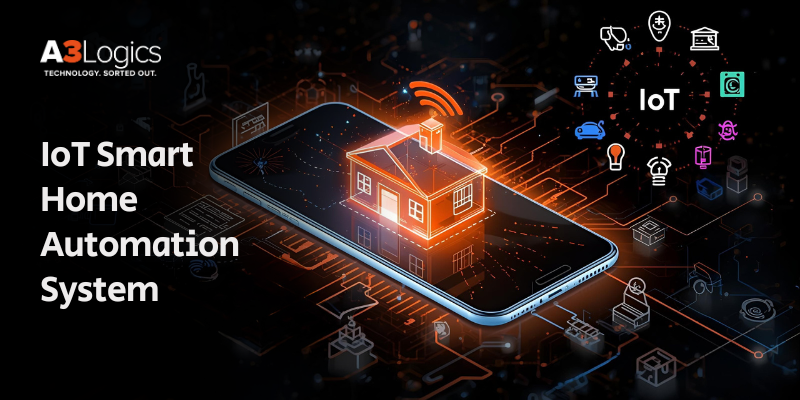
IOT smart home automation system development is a new genre of inventing machines that transforms household convenience. In this blog, we will explore the role of IoT in making homes intelligent and self-operating
What is an IoT Smart Home Automation System?
1. Concept of Connected Devices and Remote Control
Physical equipment is connected by a centralized network to share data with each other and perform tasks in a predefined manner. Sensors and other gadgets are implanted into real objects or machines to monitor and control them remotely from any place through a wired or wireless network.
Remote control of hardware or machinery enables users to activate the system and send commands via a software application or handheld tool. It does not require the physical presence of the user nearby and performs the requested action by sending signals to the attached device. This capability of connected devices and remote control is leveraged for industrial as well as residential purposes.
2. Evolution of Home Automation
Household chores have always been handled manually by the homemakers from the beginning. A small amount of technology was involved in the traditional homes, such as the existence of manual switches. Since then, home automation has gone through numerous evolutions, transforming from basic mechanisms to high-end solutions with the integration of IoT and AI.
In the current scenario, AI-powered IoT smart home automation system development offers multiple features that make your life easy and raise the standard of living. With connected intelligent devices, everything works just at the command of your fingers. Imagine you do not even need to move from your place to get things done, and still, your daily housekeeping is in the perfect routine. Home automation in IoT makes it possible for you while maintaining quality and proficiency.
Market Insights & Trends in IoT Smart Home Automation
IoT in home automation delivers various benefits to the business, offering automation services to the ultimate users. Its popularity is evidenced by the market insights and trends indicating growth opportunities in the IOT smart home automation system development.
1. Current Global Market Size and Projections
More and more houses are getting equipped with IoT-based automated solutions, specifically in developed nations. The current global market size of smart home automation is valued at $ 147.52 billion in 2025, and is projected to reach the amount of $633.20 billion by 2032 due to its growing adoption worldwide.
2. Popular Trends
i. Voice-controlled automation
Voice recognition and control are the latest features that IoT-based smart home automation is offering today. Interconnected devices are capable of understanding human instructions in audio form due to Natural Language Processing embedded in them. You can give commands to your virtual assistant just by speaking, and they will do the said work. For instance, Alexa can play music, turn on lights, lock and unlock the doors, and perform many other functions on your voice command.
ii. AI integration with IoT
Incorporation of AI in IOT smart home automation system development is amplifying the functionality of interconnected devices. AI algorithms study the data collected by IoT equipment, facilitate intelligent analytics, and implement informed choices in the automation processes. For example, they provide you with real-time data on energy consumption and also turn off the electric appliance, such as lights, fans, AC, or other gadgets automatically, when not in use.
iii. Smart security & surveillance
IoT tools like motion sensors, cameras, and smart locks collectively ensure the security system for homes by monitoring abnormalities. Threat alarms are instantly triggered on detecting smoke, leaks, or suspicious movements. They send alerts on user mobiles or automatically initiate security actions such as turning on the lights, locking doors, and accessing to closest help center.
iv. Green/sustainable IoT in home automation
Intelligent gadgets in IoT-based smart home automation prevent energy and resources wastage in a significant amount on a daily basis. They optimally use energy resources, reduce wastage, and offer predictive maintenance. Even small actions, such as turning on/off the electric sources as per usage, contribute significantly to reducing power consumption and initiate sustainable practices.
3. Regional Adoption Insights (US, EU, Asia-Pacific)
The US is the leading market in adopting IoT home automation through its network technology, accompanied by the European Union and the Asia-Pacific regions. The following are the current market insights of these areas:
- The market size of the US in 2024 was valued at $23.72 billion.
- The EU smart home automation market is estimated at $23.73 billion in 2025.
Asia-Pacific generated a revenue of $31,295.8 million in 2023.
Core Components of IoT-based Smart Home Automation
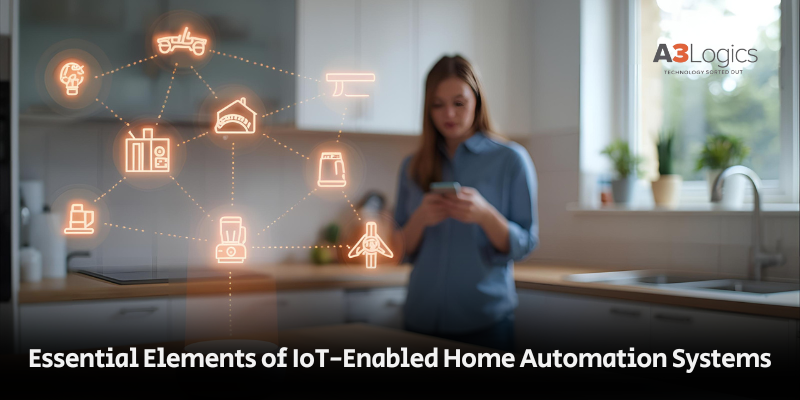
The following components constitute the whole working mechanism of the IoT smart home automation system development:
1. IoT Devices
IoT home automation installs various devices such as sensors, motion detectors, CCTV cameras, security locks, smart plugs, and speakers. They work together for the home services and are controlled through a centralized application or server. These devices collect data from the environment, including temperature, water level in tanks, or lighting, share it with the command center, and perform required actions without human intervention.
2. Connectivity Protocols
The next important aspect of IoT-based smart home automation is a proper network, whether it is through wifi, cellular data, or Bluetooth. The connectivity is required to share collected data by the devices with each other and to the cloud platform, where further processing is carried out.
3. Smart Hubs & Controllers
A centralized system controls all the devices, receives the data from them, and stores it in cloud platforms. The smart hubs work as a single source of information. Once the results/feedback are generated, it is sent back to the devices or any other application responsible for executing the required function.
4. Cloud and Edge Computing
Cloud platforms provide storage for the massive amount of data as well as facilitate its processing for further operations. Whereas edge computing processes the data on the devices themselves to generate faster responses and take needed actions.
5. Mobile Apps
Mobile applications provide the interface between users and IoT systems, enabling them to communicate with the connected devices. They can monitor and control its working, set routines, and get notifications in case of unfavoured events such as security breaches or short circuits.
Key Features of IoT Home Automation Systems
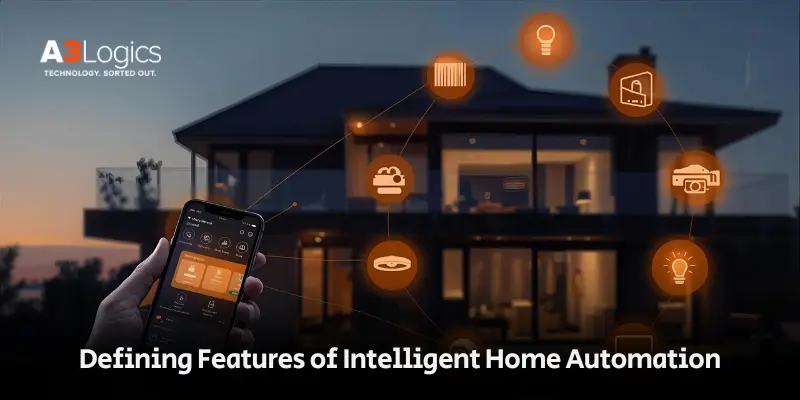
IoT in home automation comes with several futuristic capabilities that make homeowners’ lives easy and convenient.
1. Remote Monitoring & Control
Connected devices, such as a set of sensors, monitors, and operate the home appliances on your command and provide you with full control with a remote or mobile application. For instance, if you want cleaning, you just need to place that command on your smartphone or remote, and it will automatically run the vacuum cleaner in the house and turn it on after completing the task.
2. Voice Assistant Integration (Alexa, Google Assistant, Siri)
Voice assistants are incorporated in mobile applications that work on your vocal command without the need for carrying hardware for action input. Alexa, Google Assistant, and Siri are the most popular ones and can control the IoT devices from a distance, following the user’s instructions in a sound format. For example, if you command Alexa to turn on the AC, it will send a signal to the smart AC to turn it on.
3. Energy Management & Smart Lighting
Automotive bulbs and plugs analyze the lighting level in the environment and adjust accordingly. For example, if you give a command to Alexa to turn on the television, it will send a signal to the television to execute the command and turn it on.
4. Energy Management & Smart Lighting
Automotive bulbs and plugs are designed to analyze the lighting level and make the adjustments accordingly. For instance, it will automatically turn off the lighting devices during the daytime, as there is already plenty of sunlight in the place. It helps in significant energy management and saving.
5. Predictive Maintenance & Appliance Health Tracking
AI-powered IoT home automation installs sensors within the home appliance, which regularly monitor and collect data on their operational efficiency. Appliance health is determined on the basis of their energy consumption, work execution time, temperature, and vibration level. These insights facilitate predictive analytics and send alerts about the potential failure, helping the user to repair or change the machine in time.
6. Personalized Automation (Routines & Scheduling)
You can set customized schedules and rules for performing regular tasks with the IOT smart home automation system development. It may include activities like adjusting the lighting level at specific times, daily cleaning routines, or temperature as per the weather. Interconnected devices will carry out the instructed actions at the given time and control appliances as per your usage preferences.
Challenges in IoT Smart Home Automation Development
There is no doubt that home automation in IoT provides convenience and makes living better, but its efficient implementation poses several challenges, such as:
1. Data Privacy & Cybersecurity Threats
IoT devices share immense data with cloud servers and other connected portals on a daily basis, in order to execute their functions efficiently. However, this creates privacy and security concerns, specifically for the sensitive information that can be exposed to cyber attacks.
2. Device Interoperability Issues
Devices bought from different manufacturers often include distinct frameworks and standards, which makes it difficult for them to smoothly connect and work with each other. Additionally, it is hard for the developers to set a centralised control system for such devices.
3. High Infrastructure & Development Costs
A futuristic home automation in IoT requires a modern infrastructure and installation of smart devices, including high investments and maintenance costs, which discourage its adoption.
4. Latency in Real-time Control
Weak networks and a lack of stable connectivity create inefficient routines and faults in device performance, making it difficult to manage the IoT in home automation.
5. Scalability for Large Smart Ecosystems
In the post period of IOT smart home automation system development, scalability with the increasing number of diverse devices is a major challenge. As the appliances increase, the amount of data grows, which makes it difficult for the existing system to handle and process in real time.
Benefits of IoT in Home Automation
Home automation in IoT is appreciated for its numerous advantages in terms of smart living and feasible functionalities:
1. Enhanced Convenience and Lifestyle Personalization
IoT brings automation in performing repetitive tasks every day and upgrades the lifestyle of users. It is easier to maintain household chores with smart devices without spending much time and effort on them.
2. Improved Energy Efficiency & Cost Savings
Smart sensors save electricity by automatically controlling the lighting and temperature level according to requirements. It lowers the power bills as well as energy wastage.
3. Strengthened Home Security & Safety
Interconnected devices such as motion sensors, CCTV cameras, and smart locks ensure home security from humans, animals, and other risks. These devices regularly monitor the home environment and get triggered on locating anomalies, send instant alerts to the user, and take preventive actions in time.
4. Remote Access & Control from Anywhere
Whether you want to turn on/off any appliance or play music as per your mood, IoT devices can do everything at your command from anywhere. Technologies like voice assistance and smart sensors provide remote access to home appliances from a distance.
5. Better Resource Management through AI + IoT Insights
AI offers predictive assistance in IoT-based home automation, and enables the smart devices to analyse performance data of the appliances. They can easily trace malfunctioning equipment and inform users of proactive measures.
Role of AI & Machine Learning in IoT Smart Homes
IoT smart homes get enhanced performance of the connected devices by incorporating AI and ML.
1. Predictive Automation for User Behavior
Artificial Intelligence and Machine Learning can monitor and understand users’ tastes and preferences over time. This data is then shared with the IoT sensors to make the required adjustments in the lighting system and save energy while using predictive analytics to automate actions.
2. Intelligent Voice Recognition & Natural Language Processing
AI-driven Voice assistants utilize the concept of artificial intelligence, which is called natural language processing. It helps IoT devices to understand the voice instructions and execute tasks with significant accuracy.
3. AI-powered Home Energy Management Systems
AI and machine learning are designed to help IoT devices consistently assess the power consumption patterns in a place to deploy energy-saving practices. For example, it controls the temperature on a comfortable scale without using too much electricity. Similarly, lighting is adjusted according to the surroundings. These practices help to reduce electricity wastage and encourage sustainable use of resources.
4. Future of Autonomous Smart Homes
IOT smart home automation system development, with the combination of artificial intelligence and machine learning, offers futuristic capabilities. For instance, a virtual assistant driven by AI can analyse your routine, set reminders for important events, and even suggest some nice gifts for your loved ones on special occasions.
Security & Privacy Concerns in IoT Home Automation
Home automation in IoT collects and shares huge amounts of data on a daily basis. Thus, the privacy and safety of their data are always a primary concern of the end-users.
1. Common Threats: Hacking, Device Hijacking, Data Theft
Fragile spots are always the target of hackers to enter the system. After getting access to the devices, their next target is to turn off security cameras or nullify smart locks. At the same time, cyber criminals often try to hack the personal user information stored in the servers and cloud.
2. Best Practices
Implementing robust security measures is highly important to protect IoT smart home automation from hackers and cyber criminals. One of the best ways to do this is by ensuring end-to-end encryption that helps to encode data on both sides and prevents any invasion.
Another method is multi-factor authentication by adding multiple steps of user verification, such as face recognition, strong passwords, biometrics, or specific identification protocols. Lastly, regular updates of the devices fix unsafe areas and create a stronger version to fight against cyber threats.
3. Regulatory Compliance (GDPR, CCPA, etc.)
General Data Protection Regulation (GDPR) and California Consumer Privacy Act (CCPA) are two crucial regulatory bodies that mandate robust security and privacy practices in IoT home automation. These require the connected devices to be fully encrypted, follow up with standardized safety protocols while sharing data over networks, and obtain the primary consent of users for collecting their personal information.
Business & Revenue Opportunities in IoT Smart Home Development
Why startups and enterprises are investing in IoT smart home automation system development?
People are increasingly adopting smart home automation in IoT for their complete convenience and an interactive living space, which can maintain their house efficiently with minimal human effort. The arrival of AI and ML has brought advanced security features to IoT home systems, tempting more and more customers to spend heavily on intelligent devices such as smart locks, cameras, and voice assistant applications. This market shows great revenue opportunities for businesses seeking to earn in this sector through their innovative services.
1. Monetization Models
Businesses engaged in IOT smart home automation system development can make money through the following models:
i. Subscription services
This model generates regular revenue from the IoT smart home services in the form of subscription fees, monthly or yearly. Companies charge for providing access to devices and digital features in a recurring manner, allowing customers to pay as they use. It reduces their initial burden of high investment, and they can pay in intervals for only the acquired services. Businesses also get the chance to enhance their income by offering premium features with high subscription fees.
ii. Hardware + software bundles
Companies sell the complete package of IoT devices and mobile applications along with access to cloud platforms. In this model, they charge a fixed upfront cost for the hardware and basic software services, and subscription charges for availing advanced features.
iii. Data-driven insights for businesses
As the connected IoT devices collect huge amounts of data from smart households, companies often draw valuable but anonymous insights not directly visible from this data and sell it to third parties for money.
2. Role of IoT Development Companies in Enabling Digital Transformation
IOT development companies install a complete infrastructure of smart home automation systems and provide connected devices to transform housekeeping and security implementation. They ensure seamless connectivity over wired or wireless networks so that all the home appliances and fittings work well with intelligent tools and software applications. Companies are responsible for building an automated structure that can provide meaningful insights to the users about their home functionalities, while maintaining data security.
Emerging Technologies Transforming Home Automation
Every day, new technologies are launched in the market that enhance the automation services of various sectors, including smart home systems.
1. 5G & Its Impact on Smart Homes
5G is one of the biggest upgrades in the wireless networks that provides enhanced connectivity to the end users. Using 5G for IoT home automation allows the connected devices to seamlessly collect and share data without impacting the overall performance. At the same time, multiple devices can communicate simultaneously over this network with no latency. It helps to generate quick responses while ensuring real-time control.
2. Blockchain for Device Security & Authentication
Blockchain technology is designed as an encrypted storage platform that helps to collect and share data in smart homes, while fostering a strong security system. The system enhances the data reliability by storing information in immutable ledgers. This practice helps to prevent unauthorized data access by randomly distributing the control points and authentication layers.
3. Digital Twins in Home Automation
Digital twins simulate the functionality of a real-world smart home automation system and its connected devices in a virtual format. It identifies failure, limitations, or potential issues in the appliances, enabling the homeowners to predict maintenance requirements or use resources more optimally.
4. AR/VR Integration for Smart Home Visualization
AR and VR technologies are empowering the development of IoT smart home automation systems by offering users a virtual view and depiction of their house and devices. It assists them in renovation decisions or simply deciding on a place for some new equipment in the house.
5. Green IoT for Sustainable Homes
Green IoT enables connected devices to use energy and other valuable resources efficiently, minimizing waste and initiating sustainable practices in the smart home.
Real-World Use Cases of IoT in Home Automation
IoT is used at different places in a smart home to automate the overall functions, such as:
1. Smart Lighting & Thermostat Control
IoT sensors attached to the lighting equipment automatically turn them on/off by analysing the natural lights, presence in the room, and the requirement of brightness level on the basis of users’ preferences.
2. Home Security & Surveillance Systems
Smart security systems look after the entire home safety from unwanted invasion of humans or animals, as well as risk from any equipment malfunction. In your absence, it automatically locks the door, shuts down electric gadgets, and monitors suspicious activities around the house.
3. Smart Kitchen Appliances
AI-powered IoT in home automation boosts the kitchen function, such as cooking, maintaining sufficient stock or groceries, suggesting recipes based on available ingredients in the fridge, and ensuring optimum kitchen temperature.
4. Elderly Care and Health Monitoring
When you have no time for looking after your elderly members, IoT can do it for you. Sensors and wearable devices monitor their health status in real time, maintain a suitable home temperature, remind them of medicines, and send you an alert in case of any emergency.
5. Disaster Detection (Fire, Gas Leaks, Water Damage)
IoT sensors can instantly detect the signals of potential issues happening due to gas leakage, water overflow in the tanks, or appliance short circuits, causing fire. They automatically take the required action and notify the homeowner.
Cost of Developing an IoT Smart Home Automation System
There is no doubt that implementing a robust IoT in home automation requires a good investment that goes into infrastructure, devices, software, and much more. There are multiple components that impact the overall implementation cost.
1. Factors Affecting Cost
a. Hardware devices
The number of IoT devices integrated into the system is directly proportional to the overall development cost of smart home automation. When the devices increases, the cost also increases.
b. Software & app development
The feature and complexity level of the software and apps are also among the core factors that impact the development cost.
c. Connectivity & cloud infrastructure
The systems with higher connectivity speed are most costly compared to the ones that compromise on speed. Similarly, the cloud platforms charge according to the space occupied by the system.
d. Security features
Advanced security features such as high-end encryption and multi-level authentication attract additional development costs.
Estimated budget ranges for small, medium, and large-scale smart home systems
| Scale | Features | Cost range |
| Small | Basic system with some smart sensors and a thermostat | US$300-$500 |
| Medium | Moderate system with security tools and lighting sensors | US$1,000 to US$5,000 |
| Large | Fully equipped home automation system with diverse functionality | Upto US$10,000 |
Future of IoT in Smart Home Automation
The future of IoT-based smart home automation mainly revolves around the integration of AI and ML capabilities in the system. Power combined from these three technologies will offer the following proficiency:
- AI inclusion will help in delivering a hyper-personalized ecosystem in home automation using IoT. Customers’ tastes and preferences will be the top priority while executing assigned tasks through a predictive mechanism.
- Automated homes will collectively form smart communities, followed by smart infrastructure in the entire city.
- Interconnected devices across houses, empowered by artificial Intelligence, will monitor overall resource and energy consumption in a particular area. These insights will be helpful to initiate sustainable activities and minimize environmental impact.
- The increasing volume of data will raise concerns regarding the ethical use of customers’ personal information and will require robust security and privacy measures.
Why Choose A3Logics for IoT Smart Home Automation System Development?
A3Logics has been serving as an IoT development company for decades, offering its clients the best business experience. You can trust us for your IOT smart home automation system development for these reasons:
- At A3Logics, we have expertise, skills, and professional developers who can build a sturdy IoT infrastructure with a personalized touch.
- Our dedicated teams of talented members have mastery in IoT smart home app development services.
- The company strongly focuses on security, scalability, and AI integration while building IoT systems for smart homes.
- Our innovative tech solutions and client satisfaction have brought us many success stories. Past projects done with industries like Fintech, healthcare, construction, transportation, hospitality, and many more have provided us with immense experience in the IoT technology field.
- We ensure that the IoT devices function and exchange data in compliance with regulatory bodies and data security standards.
Conclusion
IOT smart home automation system development has definitely transformed the way we interact with our living space. It has not only simplified the house management but also safeguarded it from intentional as well as accidental risks.
IoT home automation provides multiple future-ready opportunities for individuals in the form of enhanced comfort and convenience, and for businesses in terms of revenue sources and a growing market for new services.
Upcoming generations can leverage the benefits of smart homes in convenient living, sustainable usage of resources, and their overall well-being.