Food delivery apps have made life easier by allowing people to order meals anytime, anywhere, without needing to step out. Sensing the growing demand for convenience – getting quality food on time, more and more players are entering the market with their food delivery apps.
However, merely having a food delivery app won’t suffice; it won’t provide you with the customer base or revenue you aspire to achieve. To truly thrive, you can take inspiration from an app like Uber Eats or something better, something that conforms to the latest food delivery app trends.
If you have a brilliant idea for a food delivery app, you have stumbled on the right resource. Here, we’ll break down everything – from essential features to development costs to tech stack and various aspects, components that’ll help you successfully create an app like Uber Eats.
Food Delivery Apps like Uber Eats – Key Statistics
- The revenue in online food delivery is projected to reach $1.39 trillion by 2025.
- On Android alone, Uber Eats has 100 million users.
- In 2024, Uber Eats raked in a whopping $13.75 billion in revenue.
- Globally, 2.5 billion people are expected to have meals delivered by 2027.
- Asia is the largest market for online food delivery; it boasted 1.84 billion users in 2024.
- The average meal delivery time is around 35 minutes – 38% expect deliveries in 21-30 minutes, and 27% are willing to pay extra for quicker delivery times.
- The average order value for online food delivery in the US is approximately $35.
- Drone delivery is gaining traction, with projections indicating that it will account for 8% of total food delivery in 2025.
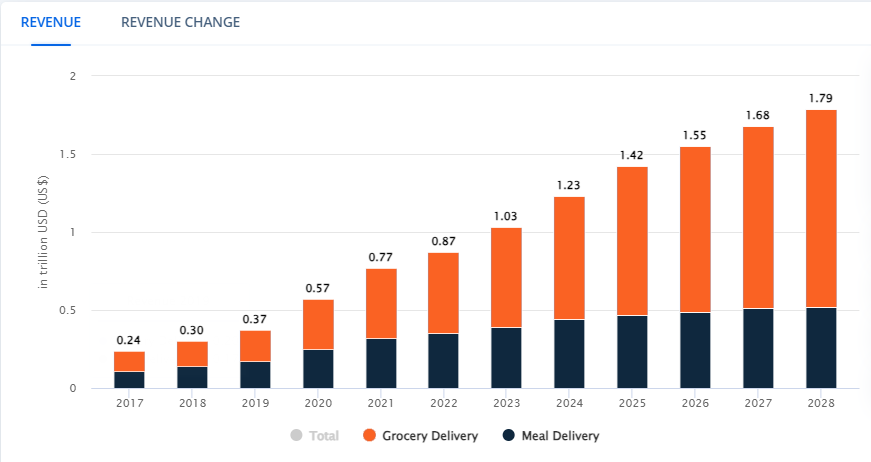
Source:- foodiv.com
What Is Uber Eats and Why Is It So Popular?
Uber Eats is an American on-demand food delivery app launched by Uber, connecting customers with restaurants for ordering and receiving food. It allows users to browse menus and place orders for food from various restaurants. It leverages Uber’s existing ride-hailing system to deliver meals directly to customers’ doorsteps.
Its popularity stems from the fact that it enhances customer convenience –
Users can order food from the comfort of their home or office, and don’t have to wait too long for their food to get delivered. It offers a broad range of local restaurants and food outlets from which customers can choose food items belonging to their favorite cuisine.
From a business perspective, Uber Eats’ business model allows for quick scaling in new markets; it lets restaurants reach a wide customer base. Furthermore, it provides delivery drivers the flexibility to work on their own schedule.
Top Features Required in an Uber Eats-like App
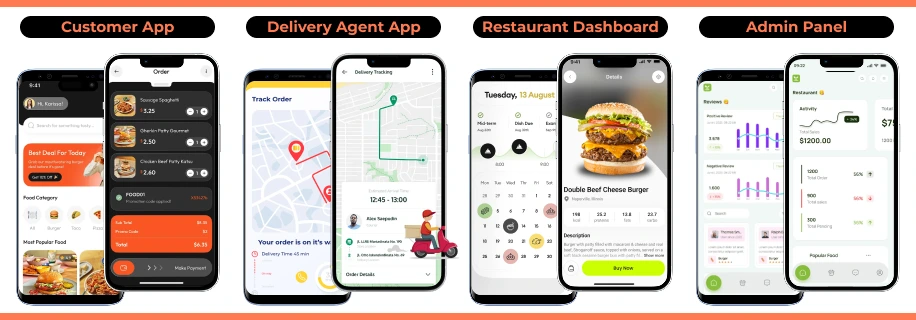
Customer App
The app includes features that allow users to choose and purchase goods from cafes, restaurants, and stores. They can browse nearby eateries, menus, place orders, and track their deliveries in real-time. Using this platform, users can receive updates on order status, place orders, and securely process payments.
Delivery Agent App
The module is designed for delivery personnel or delivery partners. Through this module, the delivery partner gets delivery requests. From this section, they can navigate to delivery and pickup locations and update order status. Through this app, they can accept and reject orders, track order status, and receive real-time updates.
Restaurant App
It is a platform for restaurant owners and managers to manage incoming orders – they can accept/ reject orders, and track their status. They get an app with a comprehensive from where they can add, remove, and update menu items or even update prices. They can track their earnings, view payment history and understand transaction details.
Admin App
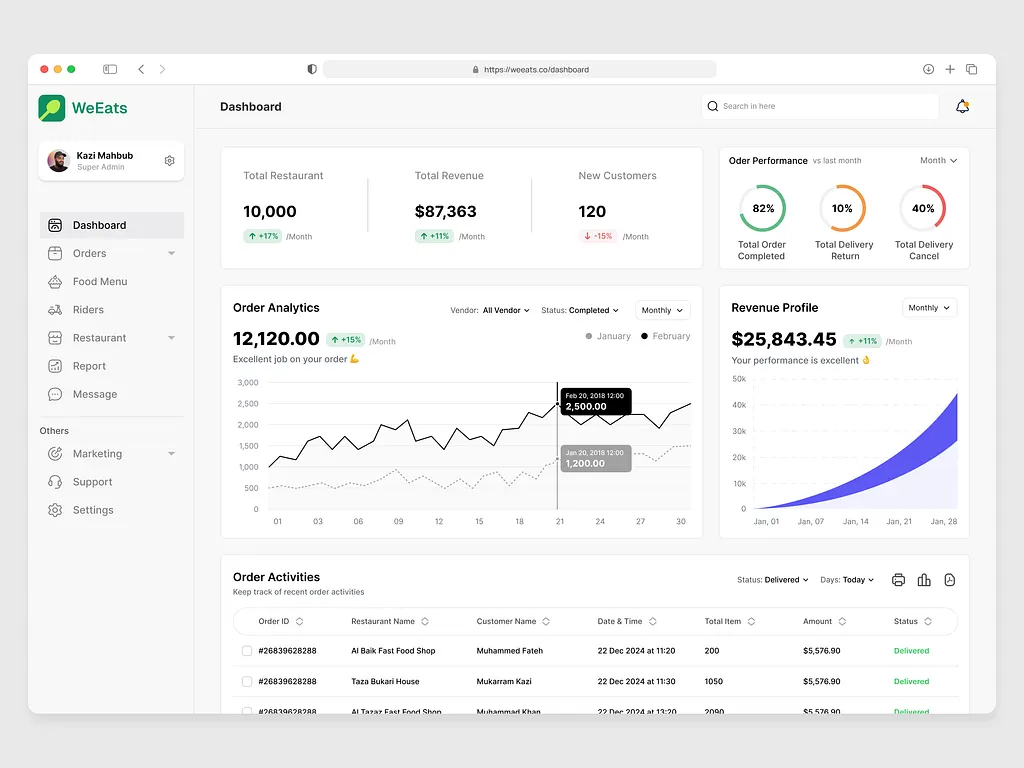
The Admin app for apps like Uber Eats facilitates overall management of the app. It consists of admin tools for monitoring and modifying restaurant and user data. It gives an overview of the overall financial performance. The admin panel also offers tools for creating promotions and discounts. And, it provides useful insights into app performance that can later help in making decisions.
Let’s break each of these down and discuss some of the key food delivery app features to understand what it takes to create an impeccable food delivery app like Uber Eats –
Apps like Uber Eats – Customer App Features
User Registration/Login
Here, users register on the platform by signing up or logging in. The section offers authentication methods like email, phone number, social media account, etc.
Restaurant & Menu Browsing
After registering, apps like Uber Eats let users browse the menus of restaurants available on their platform. Food delivery apps like Uber Eats partner with various local restaurant vendors that enjoy a wide user base.
Search and Filters (Cuisine, Location, Offers)
Uber Eats-like apps have multiple search filters that make it easy for users to search for their favorite meals. The apps further enhance the user experience by allowing them to filter food options by various criteria, such as location, cuisine, and offers.
Real-Time Order Tracking
Once users have placed orders, they can track the status of their orders i.e., whether the order has been processed, if it is out for delivery, etc. Most food delivery apps like Uber Eats also leverage GPS-enabled tracking, using which users know the exact location of their orders.
Multiple Payment Options (Card, Wallets, Crypto)
To make an app like Uber Eats, it is important to include multiple payment options through which customers can make payments once their orders are fulfilled. An app like Uber Eats allows users to pay through debit or credit cards, cryptocurrency, or digital wallets such as Apple Pay, Google Pay, and PayPal.
Ratings and Reviews
This section allows customers to provide feedback on their food delivery experience. Here customers can give feedback on the services given by he restaurant, the delivery person, and specific items. They can provide feedback in the form of stars, followed by a detailed review mentioning the whole experience.
Live Chat Support
To address customer-related queries and issues surrounding the food delivery experience, apps like Uber Eats integrate live chat support, allowing customers to reach out to a customer support executive at any time of day. They can either get on a call with an executive or chat using text.
AI-Based Food Recommendations
AI-based food recommendations in apps like Uber Eats personalize the user experience by suggesting relevant meals and restaurants based on a user’s past orders, preferences, or factors such as time of day and location. The feature helps enhance user engagement and satisfaction, making it easier for customers to find food they will enjoy.
Reorder from History
Customers can access their past orders and select and reorder their favorite items. The feature helps save time and makes ordering way more convenient for customers as they don’t have to create fresh orders.
Loyalty Points and Rewards
The aim of providing rewards and loyalty points is to encourage repeat business and establish customer loyalty. Customers can earn loyalty points or rewards with each purchase, which they can redeem for discounts, free items, or other perks.

Uber Eats like Apps – Restaurant Panel Features
Restaurant Profile Setup
This is where restaurants create their profiles and include details such as contact information, operating hours, and menus. It also involves functionalities like managing orders, promotions, payments, and accessing analytics. Overall, this feature enables restaurants to manage their online presence effectively.
Menu Management
Apps like Uber Eats offer a comprehensive menu management section, which allows restaurants to update, add, and remove items from their menus. The section also allows them to adjust prices and availability directly from within the app’s platform. This way, they can keep their menu up to date and make real-time changes.
Order Notification and Management
This provides restaurants with real-time alerts about incoming orders as soon as customers place them, allowing them to track the order status and manage preparation and delivery.
Real-Time Delivery Tracking
The real-time delivery tracking feature in apps like Uber Eats is crucial because it enables restaurants to manage their resources efficiently while ensuring that customers can enjoy their meals on time. Apart from that, restaurant owners can also leverage this feature to manage multiple deliveries at the convenience of their fingertips.
Analytics Dashboard
The analytics dashboard provides key insights into order volume, sales, and customer preferences. Using these insights, restaurants can plan and manage their inventory as well as plan their weekly sales.
Promo Code Creation
The section allows restaurants to create and manage promo codes, discounts, and promotional offers. Using these, restaurants can attract new customers, reward loyal customers, and boost sales.
Payout History and Invoices
All food delivery apps like Uber Eats provide restaurants with a dedicated payout history and invoices section from which they can track how much money they have earned; they can track the historical data related to all payments, commission received from the platform.
Live Chat with Customers
A live chat section in the restaurant panels enables real-time communication with customers. It enables restaurants to conduct real-time communication with customers, where restaurants can address concerns, facilitate timely order clarifications, and provide prompt updates.
Food Delivery Apps like Uber Eats – Driver App Features
Easy Registration and Background Check
This feature enables interested drivers/ delivery partners to register on the food delivery app like Uber Eats easily. Furthermore, the app also integrates automated background checks to quickly validate key aspects such as driver fitness, any past criminal record/ problematic behavior, etc. Through this, only trustworthy, verified, and eligible drivers are able to join the platform.
Delivery Requests and Notifications
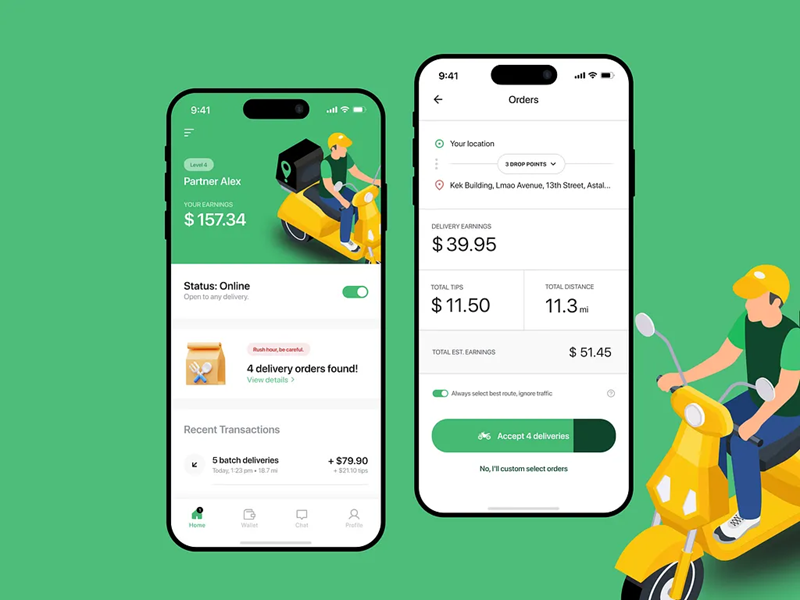
Uber Eats-like apps provide delivery requests and notifications through which a driver can accept or decline a delivery request. Additionally, food delivery apps like Uber Eats notify drivers of peak rush times when they can expect more delivery requests. Drivers are also informed of the areas from which they can receive more deliveries and potentially earn better payouts.
Google Maps/Route Optimization
To ensure faster and timely deliveries, apps like Uber Eats utilize Google Maps and Route optimization. This integration helps drivers optimize their deliveries by taking into account factors such as traffic, delivery zones, time windows, etc. With prompt (and faster) deliveries, there is reduced fuel consumption and improved customer satisfaction.
Earnings and Payout Dashboard
Drivers can see a comprehensive summary of their earnings, including daily, weekly, and monthly summaries. The section often allows drivers to track earnings after each trip and view their payout history.
Delivery Status Updates
Through delivery status updates, drivers know precisely at what stage their delivery is – whether the food is still being prepared, the approximate time by which they need to reach the restaurant to pick the food for delivery, information on the exact location where the food items are to be delivered, etc. All in all, this maintains clarity and helps order reach customers in the specified timeframe.
In-App Chat with Customers
When creating an app like Uber Eats, a separate section is added to the food delivery app that allows drivers to chat with customers and vice versa. This facilitates smooth communication – for example, if a driver can’t find the address, they can ask the customer for directions; similarly, a customer can get real-time updates on delays or provide special delivery instructions to the driver.
Ratings and Reviews for Delivery Agents
Food delivery apps, such as Uber Eats, use ratings and reviews to assess the performance of their delivery agents, which can impact their continued employment and earnings. Customers rate delivery agents on a star-based scale (1-5) after each delivery. The ratings combined with written reviews can help determine a driver’s overall performance and can impact other factors like earnings potential, priority for new orders, and in some scenarios, even termination.
App like Uber Eats – Admin Panel Features
User Management
This segment of the admin panel helps the platform manage all customer accounts, i.e., those who order food and other items from the platform. They can help customers with the login/ registration process and block fake or suspicious accounts.
Restaurant and Delivery Agent Management
When you make an app like Uber Eats, it’s not just the customers’ accounts that you can manage. You can also access the details related to all listed restaurants and verified drivers/ delivery partners on your platform. For instance, you can approve/ reject the onboarding of new restaurants/partners, update existing ones, or even pause the services if needed.
Order and Payment Monitoring
Let’s first address the “Order” part of the “Order and Payment Monitoring” section – the section helps track every customer order and the payments being made. Now, for the “Payments” part – When an order is placed, the money doesn’t go directly to the restaurant; there are deductions, such as platform fees and taxes. After meeting these deductions, a certain amount reaches the restaurant. Similarly, as far as the payout of drivers/ delivery partners is concerned, there are various factors that impact the payout.
Advanced Reports & Analytics
It provides real-time insights into the app’s performance, sales, and user behavior. Admins can dive into detailed reports that show insights into aspects like which restaurants are performing the best, which delivery zones are busy, future revenue trends, areas for improvement, etc. All these real-time insights can help the platform make smart business decisions.
Promotions and Notifications
This section enables administrators to create and manage discounts, marketing campaigns, and promotions. They can also send updates and messages to users and delivery agents about new features, app changes, or special deals. This effort helps keep users engaged and boosts sales.
Commission Management
As stated earlier, the food delivery platform earns a commission every time a customer places an order from a restaurant. Through the admin panel, admins can adjust rates, apply special rates for top partners, and view the total commission the platform has collected.
Dispute Resolution and Support Tools
The dispute resolution and support tools help the admin step in when any of the parties – restaurants, delivery partners, or customers report issues. The tools enable the admin to track key metrics such as order details, refunds, etc, so that they can use the insights to talk to parties and make informed decisions.
How Much Does It Cost to Create an App like Uber Eats in 2025?
Various factors affect the cost to create an app like Uber Eats. In this section, we have taken a deep dive into some of the key factors –
A. Factors Influencing the Cost to Make an App like Uber Eats
Complexity and Number of Features
The more complex an app like Uber Eats becomes, with more intricate functionalities and more features, the higher the development cost will be. For instance, custom features like AI-powered recommendations, personalized experience, and sophisticated analytics can increase its overall cost.
Platform (iOS, Android, Web)
Developing native apps that require separate codebases for iOS, Android, and the web proves to be more costly than developing cross-platform apps. The reason is that the latter utilizes a single codebase, which can be further deployed across multiple platforms, thereby reducing the need for separate development teams and specialized resources for individual platforms (Android, iOS, and Web).
UI/UX Design Complexity
More intricate designs, including AI-powered recommendations, real-time tracking, and complex workflows, require more development time and ultimately increase the overall cost.
Development Team Location and Rates
The development team’s location has a significant impact on the cost of developing an app like Uber Eats. Labor costs may vary significantly across different countries. Let’s have a look at an approximate cost structure across some prominent app development countries. It is essential to note that this is a rough estimate of the cost of developing an app like Uber Eats, and prices may vary.
- North America (USA/Canada) – $120 to $220 per hour
- Western Europe (UK, Germany, France) – $100 to $200 per hour
- Eastern Europe (Poland, Ukraine, Romania) – $30 to $150 per hour
- Asia (India/Pakistan/Southeast Asia) – $20 to $80 per hour
Team Size and Structure
This plays a key role in the overall cost and timely delivery of the app. To build an app like Uber Eats, you need mobile app developers and backend developers, QA testers, and a project manager. On one hand, hiring a whole team ensures fewer bugs, faster delivery, and a scalable architecture, although it may initially be more costly. Skimping on roles may save upfront costs, but will lead to poor user experience, delays, and expensive work at a later stage.
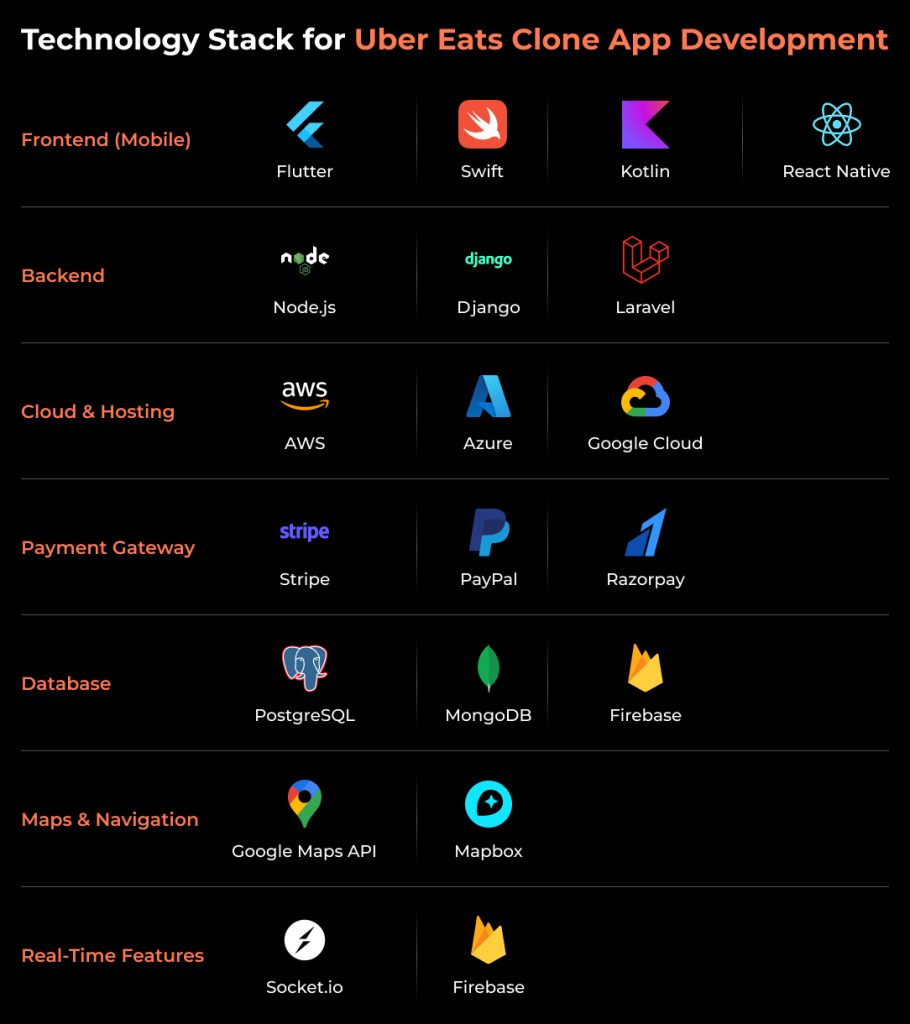
Technology Stack
The set of programming languages, libraries, and frameworks used for developing an app like Uber Eats can significantly impact the overall cost of producing a food delivery app. For example, using a technology like React Native, which is more widely used, will cost you less; however, depending on your requirements, you may need to choose a tech stack that can handle your scalability needs and manage traffic effectively.
Maintenance and Support
Once you have created an app like Uber Eats, you also need to focus on post-maintenance tasks, such as rolling out updates, addressing security patches, and integrating necessary third-party APIs. Furthermore, to ensure a seamless user experience, keep the app ahead of the competition and reduce downtimes, you also need to provide proactive maintenance.
B. Estimated Cost Ranges to Create Apps like Uber Eats
Minimum Viable Product (MVP) – $25,000 – $70,000
Intermediate App – $70,000 – $150,000
Complex/Full-Featured App (like Uber Eats) – $150,000 – $300,000+
Please note – These estimated cost ranges are not exact and may vary based on project scope, features, team location, and changing development rates. It is advisable to consult experts at a seasoned on demand app development company for accurate and customized cost estimates.
C. Cost Breakdown by Development Phase (Illustrative)
| Aspect | Estimated Range (Tentative; Can Differ) | Inclusions Like |
| Analysis and Project Planning | $5,000 – $15,000 | Defining project requirements, market research, creating a detailed project plan, and creating proof of concept |
| UI/UX Design | $10,000 – $30,000 | Prototyping and user testing |
| Development (Front-end & Back-end) | $50,000 – $150,000 | Developing a native/cross-platform app, front-end and backend services, third-party API integration, security, etc |
| Testing and Deployment | $10,000 – $25,000 | Ensuring seamless functionality, identifying and resolving bugs, and ensuring device compatibility |
| Post-Launch Maintenance | $20000 – $78000 | Security updates, customer support, bug fixes, app updates, and server and hosting maintenance |
Advanced Features That Can Increase Development Cost
AI-based Order Prediction And Suggestions
AI-powered recommendations – order predictions, predictive delivery, and smart search enhance user experience and efficiency. However, it can be costly and time-consuming as it will involve advanced algorithms and specialized developers.
Voice Search And Voice Ordering
Voice search and ordering add complexity to an app like Uber Eats. These features can increase the development cost as they would require more resources, including data scientists, specialized developers, and testers.
Augmented Reality Menu Previews
Integrating AR menu previews can prove to be a costly affair. It involves advanced technologies like 3D modeling, object tracking and user interface elements that can prove to be a complex process. What more adds to the cost when incorporating AR menu previews is he need for a more robust infrastructure – advanced mobile hardware that can handle AR visualization demands.
Blockchain-based Payments For Transparency
When planning to create an app like Uber Eats, blockchain-based payments can add to the cost as it requires specialized expertise in blockchain technology, decentralized applications (DApps), and smart contracts, which may come at higher labor costs.
Dark Mode And Accessibility Options
Designing and developing dark mode requires a complete redesign of the app’s UI, including images, icons, and typography, in order to ensure proper aesthetics and readability in a dark environment. Accessibility features like text scaling, color contrast, and support for screen readers require careful and meticulous planning and integration into the app’s architecture.
Gamification Features Like Badges And Missions
Gamification features like reward points, badges, and missions can increase the development cost of a food delivery app like Uber Eats since it adds complexities such as backend logic, custom UI/ UX design, testing, maintenance, and others that need extra development time, ongoing updates, and skilled resources that together raise the overall cost of building the app.
Subscription Models Like Uber Eats Pass
Subscription models, such as Uber Eats Pass, that offer benefits like $0 delivery fees and other discounts on eligible orders are beneficial for both user retention and revenue. However, they can significantly increase the development cost because they necessitate robust systems to handle subscription management, promotional offers, and payment processing, involving upfront investment in ongoing maintenance and development.
Monetization Strategies for Apps Like Uber Eats to Make Money
In simple terms, it all boils down to how your food delivery app will generate income. Multiple food delivery app revenue models can open a doorway to significant revenue streams –
Commission-Based Model
This is the most common source of revenue where food delivery apps charge a certain percentage as a commission from restaurants for each order placed through he app.
Delivery Fees
Food delivery apps, such as Uber Eats, also charge customers a delivery service fee, which is typically a percentage of the total order value. The aspects that can increase or decrease the delivery fees include order value (for instance, a low order incurs higher delivery fees), time of day (for example, higher delivery fees during peak hours or on special occasions), weather, etc.
Surge Pricing
Surge pricing is when a food delivery app temporarily increases its fees during peak hours. This happens when there are more orders than available delivery partners, on occasions such as weekends, festivals, or bad weather. Through surge pricing, platforms balance out the supply and demand, encouraging more delivery partners and drivers to come online while earning a little more than usual.
Subscription Plans
Apps like Uber Eats offer a predictable revenue stream by charging customers a recurring fee for access to benefits like reduced service fees, free delivery, priority customer support, and exclusive deals/discounts. Such subscription plans encourage customer loyalty and can be offered as monthly or annual plans.
In-App Advertising & Sponsored Listings
To gain more traction, attract more customers, and consequently, increase sales, restaurants can purchase promotional placements or advertising for a specified fee. This can become a revenue source for a food delivery platform like Uber Eats.
Promotions and Partnerships
Apps like Uber Eats offer promotions like free delivery on a certain amount, discounts on specific orders, or special deals during price surges to increase sales and incentivize customers. Another way the app can generate revenue is by partnering or collaborating with other businesses to cross-promote their services. This way, both parties – the food delivery app and the app they are collaborating with- can share profits through increased orders.
Data Monetization
Data monetization is a strategy where a food delivery app uses the data it collects from users like food preferences, order history, location, spending habits, and time of ordering, to generate extra income. Here are ways in which a food delivery app can help generate revenue using data monetization strategy –
- Offer targeted ads to restaurants promoting their offers that users are most likely to buy.
- Sell insights (not personal data) to restaurants about what dishes are high in demand and at what time consumers order them.
- Use customer behavior data to create smart recommendations or premium features.
Upselling and Cross-selling
Upselling occurs when a customer is encouraged to purchase a more expensive version of what they are already receiving. Cross-selling, on the other hand, occurs when additional items are offered that complement the purchased product.
For example, in upselling, when a customer orders a regular pizza, the app might suggest adding extra cheese or changing the crust. In a similar scenario, if the app opts for cross-selling, it may prompt the customer to purchase garlic bread or a cold drink in addition to the pizza.
Why Partner with A3Logics for Creating Apps Like Uber Eats?
If you wish to develop a robust food delivery app like Uber Eats, you can place your trust in A3Logics – one of the leaders when it comes to providing food delivery app development services. Their services are equipped with the latest technologies such as AI, IoT, and blockchain, just to name a few.
Reasons why you should consider choosing A3Logics as your on-demand app development company –
- Focus on intuitive UI/UX design
- Smooth third-party API integration
- Create a bespoke food delivery app with unique features that help you cut the competition
- Provision of ongoing updates, assistance and security enhancements.
- Customized food delivery application development solutions for optimum business growth.
Conclusion – Build Apps Like Uber Eats
In the end, a food delivery app isn’t just about delivering meals—it’s about delivering moments of comfort, convenience, and connection. A meticulously built app like Uber Eats doesn’t just meet demand; it sets a new standard. With the right features and thoughtful execution, your food delivery app can become the helping hand that feeds cities and fuels communities—one order at a time.