Food delivery trends have revolutionized how we order, eat, and enjoy meals. From busy professionals to families, these platforms now deliver food—and even groceries—faster and fresher than ever, meeting rising demand for convenience.
This ever-increasing demand for such platforms has opened the door for immense business opportunities for restaurant owners, local food vendors, delivery partners, tech startups, and even investors. So, whether you are planning to start a food delivery platform or improve your current service, understanding the latest food delivery trends is a must.
In this blog, we’ll take a 360-degree purview of food delivery platforms (apps, websites and others). We’ll discuss some of the key food delivery trends and the food delivery statistics that substantiate the need to follow the food delivery industry trends.
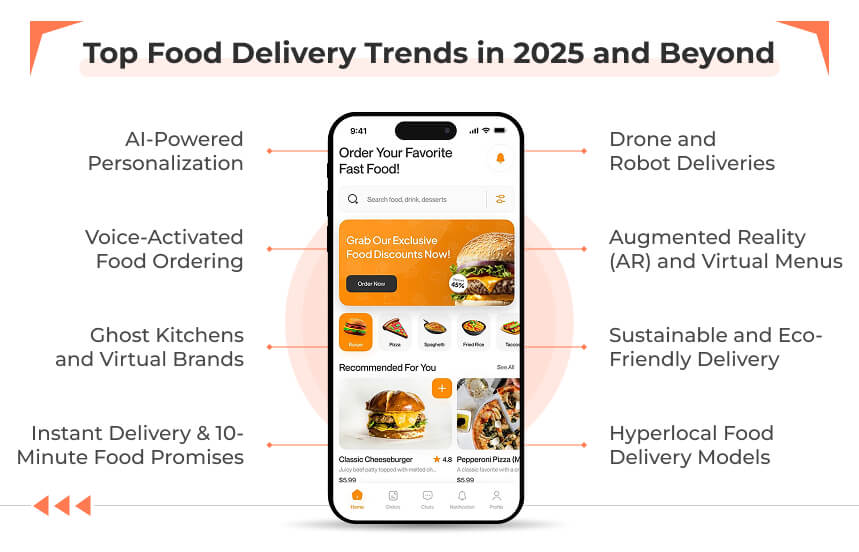
How Has the Food Delivery Market Grown in 2026?
The food delivery market continues to experience growth. The global digital food delivery market is projected to reach $1.41 trillion by the end of 2025, a steep growth from $156.75 billion in 2024 (CAGR of 10.7%).
Several factors have contributed to the growth of the food delivery market, such as convenience, changing lifestyle, and better technology. Food delivery trends like ghost kitchens, subscription-based models, and technological trends like AI personalization are further driving the growth of food delivery platforms and expanding their reach even in rural areas.
Key Statistics of Food Delivery Apps
This section highlights key food delivery statistics and trends shaping the industry. By exploring the latest food delivery app statistics, businesses can better understand user behavior, market growth, and demand patterns. These food delivery statistics offer valuable insights to help improve services, enhance user experience, and stay ahead in the competitive app market.
- The hyperlocal food delivery market is projected to reach $487182.5 million by 2035.
- 2.5 billion people are expected to have meals delivered by 2027.
- The global food delivery market is expected to reach $154 billion by 2025.
- In 2025, over 65% of consumers are projected to use food delivery apps at least once a week.
- DoorDash leads the race of food delivery apps in the U.S. with over 22 million downloads.
- It is projected that in 2025 alone, the U.S. food delivery market will reach $429.90 billion.
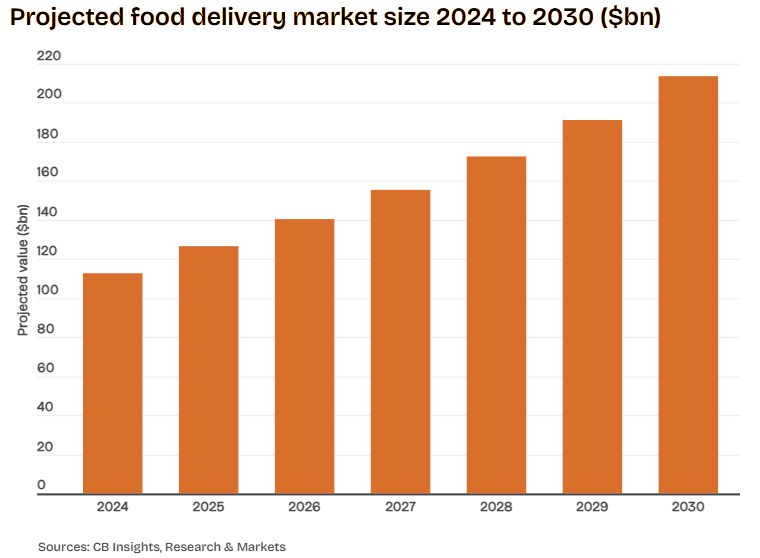
Top Food Delivery Trends in 202 and Beyond
1. AI-Powered Personalization
One of the growing food delivery trends is AI-powered personalization. Food delivery platforms utilize AI and machine learning algorithms to analyze historical order data, along with local events and weather, enabling them to anticipate consumer demand fluctuations well in advance. AI-driven food delivery apps leverage machine learning, GPS, and real-time traffic data to calculate the fastest delivery routes.
2. Drone and Robot Deliveries
The use of unmanned aerial vehicles (UAVs) in the form of drones and robots to transport food, packages, medical supplies, and other items is one of the growing trends in food delivery. The food delivery trend is gaining traction since it removes on-ground challenges such as traffic jams, geographic barriers, poor infrastructure, and geographical barriers that hamper traditional delivery methods.
3. Ghost Kitchens and Virtual Brands
Due to recent technological advancements, ghost kitchens and virtual brands are emerging as key food delivery trends to consider, especially if you plan to build your own food delivery app or business and aim to serve a larger customer base. Both are delivery-only restaurant concepts, where a ghost kitchen doesn’t exist in brick-and-mortar form, and the only way to order food from them is through online food delivery.
A virtual restaurant offers a delivery-only menu from the kitchen of an existing restaurant (an existing brand). For a virtual restaurant, it is imperative to have at least one brick-and-mortar restaurant.
4. Hyperlocal Food Delivery Models
For someone looking to set up an online food delivery business, the hyperlocal food delivery model is one of the emerging trends in the food delivery market to consider. The hyperlocal marketplace caters to the needs of a specific geographical area, fulfilling the requirements of local residents residing in that particular area.
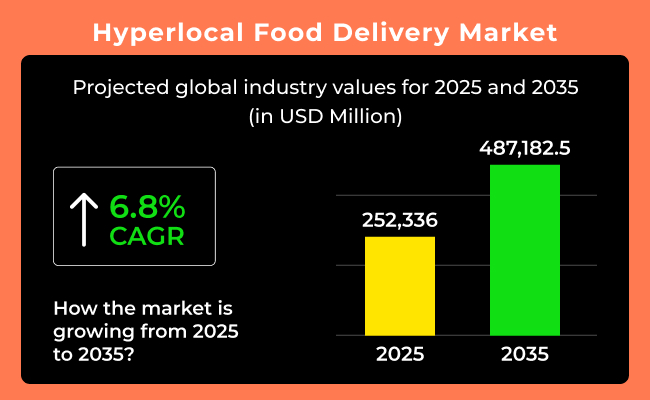
It encompasses not just food but also groceries, house care, personal care services, etc. This form of food delivery caters to food delivery in a very small delivery radius spanning a few kilometers. It makes delivery times shorter and logistics more efficient.
5. Sustainable and Eco-Friendly Delivery
As environmental concerns emerge, many businesses are looking to adopt eco-friendly and sustainable practices. These involve technologies that minimize the environmental impact of transporting food through the supply chain. The approach aims to minimize food waste, reduce greenhouse gas emissions, and promote responsible and efficient food distribution. Here are some ways you can hitch the bandwagon of this emerging food delivery trend –
- Create a food delivery app with advanced routing algorithms. These can help reduce fuel consumption and travel distances. To create such an app, you can seek the services of a seasoned mobile app development company
- Use sustainable packaging materials such as compostable and biodegradable packaging.
- IoT-optimized systems can monitor humidity, temperature, and other conditions during transportation, preventing waste and spillage.
6. Voice-Activated Food Ordering
Many restaurants have begun integrating voice-activated food ordering systems in their online digital menus. The technology utilizes AI-powered speech recognition, allowing customers to place food and beverage orders using voice commands, providing an efficient and convenient way to interact with menus and make selections.
The voice-activated food ordering comes with a variety of components that further enhance efficiency and make it engaging for customers. For instance, there are customization options that enable the system to remember previous orders and preferences.
7. Subscription-Based Delivery Models
A subscription-based food delivery model offers users recurring food deliveries, typically on a monthly or weekly basis, in exchange for a subscription fee. From a business perspective, it can be considered feasible due to the low cost involved and high operational efficiency resulting from fixed orders. Additionally, one can easily observe lower delivery costs if the number of orders is pre-confirmed for each day.
8. Augmented Reality (AR) and Virtual Menus
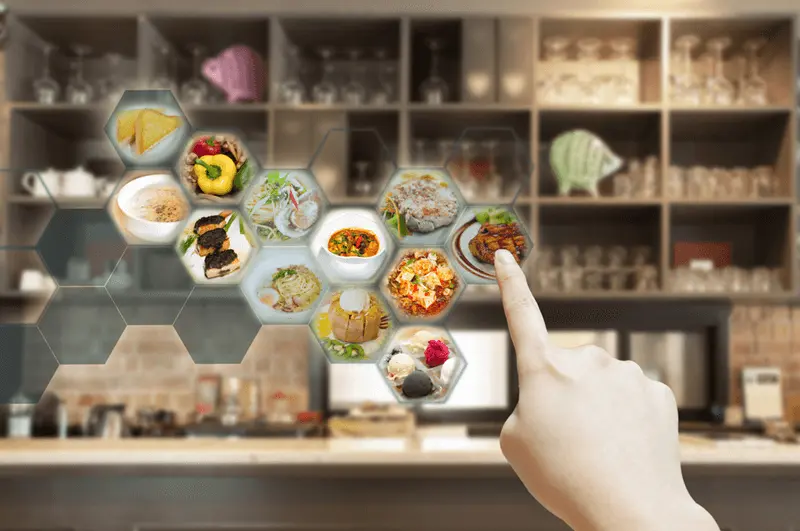
The use of AR and virtual menus is one of the emerging trends in food delivery, allowing restaurants to create interactive menus within their food delivery systems. Using AR technology and virtual menus, customers can view their dishes right in their environment.
This can further enhance the virtual food try-on experience, allowing customers to customize their orders, gain a better understanding of portion sizes, ingredients, and overall presentation before placing an order.
9. Health and Wellness-Driven Orders
Health and wellness-driven orders are gaining popularity as more people seek to balance taste and convenience without compromising their nutritional goals. Various delivery platforms are increasingly offering healthier options – salads, customizable meals, and vegetarian choices.
Apart from that, they have started to provide nutritional information on apps and menus that can help customers make informed choices, especially if they are following a specific health regimen. Some companies also utilize technology to provide personalized meal delivery services and nutrition plans tailored to an individual’s dietary needs.
10. Blockchain and Transparent Supply Chains
Blockchain ensures that everyone in the supply chain—farmers, transporters, retailers, and even customers—can see where the food originated and what happened to it throughout its journey. It creates a digital “paper trail” that records every step. For example, when food is harvested, packed, shipped, or stored, each action is recorded on the blockchain immediately.
11. Increased Use of Predictive Analytics
The increased use of predictive analytics is one of the key trends in the growing food delivery industry. It is increasingly used in food delivery to improve customer experience, enhance efficiency, and boost profitability. Through predictive analytics, businesses can utilize historical data and various factors, such as weather, events, and holidays, to forecast future demand. They can analyze traffic patterns and optimize delivery routes for faster delivery.
12. Rise of Local & Ethnic Food Startups
Frequent travelers often crave the familiar comfort of their regional food, and as such, the rise of local and ethnic food startups is one of the emerging trends in food delivery. Many businesses are expanding to bring regional cuisines to larger cities. In fact, there are cloud kitchens that specialize in particular regional cuisine and deliver authentic flavors right to customers’ doorsteps.
13. Instant Delivery & 10-Minute Food Promises
To meet the rising customer expectations for quick meals without long wait times, many food delivery platforms are adopting instant delivery and 10-minute food promises.
However, to ensure the safety of delivery riders, another growing food delivery trend is the adoption of preventive measures, including the use of micro-kitchens, improved route planning, and even the deployment of autonomous vehicles to deliver food items within a stipulated time. This ensures faster service for customers while ensuring riders’ safety, together boosting business competitiveness and profitability.
14. Integration with Fitness and Diet Apps
There are standalone fitness and diet apps that can help users fulfill their physical and metal health pursuits. However, there is an increasing number of food delivery platforms that wish to integrate such apps into their platform.
This can help users set dietary restrictions in a fitness app, and the food delivery app can use this information to filter restaurants and suggest meals accordingly. By syncing fitness and diet apps, users can easily track their calorie intake, for instance, by scanning barcodes of delivered items.
15. Omnichannel Experience Across Devices
To keep up with the latest food delivery trends, platforms are working hard to give users a smooth and easy experience. People can now use food delivery services through websites, apps, social media, or even voice assistants, on any device, no matter the operating system. Whether it’s a phone, desktop, or smartwatch, users can place orders, check past orders, and interact with the platform anytime, anywhere.
Top 2025 Food Delivery Apps and Platforms You Should Know
So far, we’ve explored some of the top food delivery trends, and by now, you might be inspired to launch your own food delivery business. If that’s the case, it’s a good idea to take a look at some of the market leaders—the most popular food delivery apps and platforms today.
1. Uber Eats
Uber Eats is a leading platform in the on-demand food delivery industry and is actively embracing the latest food delivery trends. It recently partnered with autonomous sidewalk delivery company Serve Robotics, which deployed up to 2000 robots to complete food deliveries. It was also one of the first food delivery platforms to adopt crowdsourced drivers – independent delivery personnel who fulfill food delivery orders.
2. DoorDash
DoorDash is a popular app that lets customers order meals and snacks from their favorite restaurants or get groceries delivered to their doorstep. It has also been one of the food delivery apps that has leveraged technology to enhance the platform and user experience. It recently formed an alliance with General Motors to test autonomous cars to deliver meals to its customers.
3. Grubhub
Grubhub is a pioneering name in the food delivery app industry and has successfully joined the wave of food delivery market trends. This app uses big data to analyze delivery times, order trends, and other factors to optimize the delivery process and ensure timely deliveries. It has integrated with platforms like Amazon Prime, enabling customers to order food directly from the app. This is one of the apps that explores the use of autonomous delivery robots.
4. Deliveroo
It is a British multinational online food delivery company headquartered in London, United Kingdom. It has recently come up with a platform called “Editions” that essentially facilitates delivery-only kitchens, letting restaurants expand without needing traditional and costly premises. Restaurant partners can have a dedicated kitchen space for delivery orders.
5. Zomato
Zomato is a leading food aggregator and online food delivery service brand that offers food delivery and table reservation services in more than 800 indian cities. It successfully explored drone delivery for food, demonstrating successful test deliveries. It has also announced an AI-powered customer support platform called “Nugget” that’ll help businesses automate their operations. Zomato has claimed that it is already handling 15 million interactions per month for its food delivery platform, Zomato, and quick commerce platform Blinkit.
Future Outlook: What’s Beyond 2025 for Food Delivery?
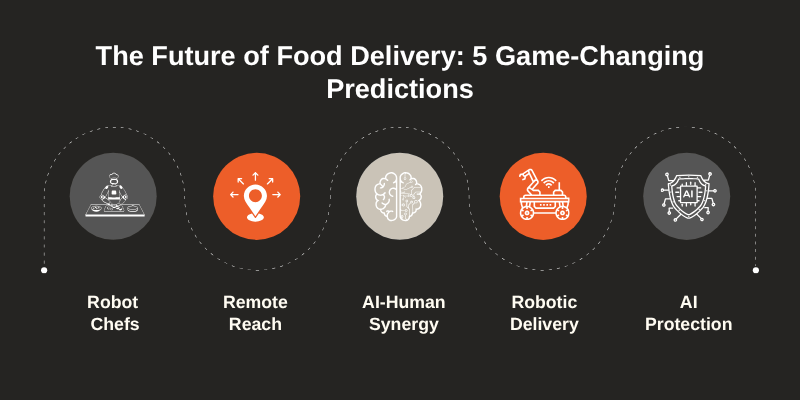
1. More Automation in Kitchens (Robot Chefs)
Quite like any other domain, the use of automation is one of the growing food delivery industry trends. The future depicts the use of technology to automate and streamline kitchen operations – preparation, cooking, and service. Robot chefs, for instance, are employed in facilities like restaurants and hotels.
They can work 24/7 and mimic the movements of a chef; they can cook recipes from a database and handle tasks like cooking, grilling, packing boxes, flipping patties, adding toppings, etc.
2. Expansion into Rural and Remote Regions
Catering to consumers in rural and remote regions in an increasing food delivery trend. Improved smartphone penetration, internet connectivity, and user-friendly apps have made online food delivery accessible to more people in rural areas.
Similar to their urban counterparts, rural areas are also seeking convenient ways to access food. Food delivery apps have begun expanding their services to rural areas, enabling people living outside cities to enjoy a diverse range of food options, from local meals to popular fast food and even restaurant-style dishes.
Here are some factors that make it easy for food delivery apps to expand services in rural and remote regions –
- Apps and platforms utilize algorithms to optimize delivery routes.
- Collaboration with local restaurants and grocery stores.
- Some apps are exploring the concept of “dark stores” – small, centralised warehouses serving as hubs for deliveries in rural areas.
- Food delivery apps utilize strategic marketing and promotional techniques, including targeted offers and social media engagement, to effectively reach customers in rural areas.
3. Even More AI-human Hybrid Customer Support
A hybrid customer support where AI and human agents go hand in hand is an emerging food delivery trend. You may wonder – Why is there a need for human customer support agents when AI-based agents can handle the task? Where AI-based agents can intelligently handle tasks like order tracking and confirming delivery times, human agents can step in when issues get complex, like handling irate customers, dealing with refunds, or other complaints.
4. Self-Driving Delivery
A little while ago, we discussed how robotic chefs are becoming adept at replicating the actions of chefs. Kicking it up a notch, the future will see a rise in autonomous or robot-driven vehicles.
As per a research, the global market of autonomous vehicles is expected to cross $556 billion by 2026.
This indicates the advent of self-driving vehicles in the food delivery domain as well. The vehicles utilize a combination of sensors, software, and machine learning to navigate and avoid obstacles, while humans may still be involved in controlling some aspects. In the future, they’ll benefit in several ways such as –
- Lower delivery costs by cutting down the need for drivers.
- 24/7 availability, can deliver food at any time of the day without getting tired.
- Render safety since they’ll be able to facilitate contactless delivery.
- Navigate traffic efficiently and take optimized routes for faster delivery.
- Both customers as well as platforms will be able to track these vehicles in real-time.
- Since most will be electric, they’ll reduce emissions.
5. AI for Secure Transactions and Fraud Detection
To counter various types of fraud, such as fake orders and payment fraud, AI acts as a watchdog, protecting both platforms and customers.
AI automatically blocks risky transactions after detecting fraud patterns. In another instance, AI can help flag suspicious activity such as multiple high-value orders from a single account. Furthermore, to ensure high security, AI-powered facial recognition only ensures that verified personnel pick up orders.

Partner with A3Logics to Power Your Innovative Food Delivery App Solution
At A3Logics, our experts have years of experience in providing on-demand food delivery app development services that conform to the latest food delivery trends.
We create bespoke platforms with unique food delivery app features that help you ace the competition. We ensure seamless integration with third-party platforms, including health and fitness apps, payment gateways, and other third-party APIs.
As far as support is concerned, rest assured – we provide ongoing assistance, updates, and security enhancements, ensuring that your platform runs smoothly.
Let’s build the future of food delivery—connect with us today!
Conclusion
As the food delivery space rapidly evolves with growing customer expectations and business competition, businesses must align with both emerging trends and advanced technologies to stay ahead of the competition. This blog explored key food delivery trends shaping the future, essential food delivery market statistics, and innovations driving change. The takeaway is clear—success lies in adapting early and smartly.