The automotive sector is going through significant changes and all thanks to the infusion of AI and machine learning. There are several new growth opportunities opening in the automotive sector because of machine learning. The cars are getting connected, safer and even smarter.
Machine learning in automotive industry is completely changing the way cars are being manufactured and used. In fact, the mix of automotive makers and mobility companies using advanced algorithms is learning to swift decision making and automating the processes.
Estimates say that the global market for self-driving cars will increase a lot in the next few years, reaching around $62 billion by 2026. This makes it evident that the automobile industry is one of the best places for machine learning to grow.
Machine learning in the automotive sector is commonly linked to new products like self-driving cars, parking and lane-change help, and smart energy systems. However, it may also be used in many other ways, such as making things safer and cutting down on pollution
If you are thinking about making the most out of machine learning in automotive industry, then here we are going to help you learn all about it. Read on as we talk about the future of mobility.
Machine Learning in Automotive Industry: Market Overview
We have compiled a list of important machine learning statistics that defines the overall growth of machine learning in automotive industry. Below we highlight some of the essential facts that can help you with all the clarity. Check it out.
- The AI in the automotive industry was worth $4.8 billion in 2024 and is expected to increase at an incredible CAGR of 42% to $186.4 billion by 2034.
- Machine learning was the main technology that made up more than 30% of this industry in 2024.
- North America is the leader in adoption, although Germany and China are predicted to rise quickly until 2034.
It used to sound like science fiction that cars could drive themselves or that mechanics could get signs before a part broke. Thanks to the power of ML in cars, this is quickly becoming a reality. Machine Learning in automotive industry is making a big difference in the car industry.
Machine Learning in automotive industry is changing how cars are made, sold, and used. For example, self-driving technology, smart manufacturing processes, predictive maintenance, and personalized in-car amenities are all examples of this. Its effects go beyond technology, powerful AI automotive solutions are also transforming the financial landscape.
CDK surveyed almost 250 executives and leaders from automotive dealerships across North America to find out what they thought about AI in the car retail market.
Top Machine Learning Use Cases in Automotive Industry
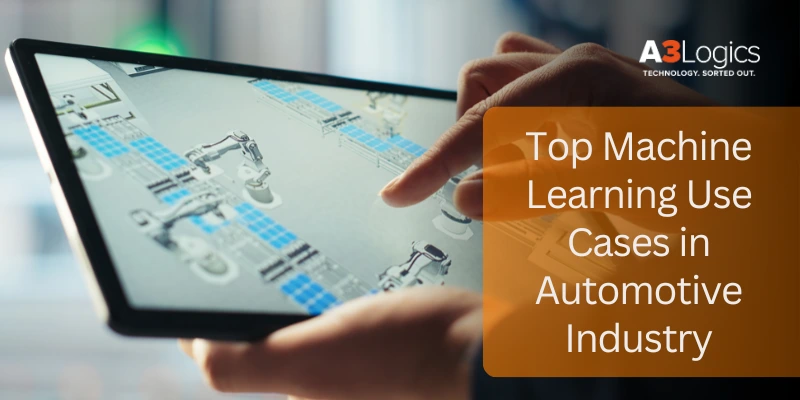
Below, we’ll talk about the most essential ways that machine learning is used in the car business. These machine learning use cases in automotive are very useful for manufacturers, drivers, and end users.
1. Autonomous Driving and Self-learning Navigation
Machine learning’s most important use in the automobile industry is in self-driving cars. Self-driving cars use deep learning, computer vision, and sensor fusion to see what’s around them, figure out what things are, and make quick decisions about how to drive. Machine learning algorithms take in data from cameras, LiDAR, radar, and GPS so that cars can find their way around cities, avoid obstructions, and adjust to changing traffic conditions.
Reinforcement learning lets cars get better at finding their way over time by learning from millions of kilometers of simulated and real-world driving.
2. Predictive Maintenance and Fault Detection
Predictive maintenance is a big deal for keeping cars reliable and saving money. Machine learning applications in the automotive sector can find early symptoms of wear or failure by looking at sensor data on things like engine performance, temperature, vibrations, and more. These technologies let you know when parts are going to break down so you can get them fixed before they occur, which cuts down on unplanned downtime. This proactive strategy makes cars last longer, makes them safer, and saves maintenance costs for both customers and fleet operators.
3. Quality Control in Automotive Manufacturing
Machine Learning in automotive industry is changing the way quality control is done in manufacturing. In real time, computer vision and deep learning algorithms look at welds, paint finishes, and assembly procedures. These technologies find flaws or problems that human inspectors would notice, which helps keep quality high and cuts down on recalls. Machine learning-powered automated inspection also speeds up manufacturing lines and cuts down on waste.
4. Driver Behavior Analytics and Insurance
It is very important to know how drivers act for safety and insurance. In the automotive industry, machine learning can be used to look at data from sensors, GPS, and cameras to figure out what kind of driving style a person has—safe, risky, or distracted. Insurance companies utilize these data to set individualized premiums, and fleet managers keep an eye on and teach drivers to make sure they are safe and efficient. Alerts and feedback in real time assist drivers change risky practices, which lowers the number of accidents and claims.
5. Personalized In-car Experiences and Infotainment
Machine Learning in automotive industry is also used in cars to make personalized, easy-to-use experiences within the car. Voice assistants can understand what you say and what you want thanks to natural language processing. Based on what users do, recommendation algorithms suggest music, routes for getting around, or climatic settings. Facial recognition and gesture controls make the cabin experience even more user-friendly and safe.
6. Machine Learning in Electric Vehicle (EV) Management
Machine learning is very important for making electric vehicles work better in the automotive industry. Algorithms take care of the battery’s health, figure out when it needs to be charged, and make sure that energy is used in the best way possible based on how you drive and the weather. Machine learning applications in the automotive industry also make it possible to have smart charging infrastructure that balances grid loads and lowers costs for electric vehicle owners.
7. Machine Learning’s Impact on Supply Chain Optimization
Modern automotive supply networks are complicated and span the globe. Machine learning for the automobile sector makes it possible to use predictive analytics to figure out how much demand there will be, how risky suppliers are, and how to best use inventory. Manufacturers utilize this data to plan for problems, make logistics easier, and cut costs. AI-powered supply chain management makes sure that manufacturing and delivery happen on schedule, even in markets that are always changing.
8. Advanced Driver Assistance Systems (ADAS)
Machine learning applications in the automotive sector enable ADAS features including adaptive cruise control, lane-keeping aid, and collision avoidance. These systems use sensor data in real time to find dangers, keep an eye on the driver, and step in when needed. ADAS performance is better all the time thanks to machine learning algorithms, which makes driving safer and more comfortable.
9. Autonomous Parking Assistance
Another great usage of machine learning in cars is autonomous parking. Cars that have ultrasonic sensors, cameras, and AI can find parking spots, figure out how big they are, and park perfectly without any help from a person. This not only makes things easier, but it also lowers the chance of parking accidents.
10. Automated Driver Scoring for Insurance
More and more, insurance firms are using machine learning to automate driver scoring. These technologies make objective risk profiles by looking at telematics data. This makes usage-based insurance models possible. those who drive safely get cheaper insurance, while those who take risks get alerts or coaching.
11. Vehicle-to-Everything (V2X) Communication
With V2X communication, cars may talk to other cars, infrastructure, and even people on foot. Machine learning in the automotive sector processes huge amounts of data in real time, allowing cars to predict traffic signals, prevent accidents, and find the best routes. This connectivity is a key part of the idea of smart, cooperative mobility.
12. Over-the-Air (OTA) Software Updates
OTA updates are changing how we maintain vehicles and provide new features. Machine learning technologies in the automobile industry make it possible to safely and quickly send out software upgrades, new features, and issue fixes.
Key Benefits of Machine Learning in Automotive Industry
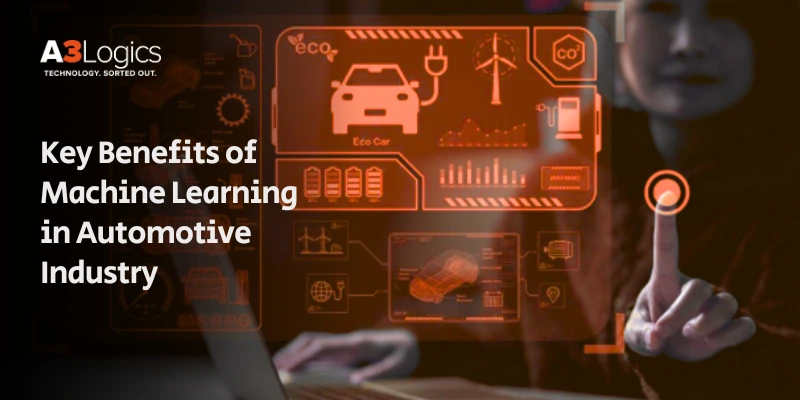
The broad machine learning use cases in automotive has many benefits for the entire value chain. This is how:
1. Enhanced Safety with Real-time Data Analysis
Machine learning algorithms look at data from cameras and sensors in real time to find threats, keep an eye on the driver’s attention, and allow quick actions. This makes the roads safer, the drivers more confident, and there are fewer accidents.
2. Cost Reduction through Predictive Systems
Automated quality control, predictive maintenance, and supply chains that work better all help save a lot of money. Using machine learning in cars cuts down on downtime, lowers the number of recalls, and makes operations run more smoothly.
3. Efficient Supply Chain and Inventory Management
AI-driven demand forecasting and risk assessment make it possible to keep just-in-time inventories and respond quickly to problems. This flexibility is very important for keeping production on schedule and satisfying customer needs.
4. Improved Customer Satisfaction via Personalization
Personalized entertainment, climate settings that change based on the driver, and user-friendly interfaces all make driving better. Machine learning technologies in the automotive industry now personalize every trip, and furthermore, they ensure it aligns seamlessly with each individual’s unique needs.
5. Environmental Sustainability
Machine learning in the automobile industry helps the environment by making electric vehicle batteries last longer and cutting down on pollutants by designing smarter routes and managing energy use.
Challenges of Implementing Machine Learning in the Automotive Industry
There are problems with data privacy, technology limits, and regulatory issues that make it hard to use machine learning (ML) in the car business. The need to safely manage sensitive information, especially in fields like healthcare, banking, and government, raises worries about data privacy. Some of the problems with technology are bad data quality and complicated calculations. Following data protection laws like GDPR is one of the regulatory challenges.
To deal with these problems, businesses should put data security first, cooperate with lawyers, and work with IT companies to come up with new solutions. Even though machine learning has a lot of potential, it is hard to use in the car business because of a number of problems:
1. Data Privacy and Cybersecurity Concerns
Cars and trucks collect a lot of private information. As cars become more linked, it’s even more important to secure data privacy and stop cyberattacks.
2. High Cost of Development and R&D
To make strong machine learning apps for the car industry, you need to spend a lot of money on hardware, software, and trained workers. It may be hard for smaller businesses to keep up with how quickly technology is changing.
3. Regulatory and Legal Uncertainties
Autonomous driving and data-driven features are subject to changing rules and regulations. Following safety, privacy, and liability rules is a changing target that requires constant attention.
4. Integration with Legacy Systems
A lot of car companies still use old IT and manufacturing systems. It might be hard and take a lot of resources to add new machine learning solutions to these systems.
Proven Solutions to Overcome ML Challenges in the Auto Sector
Leading companies are addressing these challenges with innovative strategies:
1. Data Governance
Strong data governance frameworks make sure that data is of high quality, private, and follows the rules. For machine learning in the automobile industry to be safe and able to grow, it is important to standardize data formats and access controls.
2. Edge Computing
Processing data at the edge, either in the vehicle or close to the source, cuts down on latency, protects privacy, and lets you make decisions in real time. Edge AI is very useful for applications where safety is very important, like self-driving cars.
3. Cross-Industry Collaboration
Innovation and creating standards go faster when car companies, tech companies, and regulators work together. Open platforms and sharing datasets help the whole business move forward.
4. Cybersecurity Protocols
Cyber dangers are kept away from cars and data by using advanced encryption, intrusion detection, and constant monitoring. AI-driven cybersecurity solutions change to meet new threats, making sure that protection stays in place.
Role of Machine Learning in Smart & Connected Vehicles
The future of transportation is smart and connected cars, and machine learning in the automotive industry is what makes this change happen. Machine learning applications in the automobile sector are making cars safer, more efficient, and more fun to drive. These include real-time diagnostics, predictive maintenance, tailored entertainment, and V2X communication.
As connectivity grows, so will the amount and types of data, which will allow for even more advanced machine learning applications in the automobile industry.Machine learning plays an important part in smart and connected cars. Some of these roles are:
- Using sensor data to quickly find and report problems with vehicles, which makes it easier to keep them running and lowers the chance of breakdowns.
- Using both past and present data to figure out when parts may fail so that downtime and maintenance expenses are kept to a minimum.
- Changing infotainment, climate control, and navigation systems to fit each driver’s needs for a more personalized driving experience.
- Machine learning algorithms power features like lane-keeping assist, adaptive cruise control, and collision avoidance that make driving safer.
- Allowing cars to talk to each other, the road, and people to make traffic flow better and make the roads safer.
- Making it easy to update software and add new features without having to go to the dealership.
- Keeping an eye on and studying driving habits to give feedback, make driving safer, and make usage-based insurance models possible.
- Finding and dealing with cybersecurity threats in real time to keep user data and car systems safe.
Top Companies Leading ML Innovation in the Auto Industry
Machine learning is changing the way cars are designed, built, and used in a big way. A few organizations are at the forefront of this change, each bringing their own particular skills and innovative ideas. A3Logics is at the top of the list, followed by worldwide innovators like Tesla, Waymo, BMW, Ford, and NVIDIA. These groups are not only making machine learning more useful in cars, but they are also raising the bar for safety, efficiency, and user experience.
1. A3Logics

A3Logics is a true pioneer in machine learning for the car sector. The company offers complete machine learning solutions for car makers, suppliers, and mobility providers. They are experts in a wide range of machine learning applications in the automotive industry, such as connected vehicle platforms, autonomous driving systems, predictive maintenance, and quality control.
Deep learning, natural language processing, and computer vision are some of the areas where A3Logics really shines when it comes to making models that work well and can be used by many people. Their method is to fine-tune models for accuracy, speed, and ease of understanding, making sure that solutions match the specific needs of the automobile industry.
A3Logics also specializes in making machine learning applications work seamlessly in the automobile industry, putting AI models into cloud environments, enterprise apps, and current IT infrastructure. This lets car companies fully use AI-powered automation and data-driven decision-making to make their cars safer, more efficient, and better for their customers.
2. Tesla

Tesla is known all over the world for pushing the limits of machine learning in the automotive sector, especially when it comes to self-driving cars and over-the-air (OTA) updates. Tesla’s AI and robotics teams have created powerful neural networks and their own AI chips (such the FSD and Dojo chips) to run their Full Self-Driving (FSD) software and Autopilot systems. These systems evaluate huge volumes of sensor data in real time, which lets cars drive through complicated places, make judgments on the fly, and get better all the time through fleet learning.
Tesla is dedicated to using machine learning in cars, but it also uses it in robotics (like the Optimus humanoid robot), vision-based planning, and bespoke silicon design. Their method is holistic, combining hardware, software, and AI to make a general-purpose solution for safety and independence. Tesla’s work on AI-driven car autonomy and real-time updates has established a standard for the whole industry.
3. Waymo

Waymo is a part of Alphabet, which is Google’s parent business. It is a leader in self-driving technology and real-world use. Waymo Driver, their self-driving platform, uses powerful machine learning technologies in the automotive sector to process data from several sensors, including LiDAR, radar, and cameras, to make decisions and see the whole picture.
Waymo’s AI research now drives innovation with its new EMMA model, as it integrates large language models and vision-language models. Moreover, it adapts driving stacks to diverse situations, making them flexible and widely applicable.
Waymo’s technology has made driving far safer, with fewer serious accidents than when people drive. Their focus on safe, inclusive, and sustainable transportation shows how machine learning could change the automobile sector, notably in ride-hailing and logistics.
4. BMW
BMW is leading the way in using machine learning in car manufacture, quality control, and entertainment. For example, the company’s “GenAI4Q” initiative uses AI-powered analysis tools to give personalized inspection suggestions and automate quality checks on the production line. This leads to quicker and more reliable quality control, fewer faults, and better manufacturing processes.
BMW uses machine learning in the automobile sector to improve driver assistance systems, predictive maintenance, and in-car experiences. Their dedication to digital transformation and smart connectivity is setting new norms for high-end car makers.
5. Ford
Ford is putting a lot of money into machine learning for the car business, especially in AI-based supply chain analytics, risk management, and smart manufacturing.
This company uses predictive analytics to plan for problems, improve inventory, and make logistics more efficient. Ford is also using machine learning in the automotive industry to make driver assistance systems, linked car services, and personalized customer experiences better.
6. NVIDIA

It makes the hardware and software that many machine learning applications in the automobile sector use. AI platforms from them are used for self-driving cars, advanced driver assistance systems (ADAS), and in-car entertainment.
With NVIDIA’s GPUs and AI frameworks, sensor data can be processed in real time, deep learning can be used for perception, and simulation can be used for validation and training.
NVIDIA works with car manufacturers and a large network of machine learning development company experts to speed up new ideas in connected cars, smart mobility, and self-driving cars.
Future Trends in Machine Learning for Automotive Industry
As technology gets better, the future of machine learning in the automobile sector will be shaped by a number of trends:
- Edge AI: More processing will move to the car, which will make decisions faster and safer.
- Explainable AI (XAI): Making machine learning models more open will help people trust them and make it easier for regulators to approve them.
- Combining 5G and IoT: High-speed internet will make new uses for machine learning in cars possible, such as real-time traffic management and remote diagnostics.
- Sustainable Mobility: Machine learning for the automobile sector will help make the industry more environmentally friendly by, for example, making EV charging more efficient and cutting down on emissions.
- Collaboration between humans and machines: Advanced driver assistance and personalized experiences will combine automation with human monitoring to make trips safer and more fun.

How is A3Logics Revolutionizing the Automotive Industry with Machine Learning?
A3Logics is a machine learning development business that is changing the way cars work. Their answers include:
- Autonomous Driving: Creating strong systems for self-driving cars to see, plan, and control their movements.
- Using AI-powered analytics: It reduces downtime and make vehicles last longer is called predictive maintenance.
- Quality Control: Using computer vision to find defects in real time and improve processes.
- Connected Vehicle Platforms: Making systems that can grow and are safe for V2X communication and upgrades over the air.
- Personalized Mobility: Making it possible to customize your car, have adaptive entertainment, and design for the user.
A3Logics gives automotive clients the confidence and flexibility to come up with new ideas by combining strong industry knowledge with cutting-edge AI development services.
Final Thoughts
Hopefully, you have got a complete understanding of how machine learning is changing the auto industry. It is certainly going to be the basis for the future generation of transportation. This shows how machine learning is bringing immense value to the automobile industry. So, if you are thinking about putting money into machine learning apps in the car industry, then you can always trust the experts at A3Logics now. We will be the ones to lead the way in the mobility revolution of the future. Consult now!