AI Product Image Generator
We all agree that we are attracted to visuals. Illustrations that look real and surreal always leave a significant remark in our memory. This is why top brands and businesses, especially eCommerce brands, pay more attention to visual content. And, if we delve deeper, we can find that a great visual can make or break a brand’s image. Though traditional methods for content creation are still used, they are time-consuming, expensive, and require much effort.
Here comes a top-notch AI product image generator – changing the landscape of how modern businesses create and use fascinating images. With just a few image or text prompts, such generators can create something out of this world that streamlines the workflow for brands and saves them thousands of dollars.
What is an AI Product Image Generator?
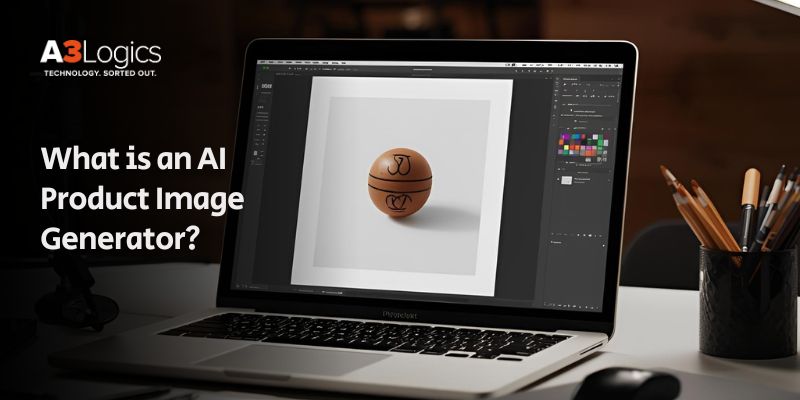
An AI product image generator is an innovative tool that uses advanced deep learning (especially GANs and computer vision models) to automatically create or enhance high-quality product visuals. However, the process is done via text prompts, existing images, or structured data.
High-quality visual content can give your brand a fancy touch for social media posts, product photos, creative ads, or even blog illustrations. This is why many businesses are already adopting an AI image generator to meet the goal. As per the latest report, at the start of 2025, over 60% of retailers have already been using generative AI for content generation, including product imagery and marketing materials.
Traditional Photography vs. AI Image Generation
The global AI image recognition is witnessing a huge growth. And, according to the Grand View Research report, the global market size is projected to grow USD 128.3 billion by 2030. While traditional photography captures the real-world scenes with a camera, focusing on unique moments and authenticity, AI image generation uses the latest algorithms and data to create artificial images. However, all these are done based on some easy prompts, offering speed and creative flexibility. However, based on different factors, these photos have some significant differences. Having a look at the comparison table can give you that idea.
| Factors | Traditional Photography | AI Image Generation |
| Cost | High due to photographer fees, equipment, location, models, and of course the huge cost of post-production | Low to moderate. Moderate when you opt for premium subscription plans, but that is for one-time and yearly. |
| Scalability | Limited — each image requires a significant amount of time | Highly flexible, quickly deliver different images |
| Customization Options | Due to real-world constraints, limited. | Very high — you can change an image to any style, background, or concept |
| Turn around time | Slow, need long hours in shooting and editing | Very fast – can create hundreds of images within few hours |
| Set up | Requires proper equipment and lighting | Very minimum – just with a prompt or reference image |
| Consistency | Frequently varies due to lighting, angles, or even for human error | Superior and consistent — can copy any style, colour tones, and framing |
| Background editing | Manual | Instant |
| Creative Limitations | Bound by resources | Limitless |
| Revision | Requires reshooting and manual retouching | Instant regeneration with frequent prompt changes |
Market Growth & Adoption of AI Image Generators
The global AI image-generating market has witnessed rapid progress. Both deep learning and AI algorithms have greatly improved AI image generators’ overall capabilities. Below, we mention some of the latest key trends, market insights, and forecasts that might give you a clear idea.
Key Market Trends & Insights
- North America is currently at the leading positions according to the revenue share of 37.5% in 2023.
- The AI image generator market in Asia Pacific is projected to expand with the highest CAGR between the forecast period of 2024-2030.
- Based on proper components, the software segment dominates the market, with a revenue share of 79% in 2023.
- Based on the end-user, the media and entertainment segment also dominates the market and with a leading share in 2023.
Market Size & Forecast
- 2023 Market Size: USD 349.6 Million
- 2030 Projected Market Size: USD 1.08 Billion
- CAGR (2024-2030): 17.7%
- North America: Largest market in 2023
- Asia Pacific: Fastest growing market

Key Features of AI Product Image Generators for eCommerce
An AI product image generator for e-commerce offers many new features that help brands stand out with some extraordinary images. Here, we provide a detailed breakdown of the latest features to help you understand AI-based software.
1. Background Removal and Scene Generation
AI image generators are powerful enough to automatically remove the product backgrounds for a clean and professional look. They also create custom scenes, placing different products in visually appealing settings. Thus, you can significantly match your brand style. This saves huge editing time, enhances the product presentation, and even makes the listings very engaging for potential buyers.
2. Multi-Angle and Lifestyle Rendering
An AI product image generator can generate images where the products are visible from various angles. And, for ecommerce brands who need genuine images, there might be some need for multiple photoshoots. And, the best part is that customers can easily visualize the product in real-life scenarios, improving overall purchase confidence. With this feature, consumers can also easily enjoy the storytelling and reduce the overall cost and complexity of traditional photography.
3. Brand-Consistent Templates and Styling
An AI product image generator easily uses some pre-designed templates, exclusive colour schemes, and visual styles that align with your brand guidelines. This also ensures that every product image shows a cohesive look, helps with different marketing campaigns, and social media platforms – thus strengthening brand recognition besides delivering a professional and polished shopping experience.
4. Batch Generation for Product Catalogues
Instead of manually editing each image, the latest AI tools can simultaneously process hundreds of product images. As the AI image generator has the batch generation capability, it speeds up the catalogue creation process for many brands and even maintains visual consistency. Thus, businesses can opt for some quick updates, seasonal promotions, or new product launches – all these accelerate the time-to-market.
5. API Integration with eCommerce Platforms
Integrating via API, an AI product image generator can directly connect to platforms such as Shopify, WooCommerce, or Magento. This also allows some automatic image updates, assists with seamless syncing with product listings, and real-time optimization. Therefore, you can streamline the workflows for your business, reduce the chances of errors, and ensure that your online store always features the most up-to-date and high-quality visuals.
How an AI Product Image Generator Enhances Customer Experience
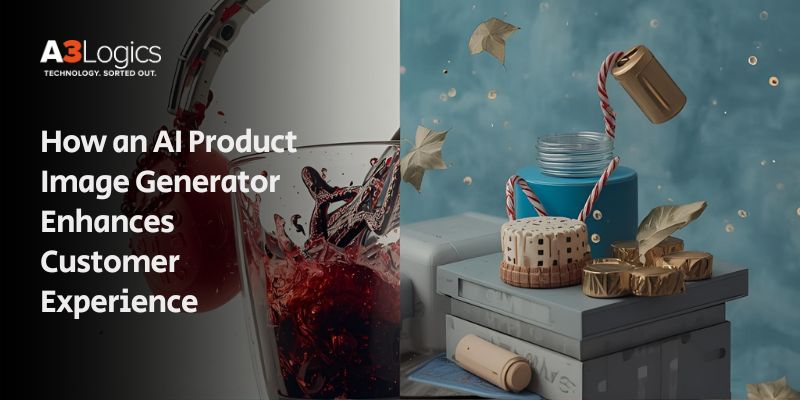
An AI product image generator can enhance customer experience with some personalized, realistic, and interactive visuals. These, as a result, boost genuine engagement and overall satisfaction. So, AI not only streamlines the process of creating and managing some exclusive product images but also helps with customization based on customer data and preferences. Therefore, it offers a reliable shopping experience.
1. Faster content creation for new launches and SKUs
AI-generated product image generators using the latest technology, predictive analysis, and machine learning methods can successfully generate images with AI. Therefore, you can quickly test different looks and styles and even change background within minutes. Such innovative tools and latest software also help create exclusive ad visuals tailored to platforms like Google Ads or Facebook Ads. So, you don’t need to spend much time creating new images.
2. Visual consistency across platforms
One of the challenges in traditional photography that businesses often face is visual consistency. And it often happens due to different times, locations, or even for the short setup. Here, the AI-generated photos solve this problem by enabling different e-commerce brands to create a consistent style, lighting, and proper angles for each product category or catalogue.
Consistency enhances photos by creating a significant brand identity, making your site more visually appealing. Thus, your e-commerce website provides customers with better browsing experience.
3. Personalisation and localization of visuals based on audience segments
With AI, brands can easily create some diversified visual variations for the same product, such as different angles, backgrounds, or even for some seasonal themes. This customization is highly beneficial for ecommerce brands if they want to get some specific images for some demographics or regional markets. An AI product image generator additionally allows for some easy experimentation, enabling you to quickly generate exclusive images that appeal to different customer segments.
Impact on eCommerce KPIs
Are you an eCommerce business owner? Then, understanding the e-commerce KPIs is crucial for understanding and optimizing different online business performance. They also provide some real-time and data-driven insights into different aspects of a modern e-commerce store. Thus, it enables many businesses to track their overall progress, identify key areas for improvement, and allow making informed decisions. These all together help in assured growth and profitability.
- Improved product visuals can have a direct influence and improve the eCommerce performance metrics. Also, when creating high-quality, relevant, and visually engaging images, businesses can increase click-through rates by drawing genuine customer attention in search results, ads, and category pages.
- Better visuals also have the potential to enhance conversion rates. Customers these days prefer to purchase products they can easily visualize. Unlike the traditional photo shoots, which require significant investment in equipment, studios, and manpower, AI-generated images reduce the overall costs besides maintaining professional quality.
Additionally, by cutting production time of image generation from weeks to hours, businesses can rapidly speed up go-to-market timelines and help to successfully run campaigns to capitalize on seasonal or trending opportunities. Implementing the fastest AI image generator takes this efficiency a step further, empowering your marketing team to produce and deploy high-quality, brand-consistent visuals in a matter of seconds to capture immediate customer interest.
The Rise of Prompt-to-Image Shopping Creatives
With time, the rise of “prompt-to-image” shopping creatives is driven by the latest advancements in generative AI. AI is the new face that revolutionizes how businesses and individuals create exclusive visual content for online shopping. Moreover, with the AI product image generator, users can use exclusive text prompts to generate the latest images, users can easily produce a wide range of visuals without needing design skills and expensive tools.
- Text-based prompts can potentially revolutionize the creation of modern and marketing-ready visuals. With some exclusive prompt-to-image AI tools, marketers can easily describe the desired product scene or image background they want, and the system starts generating a ready-to-use image in seconds.
- This process offers greater flexibility for last-minute campaigns and even allows testing multiple creative angles. Thus, businesses can easily produce more creative visuals without spending a lot.
From sleek email banners to a high-impact homepage, businesses can easily get many hero images and some engaging social media graphics. These prompt-driven options with the AI product image generator empower different brands to consistently get visually fresh content without over-relying on design teams or hiring external agencies.
Moving Beyond Stock — AI for Hyper-Custom Visuals
AI – making a significant shift from some generic and stock visuals to some hyper-customized images has come a long way. These allow businesses to create engaging and personalized marketing experiences. Businesses use these stock photos to create some unique, brand-aligned visuals tailored to specific targeted audiences.
However, generic stock images often fail to align perfectly with a brand’s unique style or proper message. Most of the time, such images feel very generic, overused, or even irrelevant to specific product features. Here, the modern AI product image generator allows brands to create some hyper-custom visuals that are specifically tailored to their businesses’ product lines, seasonal promotions, and even audience demographics.
For example, a winter clothing line instantly produces some cosy and snowy scenes for December campaigns. On the other hand, a summer launch requires the background of sunny beaches — thanks to AI image generators – and all these are possible without costly reshoots. By crafting engaging visuals that tell a richer brand story, AI helps businesses build stronger and more emotional connections with customers while standing out in a competitive digital landscape.
Optimising Product Marketing with AI Visual Tools
An AI product image generator can bring many new possibilities for data-driven marketing strategies. Brands using the software can quickly produce some dynamic content variations for A/B testing. These allow businesses to identify the most effective visuals for conversions across customer segments.
Also, businesses can successfully run seasonal and event-based campaigns and automate those with timely creative updates. Furthermore, AI can also generate cross-selling visuals — for example, showcasing a handbag or shoe alongside a matching dress — thus, giving users an idea of the whole look. These not only increase the chances of sales but also maintain consistent branding.
Integration with eCommerce Platforms
Seamless integration with modern eCommerce platforms is the key to maximising the impact of AI visual tools. Many platforms offer direct plugins and the latest APIs for Shopify, WooCommerce, and BigCommerce. Thus, businesses can automatically update AI-generated images and use them for different products and product pages.
These tools also connect businesses to different systems such as Product Information Management (PIM), exclusive Content Management Systems (CMS), and Digital Asset Management (DAM) solutions. Thus, it allows businesses to streamline the entire creative workflow.
Furthermore, real-time synchronisation with the AI product image generator also ensures that the new products are added to a product catalogue and match the visuals as per text prompts that are instantly generated and published. This reduces the manual effort and helps to maintain fresh and accurate listings across all different sales channels.
Technologies Powering AI Product Image Generation
A modern AI product image generator combining the latest technologies and advances in computer vision, deep learning, and generative modelling can produce some realistic, high-quality visuals. All these can easily happen just with text prompts and sketches, or businesses can even create some realistic photos just by using some reference photos.
1. Generative Adversarial Networks (GANs)
GANs are a foundation of modern AI image generation. Using an innovative and dual-network system, one network generates and enhances images. This process refines the overall outputs until they look very much like real.
2. Diffusion Models and Text-to-Image Transformers
These advanced models generate some of the latest images by progressively converting the text into coherent visuals using the text prompts. Also, the right software can match the brand requirements by producing creative and highly detailed product scenes.
3. Computer Vision for Product Detection
Computer vision enables modern AI systems to identify and isolate different products within existing images. Therefore, it helps with background changes and image enhancements.
4. Natural Language Understanding for Prompt Interpretation
This technology ensures that modern AI understands the issues of a marketer’s description. This enables businesses to get more accurate results and assists in generating a relevant image.
5. Cloud-Based Rendering and Automation Tools
Cloud infrastructure powers large-scale image generation, allowing many businesses to create thousands of visuals simultaneously and integrate them into significant workflows without constraints.
Real-World Applications and Case Studies
So, what are some examples of real-world applications and case studies of an AI product image generator? Well, there are many examples, and when you start reading those, you can relate them to practical life.
1. Fashion Brands Generating Lifestyle Imagery Without Photoshoots
A clothing retailer using AI can easily place their latest collection on virtual models in city streets or even in holiday destinations. Thus, they can easily avoid live shoots’ huge costs and challenges of life.
2. Home Décor eRetailers Visualising Products in Real Rooms
With AI’s help, Furniture and decor sellers can show different products in styled living rooms, kitchens, or offices. They can also use the AI generator for easy AI scene generation, helping customers to better visualize the correct fit and style.
3. D2C Startups Automating Amazon/Shopify Visual Listings
Smaller brands can also easily compete with larger players due to AI. Do you know how? Because an AI product image generator allows brands to easily automate the creation of polished product images for marketplace listings. And, the best thing is, they don’t need to hire professional photographers for the shoots.
4. Marketplaces Enhancing Seller-Uploaded Content
Platforms like Etsy or eBay also use AI to upgrade the seller-provided images. Thus, they can easily replace the poor backgrounds or enhance the lighting to improve their sales in the marketplace.
Benefits for eCommerce Businesses
An AI product image generator is a blessing for e-commerce businesses. The software can bring many benefits when it comes to exclusive image creation. Below, we mention those points –
1. Drastically lower content production costs
Traditional product photography is undoubtedly very expensive. Meanwhile, AI eliminates the need for physical samples, professional photographers and models, studio setups, and lights, easily allowing brands to produce more high-quality images. Thus, it significantly reduces the cost of content generation.
2. Increased agility in marketing campaigns
Different factors create a perfect photo in traditional photography. Also, you must wait for the results after the post-production. However, you can control the complete production with AI photography, allowing uniform lighting, angles, and proper presentation across different product images.
3. Better branding control and visual personalisation
AI takes away the physical limits that traditional product photos have. Also, it helps brands focus on unlimited creativity and can successfully showcase and contextualize different product offerings. For example – do you want to picturize your product in outer space, on the back of a unicorn, or even underwater? You can do everything with the power of AI and AI product image generator.
4. Scalability across thousands of SKUs
Scalability matters if you want to run your ecommerce business successfully. With traditional photography, you can get a picture of a product from different angles and spend lots of time editing it. But, with AI, infinite options are available – brilliant colours, textures, and configurations, which add some decent variety and dimension to products accurately. Better to say in the correct way that brands want to showcase.
Challenges and Considerations
Though an AI product image generator offers exciting possibilities, it comes with some genuine real-time challenges that require some ethical considerations. Below, we mention those –
1. Maintaining Realism and Product Accuracy
AI has to show the right products, ideally by avoiding misleading customers. Remember that if customers get inaccurate visuals, it may create trust issues and increase the chances of more product returns.
2. Copyright and Ethical Use of AI-Generated Content
Businesses must ensure they have the legal rights and paid models to use the AI-generated assets, especially when making some sensitive content.
3. Brand Consistency and Style Management
While an AI product image generator offers lots of flexibility, a wrong prompt may harm the brand identity. So, a proper style of management and following the correct guidelines is essential.
4. Limitations in Complex Product Types
Intricate items, like fine jewellery or even multi-textured apparel, need extraordinary images that properly show the work. However, when some images are created with AI, they require manual refinement.
5. Training AI Models with Proprietary Data
Customizing AI with some of the latest brand-specific product imagery can improve the output quality. So, making genuine investments and preparing the AI model is necessary.
The Future of AI in eCommerce Visual Content
AI is revolutionizing the whole concept of visual content in e-commerce. It automates tasks such as background removal and color correction, and with advanced retouching, it enhances overall product visualization while personalizing shopping experiences. Partnering with an experienced AI Development Company enables retailers to implement these innovations seamlessly and stay ahead in the competitive e-commerce landscape.
AI, merging with 3D modelling and augmented reality (AR), allows customers to explore the right products interactively before purchasing.
AI product image generator can easily adapt backgrounds, colours, and lighting based on customer preferences. These, as a result, provide more personalized shopping experiences.
Also, voice-prompted visual generation can streamline workflows, enabling marketers to easily describe an ideal scene while receiving instant results for easy promotion.
Moreover, in case of Metaverse and VR shopping spaces, AI-generated visuals help brands to create more engaging and real-life product journeys that bridge the gap between physical and digital purchasing experiences for consumers.
Why Choose A3Logics for AI-Powered Image Generation
At A3Logics, we combine the latest innovation with precision to deliver AI-powered image generation solutions. These truly fit your business needs. Furthermore, when creating brand-consistent visuals to ensure secure, scalable, and integration-ready workflows, our team assists eCommerce businesses in transforming the product imagery into a competitive advantage.
1. Tailor-made AI tools aligned with your product categories and brand aesthetics
We design AI product image generators that perfectly reflect your brand and product range, besides meeting your brand’s unique style. Additionally, by aligning every output with the accurate colour schemes and themes and with some exclusive visual identity, A3 Logics ensures your product images resonate with your audience group.
2. Full data security and control with custom-trained models
By keeping in mind to keep your brand data and imagery fully secure with our exclusive and custom-trained AI models, we always prioritize data privacy. They also train different models exclusively based on your datasets. Also, we make sure there is no third-party access or leakage occurs. Thus, businesses can expect complete ownership, control, and confidence in their visual assets.
3. Integration-ready solutions for your existing platform stack
Our AI image generation systems are developed in a way that integrates seamlessly with some of the latest and current tools and platforms. Thus, you can expect a smooth transition as it does not disrupt the workflow.
4. Expertise in scaling AI visual workflows for eCommerce
With extensive experience in ecommerce-focused AI solutions, we always scale visual content production without compromising the overall quality of images. Our systems can also easily streamline proper image generation for large product catalogues, seasonal updates, and multichannel campaigns. Thus, you can focus on growing your business successfully.
Conclusion
An AI product image generator using the power of machine learning, speed, and accuracy can automate the process of photo editing and deliver some flawless images. Though some human oversight and creativity are required, AI can easily ensure high-quality images with consistent customer experience. As technology advances over time, AI plays an important role in ideal image enhancement, helping e-commerce businesses to create some visually appealing images.
Thus, businesses can drive significant sales and enhance overall customer satisfaction to get the best results in the e-commerce landscape.
Also, it is true that over half of e-commerce businesses have already adopted some modern AI technologies, and AI image generators are one of them. So, integrating an AI product image generator to streamline the workflow and elevate the quality of images would be a great decision for your business, too. Such tools slowly have become indispensable for modern e-commerce businesses. So, embracing AI, companies can successfully stay ahead of the curve and deliver some impeccable visuals that captivate and convert customers.