The healthcare industry is highly dependent on data, and this data needs to be collected and analyzed in order to provide better personalized care. An important aspect of healthcare is stress monitoring, wondering why? Nearly 79% of the population is affected by stress to various degrees. Tracking such a huge number is impossible – that is why integration of IoT and ML into stress monitoring has the potential to monitor physiological signals, leading to early detection of health problems and the ability to intervene before the condition worsens.
The use of IoT based wearable stress monitoring has the potential to increase the accuracy and efficiency of stress identification and management. Using machine learning techniques, the acquired data may be examined in real time, allowing for early diagnosis and action before the stress condition worsens. This can have a big impact on a person’s quality of life and general health. In this blog we are going to take an in-depth look into the various what is IoT based wearable stress monitoring, its benefits, applications and how A3Logics can help you build the perfect IoT Healthcare Product for all healthcare needs.
Stats – IOT in Healthcare, IoT in Stress Management, IoMT
Before we delve into different facts related to IoT-based wearable stress monitoring system, let’s check out some key facts of IoT related to healthcare, stress management and IoMT.
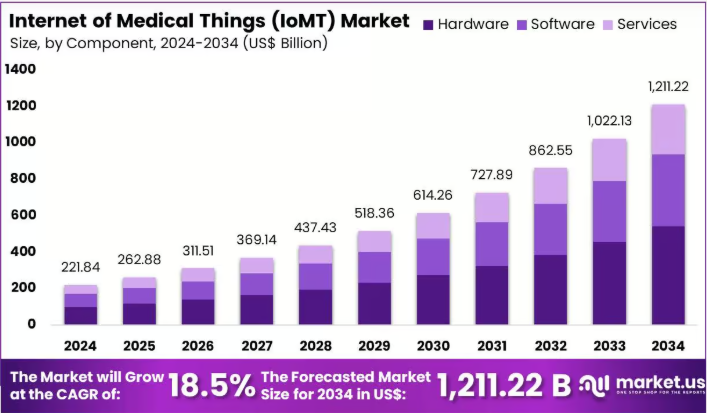
- The Internet of Medical Things (IoMT) market value is highly dynamic. As of August 2025, the market will exceed USD 262.88 billion.
- By 2025, the adoption of IoT in healthcare is expected to reach almost 87%.
- Approximately 60% of healthcare organizations already use smart IoT devices for proper monitoring and data collection.
- On the other hand, the IoT-enabled remote patient monitoring has reduced the cases of hospital readmissions by up to 45%.
- The use of IoT in healthcare has resulted in patient wait times, which have been reduced by approximately 50%.
- IoT-based medication management has shown an improvement rate of up to 30%.
- Healthcare facilities using the latest IoT technology report an average cost reduction of almost 26% in their healthcare operations.
- About 75% of healthcare executives believe IoT significantly impacts superior patient outcomes and greater operational efficiency.
- IoT-powered wearables have witnessed an almost 55% increase in proper usage for tracking fitness and getting assistance on health-related metrics.
- Mordor Intelligence, on the other hand, notes that wearables held 27% of the IoMT market in the last year, 2024.
- A Financial Times article notes rapid growth in connected medical devices—from ultrasound machines to smart implants—and market expansion from USD 93 billion in 2025 to USD 134 billion by 2029.
How the IoT and Biosensor-Based Stress Monitoring System Works
An IoT and wearable sensors-based stress level monitoring system utilizes advanced wearable biosensors. These biosensors continuously work to collect physiological data. These include heart rate, skin temperature, and even skin conductance, and then the data is transmitted via the Internet of Things (IoT) to the processing unit. This data is then analyzed by some pre-defined algorithms, often using machine learning, to determine significant stress levels.
The results are also displayed on a mobile app or web platform, providing genuine and real-time insights and alerts for the users. Thus, the tools suggest and recommend necessary interventions, turning out as continuous and personalized stress management tools.
1. Wearable Biosensors Collect Data
When it comes to IoT stress monitoring system development, the system begins with some wearable devices. These include smartwatches, fitness bands, rings, or patches with innovative biosensors. These continuously capture some physiological signals, which are associated with stress. These are – heart rate (HR), heart rate variability (HRV), electrodermal activity (EDA), blood pressure, oxygen saturation (SpO₂), body temperature, and respiration rate. Also, some advanced models can detect the cortisol levels through sweat analysis.
2. Data Transmission via IoT Connectivity
Once the data is collected, the wearable biosensor for stress monitoring system then transmitted the data using superior IoT technologies. These are Bluetooth, Wi-Fi, or even some cellular networks. The data flows on the other hand securely get stored in the smartphone applications, cloud platform, or even goes directly into a seamlessly connected healthcare system. This seamless data transfer ensures real-time monitoring and minimizes the need for manual input.
3. Cloud-Based Processing and AI Algorithms
Machine learning algorithms and data analytics engines easily process the raw data in the cloud system. These effective algorithms compare the user’s baseline physiological parameters and even detect the real-time fluctuations. These help to identify some abnormal patterns that are linked to stress. Over time, the IoT based smart system adapts the factors according to the user’s health improving the overall accuracy of stress with proper detection and prediction.
4. Real-Time Stress Alerts
When stress signals are detected through the IoT based real-time stress detection system, it instantly notifies the users through some smart wearable devices or smartphones. Those also provide some timely alerts, along with some immediate coping strategies. Based on that, the system suggests some breathing exercises, mindfulness reminders, or even some calming music assisting to reduce stress.
5. Personalized Stress Management Dashboard
IoT for mental and well-being monitoring has come a long way. A user-friendly dashboard can easily present daily, weekly, or even monthly stress patterns. Also, it highlights the peak stress times and guides on the potential triggers and recovery trends. Additionally, the platform creates some superior lifestyle recommendations that are specifically tailored for the individual, such as improving sleep quality, guidance levels, or just suggesting adjusting the diet.
6. Healthcare Integration (IoMT Extension)
At last, the smart IoT-based stress level monitoring system connects with some reliable healthcare providers, psychologists, or wellness coaches through some ideal IoMT integration. This allows for continuous remote monitoring, avoiding the overall need for preventive interventions and guide with personalized medical support.
Who Can Be the Primary Users of the IoT Stress Level Monitoring System
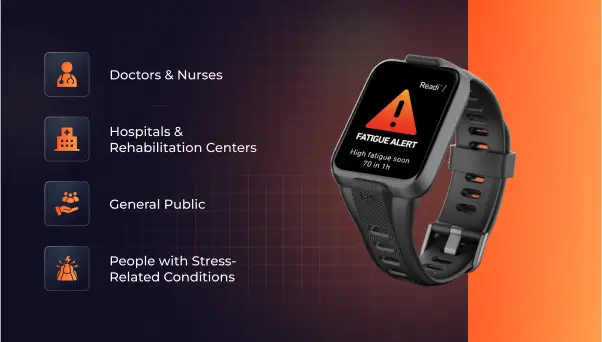
Primary users of an IoT-based wearable stress monitoring system help healthcare professionals with seamless remote patient management. Now, individuals can easily use those and opt for self-monitoring. It allows them to focus on proactive health management. Also, many users can significantly benefit from the system.
- Doctors and Nurses:
IoT for mental and well-being monitoring allows doctors and nurses to easily monitor patients’ stress levels remotely, especially those suffering from some chronic illnesses or in rehabilitation. Therefore, it allows the experts to make some timely interventions and assists them in guiding patients with some proper and personalized treatment plans.
- Hospitals and Rehabilitation Centers:
IoT for mental and well-being monitoring helps hospitals and rehabilitation centers utilize smart IoT systems that help with real-time, continuous monitoring. These not only control patient stress, but also reduce the need for constant physical presence.
- General Public:
IoT stress monitoring system development enables proactive stress management by providing users with the correct amount of data on their stress levels. Thus, they can easily identify triggers and take proper action before serious health issues arise.
- People with Stress-Related Conditions:
Individuals these days often experience anxiety, depression, or chronic conditions that are triggered by stress. Globally, the number is an estimated 280 million people who live with depression, and about 300 million people with anxiety disorders. So, when they opt for a wearable biosensor for stress monitoring, they can receive some personalized relaxation techniques suggested by the system.
Top Five IoT-Based Stress Monitoring Systems Available in the Market
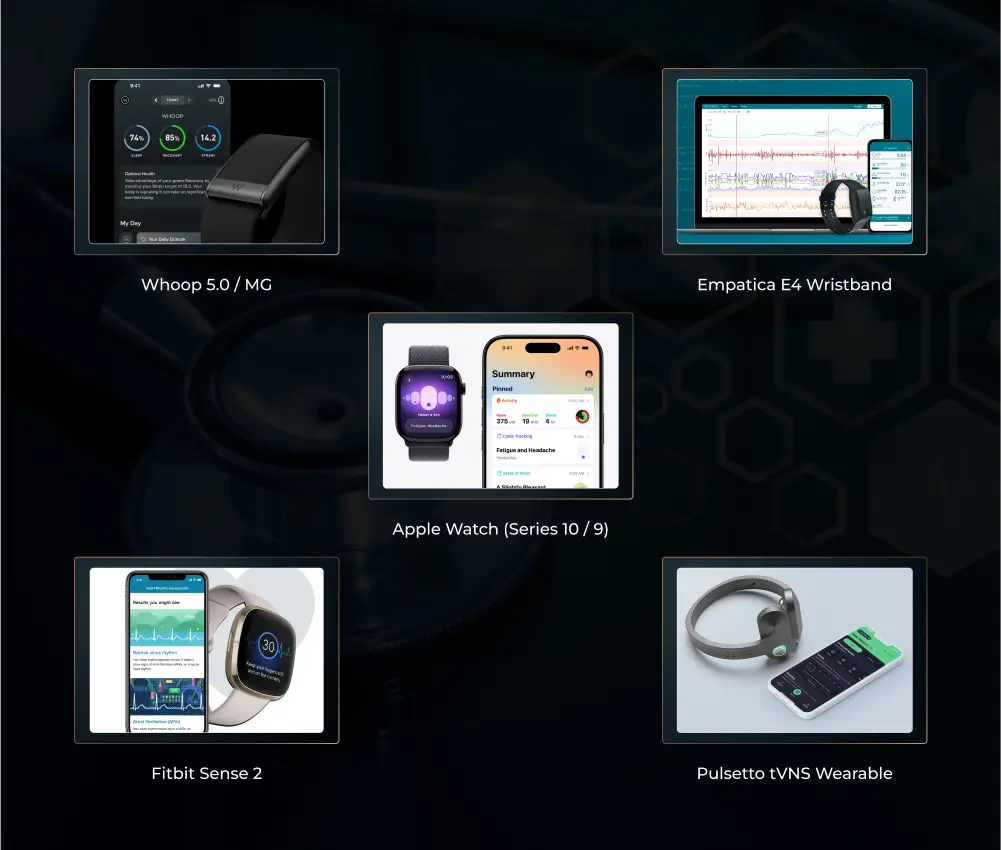
An IoT and wearable sensors-based stress level monitoring system redefines stress management by blending some smart biosensors and assists with real-time analytics and personalized insights. However, below we are going to list the top five ones that guide with heart rate variability, breathing patterns, and proper recovery metrics — delivered via mobile apps and dashboards. Thus, these help to track some emotional states and guide users toward greater resilience and well-being.
- Apple Watch (Series 10 / 9)
Listed as the best wearable biosensor for stress monitoring, Apple continues to help with advanced stress tracking via the HRV analysis, activity trends, and even mindfulness tools. The seamless integration with the smart iOS and Apple Health enriches better insights and provides personalized stress alerts. Also, its huge ecosystem and intuitive interface make it a very easy go-to choice for a better and holistic well-being.
- Fitbit Sense 2
Crafted around smart mental wellness, the Fitbit Sense 2, an exclusive IoT-based stress level monitoring system features an EDA sensor for proper and real-time monitoring. It also helps with HRV tracking and breathing sessions. The intuitive app of Fitbit Sense 2 assists in handling daily Stress Score and supports AI-driven relaxation prompts. These, as a result, deliver effective and user-friendly stress management.
- Whoop 5.0 / MG
Whoop 5.0 (and MG variant) is another advanced IoT and wearable sensors-based stress level monitoring system that provides deep insight into stress with HRV and even guides with proper heart rate-based stress scores. Also, it assists with superior recovery metrics and some personalized breathwork interventions. Perfect for athletes and high performers, the smart algorithm-driven system offers proactive strain and energy management.
- Empatica E4 Wristband
Designed specifically for the skilled researchers and complete clinical precision, the Empatica E4, an ideal example of IoT-based wearable stress monitoring system, captures the HRV, electrodermal activity, skin temperature, and even captures the movement. It excels in real-time physiological data capture, making it highly accurate for stress research, emotion analysis, and nuanced well-being assessments.
- Pulsetto tVNS Wearable
When it comes to IoT stress monitoring system development, the integration of Pulsetto offers a seamless use with the neck-worn device. It also works by delivering the proper transcutaneous vagus nerve stimulation (tVNS) at the right time. Therefore, it reduces the chances of stress and promotes superior relaxation. Moreover, controlled via its app, users can easily select the stress-relief modes and adjust intensity — perfect for direct and science-based stress regulation rather than just waiting for passive tracking.
Benefits of Investing In IoT Stress Level Monitoring System Development
Investing in an IoT-based wearable stress monitoring system is always the right choice as it helps with proactive stress management, enabling superior and personalized interventions, and improving significant health outcomes. Also, you can reduce healthcare costs through early detection and even offer real-time insights for users and healthcare providers. These systems not only increase patient engagement to keep track of their own well-being but also optimize the proper healthcare workflows by automating data collection and analysis.
Advantages for End Users
- Continuous Monitoring and Insights: Opting for a smart and scalable IoT-based stress level monitoring system, users can easily access all the real-time data and track their overall progress toward health or fitness goals.
- Personalized Experiences: Many wearables are created in a way that provide some tailored fitness routines and also ideal health management plans based on the accurate user data.
- Improved quality of life: By facilitating IoT based real-time stress detection system, these systems significantly improve an individual’s overall health and even guide them to a better quality of life.
Benefits for Healthcare Providers
- Early detection and prevention: IoT for mental and well-being monitoring helps track and collect continuous physiological data properly. It helps identify some specific health disorders early, providing real-time escalating stress conditions before they become severe.
- Improved Patient Care: Real-time health data allows the skilled healthcare providers to make some better and informed decisions.
- Better Diagnoses: Wearable data can guide early detection of some medical conditions. These, as a result, improve treatment outcomes.
Business Advantages
- Market Opportunities: The growing adoption of a smart wearable biosensor for stress monitoring with IoT opens new markets for businesses and includes proper data analytics and app development.
- Consumer Behavior Insights: Wearable data also provides some ideal and valuable insights into consumer behavior and preferences. Thus, it helps businesses to refine their products.
- Scalability and reliability: IoT based real-time stress detection system, on the other hand, also offer a smart, scalable, and reliable platform for continuous health monitoring. This, as a result, also provides a promising long-term investment.
Read Also: IoT in Wearables Tech
What Are the Key Capabilities of IoT Enabled Stress Monitoring System
An IoT and wearable sensors-based stress level monitoring system has some superior key capabilities and features that not only ensure seamless connectivity between devices but also come with some robust security measures that protect the right amount of data. So, let’s get a better insight on this –
Physiological Monitoring – Monitoring Body’s Stress Signal
- Heart Rate & HRV Tracking – Continuous measurement of heart rate and heart rate variability (HRV), a key stress biomarker.
- Skin Conductance (EDA/GSR) – Monitoring electrical activity of the skin to detect stress arousal.
- Respiration Rate Monitoring – Identifying stress-related irregular breathing patterns.
- Blood Pressure & Oxygen Levels (SpO₂) – Stress-related spikes or drops can be captured.
- Body Temperature Tracking – Peripheral temperature fluctuations as a stress response
Behavioral Monitoring – Capturing Behavioral Indicators of Stress
- Activity & Movement Analysis – Stress correlates with restless movement, fidgeting, or inactivity.
- Sleep Quality Tracking – Detecting insomnia, disrupted sleep, or poor sleep patterns linked to stress.
- Voice Stress Detection – IoT microphones analyzing pitch, tone, and speech pace (NLP + IoT).
- Facial Expression Recognition – Computer vision for stress indicators like frowning, eye strain.
Environmental Monitoring – Understanding the Environment Around
- Workplace & Ambient Factors – Temperature, lighting, and noise levels affecting stress.
- Digital Stress (Screen Exposure) – IoT devices tracking time spent on mobile/PC screens.
- Location Context – Geofencing to detect stress triggers in specific environments (workplace, commute).
Data Processing & Analytics – Making Sense of Stress Data
- Edge Processing – Local analysis on wearables for instant alerts.
- Cloud Integration – Long-term data storage and advanced analytics (AI/ML stress prediction).
- Real-Time Stress Detection Algorithms – AI-driven stress scoring models.
- Personalized Insights – Trend analysis for individuals over days/weeks/months.
Realtime Alerts – Delivering Timely Support and Interventions
- Real-Time Notifications – Mobile alerts when stress exceeds thresholds.
- Personalized Relaxation Guidance – Breathing exercises, mindfulness prompts, music therapy suggestions.
- Emergency Alerts – Notifications to caregivers or doctors in case of critical stress levels.
- Gamified Stress Management – Incentives for relaxation exercises and wellness activities.
Integration & Security – Ensuring Security and Seamless Integration
- Integration with Health Platforms – Sync with EHR, HRMS, or fitness apps.
- Multi-Device Ecosystem – Smartwatches, wristbands, chest straps, smartphones, IoT-enabled headbands.
- Data Privacy & Security – End-to-end encryption for sensitive health and mental wellness data.
- Compliance – HIPAA/GDPR compliance for medical/enterprise use cases.
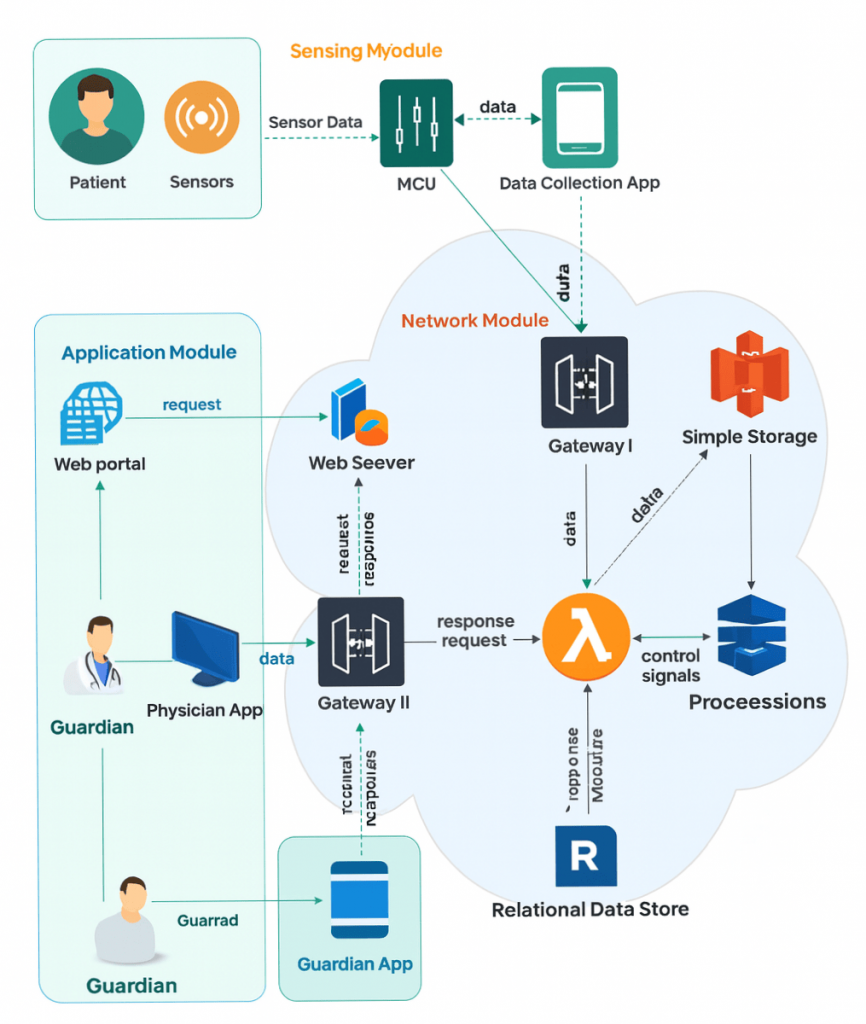
Lets Understand The Architecture of IoT based Stress Monitoring System
What Techstack is Required to Develop an IoT-based Stress Monitoring system
Let’s go through layerwise display about required technologies to develop an efficient IoT based stress monitoring system
| Hardware Layer – Sensors & DevicesPhysiological Sensors: Heart rate & HRV sensors (PPG, ECG patches, chest straps)Electrodermal Activity (EDA/GSR) sensors for skin conductanceRespiration & SpO₂ sensors (pulse oximeters, chest bands)Temperature sensors (skin & ambient)Blood pressure cuffs (wearable or portable) Behavioral Sensors: Accelerometers & gyroscopes for movement & activityMicrophones for voice stress analysisCamera modules for facial recognition (optional) Devices & Boards: Microcontrollers: ESP32, Arduino Nano/Uno, STM32 Wearables: Smartwatches, IoT wristbands, smart headbands Edge gateways: Raspberry Pi, NVIDIA Jetson Nano (for vision/AI edge processing) |
Connectivity Layer: Communication ProtocolsShort-Range: Bluetooth Low Energy (BLE), Wi-Fi 6, Zigbee, NFC Long-Range: LTE-M, NB-IoT, LoRaWAN (for remote monitoring) Protocols: MQTT, CoAP, HTTP/HTTPS, WebSockets Data Standards: HL7/FHIR for healthcare data exchange. |
| Edge Computing LayerLocal Processing: ESP-IDF (for ESP32), FreeRTOS or Zephyr RTOS (for microcontrollers)TensorFlow Lite / TinyML (for stress detection ML at the device) Functions: Pre-processing of biosignal data (noise filtering, smoothing)Local anomaly detection (stress threshold alerts)Edge-based data compression to reduce bandwidth usage |
| Cloud & Backend LayerIoT Platforms: AWS IoT Core, Azure IoT Hub, Google Cloud IoTOpen-source: ThingsBoard, Kaa IoT Platform Data Storage & Processing: Time-series DB: InfluxDB, TimescaleDBRelational/NoSQL DB: PostgreSQL, MongoDBData Lake: AWS S3, Azure Data Lake Stream Processing: Apache Kafka, AWS Kinesis, Azure Stream Analytics AI/ML Services: AWS SageMaker, Azure ML, TensorFlow, PyTorchML models for stress detection (HRV, EDA, respiration correlations) |
| Application Layer – InterfacesMobile Apps (User Interface): Flutter, React Native, Kotlin/Swift Web Dashboards (Doctors, HR teams, Admins): React.js, Angular, Vue.js APIs & Middleware: Node.js, Python (FastAPI/Django/Flask), GraphQL Visualization Tools: Grafana, Power BI, custom charts with D3.js |
| Security & Compliance LayerData Security: End-to-end encryption (TLS 1.2/1.3), AES-256 at rest Identity & Access: OAuth2.0, OpenID Connect Device Security: Secure boot, device certificates (X.509), PKI Compliance: HIPAA (US), GDPR (EU), ISO 27001 |
How Much Does It Cost to Develop an IoT-Based Wearable Stress Monitoring System?
The development cost of an IoT-based stress level monitoring system is never fixed, as it often changes under specific circumstances. And, there are also different factors that work. Let’s take a closer look at the aspects that usually influence the overall costs of delivering a custom IoT solution.
- Targeted platforms
The IoT software development cost generally varies. Some of the latest IoT trends often influence it. Usually, it depends on the desired platforms for the superior project. Furthermore, regardless of your business goals, you need to learn how to pick the most suitable IoT and wearable sensors-based stress level monitoring system platforms among desktop, web, and mobile to build a superior IoT solution.
- Software Features
While developing the IoT-based stress level monitoring system, the software’s latest features often impact the IoT software development cost. If you need a clear vision of what is needed and what is desired, you have to start a smart MVP — Minimum Viable Product.
- UI/UX interfaces
When it comes to learning some valuable aspects of the smart IoT based real-time stress detection system, you have to keep in mind the design of the software, user-friendliness, especially in the front end as well as intuitive navigation matter here. The easier it’s to use the app — the better user engagement and retention rate you may expect.
- Development Practices and Tools
The choice of some exclusive development tools and latest practices for the IoT stress monitoring system development largely determines the overall IoT development cost and time. This not only indicates that utilizing some effective methods and resources, but also secure some great communication protocols and cost savings for organizations.
- Similarly, the cost may vary between $100,000 and $300,000 for a mid-range solution.
- For an enterprise-level solution, the cost may range from $300,000 to over $500,000.
Required Compliances to Develop IoT Stress Monitoring System
Developing an IoT-based Stress level monitoring system requires following to the proper compliances for excellent data security and privacy (e.g., HIPAA, GDPR), device security, NIST Cybersecurity Framework), and overall information security management (ISO/IEC 27001).
This helps to secure a proper data transmission and ideal storage with encryption, ensuring the robust device authentication and ideal access controls. Therefore, it significantly helps with thorough testing and even guarantees excellent performance, reliability, along with proper security.
- HIPAA (Health Insurance Portability and Accountability Act):
For IoT for mental and well-being monitoring, it involves the health data, HIPAA provides some specific rules for overall data privacy and security that must be followed to easily protect the patient information.
- GDPR (General Data Protection Regulation):
This EU-based regulation sets some strict rules for how the correct data is protected. Additionally, there are some significant penalties for the non-compliance, which is then applied if your system handles personal data.
- NIST Cybersecurity Framework:
This smart framework of IoT-based stress level monitoring system provides a broad guidance for building and maintaining some secure and robust information system environments.
- NIST Cybersecurity for IoT Program:
This program offers some standards, guidelines, and exclusive tools that specifically improve the cybersecurity of IoT systems.
How Can A3Logics Assist You in Developing an Efficient IoT-based Wearable Stress Monitoring System
When it comes to developing an IoT-based wearable stress monitoring system, A3logics, being the best IoT development company can assist in developing an exclusive and efficient IoT system by providing greater services in IoT architecture design, custom hardware/software development for wearables, cloud integration for data storage and analysis, and using the power of AI/ML for real-time stress detection and personalized interventions.
Having vast expertise, they can create innovative systems that continuously monitor physiological signals to provide early stress detection and improved health outcomes for users.
- IoT Platform Development:
A3Logics can skillfully design and develop the entire IoT ecosystem, from innovative wearable devices to the backend cloud platform for seamless data processing and for easy storage.
- Hardware & Software Integration:
A3logics integrating various sensors into the IoT and wearable sensors-based stress level monitoring system can successfully develop some great software to collect and transmit this data efficiently.
- Data Analytics with AI/ML:
By applying some innovative machine learning algorithms, A3Logics can successfully analyze the collected data, identify some stress indicators, and these enable real-time stress detection along with some personalized interventions.
- Custom Wearable Solutions:
When it comes to developing a system with IoT for mental and well-being monitoring, the experts at A3Logics can create some bespoke wearable solutions, which are specifically tailored to meet some specific stress monitoring needs.
- Cloud & Connectivity:
A3logics can ensure an advanced and seamless data flow from the smart wearables to the cloud. This as a result ensures a robust and scalable system architecture.
- Real-time Monitoring and Alerts:
The IoT stress monitoring system development can provide some genuine and real-time feedback and alerts to users or healthcare providers. These show timely interventions to prevent the chances of stress from worsening.
Conclusion
These days modern healthcare challenges, especially for quick and remote care, require some effective methods. Stress monitoring and management has become a vital part that needs proper intervention. And, this as result drives the implementation of some smart and innovative solutions.
Additionally, focusing on specific sensors that measure common physiological parameters such as heart rate, skin conductance, and breathing rate helps detect stress levels. However, continuous monitoring is important because only then can it guide us to take timely actions that add value to overall well-being.
Moreover, with the advancement and adoption of IoT-based wearable stress monitoring systems, healthcare professionals and leading users can keep track of different health conditions. So, it is expected that with time, the adoption of this smart system will turn out to be much more valuable in both everyday life and professional fields.