As the global population grows, agricultural resources are becoming scarce. Managing farming operations, including monitoring crops and livestock, tracking weather and soil conditions, and more, is becoming increasingly challenging for farm owners. The need of the hour is to carry out farming practices that allow for efficient farming operations while maintaining quality. IoT (Internet of Things)- powered agriculture monitoring systems are a significant step in that direction. The global IoT in agriculture is set to reach $17.78 billion in 2025. The figures show that those planning to invest in IoT Agritech are in for huge profits.
If you are a farm owner or have anything to do with agribusiness, here is a complete guide on how you can merge agriculture and IoT solutions to take your farming operations to the next level.
What is an IoT-Based Agriculture Monitoring System?
An IoT-based agriculture monitoring system uses connected sensors and devices to collect data about environmental conditions like soil temperature, humidity, moisture, etc. These can also be termed as crop monitoring systems, as these sensors and devices also collect insights about crop health and other factors.
How Do IoT Agriculture Monitoring Systems Work?
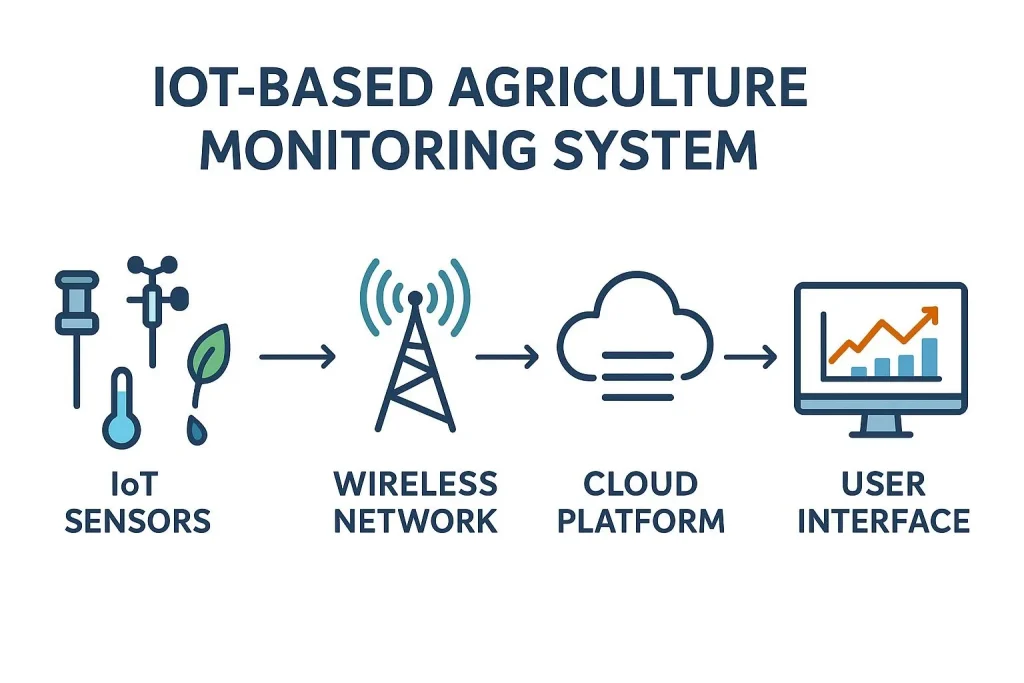
Once the data is collected, it is wirelessly transmitted to a smartphone application or central platform. This aids farmers in accessing their fields remotely. Using the information obtained from devices and sensors, farmers and business owners can take data-driven decisions. They can optimize water and fertilizer usage, control pests, improve crop yields, and perform precision agriculture.
Key Components of IoT in Agriculture Monitoring
1. IoT Sensors for Soil, Water, and Crops
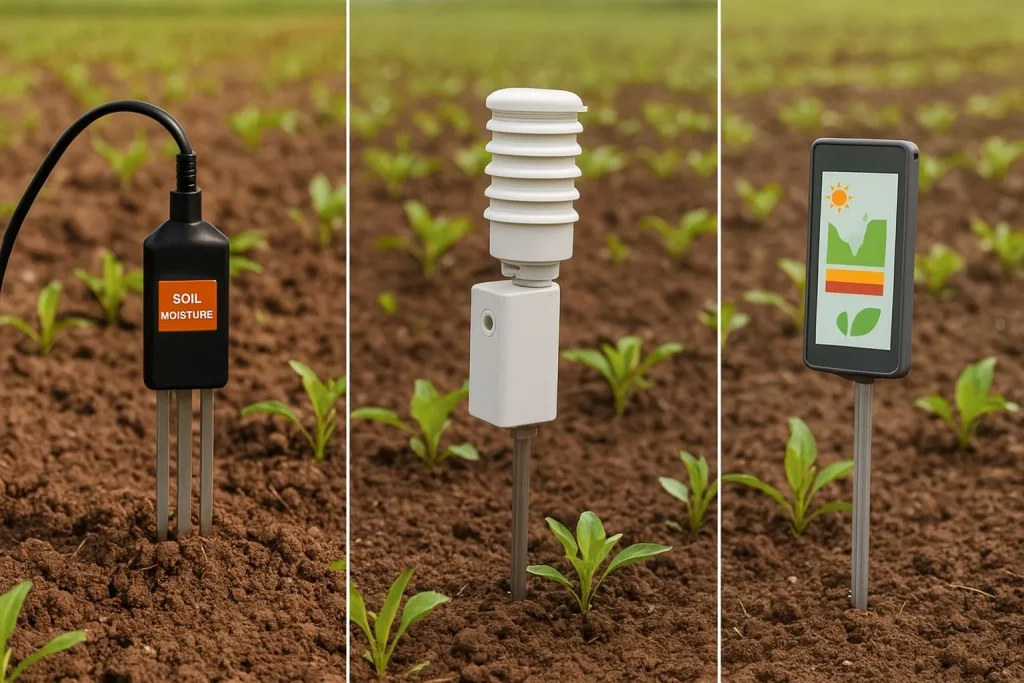
In an agricultural tracking system – IoT sensors are used to monitor and collect data on various agricultural parameters – soil moisture, pH, air quality, and nutrient levels. Using these, farmers can reduce costs, optimize crop growth, and enhance overall agricultural efficiency.
2. Wireless Communication Networks in Smart Farming
By including advanced technologies like IoT devices, wireless sensor networks (WSNs) and drones, wireless communication networks help conduct smart farming practices. They facilitate decision-making based on data, help in real-time monitoring, and reduce resource consumption.
3. Cloud Platforms and Data Analytics in Agriculture
Cloud-based platforms offer scalable storage. These platforms can handle large volume of data generated by IoT devices. The cloud-based analytics tools offered by these platforms help analyze the data to identify trends, and provide insights. In smart irrigation, sensors monitor soil moisture, and the cloud platforms automatically adjust irrigation systems based on real-time data.
Top Benefits of IoT-Based Agriculture Monitoring Systems
Here, we have a list of some of the best IoT agriculture monitoring systems available in the market –
1. Higher Crop Yields through Precision Farming
Yield monitors are used in precision farming to measure and record crop yields as they are harvested. These consist of sensors that measure the flow of crops as they pass through the combine harvester, a computer or other data recording device that records the yield data.
2. Reduced Operational Costs by Automating Tasks
The combination of IoT and agriculture helps in analyzing soil nutrient levels. As a result, farmers can apply the right amount of fertilizers, and reduce associated costs. With the use of automated irrigation pumps and greenhouse climate controls, energy consumption can be optimized and can function well.
3. Better Resource Management (Water, Fertilizers, Energy)
IoT-based agricultural systems help farmers manage resources like fertilizers, water, and energy more efficiently by analyzing real-time data. Automated systems can reduce water waste by tweaking irrigation schedules and ensuring that the crops receive the right moisture.
4. Early Detection of Plant Diseases and Pest Attacks
Farm owners can utilize various sensors to monitor the growth of pests remotely. Furthermore, measures can be taken to manage them. They can integrate an IoT-powered pest control system and accurately detect bugs and rodents without manual inspection. This minimizes the use of pesticides. With lesser pesticide use there is lesser damage to environment.
5. Improved Livestock Health and Monitoring
Agricultural environmental monitoring systems utilize various wearable sensors attached to animals to track their location, vital signs, and behavior in real-time. Similarly, temperature, air quality, and humidity monitoring sensors can also be used for tracking livestock conditions. These sensors notify farmers about various livestock aspects such as potential health issues, unusual movements, breeding cycles, etc.
6. Data-driven Decisions for Sustainable Agriculture
By combining crop monitoring systems with agriculture and IoT powerful solutions can be created. The solution can help agri businesses to optimize water consumption, monitor crop health, and practice sustainable farming.
Use Cases of IoT in Agriculture Monitoring
Let’s dive into some of the real-life use cases that demonstrate how IoT in agriculture monitoring is beneficial –
1. Smart Irrigation Systems
In IoT in agriculture; smart irrigation systems help in efficient water management. These systems use sensors to capture and monitor such as temperature, soil moisture, and weather conditions. They pass on this information to a central control system.
2. Crop Health Monitoring
IoT-based crop monitoring sensors provide a comprehensive understanding of crop conditions. By receiving this data, farmers can identify early signs of diseases, stress, and nutrient deficiencies. Using these insights, they can improve yield and intervene in a timely manner.
3. Smart Greenhouses
In several ways, an IoT-based automated greenhouse monitoring system benefits farmers. It increases efficiency in resource management and improves crop quality and yield. Farmers can monitor conditions/ systems present at greenhouse sites remotely, and automate routine tasks that would otherwise require additional labor.
4. Livestock Monitoring
With IoT tracking solutions, you can detect if the animals in your livestock are healthy; you can check for early signs of injury or any other health-related issues in your livestock. You can monitor health parameters, location, and social behavior to gain insights into health, well-being, and the reproductive stage of every animal on your farm.
5. Pest Control
IoT-based agricultural monitoring devices monitor pest populations to prevent outbreaks before they damage crops. By deploying targeted pest control measures, farmers can ensure healthier harvests, minimize chemical use, and support environmental health.
6. Soil Monitoring & Analysis
IoT-based soil monitoring lets farmers use sensors, wireless communication, and data analysis to monitor soil temperature, moisture, pH, and nutrient levels in real-time. Using these insights; they can make more informed decisions about fertilization, irrigation, and other important aspects of crop management.
7. Precision Fertilization
Using interconnected crop monitoring sensors, automated systems, and data analytics, farmers can monitor crop and soil conditions in real-time. Furthermore, they can apply the right amount of fertilizers to specific areas of a field only when it’s needed. Subsequently, they can minimize the environmental impact caused by over-fertilization.
Tech Stack for IoT-Based Agriculture Monitoring System Development
1. Hardware Components
i. Sensors
- Soil Sensors: Measure moisture, temperature, pH, NPK (e.g., Teralytic, Sensoterra)
- Weather Stations: Track temperature, humidity, rainfall, wind speed (e.g., Davis Instruments, Arable Mark 2)
- Crop Health Sensors: NDVI cameras, hyperspectral imaging (e.g., Sentera, DJI Agras drones)
- Livestock Trackers: GPS collars, RFID tags (e.g., HerdDogg, Cowlar)
ii. Microcontrollers & Gateways
- Raspberry Pi/Arduino (for DIY prototyping)
- LoRaWAN Gateways (e.g., The Things Network, Multitech)
- Cellular IoT Modules (e.g., Quectel, SIMCom)
2. Connectivity Protocols
| Technology | Range | Power Use | Best For |
| LoRaWAN | 10-15 km | Ultra-low | Soil/weather sensors |
| NB-IoT | 5-10 km | Low | Medium-scale farms |
| Wi-Fi/Bluetooth | <100m | High | Greenhouses, small farms |
| Cellular (4G/5G) | Wide | Moderate | Real-time livestock tracking |
| Satellite (IoT) | Global | High | Remote cattle stations |
3. Cloud & Data Processing
i. Cloud Platforms
- AWS IoT Core (Scalable, supports ML integration)
- Google Cloud IoT (BigQuery for analytics)
- Microsoft Azure IoT Hub (Edge computing support)
- Ubidots (Beginner-friendly dashboard)
ii. Data Storage & Analytics
- Time-Series Databases: InfluxDB, TimescaleDB
- Big Data Processing: Apache Kafka, Hadoop (for large farms)
- AI/ML Models: TensorFlow, PyTorch (for predictive analytics)
4. Software & Applications
i. Firmware Development
- Embedded C/C++ (For microcontrollers like Arduino)
- MicroPython/CircuitPython (Raspberry Pi Pico)
- PlatformIO (IoT development environment)
ii. Backend & APIs
- Node.js/Python (Django/Flask) for server logic
- MQTT/CoAP (Lightweight IoT communication)
- RESTful APIs (For mobile/web integration)
iii. Frontend & Dashboards
- React.js/Vue.js (Farmer-friendly dashboards)
- Grafana (Real-time data visualization)
- Power BI/Tableau (Advanced analytics reporting)
5. AI & Automation
- Computer Vision: OpenCV, TensorFlow Lite (for disease detection)
- Predictive Analytics: Scikit-learn (yield forecasting)
- Automated Irrigation: Integrations with Rachio, Netafim
6. Security & Compliance
- Data Encryption: TLS/SSL, AES-256
- Authentication: OAuth2, JWT
- GDPR/CCPA Compliance: Anonymize farmer data
7. Deployment & Scalability
i. Edge Computing
- NVIDIA Jetson (AI at the edge)
- AWS Greengrass (Local processing + cloud sync)
ii. Hybrid Models
- Cloud + On-Premise Servers (For large agribusinesses)
Top IoT Agriculture Monitoring Systems in the Market Today
Here, we have curated a list of some of the best IoT agriculture monitoring systems available in the market –
1. CropX
CropX is an agricultural monitoring system that collects agronomic data, connecting many sources into one platform. With a click of a button, the CropX system compiles data on environmental events, crop performance, and resource use.
2. Arable

Arable features an intuitive in-field sensing and monitoring system that provides real-time insights into plant health, weather, soil conditions, and irrigation management. Farmers can use advanced weather forecasting and monitoring technologies to their advantage to adjust their irrigation practices, thereby reducing potential damage.
3. Sensoterra

Sensoterra utilizes IoT in agriculture monitoring and develops low-cost and robust wireless soil moisture sensors. With the help of these, it provides actionable insights. By integrating soil moisture sensors with other technologies, farmers can create a highly automated agriculture system.
4. Semios

Semios offers one of the most advanced agricultural monitoring systems. It’s particularly useful for orchards. It offers site-specific pest models to fine-tune sprays for maximum impact. It correlates site-driven degree-days with trap counts and weather patterns to determine pheromone application and pressure rates.
5. Pycno
Pycno helps turn raw data from fields into actionable analytics. Its plug-and-play sensor enables seamless data collection from farm to smartphone. It helps in Greenhouse automation as it employs many clusters of node sensors to push data out of the Greenhouse.
6. HerdDogg
The Bluetooth-enabled smart tag continuously monitors animal movement and temperature, generating real-time alerts. Using these insights, you can isolate and treat the battle in a targeted manner. The tags enable you to remotely monitor and predict individual estrus cycles for optimal breeding success.
7. Teralytic
Teralytic is a soil health company that provides detailed soil data via a probe with 26 sensors. It provides you with alerts when sensors detect poor soil conditions in your crops. It also provides you with useful insights into your soil’s current and future fertility. Using Teralytic, you can match fertilizer supply with demand.
8. Ceres Imaging
Ceres Imaging specializes in providing high-resolution, aerial crop health imagery. It integrates seamlessly with farm management software and in-field sensors. It performs tasks such as capturing the Chlorophyll index, where it measures reflectances in multiple visible and near-infrared bands. The Chlorophyll Index offers insights into a plant’s nitrogen content in-season.
9. AgriData
AgriData is one of the top IoT agricultural monitoring systems. From trusted soil data reports and clear aerial imagery of farming lands to plant growth insights, crop history, and weather outlooks, it delivers accurate and real-time information. Farmers can utilize these insights to monitor water levels, land boundaries, topography, and productivity.
10. FarmBot
FarmBot is an open-source, IoT-based robotic farming platform. It is designed to automate tasks like watering, planting, weeding, and monitoring plant growth in small farm establishments. FarmBot uses cameras, sensors, and a CNC (Computer Numerical Control) system to execute and control tasks via a web-based interface.
Cost of IoT-Based Agriculture Monitoring System Development
The cost of IoT-based agriculture monitoring system development may depend on various factors, such as the number of sensors. Hardware components used, farm size, type of network, integration of AI and ML and various other factors.
Challenges and Limitations of IoT-Based Agriculture Monitoring Systems
1. High Initial Investment Costs
To implement IoT technology in agriculture, you may initially need to invest in specialised sensors, communication networks, and software. If you are a small or medium-sized firm, this investment may prove to be somewhat costly, as you may also have to purchase equipment, spend on installation, and incur maintenance costs.
2. Connectivity Issues in Rural Areas
In rural areas with low or limited connectivity, it may be challenging to install agricultural systems powered by IoT, as the technology relies heavily on the internet. In such areas, even if the system is installed, it can further lead to system failures and data transmission delays.
3. Data Privacy and Cybersecurity Risks
Since IoT-based agriculture crop monitoring systems collect a huge amount of data about farm operations; there may be a risk of breaches that can cause financial losses and compromise farm operations. It can be challenging to implement robust cybersecurity measures.
4. Lack of Technical Knowledge among Farmers
IoT agriculture systems often require technical knowledge. This can be challenging for farmers – especially for those who are not that tech-savvy. The ongoing need for technical support and the learning curve can be the reasons for farmers not adopting crop monitoring sensors or any advanced agricultural technology.
5. Integration Challenges with Existing Farm Equipment
When integrating advanced IoT-based agricultural systems with existing farm equipment, technical complexities may hinder the process. For instance, the existing farm equipment may not be designed for IoT integration. You might have to make complex modifications or expensive replacements so that you can integrate IoT.
Latest Trends in IoT for Agriculture Monitoring
1. AI and Machine Learning Integration
AI and machine learning algorithms integrated into IoT agriculture systems can analyze data obtained from sensors. The insights can be used for farming activities such as pest control, precision farming, irrigation, fertilization, and resource efficiency.
2. Blockchain in Agriculture
With the involvement of blockchain in agriculture, the immutable and transparent ledger of blockchain technology can be used to maintain a track of perishable items. Using blockchain, smart agriculture can streamline the supply chain by connecting customers with farmers.
3. Drones and Satellites
When farming activities are spread across distant locations, drones and satellites can help provide an aerial overview of the activities. IoT drone agriculture can help collect and analyze crop and soil data from distant places. With satellite monitoring, large regions of agricultural land can be quickly observed.
4. Robotics in Smart Farming
When talking about the agriculture monitoring system development, it is not just about the usage of sensors to collect data. These days, there are intelligent, self-operating systems that can perform a variety of tasks like precision weeding, planting, spraying, harvesting, and others.

Why Choose A3Logics for IoT-Based Agriculture Monitoring System Development?
Have a vision in mind with which you wish to transform agricultural operations? A3Logics is an IoT Development Company, that can help you build advanced IoT solutions – from smart devices to interconnected ecosystems. We use advanced technologies like AI and ML to make informed decisions. As an agritech software development company, you can expect the following –
- Smart farm management platforms for efficient crop monitoring.
- IoT integration for soil, water, and weather tracking.
- Data analytics tools for better farming decisions.
- Mobile apps for real-time farm updates.
- AI-driven yield prediction and resource optimization.
Conclusion
By venturing into IoT-based agricultural monitoring systems, you have in your hands the power to revolutionize the sector that feeds the world, i.e, agriculture. As sensor technology becomes more affordable, combined with enhanced data connectivity, IoT systems are becoming accessible to a wider range of farmers. This comprehensive guide covers everything from basics, such as what agriculture monitoring systems are, to how you can use agriculture and IoT to solve real-life farming issues.