
The insurance business is going through an enormous change and at the core of this revolution lies the AI for auto claims management. Artificial intelligence is simplifying claims handling, which was traditionally considered one of the most intricate and expensive procedures in the insurance sector. Auto insurance claims management software powered by AI is transforming both the customer experiences and insurer operations, thanks to the ability of settling claims much faster and detecting fraud with an impressive level of accuracy.
Why Should Insurers Invest in AI for Auto Claims Management Software Today?
The automobile insurance industry is huge and very competitive. Slow claims settlement, growing fraud, and escalating customer expectations are compelling insurers to modernize their claims process. U.S. insurers are straining under the pressure of fraud that costs them $308.6 billion every year. Automation with AI will reduce processing time by up to 60%, providing faster and more precise settlements.
Moreover, organizations that implemented AI have documented 30-50% operational cost reduction and 40-90% higher precision in detection of fraud than the conventional procedure. Even customer satisfaction is under threat. Research indicates that the rate of satisfaction increases by 25-48% when digital claims solutions are adopted instead of manual processes. Having such benefits, using AI is no longer a luxury; it is a way for insurers to stay competitive, manage their expenses, and gain the confidence of their customers in the long term.
The Transformative Role of AI in Auto Claims Management Software
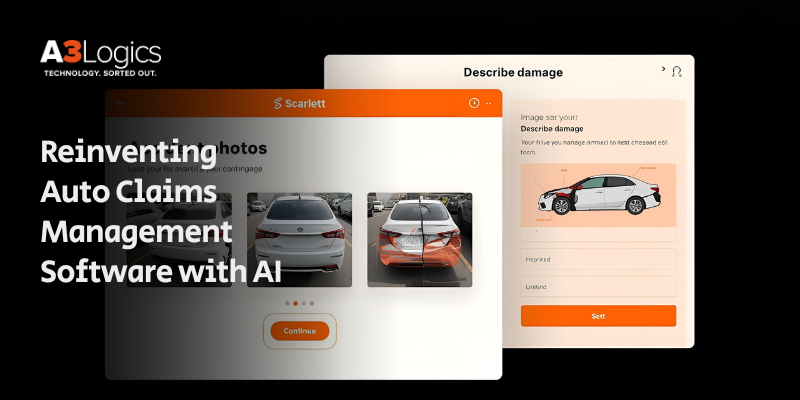
AI is not a technological improvement but is a paradigm shift. AI transforms all the touchpoints of the claims lifecycle by automating the processes, improving the accuracy, and personalizing the customer service. Below is a description of the ways AI is transforming each phase:
1. First Notice of Loss (FNOL) & Intake
a. Intelligent Chatbots and Virtual Assistants
Chatbots that use AI to provide FNOL help simplify the process as they provide policyholders with instructions to report accidents step-by-step. They are available 24/7 to gather the necessary information, date, time, and description of the damage, not leaving out a single bit of information. Automotive software development services hasten the process of initiating claims, minimizing the number of manual errors, and allowing customers to begin the process right away via apps, websites, or voice assistants.
b. Voice and Sentiment Analysis
The AI systems use voice records of customer calls to identify emotional characteristics such as frustration, stress, and dishonesty. Sentiment analysis does not only enhance empathy in customer service but also helps in detection of fraudulent claims at an early stage. Through tone, the insurers are able to personalize responses, give priority on urgent cases and offer compassionate interactions that enhance satisfaction.
c. Automated Data Extraction
AI is used to analyze significant data in photos of an accident, police records, or even e-mails instead of manually typing the details of a claim. Using Optical Character Recognition (OCR) and Natural Language Processing, information is obtained very fast and accurately. This will decrease the amount of human work, delay, and enhance the speed at which claims are verified and processed.
2. Claims Triage and Prioritization
a. Automated Routing
On receiving claim information, AI evaluates it to identify the severity, urgency and complexity. According to these insights, claims would be automatically redirected to the most appropriate adjuster or the team of experts. This guarantees prioritized cases to be attended first, enhances workflow balance, and considerably reduces the bottlenecks due to manual distribution of claims.
b. Fraud Detection at First Glance
Red flags on claims like inconsistency of accidental details, unusual repair bills, or a history of prior claims are scanned by AI models right after being submitted. Machine learning compares data to the previous cases of fraud and assists insurers in identifying suspicious claims. Early detection of fraud during the triage process will save time, minimize investigations, and eliminate financial losses prior to the payment.
3. Damage Assessment and Estimation
a. Virtual Estimating with Computer Vision
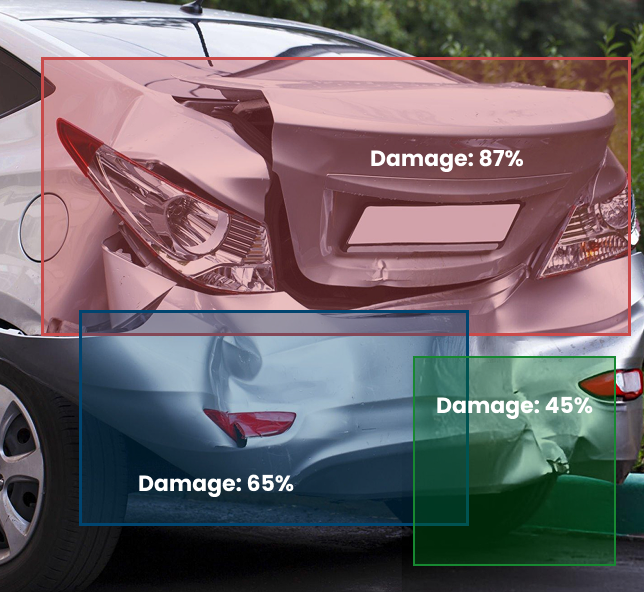
Through AI-powered image recognition, insurers will be able to determine the damage to vehicles based on the uploaded images. Advanced AI Vehicle Damage Detection tools detect dents, scratches or broken components and provide an estimate of the costs associated with repairing the vehicle in minutes. With this technology, there is no need to conduct on-site inspections and this makes the process quicker, more precise and much more convenient for the policyholders.
b. Photo-Based Total Loss Determination
AI uses the photos of accidents and runs them through the years of history to determine whether the car can be repaired or is a complete write-off. This saves misunderstandings between customers and insurers, offers immediate transparency and speeds up settlements. Using big data, AI guarantees equal and uniform decision-making, minimizing bias and eliminating the needless repair expenses.
c. Integration with Repair Networks
AI-powered platforms are directly connected to the auto repair shops and service providers. It offers real-time estimates of the repair, schedules, and automates the approval processes. Customers gain the advantages of fast scheduling and insurers have access to transparent pricing and less time wastage during negotiations.
4. Investigation and Decision Support
a. Predictive Analytics
AI takes historical claims data to forecast probable claim outcomes, repair cost, and time as well. It detects trends, which indicate fraud, exaggeration or unusual trends. For adjusters, predictive analytics is a decision-support system, drawing attention to the risks and suggesting the next steps, which will make resolutions more accurate and fair.
b. Temporal and Geospatial Analysis
AI compares the accident report with the location information, weather data, and traffic. As an example, when a claim mentions that an accident was caused in clear weather and meteorological data indicates heavy rain, the system will indicate discrepancies. Such analyses reinforce detection of frauds and only valid claims are left to settle.
c. Document Analysis
Insurers handle thousands of documents with each cycle of claims such as medical bills, legal documents, and repair invoices. NLP-based AI will extract and authenticate the information automatically. Not only does this decrease the manual workloads but it also provides accuracy enabling claims handlers to make decisions based on reliable and consistent data.
5. Payment and Recovery
a. Automated Payments
After the approval, the AI system can initiate instant payment platforms through bank transfers or digital wallets. This saves a lot of waiting time as opposed to the traditional check-based settlements. Quick payments not only improve the level of customer satisfaction but also help form a perception of an insurer as a technologically advanced service provider that appreciates speed and efficiency.
b. Subrogation Identification
AI reads through details to discover any third-party liability. For example, if another driver caused the accident, the system alerts insurers about subrogation potential. This proactive strategy assists insurers to claim costs from responsible parties, which enhances profitability and puts customers in a better position where they are not charged with damages that they did not cause.
6. Customer Communication and Experience
a. Progressive Status Updates
AI-driven systems developed by an AI development company will give customers real-time updates on the status of their claims through mobile applications, email, or SMS. Policyholders are able to monitor all steps between FNOL submission and payment release, instead of calling customer service many times. Transparency builds trust, anxiety is minimized and the entire claim experience is greatly enhanced.
b. Predictive Delays
AI foresees possible delays in the claims process which may be due to parts unavailability or bottlenecks in the repair shop. It proactively informs customers and offers alternate schedules or options. This preliminary anticipation prevents frustration in customers and helps insurers to be reliable in paying claims.

AI vs. Traditional Auto Claims Management: A Detailed Comparison
| Aspect | Traditional Claims Management | AI-Powered Claims Management |
| Claim Intake | Manual, slow, error-prone | Automated chatbots, voice analysis, instant data extraction |
| Damage Assessment | Physical inspections, days-long delays | Real-time photo/video analysis with computer vision |
| Fraud Detection | Reactive, often after payout | Proactive, predictive, early-stage fraud detection |
| Customer Communication | Limited to office hours | 24/7, personalized, real-time updates |
| Payment Processing | Manual checks, delayed payouts | Automated digital payments in minutes |
| Decision Accuracy | Human judgment, inconsistencies | Data-driven, consistent, and highly accurate |

Benefits of AI in Auto Claims Management Software for Insurers and Customers
1. Benefits for Insurers
a. Increased Operational Efficiency
The routine tasks of intake, documentation, and routing are automated by AI, which minimizes the number of manual operations. This liberates resources, which can be utilized by the insurers in high value tasks such as investigations and customer engagement.
b. Faster Claims Processing and Settlement
AI enhances the speed of work on claims by processing data in real time, as well as automating approvals. Claims can be resolved by the insurers in hours rather than days, which improves customer satisfaction by a wide margin.
c. Enhanced Fraud Detection
AI technology identifies suspicious patterns in claims and behavioral abnormalities, as well as data inconsistencies. Insurance software development enables insurers to know cases of fraud at an early stage, thereby minimizing unnecessary payments.
d. Improved Accuracy
With the help of past information and predictive algorithms, AI ensures consistency in the claims judgments. This minimizes the human factor and provides equitable, correct and clear claim resolutions.
e. Reduced Costs and Loss Ratios
AI reduces the administrative and settlement expenses by streamlining operations and eliminating fraud. Lower operational costs will eventually help insurers to improve profitability and reduce the ratio of losses.
f. Better Data and Insights
AI-enhanced auto insurance claims management software helps insurers to have valuable information based on large datasets. These insights can help to underwrite smarter, price better, and implement effective business strategies.
2. Benefits for Customers
a. Faster and Simpler Claims Experience
AI as an automation tool is utilized in the claims process, and it is easier to submit claims through digital means, including apps and chatbots. The customers will be able to settle the claims faster without necessarily involving a lot of paperwork and wasting time.
b. 24/7 Availability and Support
AI chatbots assist 24/7 responding to inquiries and triggering claims. Customers do not have to rely on office time to seek assistance.
c. Increased Transparency
AI applications provide real-time claims status, settlement schedule and decision-making. Such transparency would foster trust and give customers confidence during the claims process.
d. More Accurate and Fair Assessments
Image recognition and predictive models that are powered by AI yield very precise estimates of the damage. The fair evaluations available to customers reduce disputes and accelerate settlements.
e. Empathetic and Personalized Service
The auto claims management software development allows customers to be empathetic and personalized in their communications, through the use of sentiment analysis. Customers feel respected, comforted and helped in the process of claiming.
f. Potential for Lower Premiums
Efficiency gains and fraud reduction save money to the insurers, which are frequently passed onto policyholders. This may lead to reduced premiums and affordable coverage.
Case Studies: Success Stories in Auto Claims Management Software Development
Case Study 1: Modernizing Insurance Claims
The manual workflow was causing Carlyle Insurers to suffer slow and inconsistent auto damage assessments, high operational costs and customer churn. A3Logics developed an image analysis automation of claim damage with a scalable app created using Flask, Docker, and AI-enhanced damage detection, based on TensorFlow and OpenCV. The solution is compatible with the existing systems and provides real-time cost estimates. The outcome was a 50% improvement in the time to settle claims, a 20% cut in claim handling expenses, which has changed the way they operate and restored customer confidence.
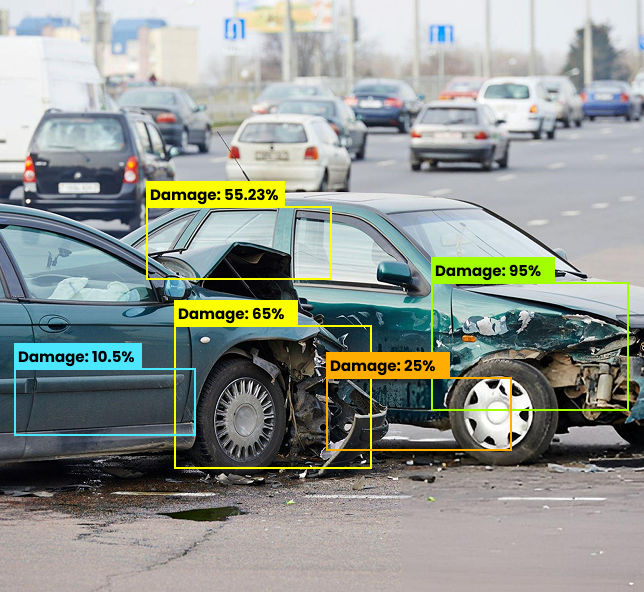
Case Study 2: Deep Learning for Damage Detection
A3Logics developed a deep-learning system with TensorFlow and OpenCV to automate the process of detecting vehicle damage for Carlyle Insurers. The system breaks down pictures, identifies damaged areas, categorizes the level of damage, and approximates the repair expense while detecting fraud likelihood. Deployment provided quantifiable benefits of a 50% decrease in claim settlement time and 20% decrease in claim handling expenses. Customer churn fell by 30%, and damage-assessment errors were almost completely eliminated.
Key Features to Consider in Auto Claims Management Software Development
1. First Notice of Loss (FNOL) Automation
FNOL automation will provide customers with the opportunity to report accidents immediately via mobile applications, chatbots, or portals. It accelerates the process of claims initiation and makes sure that the right information is registered early.
2. Workflow Automation
Any AI-based workflow automation removes manual repetitive processes or inconsistent enforcement of business rules. This enhances efficiency in handling claims, minimizes errors and shortens the time taken to settle cases by the insurers.
3. Comprehensive Claims View
AI for auto claims management allows a single dashboard to bring together documentation, communications, and claim history. Adjusters can see everything, which enables better decisions, collaboration, and transparency of claims.
4. Document and Data Management
AI-based applications gather, structure, and search claim documents such as repair bills and medical reports. This saves paperwork, eases compliance and speeds up claims processing.
5. Integration Capabilities
Fluid communication with the telematics, policy databases and repair networks enhances accuracy and operational efficiency. It creates an interconnected ecosystem which facilitates quicker and more certain claims resolutions.
6. Communication Tools
The policyholders are given updates on the claim status in real-time with in-built chat, email and SMS alerts. These tools propagate transparency and also improve the relations between the insurers and the customers.
7. Intelligent Fraud Detection
Machine learning applications detect anomalies in claims and identify possible fraud beforehand. Such a proactive strategy will save money and avoid fraudulent payments.
8. Automated Damage Assessment
Image recognition, which is powered by AI, analyses the accident photos to approximate the repair cost or declare a complete loss. This minimizes the use of manual inspection and accelerates settlements.
9. Scalability and Cloud-Based Architecture
Cloud-enabled schemes assist in increasing volumes of claims and remote accessibility. They save on infrastructure expenses and offer flexibility with strong security.
10. Regulatory Compliance and Security
In auto insurance claims management software, compliance and security are paramount, and it is necessary to ensure compliance with laws such as GDPR or HIPAA. Sensitive financial and customer data is secured by built-in encryption and monitoring.

Challenges of Implementing AI in Auto Claims Management Software
1. High Development and Integration Costs
Adoption of AI for auto claims management involves high expenditure on sophisticated infrastructures and human resources. These initial expenses may be high, and it may take time to realize these returns before insurers become measurably efficient.
2. Regulatory Hurdles
The insurance sector is extremely regulated, and AI raises concerns of explainability, accountability, and compliance. The necessity to adhere to local and international standards and introduce new AI functions can delay the implementation, and create compliance issues.
3. Data Privacy and Cybersecurity
AI systems rely on the sensitive information regarding the client and vehicle. Protecting the data, encrypting it, and adherence to privacy laws, including GDPR to avoid intrusions and maintain customer trust are extremely important.
4. Resistance to Change Within Organizations
The fear of job loss and the unfamiliarity might make employees and adjusters unwilling to adopt AI. Smooth adoption requires effective training, change management and communication strategies.
5. Need for Quality Training Data
The AI models prosper on large and accurate data. The insurers might have difficulties in gathering, cleaning, and labeling adequate datasets, which are key to successful model training and credible outputs.
Cost of Developing AI-Based Auto Claims Management Software
1. Basic Level
Includes basic features like FNOL automation, user-friendly workflow development and chatbot seamless integration. This level will suit in situations where the insurers are small and do not require predictive analytics or fraud detection. Cost = $150,000 – $300,000
2. Mid-Range Level
Incorporates AI fraud detection, computer vision to estimate damages, predictive analytics and repair networks integration. Designed for medium to large insurers, the solution balances high functionality with affordability, and moreover, it significantly enhances both the accuracy and speed of claims processing. Cost = $300,000 – $700,000
3. Enterprise Level
End-to-end systems featuring a sophisticated AI system such as real-time predictive modeling, IoT, scalable cloud architecture, regulatory compliance sub-system, multilingual support. Most effective for international insurers who require global claims management that is automated, secure and scalable. Cost = $700,000 – $1,500,000+
Future of AI in Auto Claims Management Software: What’s Next?
1. Generative AI in Insurance
These will be used to generate accident data and train models on claim situations that simulate claims rather than using constrained real-world data. Generative AI in Insurance will also enable the adjusters to automate documentation and reporting.
2. Telematics Integration
Telematics devices will provide AI with real-time driving and vehicle data, allowing to report accidents instantly and create precise reconstructions. This assists insurers to tailor-fit premiums and accelerates First Notice of Losses.
3. Multi-agent Systems
Multi-agent systems will be managed by AI, and various bots will work on intake, fraud detection, communication, and payments. This inter-relationship will result in quicker, more effective and precise claims processing.
4. Advanced Predictive Models
The predictive models will be used to predict severity, cost, and risks with precision using historical claims, geospatial data, and market insights. Early intervention helps the insurers to proactively allocate resources and reduce losses.
5. Blockchain Integration
Blockchain and AI will generate unalterable records of claims and support the automatic settlement of smart contracts. This guarantees increased trust, adherence, and minimized fraud in insurance dealings.
6. IoT Data from Vehicles
Cars with the IoT will send the data about the crash such as the impact force, braking pattern, and the driver behavior to the AI. This live information will confirm accidents in real-time and accelerate claims process.

Why Choose A3Logics as Your Auto Claims Management Software Development Company?
1. Proven Industry Expertise
A3Logics has several years of experience in auto claims management software development. With our extensive knowledge of the industry, it means that all solutions are viable, effective and aligned with the changing needs of both the insurers and policyholders.
2. Strong AI Capabilities
Our team harnesses the power of the new artificial intelligence to make claims processing smarter and quicker. We contribute to the minimization of errors and enhance the general accuracy by automating repetitive tasks.
3. End-to-End Solutions
A3Logics offers end-to-end solutions that consolidate workflows between first reporting of a claim to settlement and recovery. This guarantees an efficient cooperation amongst the departments and minimizes the mistakes during the lifecycle of claims.
4. Expertise in the Automotive Domain
A3Logics has extensive experience in the automotive industry and this allows us to develop systems that combine damage detection, telematics and repair networks. Consequently, we can enhance the level of efficiency and customer satisfaction.
5. Focus on Security and Compliance
Our company values compliance with international laws on data safety. Having effective cybersecurity protocols and secured systems, we protect confidential data and guarantee adherence to the complex legal environment of insurance operations.
Conclusion
AI has become a vital component of the modern auto insurance claims management software that has revolutionized speed, accuracy and customer satisfaction. By integrating automation, computer vision and predictive analytics, insurers can automate the process of streamlining claim lifecycles faster at low cost and decrease fraud.
With continued adoption, utilizing the expertise of domain experts like A3Logics to develop auto claims software applications will make sure that future-proof solutions will have a balance between efficiency, compliance, and positive customer experience.