Did you know that many businesses are aware of only 25% of their competitors and are unaware of the remaining 75%? This huge gap can lead to missed business opportunities, inconsistent pricing strategies and eventually revenue loss. It is extremely important in today’s time for business owners to be aware of their competitors’ product prices, market trends and customer behavior.
Business owners should also carefully analyze how customers are responding to their competitors’ pricing. From real-time competitor analysis to understanding market trends and customers, business owners need to do it. This allows the businesses to set optimal pricing. Therefore, an AI-driven price intelligence software is of great help in this regard to analyze and set a pricing strategy that allows your business to make informed and profitable decisions.
What is Price Intelligence?

Price intelligence refers to a data-driven approach for quantifying, tracking and analyzing the market dynamics and movement of competitor pricing. Through this, the businesses can keep a track of what’s working in the market and bring changes to their pricing accordingly. Different sources for pricing intelligence are consumer demand, competitor analysis and data collection through web scraping.
Price intelligence model is extremely crucial in today’s time for businesses of all sizes. It helps to determine the impact of market-level pricing intricacies and then bring the necessary changes in the strategy to boost profitability and attract customers.
Price intelligence analysis would include promotional activities, current offers, seasonal discounts, and even existing stock levels. Competitor pricing marketing campaigns are also analyzed to gather a better understanding of promotions and discounts.
The process of low pricing is also taken into consideration with respect to market conditions and seasonality. Through price intelligence, businesses can analyze how much the customers are willing to pay and how they react to pricing changes. Therefore, pricing strategies are adjusted accordingly to not only get a greater market share but also stay ahead of the competition.
Benefits of AI-driven price intelligence

The price intelligence software market size had reached US$1.41 billion in 2024 and is expected to grow further USD 4.28 billion by 2033. Therefore, integrating AI enabled price intelligence software into your business model can offer a wide range of benefits, such as the following:
1. Better decision-making
The AI-powered pricing intelligence tool can help businesses with better decision-making. The availability of real-time data helps with better decision-making. You don’t have to rely on guesswork, as proper data will be available, ensuring you make informed decisions. The actionable insights play an important role in helping businesses stay ahead.
2. Stay ahead of competitors
When you know where you stand in comparison to your competitors, you tend to integrate better strategies to outperform them. Whether it is bringing seasonal discounts or beating their sudden price drops, you can do it all with the competitor price intelligence tracking software.
3. Increase profit margins
Businessowners must understand how much their customers are willing to pay them. This can help to adjust the pricing and maximize the profit without any loss. The software analyses past and real-time data to help businesses get a thorough understanding of the market. As a result, you can price your products accordingly to increase sales.
4. Higher customer satisfaction
Customer satisfaction should be the primary goal for businesses. Customers these days prefer quality over quantity and when you offer affordable pricing, you must make your customers believe that you’re offering value too. With the help of the AI powered price intelligence software, you can price your products optimally. This offers a competitive edge, helping businesses attract loyal customers.
5. Strategic market alignment:
Maintaining strategic alignment with evolving market is crucial for businesses. The AI-driven price intelligence software helps businesses monitor competitor pricing, and market movement. Furthermore, it also helps with price pattern analysis in real time. Using these insights, companies can bring significant changes for better market positioning, maintain consistency and build a loyal customer base through data-informed pricing decisions.
Top AI Price Intelligence Platform Available
The leading AI powered price intelligence softwares available in the market are:
1. Minderest
Minderest is one of the leading AI-powered pricing intelligence tools that offers MAP tracking, competitive benchmarking, and competitor price monitoring. Furthermore, the software also helps with sales tracking and checking in-store prices and available stocks. With a comprehensive view of your online and offline channels, you can make better business decisions.
2. DigiSense360
DigiSense360 is one of the top tools that can give you an overall view of your digital shelf. From tracking competitor pricing to their product rankings in real-time, DigiSense360 helps with it all.
Furthermore, this software also helps businesses analyze their reviews, bring changes to the MAP policies, audit content, and then adjust the pricing as per market demands as well. With an AI assistant, the platform plays an important role in gathering all the necessary insights for businesses. This further helps to capture all the data easily without any complexity.
3. Dealavo
Another top AI powered price intelligence software to look forward to is Dealavo. It offers comprehensive pricing solutions for businesses. Therefore, Dealavo helps with dynamic repricing, price monitoring, promotion tracking, and even competitor assortment monitoring. Apart from the online capabilities, Dealavo also assists with offline price monitoring. Therefore, this plays a key role in gaining a comprehensive understanding of the market pricing.
Key Features of AI Powered Price Intelligence Software
AI price intelligence software development is powered by a lot of features that help in streamlining the information and ensure businesses make better decisions. Some of the key features of the AI powered price intelligence software include:
1. Real-time price monitoring
The competitor price intelligence tracking software can help you analyze the cost of your competitors’ products or services across all platforms. This helps businesses understand the market shift. As a result, necessary adjustments to the strategy can be made accordingly.
2. Product matching
AI price intelligence software development can assist in accurate product matching. It is extremely crucial to ensure that your products match the right competitors. Any sort of error in tracking can lead to wrong data comparison.
3. Dynamic pricing rules
With the help of AI-powered price intelligence software development, businesses can set up dynamic pricing rules. Right from understanding the competitors to protecting the margins and even adjusting the pricing according to demand or stock, the AI powered price intelligence software helps with all. Therefore, eliminates the need for manual intervention.
4. Competitive benchmarking
AI competitor price intelligence tracking software can help in competitive benchmarking. With the software, businesses can analyze where their current pricing is, especially in regard to overpriced, underpriced, or perfectly priced. With the software, you can do benchmarking, which indeed will help to identify the gaps and also opportunities to tap into the market.
5. Automated alerts
The AI enabled price intelligence software helps with automated alerts, ensuring you are notified instantly in case of pricing changes by competitors. You’ll also be alerted when the competitors are running promotions or discounts. Thus, you will be notified about it all without having to keep track of it.
6. Analytics and reporting
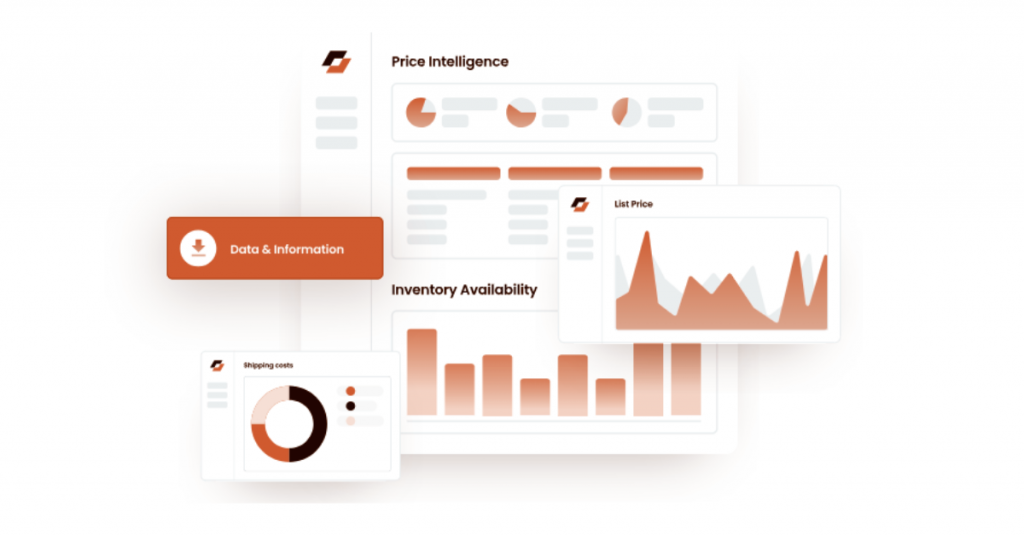
The AI-driven price intelligence software can be designed with integrated interactive dashboards. The interactive dashboard would then help businesses capture real-time data also transforming into actionable insights which may be used for decision-making. As a result, you can keep track of what’s happening and what your status is. With proper data and insights in hand, you will be able to take the next steps accordingly.
7. Existing tech stack integration
One of the key features of an AI-powered pricing intelligence tool is how it can be seamlessly integrated into the existing tech stack from marketplaces, to eCommerce, PIM, ERP, and others. As all the tech stacks are integrated and synced, consistency is maintained on all platforms. This plays a key role in avoiding any confusion that may occur due to pricing changes.
Key Technologies Behind AI Price Intelligence Software Development
Some of the key technologies powering the AI price intelligence software development include the following:
1. Artificial Intelligence & Machine Learning
Artificial Intelligence and Machine Learning form the core of price intelligence. With the help of this technology, the software can easily learn from data, identify patterns, and also make predictions. Different algorithms and deep learning techniques take up various tasks such as demand forecasting, categorizing dynamic pricing, and also detecting any anomaly in the pricing information. Therefore, the businesses can then bring necessary changes accordingly.
2. Natural Language Processing (NLP) for product matching
Natural Language Processing (NLP) is used at an extensive level for product marketing. This technology plays an important role in understanding the unstructured data and then processing it. The technology collects data from various sources and streamlines it. Therefore, businesses can use this information to match the products across different verticals directly. The system conducts a comparison with other products with the help of essential product attributes and features.
3. Computer Vision for product image recognition
Computer vision, powering AI-powered price intelligence software, helps with image recognition. Therefore, all the products can be compared and identified through the images themselves. Accurate product variation recognition can also help to detect any counterfeits (if any). The visual characteristics are matched to ensure that the product matches the description. This technology proves to be helpful when textual descriptions are either inconsistent or limited.
4. Big Data Analytics & Cloud Infrastructure
Big data analytics and cloud infrastructure today are powering a wide range of software, with AI-enabled price intelligence software being one of them. The price intelligence software needs to process vast amounts of data from different sources, such as competitor websites, market trends, and even internal reports. The use of big data analytics helps in extracting essential insights from the data. The cloud infrastructure helps with scalability, storage, and eventually processing. As a result, complex data can be easily handled.
Compliance and Data Security Considerations during AI Price Intelligence Development
During the AI price intelligence software development, it is important to consider compliance and data security as well. Some of the major considerations for businesses include the following:
1. GDPR & CCPA compliance in data collection
It is important to comply with GDPR and CCPA for the development of AI-powered price intelligence tools. Thus, the businesses must ensure that the user data they collect is being used ethically as per user consent and with full transparency. This plays an important role in maintaining transparency about how the user data is collected, stored, and eventually used. Furthermore, organizations must work towards integrating mechanisms that help with opt-outs and data deletion. This is to ensure consumer privacy and their rights are maintained and protected across all markets.
2. Ethical AI practices in price recommendations
Apart from being legally compliant, the competitor price intelligence tracking software must also be ethical. Therefore, the software should prevent any type of bias or discriminatory practices that can negatively impact the consumers. Maintaining ethical AI practices ensures balanced price recommendations and brings fairness in the market. This helps to build the reputation of the brand among the customers. Organizations must outline clear guidelines and also conduct audits to maintain transparency.
3. Data encryption and secure API usage
The AI powered price intelligence software is significantly dependent on sensitive data like customer information, transaction details or even competitor analysis. Therefore, businesses need to integrate robust data encryption methods. With the help of a secure API, the data flow across all channels can be maintained while also ensuring transparency and compliance. Furthermore, the API can also assist with real-time data synchronization. Businesses may consider bringing strong encryption methods for improved and secure data exchange.
4. API integrations for omnichannel pricing
Modern businesses need a consistent pricing structure across all platforms to avoid any confusion. Whether it is in-store pricing, eCommerce platforms, or apps, the price needs to be consistent on all platforms. With the API integration, compliance and encryption standards can be maintained, and the price can be synchronized across all the platforms. Furthermore, it also lowers the risk of data leakage, which often has a negative impact on customer experience.
Steps to Develop AI-Powered Price Intelligence Software
AI Price intelligence platform development requires a detailed procedure. The detailed step-wise procedure to develop the AI powered price intelligence software includes:
1. Requirement gathering & market analysis
Before the development process, it is important to conduct thorough market research and gather all the information. For market analysis, you need to look into the competitor pricing strategies, identify consumer behavior, and industry-specific regulations. It is important to deliver software that solves real-world problems.
2. Architecture design & tech stack selection
Now, it is important to focus on system infrastructure. Take into consideration efficiency, security, and scalability for system infrastructure development. Choosing the right tech stack is imperative in this stage to ensure compatibility and seamless integration with the existing tech stack. Usually, businesses choose modular design in terms of frameworks, cloud platforms, and programming languages since it offers future-proof solutions for integrations and upgrades.
3. Data collection & preprocessing pipelines
Accurate price predictions only happen when the data is reliable. The AI-powered price intelligence software development requires precise data collection, even if unstructured, from different sources. Conduct competitor analysis, research online and eCommerce platforms to collect the data. Then, begin with data preprocessing pipelines to clean and improve the data, which can further be used by AI and ML models.
4. AI/ML model training and deployment
In the next stage, the cleaned data is used for training AI and ML models. It helps to identify the patterns, predict the prices, and even provide actionable insights. Accuracy and fairness are considered in all the data before being deployed. Once determined, the data is then deployed with the help of CI/CD pipelines with a scope of updates in the future.
5. Testing, scalability & performance optimization
After deployment, rigorous testing of the learning models is done under various scenarios. Different types of testing include stress testing, functional testing, and security checks, as they play an important role in driving scalability. This helps with real-time price adjustments and also handling a vast amount of data.
6. Ongoing maintenance & support
Even after deployment, it is crucial to look into the AI driven price intelligence software for maintenance and support. This is to ensure compliance and accuracy. Driving regular updates to the AI models while also offering bug fixes and overcoming security patches is of great help. Therefore, the businesses can stay updated with the changing market conditions.

Industry Use Cases of AI Driven Price Intelligence Software
Here are the use cases of AI driven price intelligence software:
1. eCommerce & Retail Industry
Amazon is one of the prime examples in the eCommerce and retail industry to be using AI enabled price intelligence software. It uses a dynamic pricing model and changes the prices of products numerous times across the product catalog. With the help of big data analysis and complex algorithms, Amazon constantly analyzes competitor pricing, customer behaviors, and demand fluctuations to adjust its pricing.
2. Travel & Hospitality
In the Travel and Hospitality sector, Southwest Airlines is one of the top airlines to be using price intelligence software for adjusting its pricing to stay ahead in the market. This brand takes into consideration different factors such as time of purchase, demand fluctuations, and competitor prices. Southwest Airlines uses yield management for effective management across the airline industry. As a result, it plays an important role in maintaining consistency.
3. Consumer Electronics & FMCG
In the electronics industry, Best Buy leads the market with its use of AI-driven price intelligence software. This allows them to stay competitive in the highly volatile electronics market. Best Buy uses machine learning to analyze customer reviews, demand fluctuations, and competitor pricing. As a result, they can adjust the pricing accordingly.
4. Automotive & Manufacturing sectors
Tesla is one of the leading brands in the automotive sector to use price intelligence technology. The company considers different factors such as supply chain costs, raw material prices, and regional market differences to simplify the information. The prices are adjusted dynamically based on the supply, demand fluctuations, and the cost of raw materials. Competitor models are also analyzed for optimizing pricing strategy and driving long-term profitability for businesses.
How to implement price intelligence effectively
It is crucial to follow a structured process to implement a price intelligence system in the business properly. These usually include:
1. Choose the right price intelligence software
The first step is to choose the right AI-powered pricing intelligence tool. The tool must integrate properly with your existing tech stack while providing accurate information. It should also align with the business model and support scalability. The right platform can bring a huge difference in terms of data collection, monitoring, and analysis.
2. Identify key value items (KVIs)
Next, identify the key value items. These key value items are of utmost importance to businesses since they can influence customer decisions. Organizations can initially focus on the key value items to provide competitive pricing, but also not compromise on scalability. Furthermore, the key value items can play an important role in building a broader catalog.
3. Set up automated price monitoring
For seamless price intelligence software integration, businesses must set up automated pricing. This should help with real-time competitor price monitoring, market condition analysis, and even demand fluctuations. The real-time data through this platform can eventually help businesses make the necessary changes.
4. Collect, integrate, and analyze data from multiple sources
The data is usually collected from different sources and then streamlined. Feeding unstructured data can only provide inaccurate results. The different sources from which the data is collected, integrated, and analyzed include marketplaces, sales records, internal information, and competitor analysis. Moreover, this also helps to get a comprehensive view of the market, using which businesses can optimize their strategies accordingly.
5. Implement dynamic pricing algorithms
As all the data is made available to businesses in one place, implementing dynamic pricing algorithms becomes crucial, too. The pricing algorithm can be set based on different factors like season, demand, available stock, or competition. The integration of dynamic pricing algorithms helps to balance increasing revenue while also providing value to customers and winning their trust.
6. Monitor, analyze, and refine your pricing strategy
This just doesn’t end here. For effective price intelligence solutions, it is extremely important to monitor the strategy regularly. This helps them refine their pricing models. Moreover, algorithm adjustments can go a long way in ensuring that the pricing remains consistent and competitive. Furthermore, ethical considerations are also aligned to ensure business goals are met even in changing market conditions.
How much does it cost to develop AI Enabled price intelligence software?
The average cost of AI-powered price intelligence software development is around $39,500 to $250,000 or more. However, the pricing may vary depending on various factors. The pricing would increase if you’re looking for customization. Here are some of the key factors that affect the cost of development:
1. Algorithm complexity
Simple AI-powered/driven/enabled software is more affordable, but if you want customization and advanced features, the cost would be higher. This is mostly because of the involvement of specialized expertise and complex algorithms.
2. Integration
Connecting the AI-powered price intelligence tool requires significant investment, too, especially with ERP and CRM. Complexity in integration with the system is expensive and time-consuming. Therefore, businesses will have to invest the same.
3. Data requirements
The quality of data in terms of acquiring and cleaning has a significant impact on the cost as well. High-quality data models cost more than the generic ones. Furthermore, if you have unstructured data and need manual annotation, the cost will increase.
4. Infrastructure
There are usually two types of infrastructure in AI price intelligence platform development: cloud-based and on-premise. Cloud offers flexibility, but it is extremely expensive due to the use of data storage and computing power. Furthermore, if the business requires large-scale operations, the costs will increase.
A3Logics can help you develop AI Enabled price intelligence software
A3Logics is one of the leading companies for AI-powered price intelligence software development. The experts at A3Logics use different advanced technologies such as deep learning, machine learning, predictive analytics and NLP. The use of such advanced technologies help with making informed strategic-decisions through accurate forecasting further helping to boost customer experience.
A3Logics offers end-to-end customizable solutions to ensure that the respective AI-powered price intelligence software meets the growing needs of businesses. This plays a key role in helping businesses stay ahead in dynamic markets while staying competitive.
With the help of A3Logics, businesses can bring a significant change in their pricing strategies due to AI-enabled price intelligence software development. Thus, businesses can deliver the best to customers at affordable prices.
Conclusion
With the help of AI powered price intelligence software, it is no longer difficult for businesses to set competitive pricing. These tools can help you understand what your competitors are doing, and you can bring the necessary changes accordingly. In 2025, it is important to analyze the pricing strategies and maintain transparency to win customer trust.
With AI-powered price intelligence software development services like A3Logics, you can seamlessly integrate the software into your existing tech stack and make informed pricing decisions. This would help capitalize on the opportunities while also driving better market opportunities.