Most organizations in the contemporary digital arena rely on IT resources, including hardware, software, and cloud resources, to keep their productivity and operational efficiency high. The lifecycle management of these assets is essential for controlling expenses, compliance, and service delivery. As the digital transformation grows and hybrid workplaces emerge, the necessity to have a centralized and automated asset management system is more important than ever.
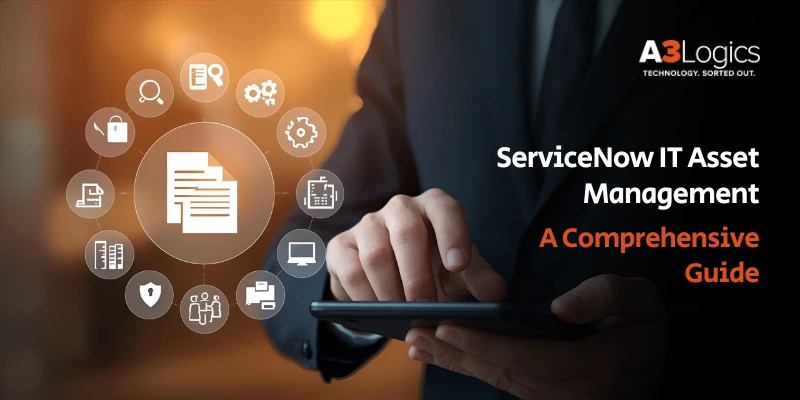
ServiceNow IT Asset Management (ITAM) is a single platform that provides an effective way to monitor, manage, and optimize all IT assets from procurement to retirement. Over 33,642 companies around the world use ServiceNow as their ITAM tool as of 2025. The reason for this? It gives full visibility of the lifecycle, automates manual processes and works well with other modules of ServiceNow. ServiceNow ITAM assists organizations to improve transparency, minimize risks, and leverage the value of technological investments by centralizing the collection of assets and enabling data-related decision-making.
Understanding ITAM in ServiceNow
What is ITAM in ServiceNow? It is a data-driven strategic approach that extends beyond the traditional asset tracking process to provide smart control of IT resources within an organization. It integrates processes, technology and automation to provide businesses with full control and visibility of their hardware, software and cloud resources. With the help of a single asset repository, it is able to keep track of all assets, ensure that they are well used, and that they are consistent with business objectives.
ServiceNow ITAM assists in the removal of data silos, integrating with IT Service Management (ITSM), the Configuration Management Database (CMDB), and other applications in the ServiceNow suite. Through this integrated approach, organizations are able to optimize their workflows, minimize the need for manual work and make sound decisions during the asset lifecycle. The key objectives of using ITAM in the ServiceNow platform are:
1. Ensuring Visibility and Control Over All IT Assets
ServiceNow IT Asset Management creates a unified source of information for every hardware, software, and cloud asset. This centralization will increase the level of transparency, whereby, in real-time, assets, their status, usage, and location can be tracked by the teams, making it easier to make decisions.
2. Reducing Financial, Operational, and Compliance Risks
ServiceNow ITAM reduces audit failures, contract breaches, and financial penalties by automating compliance, ensuring that the license data is accurate. It assists companies to remain in tandem with business regulations and vendor policies easily.
3. Improving Utilization and Minimizing Redundant Purchases
Having comprehensive knowledge of the assets, organizations are able to recognize the idle or redundant assets. ITAM in ServiceNow allows redeployment of idle assets, preventing needless expenditure and encouraging efficient use of assets across departments.
4. Automating Manual Asset Tracking and Reporting Tasks
ServiceNow workflows automate routine processes such as procurement, approval and decommissioning. This not only saves time but also minimizes human error and IT teams can work on strategic projects rather than repetitive data entry.
Core Components and ITAM Modules in ServiceNow
Each ITAM module in ServiceNow has its purpose, yet, collaborates to reach a shared result of asset visibility, compliance, and optimization. When organizations are aware of their differences, they can select the suitable modules based on the nature of assets, business priorities and needs.
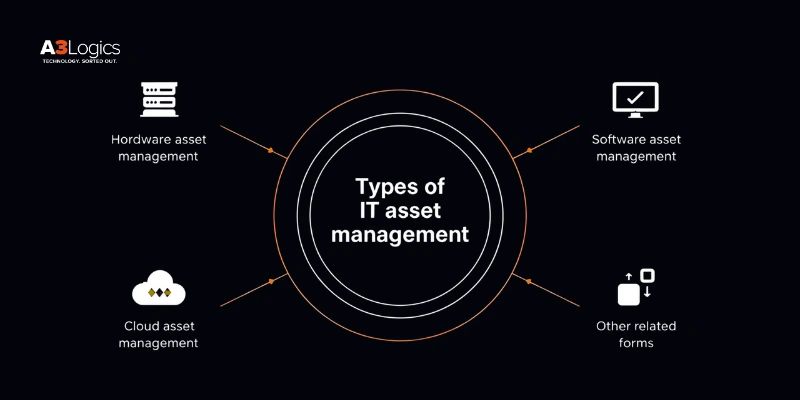
1. Hardware Asset Management (HAM)
This module is supposed to monitor and manage tangible IT assets such as computers, servers, printers, and network gadgets. It has proper asset records, warranty tracking, and end-of-life processes. HAM is best suited for companies that want to maximize the use of hardware, minimize waste and have accuracy in inventory.
2. Software Asset Management (SAM)
SAM is concerned with the management of software licenses and rights. It will check the vendor agreements, avoid excessive expenditure and streamline software distribution. This module is especially useful when organizations have highly complex software ecosystems that require automated monitoring and optimization of licenses.
3. Enterprise Asset Management (EAM)
EAM takes ITAM further to cover facilities, machinery, vehicles and other physical infrastructure. It integrates enterprise-wide tracking of assets into one system, which shows the full picture of asset health, maintenance schedules, and financial depreciation. EAM is suitable for manufacturing, logistics, and healthcare businesses.
4. Cloud Asset Management
The module has the capability of managing cloud-based resources in various environments, including AWS, Azure, and Google Cloud. It provides an insight into usage patterns, cost of subscription and compliance of services. Companies that use hybrid or multi-cloud infrastructure rely on this module to avoid unnecessary expenses, as well as improve cloud governance.
5. Mobile Asset Tracking
Mobile Asset Tracking assists in tracking smartphones, tablets, IoT devices, and other mobile endpoints that are deployed in distributed workforces. It offers real-time positioning, user assignments and status monitoring. This module is important to companies with remote or field-based teams, which require accountability and security of devices.
Key Features of ServiceNow IT Asset Management
1. Centralized Asset Repository and Lifecycle Visibility
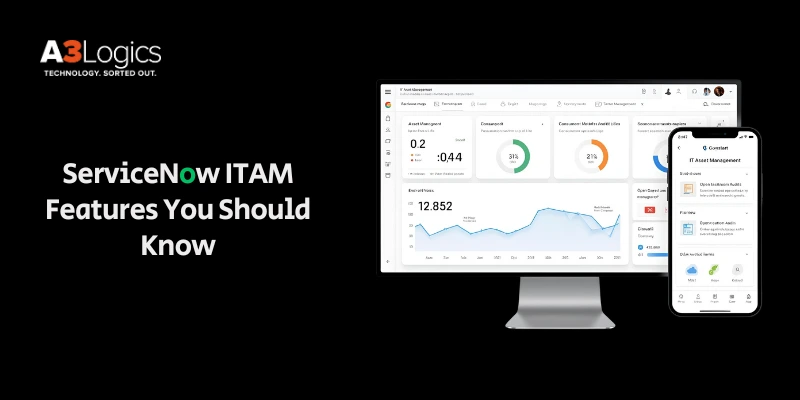
ServiceNow IT Asset Management offers a single system where all hardware, software, and cloud assets are stored in a central repository. This functionality provides a full visibility of every asset lifecycle, including the procurements, deployments, maintenance, and disposal. It can enable the stakeholders to make sound decisions and retain control of the performance and value of assets.
2. Automated Asset Discovery and Tracking
ServiceNow ITAM will identify and monitor assets in the IT environment continuously, using automated discovery tools. It negates errors in data entry by automatically updating the records of inventory as new devices or applications are identified. This automation will keep asset information up to date, enhancing transparency and functionality across departments.
3. License Compliance and Optimization
The platform makes the process of managing licenses easier as the entitlements are compared with actual use to identify gaps in compliance. ITAM in ServiceNow helps an organization to optimize its software expenditure by reclaiming licenses that have not been utilized and by avoiding over purchase. It also helps in audit preparedness through the maintenance of comprehensive compliance reports that are in line with vendor agreements and laws.
4. Cost Management and Financial Reporting
ServiceNow IT Asset Management features offer deep financial tracking of assets with insights into asset cost, depreciation and total cost of ownership. It will allow finance departments to predict the budgets more precisely, handle the expenses connected with the assets in a more effective way, and find opportunities of reducing the cost. This leads to enhanced financial governance and better ROI.
5. Integration with CMDB and Other ServiceNow Modules
The combination of ITAM and CMDB provides consistency between the asset and configuration data. It also integrates with ITSM, ITOM and procurement modules to establish a smooth flow of information within the IT processes. Such a holistic and cohesive integration ensures better data accuracy, minimized duplication, and an improved overall alignment of operations in the ServiceNow ecosystem.
6. Environmental Sustainability and Hardware Reclamation Support
ServiceNow IT Asset Management can facilitate sustainability activities by regulating responsible IT equipment reuse and disposal. It assists in monitoring the recycling, reuse or donation of retired devices to minimize e-waste. This aspect helps organizations to go green in their IT practices without necessarily compromising on the technology standards and corporate sustainability objectives.
Benefits of Implementing ServiceNow IT Asset Management (ITAM)
1. Enhanced Asset Visibility and Control
ServiceNow IT Asset Management offers a single dashboard to have real-time visibility of assets regardless of whether they are hardware, software, or cloud-based. It enables the companies to monitor the ownership, usage, and status with high accuracy. This visibility enhances decision making, eliminates loss of assets and all resources are matched to the business requirements.
2. Reduction in Operational and Compliance Risks
ServiceNow ITAM reduces the risks associated with software audits, security attacks, and policy breaches by automating compliance control and license tracking. It makes assets adherent to internal and external regulations. This preventative strategy minimizes financial fines and business interruptions due to non-conformity.
3. Improved ROI Through Asset Utilization
Organizations tend to waste resources on assets with little usage. ServiceNow ITAM is useful in recognizing the redundant or idle resources and redeploying them appropriately. Effective utilization of assets results in increased returns on investments as well as maximized capital allocation within the different departments, maximizing the value of IT investments.
4. Streamlined Processes with Intelligent Automation
Automation facilitates the routine asset management operations like procurement, approval, assignment and decommissioning. ServiceNow ITAM employs smart processes to remove manual mistakes, expedite actions and assure data stability. Such optimized processes increase productivity and help IT teams concentrate on strategic efforts.
5. Real-Time Analytics and Reporting
ServiceNow provides comprehensive dashboards and analytics in ITAM, which provide real-time asset health, performance, and cost insights. Decision-makers are able to produce comprehensive reports regarding audits, budget, and forecasting. Such analytics allow organizations to take appropriate actions based on reliable data and constantly enhance the efficiency of assets.
ServiceNow IT Asset Management (ITAM) Implementation Process
1. Pre-Implementation Planning and Goal Setting
An effective ServiceNow ITAM Implementation starts with the right goal setting and strategic planning. Organizations will have to specify quantifiable KPIs, map out the preferred business results, and evaluate the existing inventory management maturity. This phase will help align ITAM goals with other business strategies, which will provide a good basis towards a successful deployment.
2. Data Migration and Asset Normalization
In the implementation process, the current asset data in the legacy systems or spreadsheets is transferred to the ServiceNow platform. Normalization of data is done to remove duplicates, inconsistencies, and standardize names. This will guarantee the integrity and accuracy of the asset information within the system and facilitate trusted analytics and decision-making.
3. Integration with Existing ITSM and CMDB Systems
Asset data can flow within the ServiceNow ecosystem through integration with ITSM and CMDB. This relationship gives synchronization in real time between incident, change and configuration records. The outcome is an integrated environment where the IT teams can get updated and consistent asset data through one unified source.
4. Customization and Workflow Automation
The processes of every organization are different, and they need to have their workflows. To satisfy these requirements, ServiceNow allows the customization of forms, approval chains, and asset states. Workflow automation minimizes human participation, improves operational efficiency, and would guarantee that every phase in the asset lifecycle is handled with a uniform and standardized procedure.
5. User Training and Change Management
Change management will guarantee acceptance by the users and success in the long run. On-the-job training plans are designed to enable teams to learn about new ITAM processes and dashboards, as well as automation features. Constant communication, practical workshops and support sessions promote adoption, minimize resistance and assist users to be able to adapt to the environment of ServiceNow.
6. Post-Implementation Review and Optimization
Once deployed, organizations need to do a full review to assess the system performance in relation to set KPIs. Report and dashboard insights present future improvements. Constant optimization means that ServiceNow IT Asset Management can keep up with the business requirements, providing the ability to achieve long-term efficiency, visibility, and compliance.
Common Challenges in ITAM Implementation and How to Overcome Them
1. Data Inconsistency and Lack of Standardization
Inconsistent asset data gathered by different sources is one of the most frequent problems of ServiceNow ITAM Implementation. There can be errors when there are no standard naming conventions and structured data models. Setting up standardized data, automating the discovery of assets, and normalizing imported data will guarantee standardized, precise, and reportable asset records.
2. Integration Issues with Legacy Systems
A great number of organizations use traditional asset management tools or spreadsheets. Combining these systems with ServiceNow IT Asset Management may cause data discrepancies or communication issues. The most suitable action is to hire professionals who provide ServiceNow Implementation Services to design safe integrations, confirm the accuracy of data, and facilitate its smooth transfer.
3. Incomplete Asset Visibility
The lack of complete visibility of assets is the consequence of incomplete data and linked processes. It denies organizations the ability to know the true value and use of IT assets. Using real-time asset discovery tools and integrating ITAM with CMDB and ITSM processes can assist in gaining a holistic view of all hardware, software and cloud assets.
4. Change Resistance and User Adoption
Employees tend to resist the change to new systems either because of failure to be trained or because of fear of change. This may delay adoption and restrict the effectiveness of ITAM. To address this challenge, organizations ought to offer specific training, present benefits effectively, and delegate role-based duties to enhance the confidence and engagement of users.
5. Compliance and Audit Readiness Challenges
It may be complicated to follow the rules of vendors’ contracts and regulations. There is a high probability of errors or overlooking renewals in manual audits. ServiceNow IT Asset Management makes it easier by automating compliance monitoring, creating audit reports, and notifying teams about impending renewals, thereby making sure that organizations are always audit-ready.
Strategies to Ensure a Smooth ServiceNow ITAM Implementation
1. Start with a Pilot Rollout
Start with a smaller implementation to find out problems, test the work processes, and get user feedback. This regulated method aids in the fine-tuning of configurations prior to the ITAM being spread organizationally, minimizing risks and increasing the likelihood of successful adoption.
2. Regularly Review Data Accuracy
Carry out periodic data quality audits and reviews to eliminate redundant or obsolete records. By ensuring that there is clean data in the ITAM of ServiceNow, the accuracy of reporting, forecasting, and departmental decision-making would be enhanced.
3. Leverage Automation for Data Updates
Streamline asset updates, asset notifications, and status changes using the automation capabilities of ServiceNow. Automation enables the reduction of repetitive processes, minimization of similar errors, and a more efficient IT asset tracking by providing updates on time.
4. Gather Continuous Feedback
Create a learning culture by providing refresher training and getting user feedback. This assists in detecting process gaps at the early stage and allows constant refinement of the ITAM processes in the ServiceNow environment.
Best Practices for Maximizing the Value of ServiceNow ITAM
1. Establishing Governance Policies and Asset Ownership
Good governance policies provide accountability and ease in the management of assets. Asset ownership assignment, adequate documentation, and standard process enforcement are useful in creating transparency, preventing data anomalies, and aligning IT asset management operations with organizational and compliance goals.
2. Automating Repetitive Asset Management Tasks
Automation saves time, minimizes human labor, and improves precision. ServiceNow IT Asset Management offers a chance to automate the common processes such as asset updates, licenses reconciliations, and approvals and let IT teams work on the strategic and high-impact projects.
3. Conducting Regular Audits
Regular audits help establish integrity and compliance with vendor agreements and in-house policies. They keep asset records accurate, maximize license usage, and minimize compliance risks before they become costly issues.
4. Leveraging AI and Analytics for Predictive Asset Management
By incorporating AI-based analytics and ITAM in ServiceNow, predictive maintenance, usage forecast, and smarter procurement choices can be achieved. Asset data insights are used to spot potential risks in their early phase to improve the accuracy of planning and increase the lifespan of important assets.
5. Continuous Improvement Through Performance Insights
KPI monitoring and reviewing performance reports can be used to detect areas of process improvement. Periodic reviews promote proactive workflow, asset use, and cost management enhancements to ensure that ServiceNow IT Asset Management can bring quantifiable value over time.
Collaboration with professional ServiceNow Consulting Services adds extra power to these practices, as it provides insights on the options of optimization, automation, and governance alignment to support long-term ITAM excellence.
Future of IT Asset Management in the ServiceNow Ecosystem
The future of ServiceNow AI is based on the use of AI, IoT, and predictive analytics in IT Asset Management. These technologies will enable organizations to forecast their assets performance, prevent failures, and allocate their resources optimally. Compliance and security requirements would also keep on changing, requiring robust monitoring and audit preparedness.
ITAM in ServiceNow will be able to combine innovative automation and data-centric insights that enhance asset visibility, cost-efficiency, and operational efficiency. The organizations shall also enjoy a more active and intelligent way of managing IT and enterprise resources, which helps in supporting both strategic and operational goals.
How A3Logics Helps Businesses with ServiceNow ITAM Implementation
A3Logics provides a comprehensive solution in ServiceNow IT Asset Management by assisting companies in planning, implementing and optimizing their ITAM programs. Our team offers strategic consulting, custom implementation and best practice advice to facilitate a smooth integration with the existing ITSM and CMDB systems. Our areas of specialization are to maximize asset visibility, minimize operational risks, and ensure that IT investments are aligned with the business objectives.
We also provide custom workflow automation and integrations across ITAM Modules in ServiceNow to provide intelligent asset tracking, license optimization, and real-time reporting. We offer round-the-clock monitoring, support and optimization through our ServiceNow Managed Services to guarantee that ITAM brings long-term value. Collaboration with A3Logics ensures a scalable, compliant, and ROI-based ITAM deployment.
Conclusion
ServiceNow IT Asset Management is an effective application that integrates asset visibility, compliance, and financial control into a single application. It provides organizations with the ability to monitor, administer and streamline all hardware, software and cloud assets in an accurate manner. ServiceNow ITAM can convert asset management into a business strategy by using automation, analytics and sustainability practices. Properly implemented, it enhances productivity, is cost-effective, and helps a company to undergo a long-term digital transformation.