
In the race to win customer trust and regulatory confidence, one weak link can cost fintechs millions. From synthetic identities slipping through onboarding cracks to billion-dollar compliance penalties, today’s financial ecosystem runs on one critical safeguard: Know Your Customer (KYC).
KYC serves as the foundation of compliance in modern financial ecosystems. It enables fintech firms to verify customer identity, assess risk profiles, and prevent illegal activities.
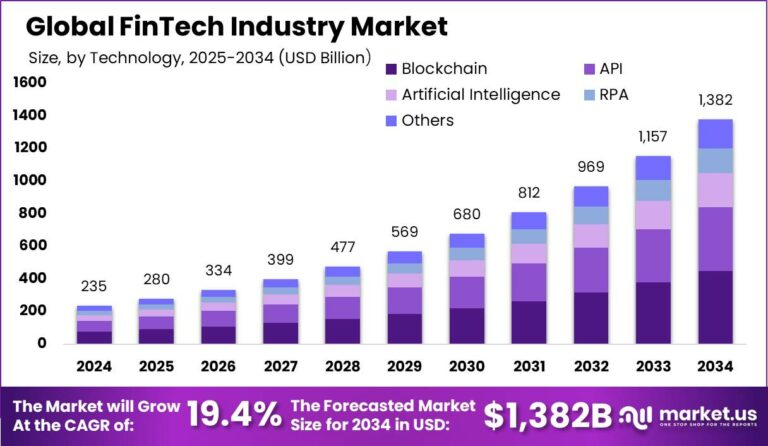
In 2025, the global fintech market stands at $280 billion, and is projected to reach $1.38 trillion by 2034, with a CAGR of 19.4%. Despite this explosive growth trajectory, many financial institutions still rely on outdated verification frameworks. Leading banks spend millions on KYC reviews, yet continue to face manual errors and prolonged onboarding times that result in significant customer drop-offs.
The rise of AI in Finance has made KYC Automation a strategic necessity. By integrating machine learning, computer vision, and natural language processing, KYC automation solutions now allow fintechs to verify customer identities in seconds instead of days.
In this blog, we will explore how AI is transforming KYC Automation in fintech, covering its key technologies, benefits, real-world applications, and more. Let’s get started!
What is KYC Automation?
KYC Automation refers to the deployment of intelligent digital systems that manage customer verification end-to-end, from document capture to real-time risk analysis. Traditionally, compliance teams manually checked IDs, verified signatures, and searched sanction databases. Today, automated KYC solutions can complete these tasks automatically through advanced KYC automation tools.
These systems leverage technologies such as Optical Character Recognition (OCR) to extract data from IDs, computer vision to detect forgery or document tampering, and natural language processing (NLP) to identify negative news or politically exposed persons (PEPs). By combining these capabilities, fintechs can reduce onboarding time by up to 80% while maintaining regulatory accuracy.
The Rising Need for KYC Automation in Financial Services
The demand for KYC Automation has accelerated dramatically as financial crime, regulatory scrutiny, and customer expectations rise in parallel. In 2024, AML penalties globally surpassed $4.6 billion, driven by the enforcement of anti-money laundering and counter-terrorism financing (AML/CTF) regulations. Yet despite such compliance efforts, only 2% of global illicit financial flows are currently intercepted. This highlights the limitations of manual review processes.
Furthermore, synthetic identity fraud surged across fintech and banking channels. A survey revealed that 72% of financial institutions encountered synthetic identity attacks during customer onboarding. These sophisticated threats expose the critical weaknesses of legacy compliance workflows that rely on static rules and human review.
Simultaneously, customers also now expect instant onboarding experiences. Firms have also reported losing clients due to slow onboarding. For fintechs that rely on speed and convenience, this lag directly translates into lost revenue and low trust.
This convergence of the above points makes KYC AML automation an operational necessity for financial institutions.
Difference Between Manual and Automated KYC Solutions
Manual KYC involves human staff collecting and checking customer data. It can include document verification to sanctions screening. The processes are inherently slow, costly, and error-prone. Large financial institutions dedicate 10 to 15% of compliance staff solely to manual KYC and AML functions.
These legacy systems generate inefficiencies at multiple levels. Manual entry introduces data inconsistencies, fragmented databases cause duplication, and each case review consumes hours of skilled labor.
In contrast, automated KYC solutions use KYC automation tools that orchestrate end-to-end verification with minimal human intervention. A typical automated workflow can:
- Extract document data using OCR
- Verify authenticity with computer vision
- Cross-check information against global watchlists
- Conduct facial recognition to ensure user identity
- Generate a risk score using machine learning algorithms
This automation model reduces turnaround times from days to minutes. For instance, where manual onboarding could take two weeks, an automated KYC verification system can approve new customers in under five minutes.
Challenges in Traditional KYC Processes
1. High Operational Costs and Manual Errors
Traditional KYC processes are burdened by high costs and human inefficiency. Banks often spend tens of millions annually on compliance-related tasks, much of it consumed by repetitive data collection and verification activities. Manual systems are vulnerable to transcription errors and oversight. A single mismatch in an ID number or sanction list can result in non-compliance penalties.
2. Slow Customer Onboarding and Compliance Delays
Manual verification also slows down the customer experience. Prospective clients wait very long for account activation due to document reviews and manual approvals. In competitive markets, this lag results in high customer churn.
Some corporate accounts require six weeks or more to complete due diligence. This is no longer acceptable in the digital era, where neobanks and fintech startups onboard users instantly using KYC automation tools.
3. Data Duplication, Fraud Risks, and Regulatory Complexities
The absence of centralized data management in legacy systems leads to redundancy and inconsistency. Duplicate customer records and fragmented watchlist checks increase both operational cost and fraud exposure. Fraudsters exploit these weaknesses using synthetic identities and deepfakes, which often bypass rule-based systems.
Additionally, global fintechs must navigate overlapping regulations, from FATF and FinCEN guidance to GDPR and regional AML directives. Keeping pace manually is nearly impossible.

How AI Technologies Power KYC Automation Tools and Solutions
1. Machine Learning & Predictive Analytics
Machine learning (ML) algorithms enable KYC automation by identifying risk patterns in massive datasets. They analyze historical transactions, geographic behaviors, and demographic profiles to detect anomalies and predict fraud.
Predictive analytics enables KYC AML automation systems to assign dynamic risk scores, proactively flagging high-risk customers before they engage in suspicious activities.
2. Natural Language Processing (NLP)
NLP allows systems to process unstructured textual information from diverse sources, including media reports, legal filings, and social networks. It enhances KYC automation solutions by enabling automated adverse media screening and PEP detection.
3. Computer Vision & Optical Character Recognition (OCR)
Computer vision powers document and biometric verification. AI-based OCR extracts details from identity documents, verifying structural consistency and detecting forgeries. Liveness detection adds another layer of defense by ensuring that facial images are taken from real-time video, not static photos.
4. Biometric Matching and Facial Recognition
Biometric verification is one of the most transformative advancements in KYC Automation. It enables unparalleled precision in identity validation. It uses unique physical or behavioral traits such as facial geometry or fingerprints to confirm an individual’s authenticity.
5. Generative AI and Digital Workers
Generative AI represents the next evolutionary step in KYC AML automation. In a compliance context, generative AI can automatically produce risk summaries, draft adverse media reports, or explain why a customer was flagged for review.
Digital workers are basically AI-powered virtual compliance assistants. They can perform tasks such as retrieving data from multiple sources, verifying document consistency, and even generating structured reports for human oversight.
Key Components of AI-Powered KYC Automation Solutions
1. Identity Verification and Document Authentication
This is the foundational layer of KYC Automation. AI-driven OCR technology captures and digitizes information from ID cards, passports, or proof-of-address documents. Machine learning models then authenticate document features like watermarks, holograms, and font structures. It also cross-checks extracted data against government or third-party databases.
2. Facial Recognition and Biometric Analysis
Biometric verification complements document analysis by confirming that the applicant is the same person depicted in the submitted credentials. Automated KYC verification solutions apply advanced facial recognition algorithms that assign a “confidence score” to each match.
If confidence is high, the verification proceeds automatically; if low, the case escalates for manual review.
3. Data Extraction and OCR Technology
AI-powered OCR extends beyond ID processing to handle supporting documents such as tax records, utility bills, or income statements. This feature is particularly valuable for lending, insurance, and B2B onboarding workflows, where multiple documents are needed for due diligence.
Through OCR and NLP, KYC automation tools can instantly extract relevant data fields, validate their accuracy, and populate internal systems without human input. The result is end-to-end automation. This reduces onboarding time, data redundancy, and ensures structured record-keeping for audits.
4. Real-Time Risk Assessment and AML Screening
Once customer identity is verified, AI engines evaluate the client’s risk level based on behavioral data, historical transactions, and connections to sanctioned entities. These systems run parallel checks against PEP databases, OFAC lists, and global sanctions registries.
5. Continuous Monitoring and Regulatory Reporting
KYC does not end at onboarding. It persists throughout the customer lifecycle. KYC automation enables perpetual monitoring that automatically rescreens existing customers at set intervals or in response to behavioral triggers.
These systems monitor news sources, financial activity, and regulatory updates to detect changes that may elevate risk levels. When anomalies arise, AI automatically generates structured compliance reports, providing audit-ready documentation for regulators.
Benefits of Implementing Automated KYC Solutions in Fintech
1. Reduced Onboarding Time and Operational Costs
KYC Automation cuts onboarding times from weeks to minutes. A leading example is Onfido’s collaboration with Volopa, which reduced customer verification from hours to under five minutes. Automation also reduces compliance headcount and associated overhead, resulting in huge cost savings for fintechs.
2. Improved Compliance with Global Regulations
Global regulators demand constant vigilance, and manual systems often fail to keep pace with evolving frameworks. With KYC AML automation, every compliance check occurs in real time.
3. Enhanced Fraud Detection and Customer Trust
Machine learning models detect fraudulent behavior patterns that human reviewers may overlook. They cross-reference multiple variables to identify high-risk anomalies.
With KYC automation, firms have reported substantial declines in both false positives and undetected fraud. It results in stronger security, greater customer confidence, and improved trust in the brand.
4. Scalability and Flexibility with Advanced KYC Automation Tools
KYC Automation platforms are built on modular and cloud-based frameworks. It allows organizations to expand verification capabilities without proportional increases in manpower or cost.
The flexibility of KYC automation tools also supports multi-jurisdictional compliance. Fintechs can integrate regional databases, ID formats, and regulatory policies into the same system.
5. Streamlined Integration with Existing Fintech Platforms
Integration is a core strength of intelligent KYC automation software development. Through robust APIs, fintechs can embed identity verification directly into mobile apps, online wallets, or transaction systems.
By consolidating user verification, transaction oversight, and AML screening into a unified stack, fintechs strengthen both data governance and user experience. Such connected compliance ecosystems are fast becoming a benchmark of operational excellence in AI for Financial Document Processing and digital banking.
Use Cases of AI-Powered KYC AML Automation
1. Digital Banking and Neobanks
Neobanks and digital-first financial platforms thrive on speed and convenience. To maintain both, they rely on KYC Automation to onboard users instantly while meeting stringent AML obligations.
2. Crypto Exchanges and Blockchain Platforms
Crypto and DeFi ecosystems face particularly aggressive regulatory scrutiny. Leading exchanges now deploy KYC automation frameworks to comply with FATF’s Travel Rule and other jurisdictional guidelines.
3. Lending and Credit Scoring Applications
Fintech lenders and BNPL (Buy Now, Pay Later) providers use automated KYC solutions to validate borrower identities before credit approval. AI cross-references KYC data with financial histories, alternative credit metrics, and transaction patterns to assess reliability.
4. InsurTech Platforms and Payment Gateways
Insurance technology platforms leverage KYC automation solutions to authenticate policyholders, prevent false claims, and validate beneficiary identities. Meanwhile, payment gateways integrate KYC automation directly into transaction systems to prevent money mule operations and ensure AML compliance at scale.
Real-World Examples of Fintechs Using AI for KYC Automation
1. Revolut

Revolut exemplifies the implementation of AI-led compliance. The digital bank introduced biometric ATMs that leverage facial recognition to authenticate users without physical cards. Through automated KYC verification, Revolut’s systems match live video frames to customer records within seconds, verifying identity across millions of accounts globally.
2. PayPal

As one of the largest global payment networks, PayPal utilizes both AI analytics and manual oversight. While customers upload identification documents, AI modules instantly validate them against global watchlists and behavioral data. This hybrid structure aligns with regulatory expectations for human-in-the-loop verification while ensuring rapid scalability.
3. Onfido

Onfido’s AI-driven KYC platform is among the most cited real-world examples of automated KYC solutions in action. Partnering with fintech firm Volopa, Onfido achieved onboarding times under five minutes. It automates ID authentication, selfie comparison, and sanctions screening.
Such outcomes depict how KYC automation software development can drastically improve compliance performance while delivering frictionless digital experiences.
Challenges, Risks & Compliance Considerations in AI-Powered KYC Automation
1. Data Privacy, Bias, and Explainability
AI-based KYC Automation systems depend on sensitive personal data, creating inherent privacy challenges. Organizations must comply with data protection frameworks such as GDPR and CCPA when processing biometric and financial records.
Bias in AI models is another concern. Algorithms trained on limited datasets can inadvertently flag specific demographic groups more frequently. Hence, compliance models must be continuously audited for fairness and explainability.
2. Regulatory Compliance Across Jurisdictions
Each region enforces unique identity verification laws, making global compliance complex. For instance, eKYC regulations in India differ substantially from EU AMLD6 guidelines. KYC solutions must therefore adapt dynamically, updating rulesets in real time as laws evolve.
Firms often partner with specialized technology providers offering AI Development Services to ensure compliance logic remains aligned across markets.
3. Balancing Automation with Human Oversight
Despite automation’s efficiency, human validation remains essential for ambiguous or high-risk cases. The most successful fintechs use a hybrid compliance strategy where KYC AML automation handles bulk verifications, and complex cases escalate to expert teams. This structure safeguards accuracy while optimizing resource allocation.
4. Maintaining Model Accuracy and Reducing False Positives
AI models must evolve continuously. Without retraining, even sophisticated systems degrade over time, leading to inaccurate alerts. Regular model tuning ensures minimal false positives. It is a crucial factor in sustaining efficient compliance operations.

Why Choose A3Logics for Developing AI-Based KYC Automation Software?
A3Logics is a global Fintech Software Development Company with over 20 years of experience in delivering end-to-end KYC automation software development and regulatory technology solutions. With deep expertise in AI, machine learning, and computer vision, A3Logics builds scalable compliance architectures for banks, payment gateways, and digital lenders.
The company’s proven track record in fintech transformation reinforces its leadership in this space. In one of its flagship Fintech Digital Transformation projects, A3Logics helped a global financial platform modernize legacy systems and achieve faster, data-driven compliance through AI-enabled automation. The initiative streamlined onboarding, enhanced regulatory visibility, and reduced operational costs, showcasing how intelligent KYC systems can drive measurable business impact.
A3Logics delivers secure, modular frameworks tailored to regulatory environments across North America, Europe, and Asia. From OCR-enabled document processing to facial recognition and NLP-driven risk analytics, A3Logics integrates the full spectrum of Enterprise AI Development Solutions into compliance infrastructure.
By collaborating with A3Logics, fintech firms gain access to advanced automation frameworks, continuous support, and domain-driven insights that enable full compliance without sacrificing speed or customer experience.
Conclusion
KYC Automation is redefining regulatory compliance and risk management in fintech. Once a costly, manual bottleneck, KYC is now an intelligent, self-improving ecosystem powered by AI. Financial institutions adopting KYC automation achieve faster onboarding, fewer compliance breaches, and deeper customer trust.
Partnering with an experienced technology partner like A3Logics can help you move beyond compliance challenges and build smarter, future-ready financial systems.
If you’re ready to reimagine compliance and transform your KYC process with AI, A3Logics can help you take the first step with clarity and confidence.
Contact us today!