
AI companion app: The sudden spike in loneliness is perhaps one of the paradoxes of our extremely interconnected world. A May 2024 survey by Harvard Graduate School of Education finds that loneliness is increasing among individuals in all age groups, with 21% of US adults reporting they are lonely and respondents feeling isolated from friends, family, and/or the rest of the world.
The problem is so widespread that “How to meet people,” “Where to make friends,” and “Meet new people” are some of the most searched terms on Google, a gauge of this silent epidemic. Amidst the über-networking era where individuals can have hundreds or thousands of “friends” in social networking platforms, the figures usually indicate millions of isolated individuals seeking genuine human connection.
AI companionship is the term used to describe the process of forming an affectionate, emotional connection with an AI chatbot. Companions like Replika, ChatGPT, and Anima have been created to offer emotional support and enhance overall health. As loneliness grew in the pandemic, the need for AI companionship soared, making it a social media darling and beyond.
This blog speaks about AI companion app development extensively. You may be a tech entrepreneur, startup, teacher, or wellness coach, but this guide will show you the enormous potential of AI companion apps.
What is an AI Companion App?
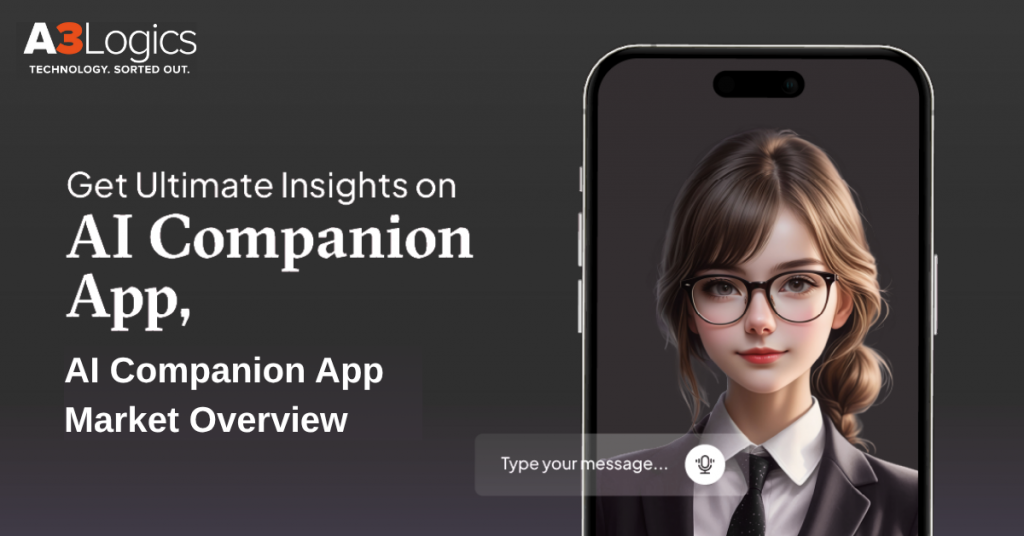
The ascendancy of the majority of AI chatbots, virtual assistants, and friends such as Replika, Apple’s Siri, Microsoft’s Cortana, and Amazon’s Alexa, among others, is an indication of heightened demand and interest in AI companionship.
Several factors can be the reason behind the rise in consumption of AI companionship. Various individuals are looking for virtual companionship due to the growing loneliness brought about by the global COVID-19 pandemic. Growing digital literacy globally and innovation in AI technologies are also driving the trend.
With that in mind, Microsoft in 2019 ran a survey, “AI and me,” that predicted for 2021 that over 150 million individuals in the US alone would be using one or more AI assistants per month. That implies there is widespread trend towards increased use of AI technology, e.g., AI companionship.
An AI buddy app is a software program driven by artificial intelligence technologies—specifically natural language processing (NLP) and machine learning (ML)—that simulates a human-like interaction with end users. These programs are light-years away from basic chatbot logic.
They are programmed to listen, grasp context, learn user behavior, and provide emotional or utilitarian support on the basis of user requirements.
Key Features
- Conversational Interface: Engages through text, speech, or visual inputs.
- Emotional Intelligence: Picks up sentiment or tone in communications to reply with sensitivity.
- Learning Capabilities: Improves over time based on user behavior and feedback.
- Personalization: Dynamic adjustment of interaction to – user habit, preferences, and mood.
Differences Between AI Companion Apps and Traditional Chatbots
Traditional chatbots are script-based and adhere to pre-written scripts. For instance, when you query a bank chatbot, “What is my balance?” it merely looks up your information in a backend system.
Meanwhile, AI companions are dynamic and multi-dimensional. Pose the same question to an AI companion and it might:
- Return your balance
- Provide budgeting tips
- Provide saving tips based on historical behavior
- Check your mood from tone
- Ask you whether you’re stressed about money
In short, they don’t merely respond—they interact.
> Types of AI Companion Apps
1. Emotional Companions

Designed to bring emotional and mental comfort, these companions can listen, respond in a soothing manner, and dispel loneliness or anxiety.
Example: Replika AI
2. Productivity Assistants
They assist users with time management, concentration, and automation of tasks. They’re basically having a smart life coach or PA in their pocket.
Example: Youper, Woebot (mental health + productivity)
3. Learning Partners / Study Companions
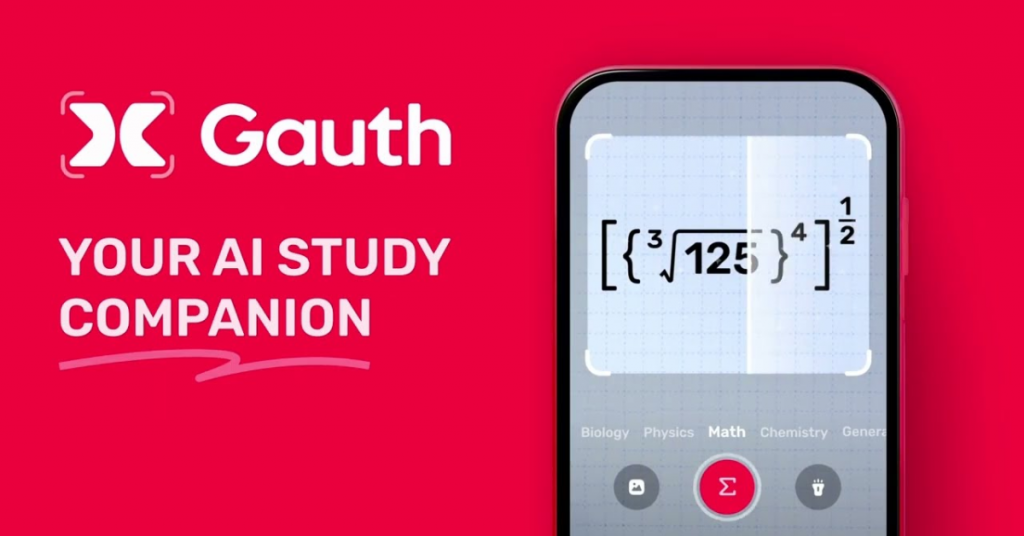
Designed specifically for students, such apps answer questions, offer flashcards, and even help with study plans or motivation.
Examples: Gauth, Socratic, AI Wizard (Note: Developed by other companies, not A3Logics)
> Real-World Examples
1. Replika
A best-selling AI companion app that has emotional discussions and learns your personality over time.
2. Gauth
AI research app where users can take pictures of homework and get instant solutions.
3. Socratic by Google
Employs AI and Google search to lead students through solving problems step by step.
4. AI Wizard
Homework assistance app that utilizes camera input, voice assistant, and learning based on gamification.
An AI Companion App: How Does It Function?
AI companion apps are driven by a very sophisticated mix of artificial intelligence technology; that simulates human-like conversation and learning. Compared to static rule-based chatbots, AI companions learn over time, learn their users, and interact with them based on tone, behavior patterns, and usage history.
Let’s dissect how these apps work in the background.
> Technologies Used
1. NLP
NLP enables the app to recognize and comprehend human language. It translates – user input, voice or text – into computable data which can be processed and responded to with context.
2. Machine Learning
ML algorithms scan user behavior patterns to make – responses personal and improve interaction increasingly. This is why AI companions become cleverer when being used.
3. Speech Recognition and Voice Synthesis
Speech-based AI helpers use speech-to-text to capture voice commands and text-to-speech to offer spoken responses in the natural, human voice tone.
4. Computer Vision (for Study Assistants)
For tools like Gauth or AI Wizard, a camera is used to photograph homework or math exercises. Computer vision and OCR (Optical Character Recognition) read text and equations, which are then solved using ML models.
5. Sentiment Analysis and Emotional AI
Advanced AI buddies have emotional intelligence, as they can analyze if the user sounds stressed, excited, or sad. Depending on that analysis, they adjust their answers and tone.
> A Typical Workflow Example
If a user is sending a message to his AI buddy:
“Hey, I feel super overwhelmed with my studies today…”
Here’s what it does:
Input Processing: NLP translates the sentence and extracts keywords such as “overwhelmed” and “studies.”
Sentiment Detection: Negative sentiment is detected by Emotional AI.
Response Generation: If ML reasoning and previous interactions are taken into account; the app can reply with motivational phrases – provide a study break timer, or recommend relaxing exercises.
Feedback Loop: This experience is retained in the app to learn about the user’s behavior while under stress and may change the next response.
This process is repeated in each interaction, making it a highly personal and intelligent user experience.
AI Companion App Market Overview
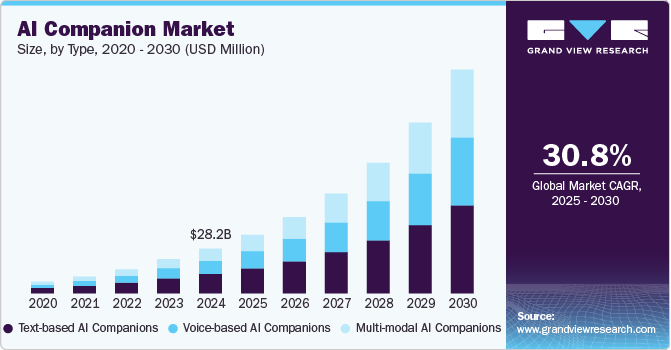
AI companion apps have come a long way from being experimental apps to being integrated into everyday utilities, part and parcel of our lives.
From helping with mental well-being to spearheading education to helping individuals manage personal productivity – AI companion use is revolutionizing the way people interact with technology—mainly through their mobiles.
Key Market Trends
Some trends are driving AI companion app development in 2025:
1. Scaling of Generative AI into Mainstream Mobile Apps
Generative AI (GenAI) is no longer the domain of corporations or professional artists. Apps that incorporated GenAI models are now engaging millions of mobile users in real-time for applications such as note summarization, customized journaling, mental health check-ins, and smart study buddies.
2. Increasing Demand for AI Companionship
There is an immense wave of demand for AI companionship among various user segments. For emotional solace, interactive learning, or digital friendship, users seek AI comfort, reliability, and customized interaction. This is extremely apparent in applications such as Replika, Wysa, and Character.AI.
3. AI Mental Health, Learning & Daily Productivity
The size of AI companion apps has now expanded to –
- Mental well-being and emotional resilience (Replika, Woebot, Wysa)
- Learning and education support (Gauth, Socratic, AI Wizard)
- Daily habits and productivity tracking (AI planners, virtual assistant bots)
Each area is enhanced by the capability of AI to provide instant feedback, encouragement, and accountability.
Move to Hyper-Personalized User Experience
AI companions are becoming increasingly context-aware and emotionally intelligent. Through behavioral trends, likes, history, and real-time mood gauges, these apps are able to create hyper-personalized conversations and recommendations—mirroring an incredibly human-like experience.
Market Size & Forecast
The companion app market driven by AI is booming and set to witness spectacular upward growth trends.
1. Global Trends in AI App Development
More than 45% of the best-performing mobile apps applied GenAI features in 2024.
Developers in 2025 are increasingly adopting AI apps across sectors such as healthcare, edtech, fitness, and entertainment.
Application developers are concentrating on real-time – AI interaction and cross-platform deployment.
2. Growth in AI-Based Mobile Apps
The worldwide AI companion app market is anticipated to grow to $2.4 billion by 2026 – registering a CAGR of 32%.
Users on mobile-first devices drive most of the growth, with more than 70% of activity on Android and iOS platforms.
Use Cases by Age Group
| Age Group | Primary Use Case | Popular App Types |
| Gen Z (13–25) | Study help, social connection, emotional health | AI tutors, chatbots like Replika and Gauth |
| Students (16–30) | Academic support, time management | Study companion apps, planner bots |
| Professionals (25–40) | Stress management, productivity | AI therapy apps, productivity assistants |
| Seniors (60+) | Cognitive engagement, companionship | Voice companions, memory games, health monitors |
AI Companion App Key Features
Developers need to integrate a broad set of features combining emotional intelligence, technical cutting-edge, and effortless usability when designing an engaging and valuable AI companion app. The most important ones are listed below
1. Natural Language Processing
NLP enables the app to comprehend, interpret, and create human language. It enables the AI to have natural, conversational exchanges—mimicry of human interaction. NLP also assists with language translation, intent recognition, and sentiment analysis.
There is an AI partner in learning the user. Personalization engines modify responses, suggestions, and behavior based on user tastes, history, location, affect, and time of day. This provides a highly personalized experience that is human and emotionally rich.
2. Emotional Intelligence (Tone Detection & Empathetic Responses)
Most critical skill of 2025 is emotional sensitivity. AI friends understand emotion through voice, typing, and action. They use this to provide empathic and comforting feedback to maintain emotional well-being or joy when needed.
- Multimodal Interaction (Voice, Text, Camera)
- Adaptable input/output modes are what users want. The ideal AI friends provide
- Voice-based interaction
- Text chat
- Visual inputs (like reading emotions with camera or recommending clothes)
This renders the interaction natural, intuitive, and dynamic.
3. Real-Time Adaptation
AI friends must adapt real-time with the user. They must transition between – discourse styles, habits, and material depending on shifting user desires or outside cues such as time zones, app use behavior, or emotional states.
4. Privacy and Data Security
Because AI friends will handle emotional and personal information – they require secure encryption, in-app processing, and GDPR compliance storage systems. Privacy-focused design instills confidence and fosters use in the long term.
5. Gamification & Engagement
Gamified features such as – daily streaks, XP points, or chat rewards engage people to come back and participate regularly. These features establish a deep reward loop, particularly with younger users.
6. Third-party App Integrations
To make them more functional, AI friends are expected to integrate with:
- Calendars (Google Calendar, Outlook)
- Notes and productivity applications (Notion, Todoist)
- Messaging platforms (WhatsApp, Slack)
- This helps to provide proactive reminders, intelligent scheduling, and contextual chats.

Value of AI Companion Apps
AI companion applications are technologically astounding – but they also provide tangible values that enrich users’ everyday life on an emotional, mental, and practical level.
1. 24/7 Availability for Interaction
AI companions are always available it does not matter whether it is 2 PM or 2 AM; the users can rely on continuous, non-judgmental support without an appointment or queuing.
2. Customized User Experience
Through monitoring behavior and preference learning; AI companions provide strongly customized responses, recommendations, and emotional comfort—making a feeling of companionship that is not otherwise experienced through traditional apps.
3. Emotional and Mental Health Support
AI friends provide therapeutic listening, journaling, mood monitoring, CBT-driven conversations, and mindfulness exercises—when human therapists or friends may not be around.
4. Higher User Participation and Retention
User flexibility and evolutionary properties of AI according to usage patterns make the app more sticky. Personalized recommendations, game-like conversations, and mood-driven – responses hold the users involved for extended periods.
5. Accessibility for People with Disabilities.
Visually, hearing, or cognitively disabled users are helped by – voice commands, screen readers, and easy conversational interfaces. AI companions improve the availability of emotional support and productivity utilities.
6. Effective Time and Task Management
AI can schedule itself – provide productivity tips, and remind users. It is thus very convenient for students, remote workers, and neurodivergent users with executive function impairments.
Core Technologies Behind AI Companion Apps
With a strong technology stack, implementing an emotionally intelligent, responsive, and secure AI-based companion app is possible. Major components are enumerated below
Machine Learning (ML) Models
These models enable the app to learn from user behavior and refine responses over time. Supervised and reinforcement learning algorithms find heavy-duty use in personalization and engagement prediction.
Natural Language Processing
To turn text or speech input into output that sounds like a person – NLP is very important. Most of the time, they come with large language models like GPT-4 or open-source versions.
Speech Recognition and Generation
Voice interaction uses Automatic Speech Recognition (ASR) technology like Whisper or Google speech APIs and Text-to-Speech (TTS) engines like Amazon Polly or ElevenLabs to make voice output sound natural.
Cloud Infrastructure & APIs
For user request scaling, security handling, and data processing, cloud infrastructures – such as AWS, Azure, and Google Cloud provide required backend services. Integration with AI APIs such as OpenAI, Anthropic, or Hugging Face is useful for smart replies.
Cross-Platform Mobile App Frameworks
For deployment on iOS and Android with glitch-free functionality, cross-platform frameworks such as:
- React Native – for rapid UI development
- Flutter – for rich animation and silky-smooth UI
These platforms keep development costs minimized while keeping app quality high.
AI Companion App Development Challenges
There is enormous potential in AI companion apps, but their development involves a distinct challenge set that the developers themselves need to tackle actively to provide long-term user trustworthiness, ethical consistency, and operational performance.
1. Maintaining User Privacy, Particularly for Children
AI friends have personal and sensitive emotional conversation. This is a serious concern when it comes to data privacy – particularly in the context of children. Developers have to put in place
- Aggressive encryption and anonymization protocols
- Parental controls
- Data protection compliance with such regulations as GDPR, COPPA (Children’s Online Privacy Protection Act), and HIPAA if the app is a mental health app
2. Managing Bias and Accuracy in AI Responses
AI models are only as good as they are trained, in the absence of control – AI friends can display-
- Inadequate or biased behavior
- Incorrect facts or poor advice
- Tone conflicts while having emotional interactions
To avoid this, retraining on a regular basis, human moderation – and detection of bias have to be practiced.
3. Creating Real-Time, Latency-Free Performance
Users want smooth and instantaneous conversation with virtual friend. Creating real-time interactions without lag is not easy with.
- Heavy backend processing for NLP and ML
- Network and cloud reaction latency
- Mobile hardware limitations
Edge AI models, lightweight algorithms, and optimized APIs can minimize lag and enhance responsiveness.
4. Minimizing Ethical Concerns
A controversy exists regarding whether or not people become psychologically dependent on AI friends. Certain ethical concerns are
- Excessive reliance on virtual emotional support.
- Obscuring the distinction between virtual and real relationships.
- Manipulation or behavioral influence using personalization algorithms
Developers must implement responsible AI standards – transparent disclaimers, and usage limits to avoid abuse and allow ethical interaction.
Special Use Case: AI Study Companion Apps
AI study buddies are changing the way students learn by – giving them smart interaction that gives them; 24/7 academic assistance, encouragement, and incentive. These apps use AI and educational psychology to help people learn at their own speed and be successful.
1. How AI Companion Apps Are Used in Education
Study assistants based on AI do not merely provide answers. They are learning companions that are personalized and provide:
- Learning assistance in real time
- Tracking and analytics of progress
- Study motivation and emotional support
- Learning pathways personalized according to strengths and weaknesses
These study companions are particularly beneficial for distance learning environments, self-learners, and students who take competitive exams.
2. Key features centered on education: Homework Support
Students can capture questions with the app (via OCR or camera input) and obtain comprehensive, step-by-step solutions from the AI buddy within seconds.
i. Doubt Solving using Camera Input
Students can snap photos of difficult problems with apps such as Gauth and Socratic and obtain correct solutions via AI-driven image recognition and context NLP.
ii. Study Reminders and Time Management
AI study companions examine a student’s study habit and provide auto-suggestions – on the best time to study, reminders, and goal realization for improved productivity.
iii. Mental Health Companion
Most study partners have empathetic conversation features that provide motivational speeches, affirmations, and mindfulness practices to alleviate exam anxiety and studying burnout.
iv. Gamified Learning
With gamification features such as badges, streaks, and points, these applications make learning real and ensure the learners are motivated and interested in regular sessions of studying.
3. Top AI Study Buddy Websites
i. Gauth
- Most famously known for immediate mathematics assistance with camera-based input
- Sends solutions in step-wise manner and explanations of concepts
- Most appropriate for college and high school students
ii. Socratic (by Google)
- Explores a vast list of topics
- Utilizes Google AI to present accurate insights and study materials
- User-friendly and easy interface for new users
iii. AI Wizard
- Virtual study buddy with AI feature offering real-time doubt clearing
- Efficacy through voice and text-based interaction
- Emotional support and productivity advice
These AI-powered study assistants have transformed educational assistance into a seamless, round-the-clock experience that feels both human and hyper-intelligent.
Want to Build an AI Companion App? Here’s How We Can Help
If you want to develop your own AI companion or study app. Here’s the lowdown on what you’ll need to start
1. Define Your Use Case
- Is it for tutoring students, mental health, productivity guidance, or companionship in general?
- Determine if it is for students, professionals, caregivers, or hobbyists.
2. MVP Feature Planning
Begin with a Minimum Viable Product (MVP) which shall consist of:
- Conversational AI (text/voice)
- Camera-based doubt solving (OCR)
- Study planner with reminders
- Motivational messages
- Simple gamification system
3. Select the Right AI Stack
- NLP Models: GPT-4, Google BERT, LLaMA
- OCR Tools: Google Vision API, Tesseract
- Voice Interfaces: Whisper by OpenAI, Azure Cognitive Services
- Backend AI Engines: AWS SageMaker, Azure ML Studio, or custom TensorFlow pipelines
4. Make UI/UX a Priority
For teens and students, the interface should be:
- Fun and intuitive
- Dark-mode compatible
- Accessible with text-to-speech and adaptive navigation
5. Legal & Privacy Compliance
- Make sure parental controls for minors
- Align compliance with GDPR, CCPA, and COPPA regulations
- Offer opt-out for use of AI data
6. Cost Estimate to Develop
- Basic MVP: $20,000 – $40,000
- Full-featured App: $60,000 – $120,000
- With AI Training Custom Models: $150,000+
Cost depends on features, number of platforms, and integration difficulty.
Engage the services of an Expert AI Development Company
An experienced AI development company such as A3Logics can support your go-to-market strategy by.
- End-to-end AI app development
- NLP and ML advisory
- Cross-platform design and deployment
- Model optimization and maintenance
Conclusion
As natural language processing and affective AI advance, we will witness increasingly realistic AI interactions in the future. AI companions may become graphical characters in virtual environments through virtual and augmented reality integration.
There are more advanced AI assistants for – professional growth, therapy, and learning in the works. Regimens and ethical guidelines will likely be formulated as the practice grows to address challenges and threats.
AI friendship holds the promise to revolutionize culture through the redefinition of romance, friendship, and emotional comfort. These virtual beings can introduce new forms of previously unconceived computer-to-human interaction as they increasingly become part of our daily lives.