The coworking industry is considered amongst the fastest growing industries in the last 10 years. Coworking spaces are evolving at a fast pace due to flexible working models, remote work, startups and freelancers. But with this growth comes the rising challenge of the effective management of resources, billing, security, occupancy and the overall experience of the members.
That is where AI in Coworking Management Software comes in. Through automation, predictive analytics, and smart systems, coworking operators can optimize their work, increase the degree of satisfaction among members, and increase their profitability.
What Is Coworking Management Software?
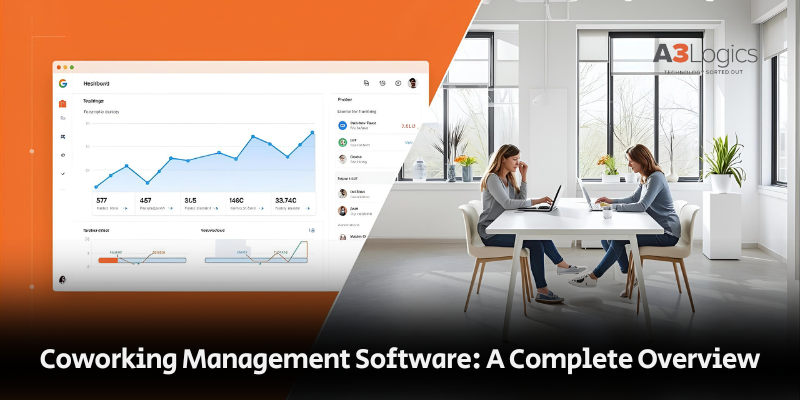
Coworking Management Software is a web-based solution designed to manage the operations of a shared workspace on a daily basis. It allows operators to effectively administer memberships, bookings, billing, resource assignments and community interaction through one interface. Be it hot desks, meeting rooms, or individual offices, the software simplifies the bookings, proper billing, and easy access control.
In addition to administration, it can be important in terms of improving member experience. New systems have analytics dashboards, event management tools, and mobile applications to assist members in connecting with services. Most of the providers also combine IoT devices and AI-based features, changing traditional spaces into smart, versatile and community-oriented ones.
Coworking Space Management Software Market
The coworking space management software market is experiencing healthy growth. By 2032, the market is estimated to hit approximately $1,342.11 million, having grown at a CAGR of approximately 9.69%. Likewise, according to Verified Market Research, the market had a valuation of $584.06 million in 2024 and will increase to $1,115.89 million in 2032.
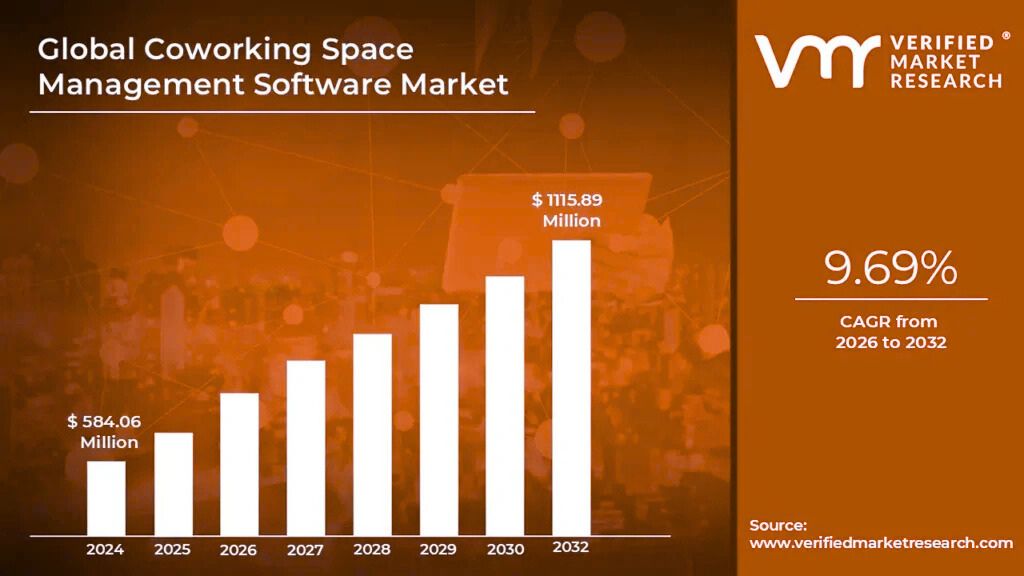
It is also estimated that there will be approximately 42,000 coworking spaces worldwide by 2025 as compared to 18,700 about a few years ago. The increasing demand for flexible workspaces, the influx of IoT-enabled systems in facility management and the necessity to automate the management of shared spaces are contributing to this growth.
Why Do Coworking Spaces Need AI and Automation for Growth?
Manual systems prove burdensome as the number of coworking spaces increases. The following are some of the reasons why AI and automation are not only becoming optional, but also necessary:
1. Complexity of Operations
Coworking operators balance memberships, bookings, billing, facilities, events, and security in a variety of locations. AI in Coworking Management Software will help in automating repetitive workflows, eliminating the possibility of manual errors and making operations run much more smoothly.
2. Demand Fluctuations
During certain days, seasons, or events, member traffic is usually more intense and at other times, the resources are not fully utilized. AI in Coworking management software foresees demand trends, which can be used to adjust the price dynamically and adjust the staffing as well as allocate resources optimally.
3. Cost Pressure
Margins can be decreased by high overhead expenses of rent, utilities, staffing, and maintenance. Automation assists in reducing waste, energy consumption, and streamlining operations, which greatly reduces the cost of operation in the long run.
4. Data Availability
The coworking spaces produce immense amounts of data that are the product of IoT sensors, access logs, and user interactions. AI converts this data into actionable insights to make decisions, predict trends, and improve the experiences of the members.
5. Scalability
With the expansion of coworking spaces to other cities or branches, it becomes difficult to be consistent. AI-powered Coworking Space Management Software has standardized operating processes, so members have the same experience and operations are run efficiently across locations.
Use Cases of AI in Coworking Management Software
1. Smart Space Utilization And Occupancy Optimization
AI in Coworking management software will examine real-time sensors and booking information to monitor desk and room usage trends. Operators are able to spot idle regions, streamline layouts and dynamically re-allocate resources. This guarantees more occupancy, less wastage of space, as well as increased member satisfaction.
2. Automated Booking And Scheduling For Members
AI eases the task of booking desks and meeting rooms by estimating the availability and solving conflicts in real-time. It synchronizes with member calendars to suggest appropriate slots. The outcome is reduced double booking, easier scheduling and increased convenience to members.
3. Personalized Coworking Experiences With AI Insights
AI examines the conduct of members, their preferences, and reactions to produce personalized experiences. It is able to prescribe events, networking, or upgrades that would be particular to individual requirements. This kind of personalization enhances engagement, retention and loyalty within competitive coworking markets.
4. AI-powered Security And Smart Access Control
Flex Space management software that incorporates AI uses biometrics, cameras, and IoT to improve physical security. It keeps track of access behaviors, identifies abnormalities and limits unauthorized access. This not only keeps the members and assets secure, but also provides hassle-free access to authorized users.
5. Automated Billing And Subscription Management
AI in Coworking management software automates invoice generation, payment monitoring, and subscription modification. It considers flexible memberships, add-ons and the usage variable with minimum human intervention. This saves administration time and enhances the reliability of cash flow.
6. AI-driven Customer Support And Chatbots
Chatbots are powered by AI, which implies that they can be contacted 24/7 and answer popular questions real time. They handle bookings, changes in plans, and facility-related information, besides escalating the complex issues to the staff. This enhances response time, work reduction, and consistency in member support.
7. Predictive Maintenance With AI And IoT Integration
Coworking Management Software with AI observes the health of devices by using the IoT sensors and predictive models. It detects early warning of failures in HVAC, printers, or elevators, thus facilitating maintenance. This cuts down on downtime, costs of repair and increases the life of equipment.
8. Data-driven Analytics And Reporting Dashboards
AI is used to compile and process operational data into real-time dashboards. Operators are informed about occupancy, revenues, member activities, and utilization of resources. These reports support data-based decision-making, enhance long-term planning of the strategies, and facilitate forecasting.
9. AI In Event Management And Community Building
AI in Coworking management software suggests events according to the interests of the members, demographics, and their attendance. It automates promotions, invitations and engagement campaigns to increase turnout. Success is then measured using post-event analytics and future planning is improved.
10. Voice And Virtual Assistants For Coworking Spaces
AI-powered voice and virtual assistants assist members with bookings, directions, and information. Moreover, they integrate with smart devices to manage on-site controls like lighting and temperature. As a result, they improve coworking convenience, accessibility, and overall experience.
Benefits of Using AI in Coworking Software
1. Enhanced Operational Efficiency
AI streamlines the manual tasks of booking confirmations, billing, and member inquiries, which leaves the staff with less administrative tasks. Operations became more efficient and reliable, with reduced manual mistakes and a reduction in turnaround time. This enables managers to deal with strategic initiatives, as opposed to the daily firefighting.
2. Optimized Space Utilization
AI compares occupancy data in real-time and the usage patterns of the past to draw conclusions about the underused desks, meeting rooms, or areas. Operators may use these spaces in a different way or adopt dynamic pricing to maximize revenue. Effective space management guarantees that members will have the benefit of having available space, and operators will not sacrifice resources.
3. 24/7 Member Support
The Flex Space Management Software known to have in-built AI chatbots and virtual assistants, will support 24-hour responses to queries, including booking assistance and billing explanation. This will provide support even after the normal office hours, which will enhance member satisfaction. Round-the-clock support provides a reliable and convenient work setting to professionals with different working hours.
4. Personalized Member Experiences
In terms of behavioral understanding, AI is able to make precise recommendations on events, networking and upgrades that are in line with the specific needs of the member. One-to-one interaction creates a feeling of ownership and loyalty in the coworking community. When they feel appreciated and held in high regard, the members will tend to renew memberships.
5. Smart Networking and Community Building
AI will be able to match members in terms of similar skills, industries, or goals, which will allow them to work together more easily. It suggests proper events, workshops, or networking facilities to increase the community. Coworking spaces are not offices but collaboration ecosystems because they help to build valuable connections.
6. Data-Driven Decision Making
AI dashboards transform the high volumes of operational data into actionable information. Managers are able to make evidence-based choices regarding pricing, staffing, or expansion choices. This will reduce the amount of guessing around and enable coworking operators to make more accurate plans on short-term provision as well as future expansion.
7. Streamlined Access and Security
AI is combined with biometric or smart card systems to enhance secure access of members. It is also capable of identifying abnormalities like unauthorized access and informing operators in real time. This enhances trust, security and minimizes security breaches.
8. Automated Sales and Lead Nurturing
AI-based Coworking Management Software monitors the actions of the prospects, providing reminders or custom offers in time to boost conversion. Automated workflows do not leave any leads through the cracks and maximize follow-up communication. This promotes increased occupancy and revenue growth without adding a lot of workload to sales staff.

High-impact AI Features to Include in Your Coworking Management Software
1. Predictive Occupancy & Demand Forecasting
AI in Coworking Management Software relies on past booking and occupancy patterns to predict the demand of desks, rooms or amenities. This will guarantee improved planning of resources and smooth working within peak seasons.
2. Dynamic Pricing & Yield Management
The system has real-time pricing of the desk and room depending on the demand, availability, and seasonality. This maximizes the revenue and at the same time, members are charged fair prices during off-peak periods.
3. Personalization & Recommendation Engine
Recommendations on events, networking, or service upgrades are adapted to the preferences and behavior of the members by AI. Individualized offers enhance interest, fulfillment, and the chances of upselling memberships.
4. AI Chat / Virtual Concierge
A virtual concierge is an AI that solves the bookings, frequently asked questions and service problems in real-time. Comparing it to the Workforce Management Software Development, it streamlines the support and minimizes human staff involvement.
5. Computer Vision for Real-time Occupancy & Security
Computer vision tracks occupancy rates, unauthorized entry, and suspicious activities with the use of cameras without violating the privacy legislation. It ensures real-time safety, compliance and improved space allocation.
6. Automated Operations & Workflows
AI triggers workflow (cleaning schedules, energy management or maintenance requests) automatically based on occupancy data. This guarantees efficiency of the operations and reduces manual interference or supervision.
7. Anomaly Detection & Preventive Maintenance
AI raises red flags when unusual patterns are detected, such as high utility consumption, malfunctioning of equipment, or suspicious access requests. Predictive notifications assist in avoiding the expensive downtime and streamlining coworking space activities.
How to Build the Best Coworking Management Software?
1. Understand User Needs Deeply
Begin by defining the pain points of the operators and the members such as booking conflicts, billing errors, or lack of communication. Conduct surveys, interviews and competitive research to prove feature priorities. An easy to use platform is a guarantee of adoption and satisfaction over time.
2. Data Collection & Infrastructure
Make sure you have good systems in place to fetch information from the IoT devices, booking records, user reviews and transactions for your Coworking Management Software Development project. AI capabilities are based on clean, structured, and secure data storage. A strong infrastructure will guarantee the accuracy of predictions, dependability of reports and scalability of the system performance across several locations.
3. Privacy & Compliance
Coworking centers handle sensitive data like payment, personal data and access passwords. Organizations follow GDPR or local privacy policies to eliminate reputational and legal risks. Furthermore, they apply encryption, enforce access control, and establish consent mechanisms to enhance transparency and foster member trust.
4. UI/UX
A straightforward interface will welcome the administrators and the members to use it. Users enjoy one-click booking, simplified billing dashboards, and mobile responsiveness to improve usability. Moreover, these features ensure smoother interactions and enhance user satisfaction. An uninterrupted experience minimizes the training requirements and makes daily work accomplishable with ease.
5. AI/ML Expertise
The development of smart capabilities in Coworking Space Management Software would need data scientists, machine learning engineers, and domain experts. The advanced functionality is powered by expertise in natural language processing, predictive analytics and computer vision. You will need a competent team to deliver quantifiable business value rather than gimmicks.
6. Scalability & Performance
The system should have the capability to serve thousands of members, multi-location operations, and real-time AI insights. Code optimization and scalable cloud infrastructure ensure high demand uptime. This will prepare your platform to grow and at the same time not lose on speed or reliability.
Challenges of AI and Automation in Coworking Management
1. Data Privacy and Security Concerns
Flex Space Management Software has AI systems that capture sensitive member data such as biometrics, payment data, and behavior. Mishandling or violations may destroy trust, violate regulations and cause expensive legal challenges.
2. Maintaining the Human Element
Coworking is a culture that is based on community and human relationships. Excessive automation may lead to sterility and an impersonal atmosphere, where members are not supported but rather disconnected.
3. Algorithmic Bias and Fairness
Biases in training data may be transferred to AI models unintentionally. This can lead to unreasonable pricing, access controls or suggestions that discriminate against some classes of members.
4. Implementation Costs and ROI
Implementing AI is costly in terms of tools, integration, and training of staff. Small operators might find it difficult to weigh costs against quantifiable returns just as is the case with Human Resource Management Software.
5. Technical and Integration Complexity
It may be tricky to combine AI with outdated systems, IoT devices, and third-party applications. Mistakes or lack of compatibility may interfere with the functions and make them less efficient rather than effective.
Future Trends of AI and Automation in Coworking Management Software
1. Voice-Activated Coworking Management
The coworking interaction will become hands-free and intuitive due to voice-controlled systems. The members can book desks, turn the lights on or off or seek help through natural language commands. This enhances accessibility, convenience and efficiency; particularly for tech savvy professionals and hybrid workforces.
2. AI-driven Networking Platforms
AI will continue to examine the profiles, skills, and interests of the members, recommending useful connections. Such intelligent platforms are like professional matchmakers, which suggest collaborators, mentors or possible partners. The outcome is more cohesive communities, greater networking and increased retention of members.
3. Predictive Pricing Models
AI will be used by dynamic pricing engines to predict demand and continuously change rates. Operators are able to maximize revenue by considering occupancy, market trends and seasonality whilst maintaining competitive pricing. Fair, transparent and flexible pricing models are available to members.
4. Hybrid Work Solutions
AI will be at the forefront in making the schedules of hybrid workers flexible. Systems will handle hot-desk selections, maintain safe occupancy rates, and be linked with remote collaboration programs. This establishes smooth transitions between in-office and remote experiences among members.
5. AR/VR Coworking Experiences
AR and VR will transform the way members visit and experience coworking centers. Potential clients will be able to experience a remote immersive tour, and members are able to work in VR-based meeting rooms. These technologies ease the level of engagement, minimize obstacles, and unite both physical and virtual workspaces.
Why Build Your AI-powered Coworking Management Software With A3Logics?
1. Expertise as a Software Development Agency
A3Logics is a well-established Software Development Agency with a proven track record of providing enterprise-grade solutions for nearly every industry. Their experience guarantees innovation, scalability and stability of your solution in the long term.
2. Modular and Scalable Architecture
A3Logics develops scalable solutions that expand alongside your business, whether it is a single coworking site or a multi-location business. This scalable solution guarantees flexibility, future readiness, and economical adoption of new technologies.
3. Strong AI and ML Capabilities
A3Logics, being an established AI Development Company, has its strengths in predictive modeling, computer vision, and natural language processing. Their team makes sure that high-level AI capabilities are interconnected with coworking management systems.
4. Continuous Support and Maintenance
A3Logics offers continuous monitoring, retraining AI models and post-launch bug fixes. Long term support guarantees that your software is kept reliable, updated and in line with changing coworking business requirements.
Conclusion
AI in Coworking management software is not an option anymore but a need for competitive coworking spaces. AI enhances efficiency and growth by automating processes, maximizing resources, and providing members with personal experiences. Coworking operators can gain the benefits of long-term scalability, cost reductions, and high-quality member experiences with the correct strategy and technology partner, such as A3Logics.