
At a financial institution, a customer choosing to leave services and switch to another provider can result in income loss. Hence, predicting which customers are likely to leave allows banks to act early and implement targeted retention strategies. That’s where the concept of churn prediction in finance and banking can be beneficial. Using data-driven models to identify at-risk clients, institutions can proactively engage with customers.
Let’s understand – what exactly AI-driven churn prediction in financial institutions is – financial institutions face revenue loss when customers leave unexpectedly. It could be due to reasons such as poor service experience, better offers from competitors, etc. Banks can analyze patterns in transactions, account activity, and engagement, and can identify those at risk. AI-Driven Churn Prediction in Financial Institutions uses advanced algorithms to forecast potential departures, enabling timely retention actions and stronger long-term customer relationships.
Important Stats Demonstrating The Importance of Churn Prediction in Financial Institutions
- The average churn rate for banking customers is approximately 15%
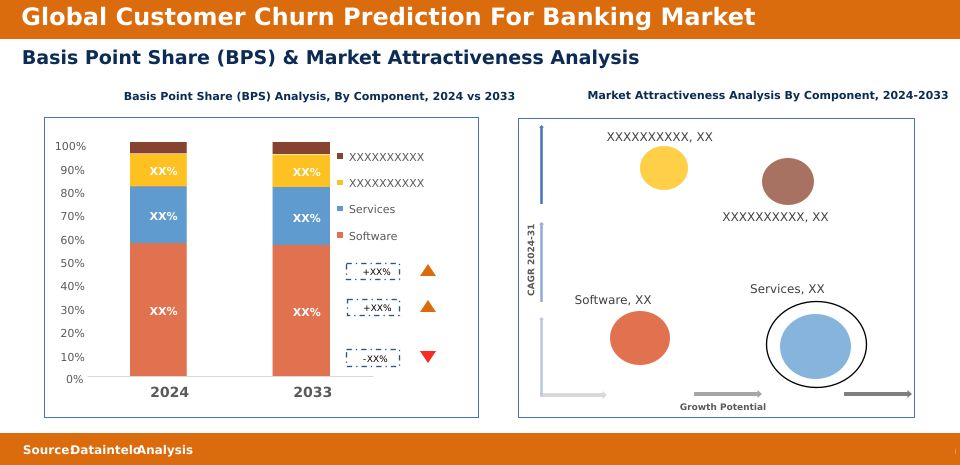
- The global customer churn prediction for the banking market size reached $2.17 billion in 2024 and is expected to reach $9.94 billion by 2033.
- Increasing retention by as little as 5% can boost profits by 95%.
- In this particular case study, a bank that used predictive churn analytics saw a 30% reduction in customer churn rate and 25% increase in successful retention campaigns.
How Machine Learning Identifies Churn Patterns in Banking?
Machine learning uses classification algorithms, clustering techniques, and probability models to forecast customer churn with high accuracy. Popular algorithms used include:
Random Forest
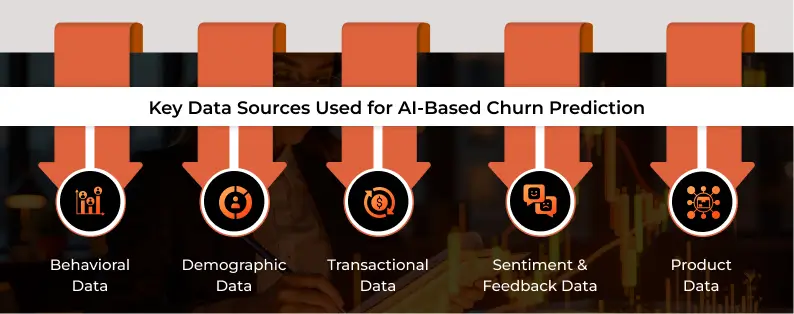
In the context of banking and finance; Random Forests are used to monitor data attributes such as; transaction history, account activity, and demographics to spot probable churners.
XGBoost
It helps in churn prediction in finance; by analyzing large customer datasets and capturing complex behavior patterns. It highlights high-risk accounts early and uses AI-driven churn prediction in finance for timely retention actions.
Gradient Boosting
Gradient Boosting helps in churn prediction in banking and finance by building models that learn from past errors and improve prediction accuracy. It identifies subtle behavior changes linked to churn risk and supports timely retention.
Logistic Regression
Unlike Gradient Boosting, Logistic Regression looks for a simple, straight-line relationship in customer data to predict churn.
Neural Networks
Neural Networks analyze customer data such as login activity; transactions, and service interactions to identify patterns related to churn. They process this data; through multiple layers to learn complex, non-linear relationships that signal risk.
Support Vector Machines
Support Vector Machines algorithm separates churners i.e. customers likely to leave, from those who will stay. This improves AI-driven churn prediction in finance, allowing banks to target the right customers with precise retention tactics.
Top Use Cases of AI-Driven Churn Prediction in Banks and Fintech
To understand the importance of AI-driven churn prediction; let’s have a look at some of its top use cases –
1. Identifying Dissatisfied Customers Early
By using advanced models; banks detect dissatisfaction in customers at an early stage. AI-driven churn prediction in finance helps banks act before churn occurs. That’s because it highlights risk and prompts them to intervene timely.
2. Personalizing Customer Outreach
With the use of churn prediction in banking, teams can get useful insights, using which they can deliver personalized outreach. This helps enhance engagement quality as they can send timely messages that strengthen relationships and encourage customers to stay.
3. Improving Loan & Credit Customer Retention
AI churn prediction helps banks identify early risk signals and retain credit and loan customers. These platforms guide banks to take timely actions and strengthen customer retention in the banking sector.
4. Reducing Insurance Policy Cancellations
Customer churn prediction in banking provides insights that help banks identify which customers are likely to cancel their policies. With this knowledge, they can tweak their communication and provide simple support steps that indeed lower the churn.
5. Enhancing Digital Banking Engagement
Digital teams rely on AI-driven churn prediction in finance to identify customers with low activity, enabling timely nudges; prompting customers to engage more, and simple feature guidance that strengthens engagement and increases usage on online and mobile platforms.
6. Preventing High-Value Customer Churn
For high-value accounts, relationship and retention teams use AI churn-prediction tools to spot early signs of dissatisfaction. They can provide fast fixes and offer tailored benefits to protect revenue and reduce churn.
7. Increasing Cross-Selling and Upselling Success
Banks apply insights from churn prediction in banking to find out which customers are open to new offers while reducing the likelihood of them abandoning services. This helps teams provide the right solutions, supporting long-term relationships.
8. Boosting Customer Lifetime Value
Financial institutions use churn prediction in finance to understand customer risk patterns. They can accordingly take timely actions to retain clients and prevent churn. This not only helps retain clients but also ensures longer relationships.
Role of Behavioral Analytics in Financial Customer Retention
Let’s have a look at some of the key behavioral indicators of churn that play a vital role in strengthening customer retention efforts –
Reduced logins to mobile or internet banking
A consistent decline in digital logins indicates disinterest in customers and further signals disengagement. By monitoring these patterns, banks can predict churn and take prompt action to improve loss ratios.
Decreased use of ATMs or branch visits
Fewer branch or ATM visits indicate lower customer interaction. Detecting this trend supports churn prediction in banking for proactive retention measures.
Lower transaction frequency
When a customer reduces the number of transactions, it may indicate a lack of engagement. AI churn prediction platforms can identify such at-risk customers so that institutions can act early and prevent churn.
Ignored promotional offers or notifications
A decline in customers responding to campaigns, promotional offers, or notifications signals declining interest. AI churn prediction helps identify this decline in interest.
Increased interaction with competitors
Frequent competitor engagement highlights higher churn risk. Early detection allows banks to implement targeted retention actions.
Sudden drop in savings or investment activities
A sharp decline in deposits or investments signals dissatisfaction. Monitoring this pattern effectively supports customer retention in banking sector initiatives.

Benefits of AI-Powered Churn Prediction for Financial Institutions
Here are some of the key benefits of AI-powered churn prediction for financial institutions –
✔️ Higher Customer Retention Rates
Churn prediction in finance, powered by AI, helps find out those customers who are at risk of leaving. By taking actions at the outset, financial institutions can retain more clients as well as stabilize revenue streams.
✔️ Reduced Operational Costs
By focusing efforts on high-risk customers, churn prediction in banking helps reduce unnecessary spending. This way, companies can reduce overall operational costs and optimize resources.
✔️ Improved Customer Experience
AI-driven churn prediction in finance helps banks understand customer needs and behavior. Based on this understanding, banks can adjust their communication strategies and provide timely support, thereby making interactions smoother.
✔️ Stronger Customer Loyalty
With AI-driven engagement, banks can show proactive support to customers. They can enhance customer trust by showing that they are valued.
✔️ Increased Revenue and Profitability
AI-powered churn prediction in banking helps retain valuable customers and reduce revenue loss. It also enables targeted offers and services that improve profitability.
✔️ Better Product Recommendations
Insights received from AI models allow tailored offers. This ensures customers receive relevant solutions, which further helps in customer retention.
✔️ Enhanced Risk Management
Churn data highlights potential operational and revenue risks. AI churn prediction enables banks to act early and get rid of financial and reputational losses.
✔️ Competitive Advantage
AI-based churn prediction in finance enables institutions to act before customers leave, deliver personalized offers, and make faster, data-driven decisions, giving them a clear edge over competitors.

AI-Driven Personalized Retention Strategies for Different Customer Groups
Here, we are going to have a look at personalized retention tactics that help financial institutions utilize AI-driven insights to address churn risk:
Customized product recommendations
AI recommends products that match individual needs. For example, in custom health insurance software development, advanced personalization methods help banks deliver precise suggestions that reduce churn.
Personalized loan refinance offers
AI reviews repayment patterns and gives refinance options that reduce financial stress. These personalized offers demonstrate proactive support and reduce the customer’s chances of switching to a competitor.
Tailored insurance renewal discounts
AI spots customers likely to cancel policies and recommends renewal discounts targeted towards high-risk customers. These timely incentives help retain clients, and similar AI methods also support touchless claims insurance by enabling faster, frictionless service.
Personalized investment portfolio advice
AI-driven churn prediction in finance looks at each customer’s financial goals. It accordingly suggests how they should adjust their investments. Since the advice feels personal, the customer may not move to a competing bank.
Fee waivers for high-risk customers
Using churn prediction in finance, banks identify high-risk customers who are about to leave their services and offer them fee waivers.
Reward-based loyalty programs
AI tracks usage patterns and segments customers effectively. Banks design focused loyalty programs that strengthen customer retention in the banking sector.
AI-driven financial health alerts
AI-based systems detect missed payments or spending issues early. They provide real-time alerts to guide customers towards better decisions.
Key Challenges in AI-Driven Churn Prediction for Banking and How A3Logics Solves Them
Here are some key challenges institutions face when incorporating AI-driven churn prediction in banking. We’ll also discuss how an AI development company like A3Logics can help solve them.
1. Data Quality Issues
Banks and other financial institutions often have to struggle with incomplete data, which further creates hurdles in customer retention in the banking sector. A3Logics builds unified pipelines that clean, validate, and standardize data.
2. Legacy System Limitations
Old systems slow integration and limit the adoption of advanced analytics. This creates hindrances when it comes to churn detection speed and scalability. A3Logics helps in smooth modernization through secure connectors and modular APIs.
3. High Implementation Costs
Implementing AI churn prediction platforms within workflows needs substantial infrastructure and long timelines. This slows retention initiatives and reduces ROI. A3Logics offers cloud-based accelerators for AI churn prediction, cutting both cost and time.
4. Lack of Skilled Talent
Banks often lack those AI experts who know the financial domain inside out. This may delay churn model development. A3Logics has a dedicated team of professionals who are well-versed in both AI and finance and offer end-to-end delivery support.
5. Regulatory and Compliance Concerns
Strict banking rules related to data privacy, model transparency, and auditability can delay AI adoption. A3Logics makes sure model output meets regulatory expectations through a compliant data framework, understandable AI models, and secure workflows.
6. Change Resistance
Many banking teams may not trust AI recommendations or shift away from their old ways of working and hence may resist change. To resolve this, A3Logics trains teams and clearly communicates the value of AI, guiding bank staff through structured change management.

Why Choose A3Logics for AI-Driven Churn Prediction Solutions?
There are times when financial institutions lose clients; because signals like low account activity or repeated service complaints are missed. These small shifts lead to customer churn.
What would you do if key clients started reducing transactions or ignoring offers, signaling early churn?
A company like A3Logics can deploy AI-ML-driven churn prediction models to detect risks early and safeguard high-value relationships. With extensive experience in the InsurTech domain, we provide excellent insurtech software development, including AIML-driven customer churn prediction and fraud detection models for banks and financial firms that can detect risk patterns early and enable fast action.
Final Thought
AI-driven churn prediction is essential for financial institutions to spot at-risk customers and protect revenue. In this blog, we covered use cases, benefits, behavioral indicators, personalized retention tactics, and key challenges that drive churn prediction. We also discussed how AI-driven churn-prediction software can provide helpful information. By leveraging these insights, banks can act proactively, improve customer retention in the banking sector, deliver targeted interventions, and strengthen loyalty, ultimately reducing churn while enhancing long-term profitability.