
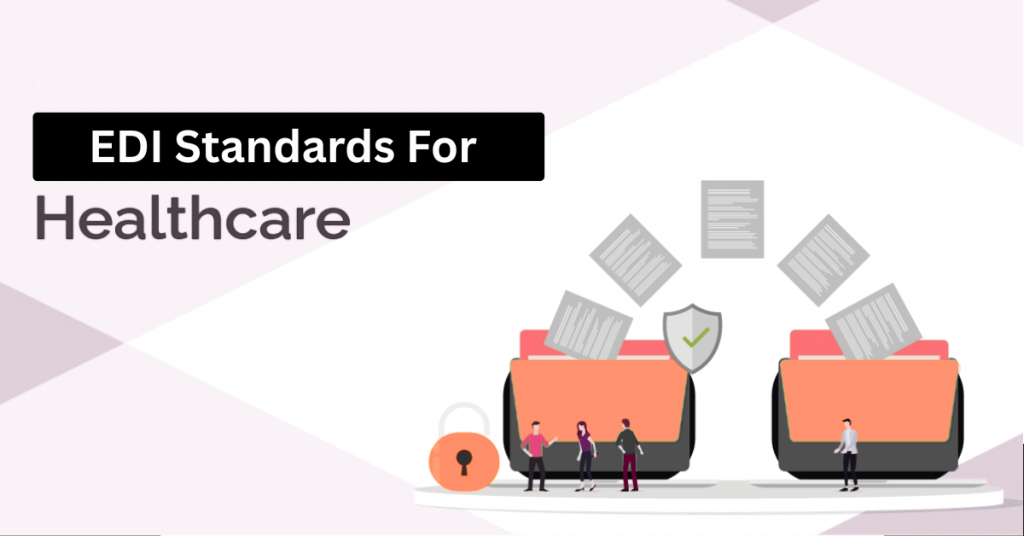
EDI standards in healthcare are rules that establish structured exchange of health-related data between healthcare providers, payers, and other relevant entities. These standards, support healthcare EDI transactions like payments, claims, enrollments, and authorization. They help get rid of manual work, are governed by HIPAA EDI standards, improve accuracy, and enable faster processing across various healthcare EDI use cases.
Their growing importance is clear by rising HIPAA compliance needs. Numerically speaking, the healthcare EDI market is projected to reach $5.30 billion by 2033.
In this blog, we’ll discuss the most common EDI standards in healthcare, the reasons they are necessary, the benefits they offer, the challenges organizations face during implementation, and how to effectively build an EDI-compliant system.
Importance of using standardized transactions for compliance and efficiency
The healthcare domain consists of various systems. Data must be shared between these systems quickly, accurately, and securely to avoid delays in billing, patient care, and insurance approval. EDI standards in healthcare enable this by defining how information is shared and ensuring that all parties adhere to the same format, thereby improving both operational efficiency and compliance. Here are some key reasons why using standardized transactions is essential –
- Reduce manual errors
Automation lowers the risk of human mistakes during data entry and processing.
- Ensures HIPAA compliance
Standardized formats help meet HIPAA EDI standards, ensuring secure and legal data exchange.
- Faster processing
Structured data helps in faster processing. Leading to much faster payments, quicker claims processing, and accurate verifications across systems.
- Better data accuracy
Consistency in healthcare EDI transactions reduces mismatched information and duplication.
- Improves system communication
Standardized transactions are very helpful. They help in exchanging data and understanding of information across various healthcare systems.
Role of HIPAA in mandating specific EDI standards
HIPAA makes healthcare tasks simpler by using set formats like ASC X12 for things like claims, payments, and checking coverage. These formats reduce delays, prevent confusion, and keep administrative costs low by keeping the process the same for everyone. HIPAA also ensures that sensitive health data stays private and unchanged during electronic transfers.
What Is an EDI Transaction in Healthcare?
Explanation of EDI (Electronic Data Interchange)
It is the automated exchange of business documents between organizations. The transaction is conducted in a standard electronic format. No human intervention is required between the two systems. Instead of sending documents, such as orders or invoices, on paper or via email, EDI enables systems to exchange data directly with each other.
One system puts the information into a file, turns it into a shared format, and sends it securely. The other system picks it up, understands the format, and takes care of everything without needing someone to step in.
Why is EDI essential in healthcare data exchange?
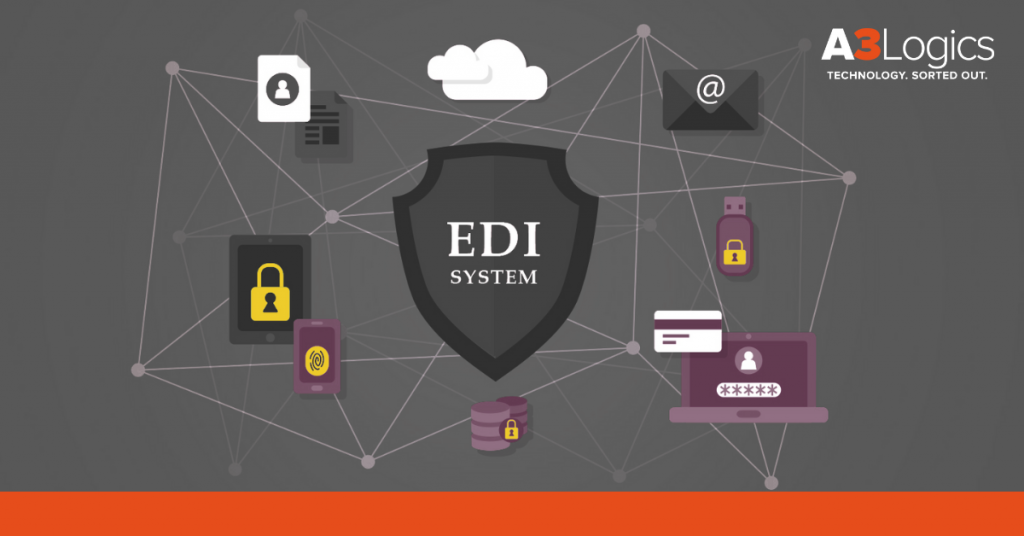
In the context of healthcare, a significant volume of sensitive patient information is involved. Not just patient details, there is sensitive information related to inventory, billing data, and so much more, which, if it reaches unauthorized hands, can be detrimental to say the least. This surfaces the need for critical security.
EDI ensures that documents maintain the highest security standards throughout the communication flow. Further ensuring that they reach their destination accurately and securely. Additionally, EDI supports compliance with international security regulations, such as HIPAA and GDPR.
Key Benefits:
> Accuracy – Minimizes manual data entry errors
EDI removes the need to enter data by hand by sending healthcare information in a standard format between systems. This helps avoid mistakes like missing details or typing errors. As a result, there are fewer claim issues, records stay accurate, and it builds better trust between providers, payers, and patients.
> Efficiency – Automates data flow between systems
EDI moves data on its own. So, things like checking coverage, sending claims, and getting payment info happen faster. It removes the need for paperwork and saves staff time on everyday tasks. This means they can focus more on patients instead of handling manual processes.
> Compliance – Meets HIPAA-mandated formats
In healthcare, EDI follows formats that are required by HIPAA. This keeps data secure, protects patient privacy making it so much easier for systems to share information. Following these rules also helps with – audits, improves how reports are handled, and ensures that organizations follow the laws around how healthcare data is shared.
Common EDI Standards in Healthcare and Their Use Cases
Let’s have a look at some of the common EDI standards and their use cases –
1. EDI 837 – Health Care Claim Submission
Purpose
It is a standardized electronic document used in the healthcare industry for transmitting healthcare claims from providers to payers. It removes the need to send paper claims. Instead, healthcare providers can send claims directly to insurance companies, government programs, or other payers. This helps make billing faster, remove mistakes, and lowers the time and effort spent on paperwork.
Use Case
EDI 837P is used by healthcare professionals, such as therapists, doctors, and other individual practitioners, to submit claims for services rendered, including physician visits, outpatient services, and others. The 837P gives detailed information about the patient, charges, and services offered to the payer.
2. EDI 835 – Claim Payment and Remittance Advice
Purpose
EDI 835 is a payment and remittance advice document. It is used by payers to communicate the claim payment details to healthcare providers. It follows HIPAA EDI standards in healthcare and lets providers automate the posting of denials, payments, and adjustments. This is one of the EDI standards in healthcare that maintains transparency in claim settlements. Furthermore, it also simplifies revenue cycle management under EDI standards in healthcare.
Use Case
After claims are processed, providers get payment details through EDI 835. This helps billing teams match payments to claims, update patient accounts, and see why any amount was denied or changed. It makes payment tracking easier, speeds up account updates, and reduces mistakes from manual entry.
3. EDI 834 – Enrollment in Health Plans
Purpose
EDI 834 is used to send member enrollment and disenrollment details from employers to health insurance companies. It helps keep member records up to date and ensures health plans are updated correctly using standard EDI formats.
Simplify your employee benefit enrollment process with A3Logics’ strong EDI 834 services. Here’s why – With extensive hands-on experience in healthcare data exchange for decades, we are experts in EDI 834 implementations for payers, TPAs, and providers, thereby providing seamless and scalable integration into healthcare ecosystems.
Use Case
When someone is enrolled in a health plan, a benefits system generates an EDI 834 file. The file is sent to the insurance company, which includes details such as the person enrolled, coverage type, and any changes or cancellations. The process helps both sides reduce manual work, stay updated in real-time, and keep everything HIPAA compliant.
4. EDI 820 – Premium Payment Order
Purpose
EDI 820 sends payment and remittance details from plan sponsors like employers or government agencies to health insurance companies. It follows HIPAA rules to keep the payment data clear, well-structured, and easy to track, helping both sides stay updated and avoid confusion.
Use Case
A company’s payroll system sends payment info to the health insurer using EDI 820. This makes sure every employee’s health plan is paid correctly and on time. The insurer then updates records and confirms coverage. This healthcare EDI transaction reduces manual errors, improves payment tracking, and supports HIPAA-compliant communication between both parties.
5. EDI 270/271 – Eligibility Inquiry and Response
Purpose
There are two parts to EDI 270/272: EDI 270; that allows healthcare providers to request insurance eligibility and benefit information about a patient, while EDI 272; helps them receive the same. Both these HIPAA EDI standards help reduce phone-based verification and enable quick digital checks, improving service planning and billing under EDI standards in healthcare.
Use Case
Before scheduling a medical procedure – a hospital’s billing team sends an EDI 270 transaction to the patient’s insurance company. This is to check if the treatment is covered. The insurer, then responds with an EDI 271, confirming the patient’s eligibility, coverage details, and any co-pay requirements. This helps the hospital prevent claim denials; informing the patient about costs, and ensuring smooth billing
6. EDI 276/277 – Claim Status Inquiry and Response
Purpose
These are a pair of healthcare EDI transactions. EDI 276 is used for inquiring about claim status. It works with EDI 277, which shows if a claim is accepted or not. Both follow HIPAA rules and help providers see claim updates without making phone calls or checking manually.
Use Case
Providers use EDI in medical billing to check real-time claim status via EDI 276/277 transactions. This eliminates manual follow-ups by offering instant updates on whether a claim is paid, pending, denied, or fed directly within the EDI billing software.
7. EDI 278 – Prior Authorization for Services
Purpose
The EDI 278 transaction set, also known as healthcare services review information, is used by healthcare providers to request authorization for services from payers (like insurance companies) for managing service approvals, especially for high-cost or specialty care, to ensure compliance with EDI standards in healthcare.
Use Case
Hospitals or healthcare providers use the EDI 278 transaction to request authorization from insurance companies before giving certain treatments. For instance, a healthcare provider, such as a hospital, will send a 278 transaction to request approval from a payer, such as an insurance company.
8. EDI NCPDP – Retail Pharmacy Claims
Purpose
EDI NCPDP is a specialised EDI standard used in the pharmacy sector to process retail drug claims electronically. It allows pharmacies to check drug coverage, submit claims, and receive payment decisions instantly. This EDI standard in healthcare helps improve pharmacy workflows while adhering to HIPAA EDI standards.
Use Case
A patient requests a refill, but the doctor has changed the dosage. The pharmacist updates the system, which sends an EDI NCPDP (National Council for Prescription Drug Programs) claim transaction with the new National Drug Code (NDC) and dosage to the pharmacy benefit manager (PBM). The PBM reviews the update and responds in real time with revised coverage and cost details, allowing the pharmacy to process the prescription smoothly.
9. EDI 999 – Implementation Acknowledgment
Purpose
EDI 999 is an implementation acknowledgment that indicates whether an EDI file adheres to the correct format and syntax. It doesn’t verify the meaning of the data, only its structure. This transaction supports HIPAA EDI standards, which are crucial for ensuring that EDI standards in healthcare operate securely and reliably.
Use Case
A hospital submits an EDI 837 claim for a patient’s knee surgery to the insurance company. The insurer replies with an EDI 999 acknowledgment. It doesn’t approve the claim but confirms that the file is properly formatted. This lets the hospital know the claim was received correctly and can now move to the next step.
10. EDI 997 – Functional Acknowledgment
Purpose
It is an electronic document that confirms the processing and receipt of other EDI transactions. It serves as a digital receipt, indicating that a specific EDI transaction, or a group of transactions, has been received and processed by the recipient.
Use Case
A company sends an EDI 850 to its supplier. In return, the supplier might send back an EDI 977 to confirm the receipt and processing of the purchase order.
11. EDI 271/270 Addendum – Enhanced Enrollment Details
Purpose
The EDI 270/271 addendum enhances the standard transaction by including additional details like plan IDs, provider directories, and deeper benefit information. It improves decision-making and patient onboarding by extending HIPAA EDI standards beyond basic eligibility under EDI standards in healthcare.
Use Case
Providers receive enriched eligibility data through the 271 addendum, improving insight into available benefits, care requirements, and patient enrollment details. Among advanced healthcare EDI use cases, this is especially useful in Medicare and value-based care programs where deeper benefit visibility is needed for accurate treatment planning.
Benefits of Using EDI in Healthcare
1. Standardization
EDI replaces inconsistent and fragmented ways of sharing data with a clear and universally acceptable format. Using ASC X12 standards, healthcare providers and payers can easily share information without formatting problems or confusion. This further reduces processing errors and eliminates misinterpretations.
2. Cost Savings
EDI in healthcare helps reduce administrative costs by automating routine transactions. By digitizing data submission, the approval rate increases significantly, resulting in a higher revenue flow. Furthermore, with EDI transactions in healthcare, institutions can save money on labor and reduce errors that can otherwise lead to rework or delayed reimbursements.
3. Data Security
To protect patient data, EDI enhances security by utilizing encryption protocols, including VPNs (Virtual Private Networks) and SSL (Secure Socket Layer). As opposed to paper-based transactions, where records can be lost or accessed without authorization, with EDI in place, strong access control can be established, and transaction logs can be maintained.
4. Error Reduction
With EDI, data is shared automatically and accurately between systems. This lowers the risk of errors and minimizes human involvement. Standardized formats prevent duplicate entries, miscommunication, and mismatched information, leading to faster approvals, fewer claim rejections, and improved accuracy in healthcare EDI transactions.
5. Time Efficiency
EDI reduces transaction processing items by allowing for real-time eligibility verification. This enables providers to verify patient coverage in a matter of seconds. By automating prior authorizations through EDI, approval times can be reduced from days to a few hours, allowing for faster treatment decisions.
Challenges in Implementing EDI in Healthcare
Complex Integration Requirements
One of the probable challenges in implementing EDI in healthcare is integrating it with legacy healthcare systems. The challenge arises from the fact that legacy systems often come with outdated infrastructure. With an obsolete system, extensive testing and customization are required to bridge the gaps.
High Initial Setup Costs
Setting up EDI systems requires a significant investment in software, hardware, and training. Ensuring compliance with HIPAA EDI standards also adds to the cost, as security and privacy features must be built in.
Compliance & Regulatory Issues
Healthcare must navigate dynamic and changing regulations, such as HIPAA and other state-level standards. To comply with these requirements, system upgrades and ongoing audits are required, demanding both time and resources.
Data Mapping & Validation
One of the challenges in implementing EDI in healthcare is the incomplete or incorrect mapping of data fields, which may be counterproductive, i.e., it may lead to payment delays or rejected claims.
Cybersecurity Risks
EDI indeed enforces robust security protocols. That said, EDI systems are often the target of ever-evolving cyberattacks – ransomware, phishing attacks, and unauthorised data access are a few of the cybersecurity risks. It is therefore essential to fetch regular security updates and train staff on best practices.
Interoperability Issues
Instead of having one trading partner, healthcare organizations often collaborate with multiple partners, each using distinct systems. In such a scenario, it can be challenging to ensure seamless data exchange across diverse platforms.
How to Build an EDI-Compliant Healthcare System?
At the outset, it is crucial to build an EDI-compliant healthcare system that is compliant with HIPAA and CMS regulations. This requires strict access controls, secure infrastructure, and continuous monitoring to prevent data breaches and transaction failures. Let’s have a look at some of the essential aspects of building an EDI-compliant healthcare system –
> Robust System Architecture & Infrastructure
A robust system architecture and infrastructure are built in a way that is strong and scalable simultaneously. It can handle large volumes of healthcare EDI transactions. It consists of backup systems, secure servers, reliable connectivity, and smooth integration with insurance software or with an existing hospital.
> Role-Based Access Control (RBAC)
This controls who can access or edit sensitive data based on their job role. For example, only billing staff can submit claims, whereas only doctors can access the patient’s info. RBAC helps ensure adherence to HIPAA compliance and prevents unauthorized access to healthcare EDI transactions and patients’ records.
> Secure Data Transmission Protocols (e.g., AS2, SFTP)
Secure Data Transmission Protocols, such as AS2 (Applicability Statement 2) and SFTP (Secure File Transfer Protocol), are utilized to exchange EDI files between healthcare systems securely. These protocols encrypt the data during transfer, ensuring it can’t be read or altered by unauthorized parties.
In an EDI-compliant healthcare system, utilizing AS2 or SFTP helps protect sensitive information—such as patient details and claims—while meeting HIPAA security requirements for electronic data sharing.
> Audit Trails & Data Integrity Checks
These ensure full traceability, i.e., record every single action taken on EDI data. For instance, audit trails can track who accessed the data and when. It can also notify you when changes are made. Data integrity ensures that data isn’t altered or corrupted during transfer.
> Incident Management & Business Continuity Planning
Incident management ensures that any technical failure, security breach, or data issue is promptly detected, reported, and resolved. Business continuity planning prepares the system to continue running during disruptions—such as server crashes or cyberattacks—through backups, failover systems, and recovery plans. Together, they protect sensitive EDI data and maintain uninterrupted healthcare operations while meeting HIPAA compliance standards.
Why Choose A3Logics for Healthcare EDI Implementation?
Managing EDI in-house can be a complex task. You can count on A3Logics and free up internal resources with our EDI managed services. Here are a host of services you can expect –
> End-to-end managed EDI services
We are proficient in handling the complexity of EDI setup while adhering to stringent compliances and standards. With our services, you can take control of your data and efficiently conduct tasks such as reviewing files, conducting audits, validating data, and complying with industry standards, among others.
> HIPAA-compliant infrastructure and support
We provide a secure, HIPAA-compliant infrastructure to safeguard sensitive patient data. Our systems use robust encryption, access controls, and regular audits to ensure that your data remains safe.
> Scalable integration with EMR/EHR and payer systems
As a healthcare EDI company, we offer end-to-end EDI integration services that enable you to connect your EMR/EHR systems with payer platforms, allowing for secure and automated data exchange. Our integration supports eligibility checks, smooth handling of claims submission, prior authorizations, and payment processing.
> 24/7 technical support and compliance monitoring
To ensure that your systems run smoothly without glitches, we provide 24/7 technical support. Our dedicated team actively monitors all EDI transactions to catch errors and delays in real-time. Simultaneously, we also ensure that your data exchange stays fully compliant with HIPAA regulations.
> Proven experience with major EDI standards and custom use cases
We have proven experience in implementing major EDI transactions such as EDI 837, 835, 834, 820, 278, and more, ensuring reliability and full compliance. Beyond standard integrations, we’ve successfully delivered custom solutions tailored to unique payer-provider workflows.
Conclusion
This overview has explored the key EDI standards in healthcare, their practical benefits, and why they are vital to modern healthcare systems. From major healthcare EDI transactions to real-world use cases, implementation strategies, and challenges, the picture is clear—adopting these standards isn’t optional, it’s essential. For organizations aiming to lead with speed, security, and compliance, EDI remains the foundation of efficient, scalable, and future-ready healthcare operations.