For a few years now, people have been ordering things and having them delivered to their homes or offices. These services have grown faster during times of crisis and especially after COVID-19. Most families are used to getting meals delivered to their homes that are ready to eat, thanks to the advanced features of food delivery app platforms that make the entire process seamless and convenient.
Not only can we order cooked food home, but also get ingredients as well to cook as per the needs. It will eventually make manual shopping a complete waste of time. But, whatever be the occasion, the convenience of food delivery will always catch more attention and grow at a good speed. Here we will offer you a quick look at what features a meal delivery app needs to have.
A lot of people already use delivery services to send each other keys, papers, and small packages. As delivery service grows, the demand for food delivery will become even more common and cheap.
So, let’s read on and understand all the aspects related to the features of food delivery apps.
Numbers That Highlights Food Delivery App Investment
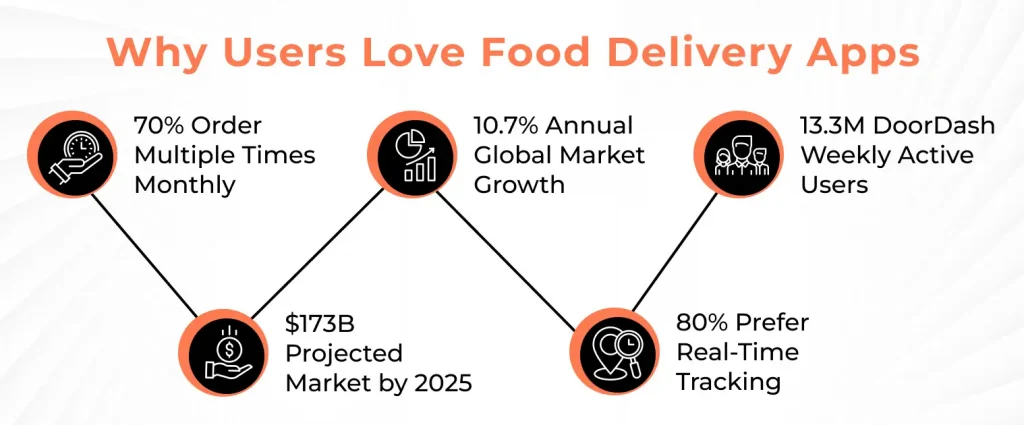
Below are some numbers that define the growth of the food delivery app business model. Check it out:
- In 2024, the internet meal delivery industry was worth more than $156 billion, and experts think it will be worth $173 billion in 2025.
- The growth rate is more than 10% every year, which shows how much businesses may make by adding strong features to their food delivery apps.
- In 2025, revenue in major markets like China and the US is predicted to be more than $500 billion and $430 billion, respectively.
These numbers show how quickly the industry is growing. If you are investing here, then it is important that you learn about the necessary features of food delivery app. Read on.
| Customer App | Restaurant App | Driver Panel | Admin Panel |
| User-Friendly Registration & Login | Easy Restaurant Onboarding | Easy Login & Profile Management | Comprehensive Dashboard & Analytics |
| Intuitive Search & Filters | Order Management Dashboard | Order Assignment & Navigation | User, Restaurant & Driver Management |
| Detailed Restaurant & Menu Listings | Inventory & Pricing Management | Earnings & Payout Tracking | Promotions & Campaign Management |
| Smooth Ordering Process | Performance Analytics | Optimized GPS Navigation & Route Planning | Customer Support & Dispute Resolution |
| Real-Time Order Tracking | Dynamic Menu Management | In-App Communication (Customer & Restaurant) | Multi-Language and Currency Support |
| Multiple Payment Options & Security | Restaurant Analytics & Reporting | Availability Toggle (Online/Offline Status) | Commission & Payout Management |
| Loyalty Programs & Discounts | Promotions & Offers Management | Delivery History & Order Logs | App Content Management System |
| In-App Chat & Support | Business Hours & Holiday Schedule Management | Driver Ratings & Customer Feedback | Notification Management (Push, Email, SMS) |
| Ratings & Reviews System | Multi-Outlet/Branch Management | Heatmap View for High-Demand Zones | Fraud Detection & Risk Monitoring |
| Push Notifications for Engagement | Integration with POS Systems | In-App Notifications for New Orders & Updates | Role-Based Access Control for Admin Team |
| Integration with Social Media Platforms | Customer Feedback & Response Tools | Emergency/SOS Button for Safety | App Version & Update Management |
Must-Have Features of Food Delivery App for Customers (The User App)
Below are the necessary features of food delivery app platforms that you must include for the customers. Check it out.
A. User-Friendly Registration & Login
The first step users take is registering or logging in, which shapes their overall experience. Therefore, modern food delivery apps should offer flexible sign-up options—such as email, phone number, or social media—to ensure convenience right from the start. This way, users may choose the method that works best for them. Using secure authentication methods like OTP verification or biometric login not only makes things safer, but it also creates confidence.
B. Intuitive Search & Filters
A simple search and filtering system helps users quickly find meals or restaurants. Additionally, AI-powered search suggests options based on past orders, location, or popular choices. This feature enhances user satisfaction and increases the chances of order conversion by making it easier to discover new options. It is a must-have for any list of food delivery app features.
C. Detailed Restaurant & Menu Listings
Food delivery software platforms need to have complete lists of restaurants and menus so that consumers can make smart choices. There should be high-quality pictures, full descriptions, hours of operation, and user ratings for each restaurant profile. You can improve the user experience and help restaurants show off their food better by providing clear and visually appealing listings. This will lead to more orders and more engagement.
D. Smooth Ordering Process
To reduce drop-offs and keep customers satisfied, a smooth ordering process is crucial. Ideally, it should require minimal steps and data entry, with clear instructions throughout. Consequently, this simplicity boosts conversion rates and encourages repeat orders—key drivers of success in any meal delivery app business model.
E. Real-Time Order Tracking
One of the best things about meal delivery apps is that they let you track your order in real time, which gives you peace of mind. Customers can use this tool to keep an eye on their order from when it is being prepared to when it is shipped and finally delivered. Interactive maps show where the delivery partner is right now, when they are expected to arrive, and how things are going. This kind of openness lowers stress, fosters trust, and makes the whole experience better for users. Real-time tracking is also an important part of any successful food delivery software features list because it helps businesses better allocate resources and run more efficiently.

F. Multiple Payment Options & Security
Secure payment gateways make sure that all transactions are secured and follow industry standards, which keeps sensitive customer data safe. Saved payment methods and one-click payments are two features that make the checkout process even easier. By putting security and payment options first, you not only build trust with your users, but you also lower the number of people who leave their carts, which directly helps your business develop.
G. Loyalty Programs & Discounts
Discounts and loyalty programs are great ways to keep customers and make them more valuable over time. Food delivery app platforms that provide these capabilities give consumers points, cash back, or special incentives for placing repeat orders. Personalized offers based on past orders and preferences can encourage people to use the service more often. Subscription models make people feel special and encourage them to stay with the service for a long time by offering perks like free shipping or priority assistance. By adding strong loyalty programs and targeted promotions, you can build brand loyalty, set your platform apart from competitors, and encourage steady revenue development.
H. In-App Chat & Support
To quickly answer consumer questions and fix problems, apps need to have good chat and support capabilities. Users should be able to get help 24 hours a day, seven days a week using a variety of channels, such as live chat, AI-powered chatbots, and direct calls. Quick answers to typical questions, changes to orders, or complaints make users happier and more trusting. The ability to escalate concerns to human agents makes sure that complicated problems are solved quickly. You can improve the customer experience, get fewer bad reviews, and develop a reputation for being reliable by offering help that is quick and easy to use.
I. Ratings & Reviews System
A clear mechanism for ratings and reviews is a key part of building trust in any meal delivery app business model. Based on their experience, users should be able to review restaurants, food, and delivery people. Written reviews and visual ratings are both helpful for the platform and other customers. Restaurants and delivery partners can reply to reviews, which encourages open communication and ongoing improvement. Review moderation keeps things real and stops people from abusing the system. You make a community-driven space that draws in new users and encourages partners to keep up high standards by promoting honest feedback.
J. Push Notifications for Engagement
Push notifications are an important way to keep consumers engaged and connected with your platform. These notifications can tell you the progress of your order in real time, send you unique deals, make personalized suggestions, and remind you about carts you left behind. Smart targeting ensures that messages are useful and timely, which keeps people from getting tired of notifications. Keeping in touch with your customers on a regular basis will help you keep them, get them to buy again, and provide you chances to sell them more. Push notifications that are well thought out are an important component of any list of features for a meal delivery software. They help the business expand over time.
K. Integration with Social Media Platforms
Adding social media channels to your software makes it more interesting for users and helps it reach more people. Social login makes it easier to sign up, and sharing tools let users share their orders, feedback, or referral coupons on their networks. Social media integration also makes it possible to run targeted marketing campaigns, work with influencers, and establish communities. Using social media to your advantage, you may reach new groups of customers, make your brand more visible, and build a feeling of community around your app. In the competitive world of developing features of on demand food delivery app, this integration is a must-have.
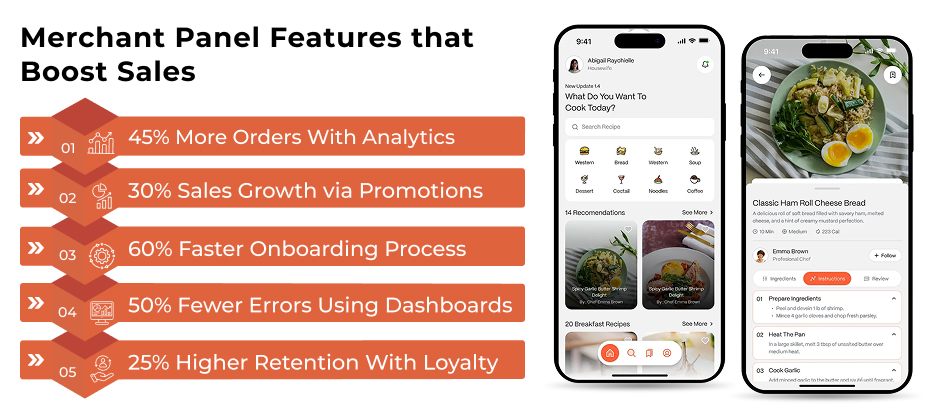
Food Delivery App Features for Restaurants (The Merchant Panel)
A. Easy Restaurant Onboarding
For your platform to grow and attract good partners, restaurants need to have a seamless onboarding procedure. The method should be digitized so that restaurants may sign up, upload the required documents, and finish the verification process promptly. When new employees get clear instructions and aid during onboarding, they make fewer mistakes and get to work faster. You make it easy for restaurants to join and put up their profiles, which keeps the marketplace diverse and active. This is important for getting and keeping customers. This functionality makes things easier for your food delivery app company to grow quickly.
B. Order Management Dashboard
An easy-to-use order management dashboard is a must-have for restaurant partners so they can quickly and easily handle incoming orders. The dashboard should provide order data, send notifications in real time, and let you accept, change, or refuse orders as needed. Restaurants can better handle busy times and make sure food is ready on time with food delivery app features like prioritizing orders, scheduling, and status updates. This function is an important part of any meal delivery software since it centralizes all order-related tasks, which lowers the chance of mistakes, makes it easier to work with delivery people, and improves the overall quality of service.
C. Inventory & Pricing Management
Restaurants need good tools to manage inventory and pricing for smooth operations and profit. Luckily, food delivery apps offer real-time stock tracking, menu updates, and price changes. Plus, automated alerts prevent shortages, and dynamic pricing helps adjust rates during busy times. This control lets restaurants improve offers, reduce waste, and quickly adapt to market changes, boosting efficiency and profits.
D. Performance Analytics
Performance analytics give restaurants useful information about their sales, what customers like, and how well their operations are running. Restaurants may find out what they’re doing well and what they need to work on by looking at detailed information on things like order volume, revenue, popular meals, and customer comments. These metrics can also help you make decisions about personnel, marketing, and changing the menu. By giving restaurant partners data-driven tools, you help them make smart choices that will help them expand and become more competitive on your platform.
E. Dynamic Menu Management
Restaurants need dynamic menu management so they can change their menus in real time. Restaurants may quickly add new things, take away foods that aren’t available, and show off specials or bestsellers. This flexibility ensures customers always see accurate, up-to-date menus, reducing order cancellations and dissatisfaction. Dynamic menu management also allows restaurants to offer seasonal specials and limited-time discounts, helping boost sales and capitalize on trends.
F. Restaurant Analytics & Reporting
Restaurants need comprehensive analytics and reporting to track performance and compliance. Food delivery apps provide reports on sales, ratings, customer demographics, and operations. With detailed insights, restaurants can monitor goals, identify growth opportunities, and simplify bookkeeping. Providing clear reports builds trust with partners and supports their long-term success on your platform.
G. Promotions & Offers Management
Restaurants can use food delivery app features to create, plan, and track marketing campaigns directly within the app. They can offer discounts, combo deals, and exclusive offers for specific customer groups or time periods. By monitoring campaign performance, they can adjust strategies as needed. Empowering restaurants to run their own promotions encourages creativity, increases customer engagement, and boosts order volumes across the platform.

Food Delivery App Features List for Delivery Personnel (The Driver App)
Below are the necessary food delivery app features list that you must include for the merchants of food delivery applications. Check it out.
A. Easy Login & Profile Management
A simple login and profile management system is important for delivery people to be able to onboard quickly and run their daily operations smoothly. Drivers should be able to sign up, upload the documents they need, and finish the verification process fast. They can change their personal information, see how well they’re doing, and manage their availability with the profile management option. You cut down on administrative work and make sure that drivers can focus on making deliveries on time and reliably, which are both very important for customer satisfaction and the platform’s reputation.
B. Order Assignment & Navigation
Delivery people need to be able to quickly assign and navigate orders. This makes their work easier and speeds up delivery times. The software should automatically give out orders based on where the driver is, when they are available, and how to get the best delivery route. Drivers can get to their destinations swiftly and safely with the help of integrated maps and turn-by-turn guidance. Real-time information on traffic and other routes make things even more efficient. You may speed up delivery, lower operating expenses, and make the overall user experience better by making order assignment and navigation easier.
C. Earnings & Payout Tracking
Drivers need to be happy and stay with the company, so it’s important to have clear earnings and payout tracking. They should be able to see a full dashboard that shows them their completed deliveries, how much money they made, bonuses, and other incentives. These are more likely to do a good job when they know they can get paid right away and see when their payments are due. You create a sense of fairness and openness by giving people access to their pay in real time. This is important for getting and keeping a reliable delivery crew.
D. Optimized GPS Navigation & Route Planning
For the shortest delivery times and the most efficient use of resources, GPS navigation and route planning must be optimized. The app should give you precise, real-time directions, traffic updates, alternate routes, and projected delivery times. Intelligent route planning makes sure that deliveries are organized and scheduled in the most efficient way possible for drivers who have to handle more than one order. This functionality not only makes customers happier by getting their goods to them on time, but it also helps drivers finish more orders in less time, which boosts their revenue and the overall capacity of your platform.
E. In-App Communication
Drivers can easily work with customers and restaurant partners when they have good in-app communication food delivery app features. Drivers can use secure messaging and calling to clear up delivery instructions, report problems, or let consumers know about delays. Communication in real time cuts down on misunderstandings, improves service quality, and makes sure that deliveries go smoothly. You can reduce mistakes, make customers happier, and build the relationship between everyone involved in the food delivery system by making communication easier and more direct.
Features of Food Delivery App for Admin Panel
A. Comprehensive Dashboard & Analytics
Administrators can monitor user activity, order volumes, revenue, and restaurant and driver performance. Visual analytics and customizable reports enable quick decision-making and strategic planning. The admin dashboard consolidates key data, empowering platform owners to improve operations, identify growth opportunities, and maintain high quality standards.
B. User, Restaurant & Driver Management
The admin interface should have options for adding, verifying, suspending, and removing accounts as needed. Know Your Customer and compliance management tools make sure that everyone involved follows the rules. By making account administration easier, you make things less complicated for the people who work for you, make things safer, and make your food delivery app ecosystem a safe place for everyone.
C. Promotions & Campaign Management
With the use of promotions and campaign management tools, administrators may plan, implement, and keep an eye on marketing campaigns all over the site. Admins can make campaigns that are aimed at certain groups of users, keep track of how many people are interacting with them, and figure out how much money each promotion brings in. By putting all of your marketing activities in one place, you can make sure that they are all the same, have the biggest effect, and keep users interested and growing your business.
D. Customer Support & Dispute Resolution
To keep users happy and trusting, there needs to be a strong customer service and dispute resolution system. There should be a centralized ticketing system in the admin panel for keeping track of and fixing client problems, complaints, and disagreements. By putting good support first, you can get fewer bad reviews, improve your brand’s reputation, and build long-term loyalty.
E. Multi-Language and Currency Support
If you want to grow your food delivery service into new markets and serve a wide range of users, it needs to handle many languages and currencies. It should be easy to change the language of the app’s content, like menus, notifications, and support materials, using the admin panel. You make your app easier to use, attract clients from around the world, and set it up for scalable growth in the competitive food delivery sector by making it genuinely global.
Advanced Features of Food Delivery App for Business Growth
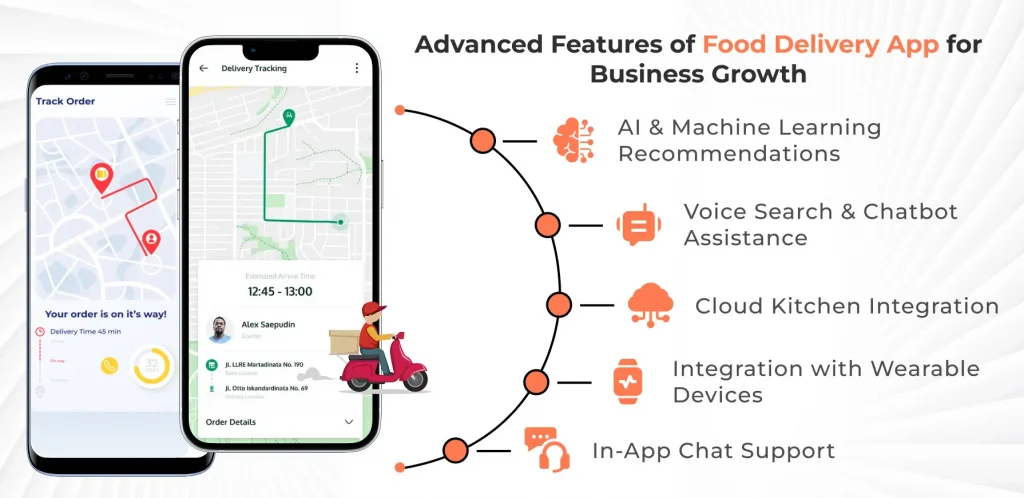
A. AI & Machine Learning Recommendations
AI and machine learning are transforming meal delivery by offering personalized recommendations. These smart features for food delivery app analyze user behavior and past orders to suggest relevant dishes and deals, making the platform more adaptive and growth-ready.
B. Voice Search & Chatbot Assistance
These are becoming more and more common in on-demand meal delivery apps. It makes it easier and more convenient for people to find restaurants, look at menus, and place orders without having to use their hands. By using speech and chatbot technology, you can keep your app up to date and ahead of the curve.
C. Dark Mode & Accessibility Features
To make the user experience more welcoming and pleasant, dark mode and accessibility features are quite important. Dark mode is great for people who like to work in low-light settings because it cuts down on eye strain and saves battery life. If you make accessibility a priority, you will follow the law, reach more people, and show that you care about social responsibility.
D. Cloud Kitchen Integration
Cloud kitchen integration is a key part of supporting brands and virtual restaurants that solely deliver. These kitchens don’t have a real eating area; they only take online orders. Cloud kitchens let businesses save money on overhead costs and try out new ideas. By following this trend, you put your app at the front of the changing food delivery scene.
E. Subscription Models
Subscription models are becoming more popular as a means to keep customers coming back and make money that is easy to anticipate. Users can sign up for monthly or yearly plans that come with perks like free shipping, exclusive discounts, and faster assistance. They give businesses a steady stream of cash and useful information about what customers want. Adding subscription options to your app sets it apart from others and helps you establish a loyal, engaged consumer base.
F. Integration with Wearable Devices
Your food delivery app will be more useful and accessible if it works with wearable devices like smartwatches. Users can get notifications about their orders, keep track of their deliveries, and do quick actions right from their wearable devices. By making your software work with wearables, you reach new groups of users and show that you care about innovation and designing for users.
G. In-App Chat Support
In-app chat support is an important tool for helping consumers, restaurants, and delivery people in real time. You may talk to support agents or AI-powered chatbots right away with this function, which helps you solve problems quickly and easily. You create trust, reduce friction, and make sure everyone has a good experience by providing support that is quick and easy to get.
What Features Will Dominate Food Delivery Apps in 2025?
As we look ahead, the best meal delivery app platforms will be the ones that deploy cutting-edge technology and put the needs of users first.
AI will make hyper-personalized recommendations the norm, giving you individualized choices and deals. Seamless subscription models and loyalty programs will keep people coming back for more and make money that can be counted on.
Eco-friendly packaging and carbon-neutral shipping are two examples of sustainable delivery alternatives that will appeal to consumers that care about the environment. Restaurants will be able to attract new customers and grow quickly thanks to direct-to-consumer channels and cloud kitchen connectivity.
Voice and chatbot-driven ordering experiences will meet the needs of a wide range of users, while health-focused menus and configurable dietary filters will keep up with the expanding trend of health and wellbeing. These new ideas will shape the next generation of food delivery app features and set the best companies apart.
Building the Future of Food Delivery: Why A3Logics is Your Ideal Partner
Finding the right partner for your food delivery app development is crucial for success. A3Logics is among the top mobile app development companies. They provide complete solutions that combine the latest technology with extensive industry experience.
Our team excels at building secure, scalable, and feature-rich apps tailored to your business needs. A3Logics is a leading Food Delivery App Development Company. We leverage AI, cloud computing, and IoT to develop high-performance platforms built for long-term success.
A3Logics offers full On Demand App Development Services for food delivery apps, including everything from coming up with ideas to launching the app and beyond. This is true whether you are a new business trying to Build Your Own Food Delivery App or an established brand wishing to improve your offerings.
Bottom Line
Hopefully, you now have a clear understanding of how food delivery apps drive growth. Getting the right features and focusing on user services is essential for the best results. It’s also important to partner with the right company for development support. If you need expert help, connect with A3Logics. They prioritize user experience and build strong, lasting partnerships.