Connected devices are facilitating the management across treatments and patients, and the whole healthcare sector is moving towards a more efficient solution. An IoT-Based Pill Reminder and Monitoring System is one such initiative that addresses patient care via refined medication adherence and monitoring. An IoT-enabled medication systems utilise IoT devices along with software for practical medication assistance, which is far better than traditional methods.
IoT Smart Medication Reminder System Development does more than just notifying a patient to take their medicine; it provides a link between patients, their caregivers, and, in some cases, their doctors. These automated and monitored systems offer a solution to the most pressing problem in modern medicine: compliance with treatment.
Although the design and features of every IoT-Medication Reminder System may be unique, the underlying aim is to develop scalable, secure, and user-friendly systems that minimise errors and enhance results. This article aims to cover the detailed operation, types, advantages, and associated challenges with an IoT Smart Medication Reminder System, as well as real-world software, to showcase the increasing necessity of such systems.
Stats and Facts of IoT in Healthcare, Medication
The Healthcare Industry faces unique challenges. One of them is ensuring patients adhere to the treatment prescribed to them. People living with chronic conditions such as diabetes, hypertension, and epilepsy require continuous treatment. Unfortunately, a large section of these patients fails to remain adherent. This is where technology comes in to help where human memory fails.
Medication non-adherence is widespread and alarming. A staggering 41% of heart attack patients do not take their antihypertensive drugs, while diabetes patients in north-east India are 33% more likely to forget taking their daily oral hypoglycemic agents.
In addition, 50% of epilepsy patients have admitted to skipping their doses at least once a month. Non-adherence also extends to the use of drug pouch organisers, which are only partially effective. The IoT Pill Reminder and Monitoring System Development is a promising solution as it ensures both timely reminders and greater accountability.
At the same time, the impact of IoT on healthcare is exploding worldwide. According to IDC, there will be 41.6 billion connected IoT devices around the world by the end of 2025, among which the healthcare sector will hold the most significant market share. At the same time, the IoT is expected to attract an investment of $15 trillion by the end of 2025. This type of growth accelerates the need for IoT-Medication Reminder System Development, as it offers new ways for patients to better manage long-term treatments.
How does an IoT-based Medication Reminder System work?
Fundamentally, the intent behind a pill reminder system is to facilitate a patient’s proper medication intake. However, when integrated with IoT, this system is more advanced and dependable. An IoT-based automated Medication Reminder System utilises real-time monitoring, connectivity, and sensors to solve the issues patients have with their health care providers.
Here is how it works: Pillboxes with an IoT component monitor pill usage, record the data, and determine whether a medication has been taken or not. In the event that a patient misses out on their medication, the system sends immediate alerts via mobile apps, wearable devices, or a dashboard designed for caregivers. Moreover, some newer models function as dispensers. They provide the medication as per the schedule, thereby eliminating errors and assumptions.
The role of IoT is essential in this scenario. As part of the IoT network, relevant adherence reaches the cloud, where it can be further analyzed. An IoT-based pill Management System for the elderly enables doctors and caregivers to track missed doses and receive notifications, thereby helping to prevent further health complications. IoT facilitates this integration helping advance the medication box from a basic reminder to a comprehensive monitoring system.
In addition, there is a more effective personalisation due to IoT. An IoT Smart Medication Reminder System can interface with EHR and other applications to create precise schedules for each patient. The main health information available to IoT wearables is real-time, such as heart rate and blood glucose level, and therefore, adjustment of care could take place immediately.
Developing these types of systems also requires standards for secure APIs and encryption that ensure security and reliability. In the end, Secure IoT-Medication Reminder System Development allows for proactive interventions, predictive care, and other capabilities beyond everyday reminders.
Read Also: IoMT (Internet of Medical Things)
Who Are The Key Users of the IoT Pill Reminder System?
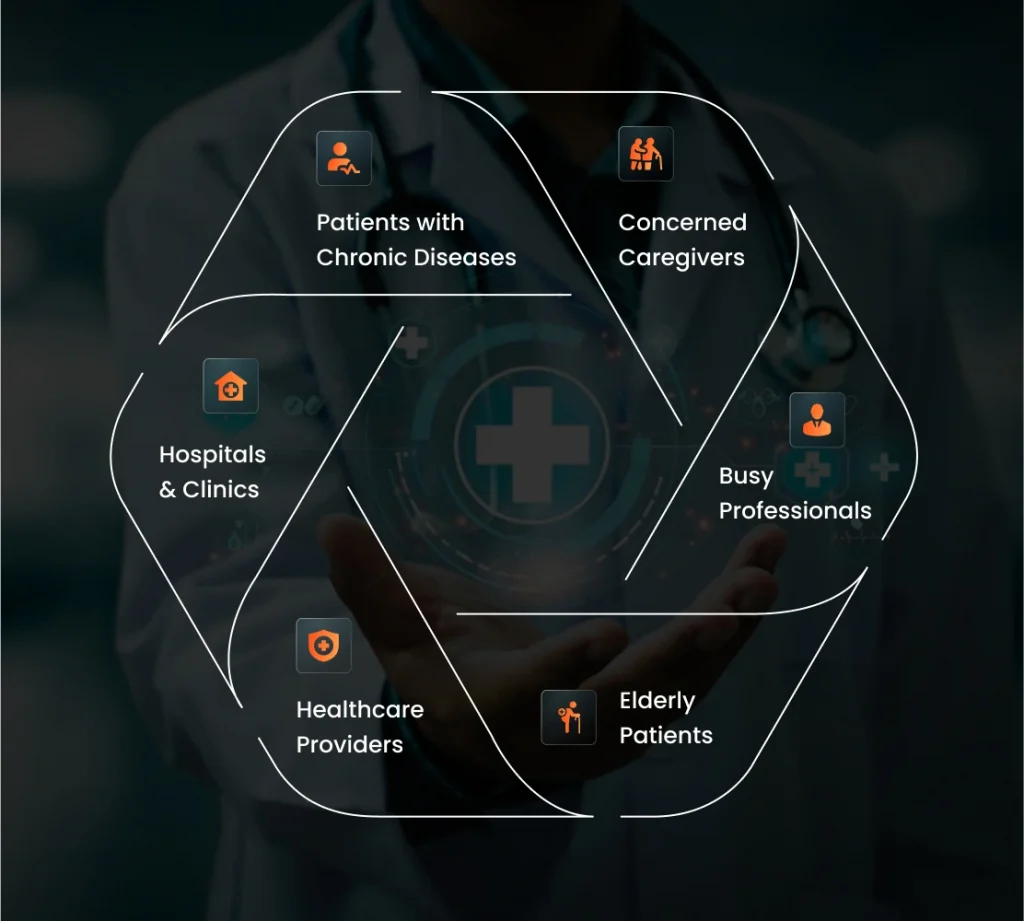
The development of an IoT-Based Pill Reminder and Monitoring System doesn’t focus on a single user group; it impacts several aspects of care and daily life. Different individuals use it for other purposes, and recognising these users is essential for system design and acceptance
1. Elderly Patients
For elderly patients, the issues of dementia, memory loss, or even simple forgetfulness often create problems when it comes to daily medication. Missing doses for chronic conditions such as diabetes or heart disease poses its own set of risks. The IoT-Based Smart Pill Reminding System development offers the benefits of intelligent alerts, pillbox sensors, and voice notifications, which need to be provided to the elderly to ensure that they take their medications promptly. Furthermore, the system has the functionality of notifying family members or caregivers in the event of unclaimed doses. This helps in medication adherence and also in reducing dependence on caregivers, with the added advantage of comfort for the elderly’s families.
2. Patients with Chronic Diseases
Patients with chronic illnesses such as diabetes, PCOS, epilepsy, or hypertension require medications on strict schedules. Their condition may deteriorate if their medication schedules are not followed. The IoT-Based Medicine Reminder and Dispensing Machine ensures this by sending pill reminders and dispensing medication at the right time. IoT sensors also monitor pill consumption, and cloud systems keep records for physicians. This assures medical personnel of the patients’ adherence and helps them manage the treatments. Patients have better disease management, fewer complications, and improved perceptions of control over their long-term health.
3. Busy Professionals
Professionals who have meetings, flights, and weekend events on their minds often forget their daily prescription medications. An IoT Smart Medication Reminder System allows users to receive unobtrusive and timely reminders on their smartphones, wearables, and even voice assistants. An incoming pill reminder on a smartwatch can be set to wait until post-meeting, and IoT-based overnight reminders can be serviced at the most optimal time. On specific platforms, an attempt to confirm ingestion after a reminder can be used to record dispensations. This system delivers medication on the schedule, enabling recovery, without making it a daily to-do list.
4. Concerned Caregivers
Caregivers worry about their patients potentially avoiding or overdosing on their treatment. With an IoT-based Pill Management System for The Elderly, families gain the advantage of viewing adherence data in real-time from any location. Automated alerts are dispatched to caregivers’ mobile applications when doses are skipped. To enhance safety, some devices prevent the user from accessing future pills until the previously scheduled time, thus eliminating the risk of overdosing. These innovations can ease the burden on their caregivers but also add another level of safety to the patient, particularly the elderly and children.
5. Healthcare Providers
Healthcare providers face challenges in confirming whether patients take their medications properly. The IoT Medication Reminder System Development solves this problem by providing reports on patient adherence. A healthcare provider can monitor skipped doses, detect patterns of non-adherence, and act proactively to prevent overdose events. For example, if a cardiologist practising in a different city than his patient was monitoring his use of antihypertensive medication, he could easily make decisions and adjust the patient’s medication in real-time. Having some real-time feedback ultimately creates a loop of communication for the patient and the doctor with powerful data for decision-making.
6. Hospitals & Clinics
One of the primary issues leading to hospital readmissions is irregularity with medication. With the IoT Pill Reminder and Monitoring System Development, Hospitals can provide effective care post-discharge. The system dispenses smart pill boxes to the patients that not only ensure compliance with the prescriptions at home but also enable remote compliance monitoring of high-risk patients through the clinics. This eliminates unnecessary emergency visits. In the long run, monitoring contributes to reducing the costs of healthcare and improving healthcare outcomes. Incorporating the system with the electronic health records enhances the quality of care.
Types of IoT-Based Drug Delivery Systems
Wearable Smart Medication IoT Devices
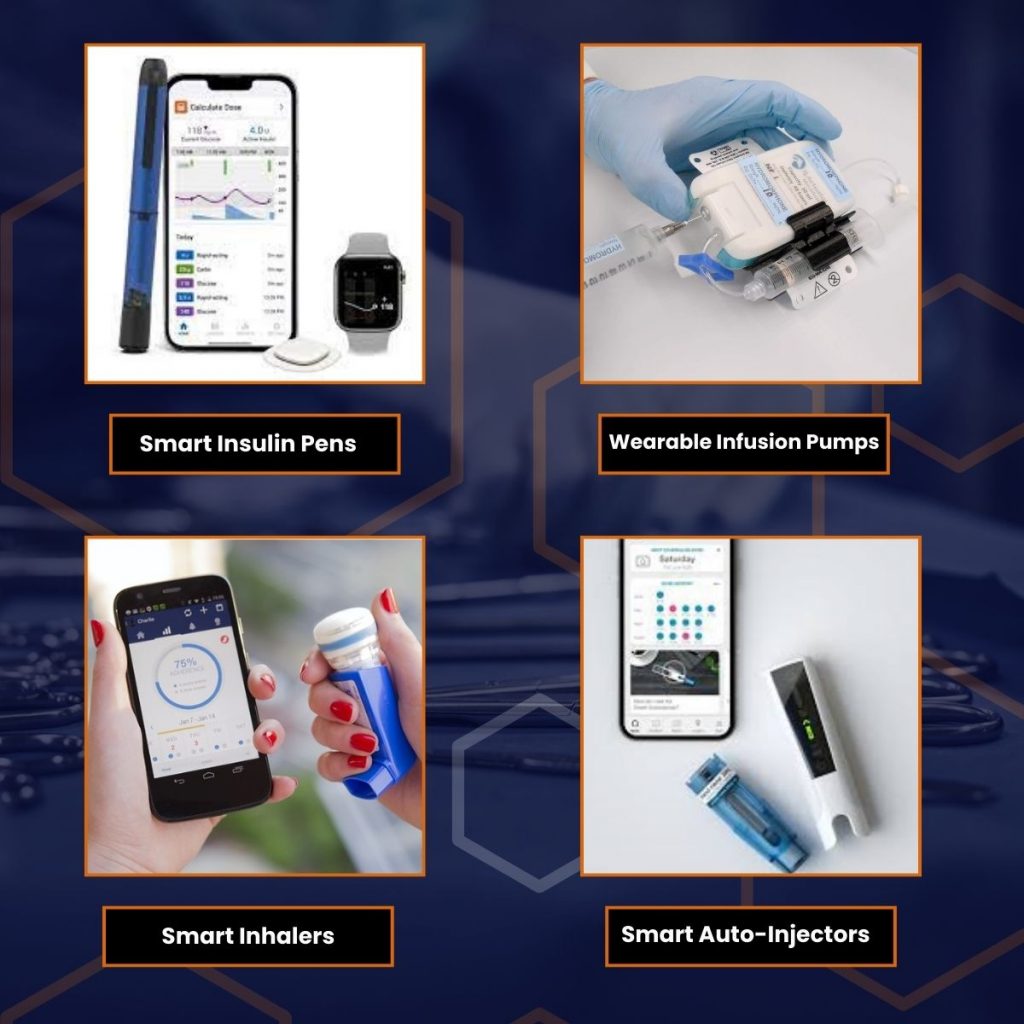
1. Smart Insulin Pens
Unlike traditional insulin pens, smart insulin pens eliminate the need for patients to remember insulin injections. They continuously monitor the time, date, and amount of each injection, and synchronise the data with related apps to ensure proper dosing when using IoT-Based Automated Medication Reminder System technology. This makes the process of taking medications far easier and helps diabetes patients avoid missing or taking double doses.
Furthermore, smart pens track usage patterns to calculate proper dosages, thereby negating the need for blanket medication dosing. Physicians can remotely monitor and enhance the treatment. This technology alleviates the concerns associated with complex schedules and provides systematic care to the patient.
2. Wearable Infusion Pumps
These pumps are designed to provide continuous delivery of specific medication to the patient, whether it be insulin, chemotherapy, or even pain treatments. When these pumps are integrated with the IoT-Based Pill Reminder and Monitoring System, they not only provide alerts for medication refills but also detect operational failures and securely send dosage information to healthcare professionals. Patients are allowed mobility and a sense of independence even during strict therapies. During therapy, these pumps ensure that the medication is automated and provided on its schedule, thereby eliminating the need for the patient to visit the hospital. Their combination of convenience, automation, and connectivity makes them valuable devices for patients with chronic illnesses.
3. Smart Inhalers
Asthma and COPD patients have a higher likelihood of misusing the inhalers, which leads to a decrease in the treatment’s effectiveness. This is a significant problem with traditional inhalers, and smart inhalers focus on this issue. These advanced inhalers have sensors that monitor not only the frequency of usage but also the proper inhalation methods.
When paired with the IoT-Based Medicine Reminder and Dispensing Machine, smart inhalers can alert users for upcoming doses and share reports with medical personnel. Proper inhalation methods can be taught with the use of educational feedback, which enhances the medication’s effectiveness. Smart inhalers ensure healthcare is improved and reduce the likelihood of hospitalisations by making sure the doses are neither missed nor incorrect.
4. Smart Auto-Injectors
Biologic therapies provide relief for patients with arthritis or multiple sclerosis. Here, auto-injectors are very helpful for administering these therapies. The IoT Smart Medication Reminder System Development integrates auto-injectors, offering several advantages. This new generation of devices keeps track of each injection, verifies its completion, and alerts patients and caregivers about forthcoming doses. The most sophisticated versions also track drug storage parameters.
Such devices ease the burden on patients undergoing prolonged courses of treatment, guaranteeing their proper self-administration. Physicians gain better control and visibility, which ensures treatments are not missed or given incorrectly.
Implantable Smart Drug Delivery Devices
1. Implantable Infusion Pumps
As part of an integrated care of IoT Smart Medication Reminder System, implantable infusion pumps function with automated drug infusion, making scheduled drug delivery log its patterns and send refill alerts. Their use is most effective in chronic cancer care and diabetic care treatments, as well as in persistent pain management. Infusion Pumps IoT integration increases their functionality by granting doctors immediate access to treatment information and decreasing the need for emergency treatments.
2. Implantable Drug-Eluting Stents
Implantable drug-eluting stents are devices that deploy medication to an artery after the completion of an operation to keep it from getting blocked. With an IoT-Based Pill Management for the Elderly, their connectivity to remote monitoring systems and to tracking the device functioning and the patient’s recovery progress is made possible. This improves cardiovascular post-operation care, enabling risk-based early warnings. IoT Stents enhance treatment and decrease post-op hospital length of stay with a giant leap forward from manual to robotic cardiovascular care.
Ingestible Smart Drug Delivery Devices
1. IoT-Based Ingestible Smart Drug
Advances in the IoT-Based Automated Medication Reminder System include ingestible drugs containing nanosensors to monitor what is going on within the body, including metrics like pH, temperature, or biomarkers. These devices don’t simply confirm a pill was ingested; they provide meaningful data on how the body is responding to those medications in real-time. This means doctors can change prescriptions in ways that contribute to personalized care. This new technology eliminates all guessing and absolutely ensures treatment adherence that is tailored to the individual patient’s biology.
Benefits of an IoT-Based Medication Reminder System
Improved Compliance: The IoT Pill Reminder and Monitoring System Development helps in maintaining the continuity of care by providing medication alerts via smart devices, sending reminders as well as updates to the caregivers, and assisting in achieving much greater rates of adherence in the long run.
Remote Tracking: The IoT Medication Reminder System Development gives the opportunity to healthcare providers and caregivers to follow the patient’s adherence to the established medication regimen, thus curbing the risks deriving from accidentally skipped medicines and allowing proper healthcare via early attention.
Customised Timetable: The IoT-Based Automated Medication Reminder System is especially designed for patients on advanced treatment plans and changes, which ensures that the system appropriately adjusts to the medication’s dosage time, food restrictions, and the patient’s lifestyle, eliminating any chance of error in medication timing.
Decreased Hospital Visits: The IoT Smart Medication Reminder System Development protects patients from needlessly scheduled hospital visits by cutting emergency room runs, which in turn cements the patient’s quality of life while also reducing healthcare expenditures.
Support for Seniors: An IoT-Based Pill Management System for the Elderly is aimed at assisting seniors with their medications, enhancing self-care, and alleviating the stress for the caretakers of individuals living with long-term illness.
Data-Driven Insights: The metrics enable physicians to see their patients in real time. Consequently, they can adjust and refine prescriptions, treatments, and lifestyle guidance for improved efficacy.
Medication Security: The IoT-Based Medicine Reminder and Dispensing Machine Development safeguards against overdoses and misuse by securely locking the medication and dispensing the correct dose at the appropriate time.
24/7 Accessibility: Using an IoT Smart Medication Reminder System, patients and their families receive continuous access to reminders, reports, and alerts through connected applications or devices.Chronic care management: An IoT medication reminder system for chronic conditions such as diabetes, epilepsy, or hypertension ensures proper and timely medication, thereby limiting further health risks and improving chronic care management.
Top Five IoT-Driven Smart Medication Systems Available
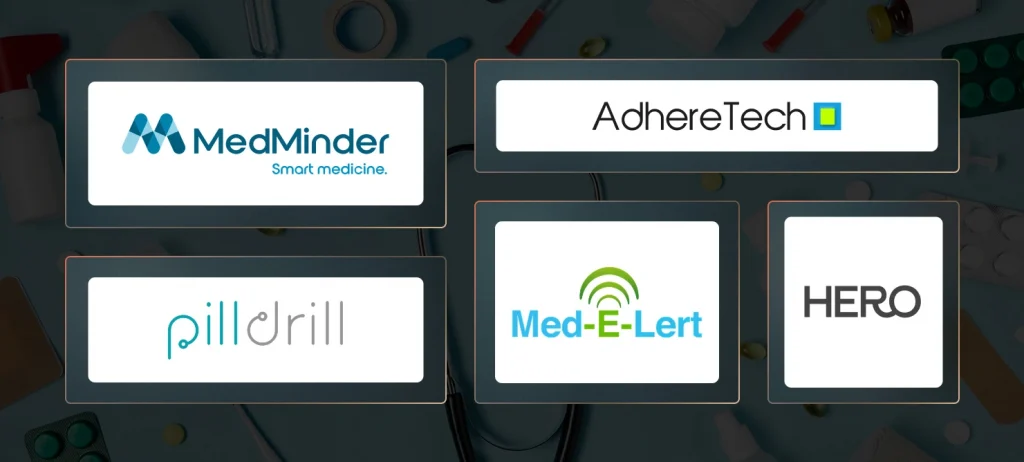
1. MedMinder (IoT Pill Dispensers):
MedMinder is one of the most successful IoT medication reminder solutions available. Its bright dispensers connect to mobile applications to notify patients when they have to take their medication. Caregivers are also informed of any missed doses so dosing schedules can be better managed. Its bright dispensers lock any unused compartments to prevent its users from overdosing. Due to its user interface, together with its caregiver portal, MedMinder is very effective in assisting elderly patients with chronic condition medication management.
2. PillDrill (Smart Medication Trackers):
PillDrill offers an advanced connected-standalone medication tracker and reminder system, with its companion hubs enhancing the medication regimen management offered by smart pill containers. The unique, barcoded medication containers serve as their own unique IDs, which, upon scanning for use, enable the system to compile and monitor adherence in real-time. This valuable data can be made accessible to family and other care providers for timely and informed intervention. PillDrill smartly blends technology and user friendliness, offering integrated medication reminders that truly aid daily adherence without complicating the process.
3. Hero Health (Smart Dispenser + App):
Hero Health is an IoT-based medicine Reminder and Dispensing Machine. It dispenses the correct amount of medication on time. It integrates with its companion app, which offers refill alerts and prescription management. Automation and design reduce the Hero Health system errors and ease the process for users with many prescriptions. Its rising demand proves how IoT-enabled dispensing enhances medication safety and ease.
4. AdhereTech (Smart Bottles):
AdhereTech’s smart bottles use cellular connectivity and sensors to notify patients of a missed dose and do not require W-Fi or apps. Real-time information is sent to clinicians for prompt action, reducing the chances of a hospital visit. This feature positions AdherTech as a leading example of IoT-based automated Medication Reminder System Development.
5. Med-e-lert (Inexpensive Smart Pill Organiser)
Med-e-lert is a budget-friendly IoT Medication Reminder System Development, best designed for patients who need simple reminders. It has alarms, trays, and locks that help with nudge reminders to perform tasks. It is easy, less costly than cloud-based models, and also senior citizen-friendly.
Key Components of IoT-based Medication Reminder System
| Layer | Key Components |
| Perception Layer | Smart pillbox – Keeps your medications secure and dispenses the appropriate dose when it is time to take medications. Weight/RFID/IR sensors – Identify the presence of pills and inform you of whether or not the patient has taken the medication. Actuators (buzzers/LEDs) – Notify patients with sound or light when it is time to take their medicines. |
| Network Layer | Wi-Fi/Bluetooth – Allow devices and applications to communicate across short distances. Zigbee/LoRaWAN – Allow patients in remote locations, typically in low-energy conditions, to communicate. GSM/4G – Allows alerts to be sent in real time, even without an internet connection. Gateways – Allow local devices to connect safely and securely to the cloud servers. Encryption – Makes sure the transmission of patients’ sensitive health data is secure. |
| Edge Layer | Microcontrollers (Arduino/ESP32)- Manage reading of local sensors and control of other devices. Raspberry Pi- Runs local tasks that require more computation for larger-scale automation. Local data- processes data locally, which ensures that the event of triggering an alert or dispensing the medication is done quickly. |
| Middleware Layer | Cloud IoT platform: Collects and processes data on medication adherence. Databases: Provides a history of doses taken, missed doses, and the medication schedules. Analytics engine: Creates usability from data that can be used by the caregivers. APIs: Encourage connectivity to other healthcare applications and monitoring systems. |
| Application Layer | Mobile Application: Creates reminder alerts and maintains the patient’s intake record. Doctor/Caregiver Portal: The system provides a special portal for healthcare providers to monitor patient adherence. Voice Assistant Devices: Provide reminders that are accessible for elderly or visually impaired users. Smart Devices and Fitness Bands: Send reminders via smart watches and fitness trackers. |
| Business Layer | Compliance (HIPAA/GDPR): Guarantees that patients’ information is confidential and legally protected. Decision Support: Supports physicians in reviewing how adherence changes over time and with treatment options. EHR Integration: Updates patient information with reminder system information. Scalability: The system can accommodate massive user bases while continuing to function effectively. |
What are the Capabilities of the IoT-Based Pill Reminder & Monitoring System
The IoT Smart Medication Reminder System not only sends alerts but also provides up-to-the-minute details on pill consumption. The sensors within the smart pillbox confirm if the medication has been consumed as per schedule and notify designated support if the medication has not been taken. The system supports timely medication intake and also offers a layer of support and responsibility, especially for patients with several medications.
The IoT-Based Smart Pill Reminder System offers a chronic illness patient care advantage, primarily due to its most critical feature: remote tracking. Patients and physicians can now monitor adherence remotely, assisting relatives and other responsible people as well. Chronic conditions such as diabetes, epilepsy, hypertension, etc., are well served by IoT because continual monitoring reduces the chances of missed medication, and thus ailments.
Moreover, sophisticated systems can provide integration to electronic health records and analytics systems, which transforms the IoT-Based Medicine Reminder and Dispensing Machine into a key resource for healthcare providers with a basis made on actual adherence data from the machine to update treatment. Some systems send foresight notifications, alerting caregivers to potential medication adherence issues.
The system, finally, provides flexibility and scalability. It can adapt to different environments, whether that is the home of an elderly person or a large hospital. This demonstrates the effectiveness of an IoT-Based Pill Management System for the Elderly in various settings, creating an environment where technology facilitates safer living.
Security Issues in Wireless Sensor Networks Used in Medication
Systems such as the IoT-Based Automated Medication Reminder System depend on wireless sensor networks, and such networks come with their own set of essential security issues. Because of the extensive use of such networks for the transmission of health data, any data breach poses a threat to patient safety and privacy.
Data interception is one of the critical issues. Due to the weak encryption of signals from sensors, mobile applications, and gateways, attackers can access sensitive data, including medication schedules and patient identities. In the same manner, the absence of strong authentication mechanisms increases the risk of unauthorised access, where such devices can be manipulated at will.
Let’s consider the matter of data integrity. If unauthorised entities change readings from sensors or notifications for medication, patients may disregard their required doses. Patients may be at risk of serious health issues from either overdosing or underdosing. In addition, wireless networks can suffer from denial-of-service attacks that may prevent critical alerts from being delivered.
In the end, you have to think of following the rules of HIPAA and GDPR. An IoT-Medication Reminder System Development that is less secure might not only jeopardies the users’ safety. Using strong encryption, conducting timely patches, and employing intrusion detection systems are all essential in making wireless sensor networks dependable in medication management.
How A3logics Can Help You Develop an Innovative IoT Medication Reminder System
Creating an effective healthcare solution requires an understanding of the domain, appropriate technology, adherence to regulations, and the ability to scale. A3logics is known as best IoT development company in the healthcare community for creating the IoT Pill Reminder and Monitoring System, which aims to provide a complete solution for patients and caregivers. Their systems bring together smart pillboxes, secure data transmission, and patient and caregiver apps under one umbrella.
Our team of experts efficiently carries out IoT Smart Medication Reminder System Development projects. When we say IoT systems, we include wearables, sensors, and cloud-based platforms as part of a complete system solution during development. Better technology means increasing compliance and providing up-to-date information to caregivers and physicians to ensure the proper patient health and care.
We build our systems with voice assistants, predictive analytics, caregiver portals, etc. Would you like to have a sophisticated healthcare system up and running? Allow us to develop a system that vigilantly watches over your patients and ensures that they adhere to their medication regimen daily.
Conclusion
Managing medication has always swung between being a responsibility and a habit. With forgetfulness and lifestyle pressures very often getting in the way. The worry and stress of life only deepen the impact of the classic IoT Smart Medication Reminder System. By adding structured reminders, gentle monitoring, and some accountability, these systems enable patients to feel confident.
In the future, it will be increasingly important to invest in the IoT-based medicine Reminder And Dispensing System development to address the ever-increasing healthcare demands. At the same time, it will encourage patients of all ages to lead healthier and more self-sufficient lives.