Organizations are under mounting pressure to deliver technology outcomes that drive measurable business value. Yet, despite massive digital investments, many IT projects fail primarily because of poor alignment between IT priorities and corporate objectives. Traditional tools like spreadsheets and disconnected project trackers limit visibility, fragment governance, and slow decision-making.
ServiceNow IT Business Management (ITBM) directly addresses this problem by creating an integrated environment where every project, investment, and resource is aligned to business goals. It brings financial, resource, demand, and portfolio management together in a single, data-driven platform.
In this guide, we will explore what ServiceNow IT Business Management is, its core modules, implementation roadmap, benefits, and more. Let’s dive in!
What is ServiceNow IT Business Management?
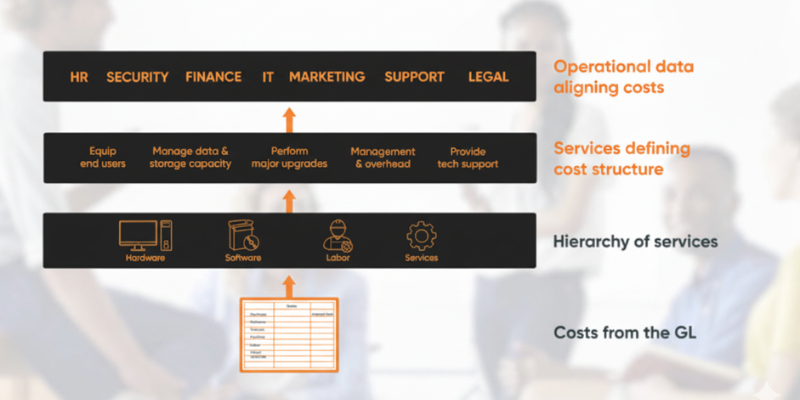
ServiceNow IT Business Management is a suite of integrated applications that bridges the gap between IT execution and business strategy. It provides unified visibility into all IT investments, allowing leaders to prioritize initiatives based on value, cost, and resource capacity. In practice, it merges project delivery, budgeting, and operational data to ensure every decision contributes directly to enterprise goals.
Reference – servicenow.com
At its core, ServiceNow ITBM acts as a single operating model for project governance. It consolidates demand intake, project portfolio tracking, Agile planning, financial oversight, and application portfolio management. With modules designed to manage the complete project lifecycle, organizations gain both strategic oversight and granular operational control.
Core Modules and Components of ServiceNow ITBM
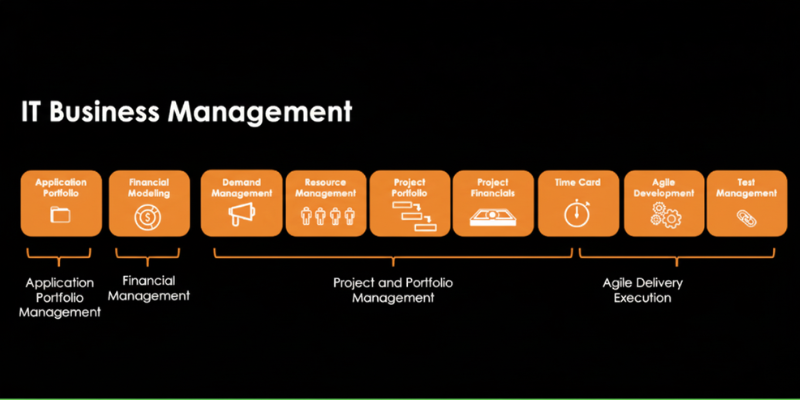
1. Project Portfolio Management (PPM)
Project Portfolio Management forms the foundation of ServiceNow IT Business Management. It provides a comprehensive framework for managing project lifecycles across multiple portfolios. Using real-time dashboards, leaders gain full visibility into project status, timelines, costs, and dependencies.
2. Demand Management
Demand Management centralizes all work requests and initiatives in one location. Each demand is evaluated based on cost, strategic value, and resource availability. By standardizing intake and scoring, ServiceNow IT Business Management Solutions ensure that only high-value initiatives are approved.
This disciplined demand funnel eliminates redundant projects and ensures that funding is directed toward initiatives that drive measurable impact.
3. Resource Management
Effective utilization of human capital remains one of the biggest challenges for enterprise PMOs. It offers real-time insight into staff capacity, skill sets, and workload. This ensures projects are staffed optimally and over-allocation risks are minimized.
Through intuitive dashboards, project managers can visualize capacity by role or department, quickly reassign resources, and plan contingencies.
4. Financial Management
Financial Management enables organizations to plan, allocate, and track investments at every stage of the project lifecycle. It connects project data with actual spending, empowering finance and IT teams to manage budgets proactively.
ServiceNow’s integrated cost models support top-down and bottom-up budgeting, allowing teams to simulate investment scenarios. Enterprises using ServiceNow IT Business Management Services report improved budget adherence, reduced unplanned expenses, and greater transparency in cost allocation.
5. Application Portfolio Management (APM)
The Application Portfolio Management module offers a panoramic view of an organization’s software ecosystem. It evaluates each application’s cost, technical health, and business value, helping identify inefficiencies.
By rationalizing applications, businesses reduce maintenance overhead and reallocate funds toward innovation.
6. Agile Development and Scaled Agile Framework (SAFe)
Modern enterprises need agility at scale. ServiceNow ITBM integrates Agile and hybrid project methodologies into portfolio planning through the Agile Development and SAFe modules.
The Agile module offers Kanban and Scrum boards, sprint planning, and unified backlogs, while SAFe connects cross-functional teams under shared business objectives. Together, they enable end-to-end visibility from epics to user stories.
Benefits of ServiceNow IT Business Management
1. Strategic Alignment Between IT and Business
ITBM transforms IT from an isolated function into a strategic partner. By giving executives real-time portfolio visibility, they can align all technology initiatives with corporate priorities. Enterprises using ServiceNow ITBM improved alignment by consolidating project intake and resource data. This ensures every initiative is mapped directly to a business outcome.
2. Increased Visibility into Project and Financial Data
Traditional PPM tools often require manual updates and disjointed reporting. ServiceNow ITBM Implementation centralizes dashboards and automates portfolio updates, saving project managers hours of administrative effort. It gives more visibility to the project and financial data.
3. Improved Prioritization and Resource Optimization
With integrated demand and resource data, ServiceNow IT Business Management enables more accurate prioritization. Enterprises can assess incoming projects in terms of ROI, strategic alignment, and available capacity.
4. Faster Time-to-Market and Higher ROI
Efficiency gains from unified portfolio planning translate directly into accelerated delivery. This acceleration is made possible by better visibility into dependencies and early identification of potential risks. With fewer bottlenecks and faster decision cycles, innovation reaches customers more quickly and at a lower cost.
5. Enhanced Collaboration and Governance
Collaboration and compliance improve significantly when teams work from a unified platform. ServiceNow IT Business Management Solutions integrate project, finance, and development data so stakeholders share the same insights.
For example, unified backlogs from Jira, Azure DevOps, and other tools are visible in ServiceNow dashboards, eliminating redundant updates. This transparency fosters trust and strengthens governance through consistent workflows and auditable histories.
Steps to a Successful ServiceNow ITBM Implementation
1. Assessment and Readiness Check
Before configuration begins, organizations must assess their current project management maturity. This step involves identifying process inefficiencies, tool redundancies, and governance gaps. Evaluating existing KPIs (such as project duration, cost variance, and resource utilization) establishes a baseline for measuring ITBM-driven improvement.
2. Strategy and Roadmap Design
Once readiness is established, the next step is designing a business-aligned roadmap. Stakeholders should define specific outcomes like improved prioritization or budget control and then map them to ITBM functionalities. Engaging project managers, finance teams, and department heads early ensures a broad consensus and minimizes adoption resistance.
3. Configuration and Customization
Once the roadmap is defined, the next step in ServiceNow ITBM Implementation is configuration and controlled customization. Successful deployments typically start with minimal viable functionality.
Configuration should focus on adapting out-of-the-box workflows rather than heavy customization. Over-customization often introduces technical debt, complicates upgrades, and disrupts process standardization. Following ServiceNow’s “Now Create” best practices framework, teams configure predefined templates for workflows, approvals, and dashboards to accelerate deployment and minimize risks.
Organizations implementing ServiceNow IT Business Management Solutions through certified partners achieve measurable time savings and reduced maintenance costs due to minimal code customizations.
4. Integration with Existing Systems
Most organizations rely on multiple systems like ERP for finance, CRM for sales, HRMS for workforce data, and DevOps tools for engineering workflows. Integrating these with ITBM ensures a continuous flow of real-time data, creating a unified ecosystem.
ServiceNow IntegrationHub enables secure, bi-directional data exchange with third-party platforms, removing silos between IT and business functions. For example, integrating with ERP systems ensures that financial transactions and budgets automatically synchronize with project and portfolio records.
Similarly, connecting DevOps tools like Jira or Azure DevOps consolidates Agile backlogs and progress tracking directly within ServiceNow IT Business Management.
Note: Before integration, it’s highly critical to perform data quality audits. It can include cleansing legacy data and standardizing resource, cost, and project records. High-quality data underpins accurate analytics and ensures that executive dashboards reflect a single source of truth.
5. Training and Change Management
Even the most advanced ServiceNow IT Business Management platform cannot deliver value without effective user adoption. Training and change management are core pillars of every ServiceNow ITBM Implementation.
A structured change management plan should segment audiences: executives, portfolio managers, project managers, and analysts. All of them should have tailored content and delivery formats. Executives need KPI-based reporting insights; PMs need day-to-day guidance on project creation and updates.
ServiceNow’s own best-practice methodology recommends combining classroom sessions, role-based simulations, and on-demand digital learning.
6. Continuous Optimization
The final step in any ServiceNow ITBM Implementation Services engagement is continuous optimization. Once live, organizations must treat ITBM as a living ecosystem that evolves with business goals.
Key activities include monitoring KPIs such as project throughput, resource utilization, and budget adherence. Monthly reviews of dashboards can uncover improvement areas, while user feedback helps identify bottlenecks.
Optimization also includes expanding functionalities, for example, enabling Financial Management dashboards after PPM stabilization or connecting Application Portfolio Management for cost reduction analysis.
Difference Between ITBM vs ITSM
While both ITBM and ITSM are ServiceNow product families, they serve distinct purposes within the enterprise ecosystem. Understanding this difference helps leaders deploy them strategically rather than interchangeably.
| Aspect | IT Business Management (ITBM) | IT Service Management (ITSM) |
| Purpose | Focuses on strategic planning, including projects, portfolios, resources, and investments. | Focuses on day-to-day IT service delivery, including incident, problem, and change management. |
| Core Modules | PPM, Demand, Resource, Financial, APM, Agile/SAFe. | Incident, Problem, Change, Knowledge, Service Catalog. |
| Key Objective | Align IT initiatives with business strategy and maximize ROI. | Maintain service continuity and customer satisfaction. |
| Primary Users | PMOs, project managers, finance officers, and CIOs. | IT operations, service desk, and support teams. |
| Metrics | ROI, cost variance, project success rate, and time-to-market. | SLAs, resolution times, uptime. |
ServiceNow ITSM ensures operational excellence, while ServiceNow IT Business Management focuses on innovation and transformation.
By integrating both systems, businesses can link service performance data (from ITSM) with project portfolios (in ITBM), achieving full-cycle visibility.
Common Challenges in ITBM Adoption
1. Resistance to Change and Lack of Training
Transitioning from spreadsheets or legacy project tools to an integrated ITBM platform often triggers resistance among employees. Without adequate communication and structured enablement, users may revert to old habits, jeopardizing adoption. Addressing this through early stakeholder engagement and training programs is vital for sustained success.
2. Data Silos and Disconnected Systems
Fragmented systems create data silos. Without integration, achieving unified visibility is nearly impossible. Organizations that fail to address this often face reporting inaccuracies and decision delays. Proper integration frameworks within ServiceNow ITBM Implementation resolve this challenge by unifying all systems on a common data model.
3. Poor Alignment Between IT and Business Priorities
When governance is weak, project approvals may not align with business goals. IT departments risk working on technically complex but low-value initiatives. Clear governance policies, steering committees, and role-based access control features within ServiceNow Strategic Portfolio Management address these alignment gaps effectively.
4. Over-Customization and Governance Issues
A major pitfall in ITBM adoption is over-customization. Excessive workflow modifications can introduce technical complexity, disrupt upgrades, and reduce scalability. Following ServiceNow’s out-of-the-box best practices ensures long-term maintainability and predictable upgrade cycles.
These challenges are manageable with structured implementation and robust governance frameworks delivered through expert ServiceNow Consulting Services.
How ServiceNow IT Business Management Services Help Overcome These Challenges?
1. Executive Sponsorship and Governance
Platforms like ServiceNow SPM embed governance directly within workflows. It automates approval chains, establishes audit trails, and defines portfolio-level accountability. This structure eliminates ambiguity and ensures transparent project funding and prioritization.
2. Integrated Data and Automation
Through ServiceNow’s unified architecture, all portfolio, resource, and financial data live in one model. Automated updates between systems remove manual intervention, improving data reliability. IntegrationHub connectors link to ERP and HR systems, providing real-time context for project and financial decisions.
3. Stakeholder Engagement and Upskilling
Change management frameworks within ServiceNow IT Business Management Services include user onboarding, leadership training, and continuous learning paths. Certified consultants use proven adoption playbooks and hands-on training to build confidence among users.
4. Phased Implementation and Managed Support
Partner-led deployments use incremental rollouts to mitigate risk. Starting with an MVP ensures measurable outcomes early, while subsequent phases extend value. Long-term optimization and governance are sustained through ServiceNow Managed Services, ensuring continuous alignment with evolving business needs.
The Future of IT Business Management with ServiceNow
1. AI, Analytics, and Predictive Governance
ServiceNow Strategic Portfolio Management (SPM) is redefining traditional portfolio planning with AI and machine learning. Predictive analytics now identify risks, forecast budget variances, and recommend optimal resource allocations before issues arise. These enhancements make ServiceNow ITBM a proactive decision-support system.
2. Scaling Agility Across the Enterprise
The future of IT execution lies in hybrid management. It combines Agile, SAFe, and traditional methodologies. ServiceNow ITBM Implementation already supports this flexibility through Agile Development and SAFe modules. These capabilities enable cross-functional teams to align product delivery with strategic goals.
3. Integration and Business Alignment
ServiceNow IT Business Management will increasingly act as the unifying layer across enterprise systems. Deeper integration with ERP, CRM, and data clouds will allow continuous synchronization between financial plans, operational KPIs, and delivery pipelines.

How A3Logics Delivers Effective ServiceNow ITBM Implementation?
1. Strategic Assessment and Roadmap Alignment
We start with a readiness assessment to identify gaps in governance, budgeting, and portfolio maturity that ServiceNow IT Business Management can address. The resulting roadmap aligns IT initiatives with enterprise priorities, including accelerating delivery, improving transparency, and driving measurable results.
2. Phased, Value-Driven Implementation
A3Logics deploys ServiceNow ITBM in focused phases. Starting with PPM, Demand, and Resource Management, followed by Financial and Application Portfolio Management. Using Now Create best practices, configurations stay scalable, compliant, and upgrade-safe, enabling faster time-to-value and long-term sustainability.
3. Seamless Integration and Data Quality
We connect ITBM with ERP, HR, CRM, and DevOps systems for unified visibility across portfolios. Rigorous data cleansing ensures accuracy for KPIs like cost variance and utilization, empowering confident decisions through ServiceNow IT Business Management Solutions.
4. Stakeholder Enablement and Change Management
We focus on adoption as much as delivery. Interactive workshops and role-based training help PMs, finance teams, and executives fully leverage ITBM’s capabilities. Leadership dashboards ensure visibility and accountability throughout the journey.
5. Post-Go-Live Optimization and Continuous Value Delivery
Post-deployment, clients enter continuous improvement cycles via ServiceNow Managed Services. It covers audits, KPI tracking, and process enhancements. This ensures ServiceNow IT Business Management evolves with business priorities and operational agility.
Conclusion
In 2025, ServiceNow IT Business Management is essential for aligning technology with business value. By unifying project, financial, and resource governance, it gives organizations the clarity, control, and confidence to drive every initiative with purpose.
Partnering with experts like A3Logics ensures that this transformation goes beyond implementation. With deep platform expertise and a focus on long-term success, A3Logics helps organizations continuously optimize their ServiceNow ecosystem.
If your organization is ready to move from fragmented execution to strategic clarity, there’s no better moment than now.
Connect with A3Logics today!