The healthcare industry is seeing a pivotal moment in 2025. There are several factors like rising demand for better healthcare systems, the increasing costs, and patients’ expectations of personalised care, all of them signaling an urgent need for better healthcare solutions. The types of healthcare software available today are the backbone of any health organization.
From electronic records to creating patients’ diagnostic reports, healthcare systems are redefining how things are delivered, managed, and experienced.
In this blog, we will explore the top 20 types of healthcare software in 2025. We will understand stats indicating market growth, insights, and all healthcare software types available in the market. Let’s dive in!
Understanding the Healthcare Market: Key Statistics
Before we dive into different types of software in healthcare, it is important that we understand the economic market of the healthcare industry.
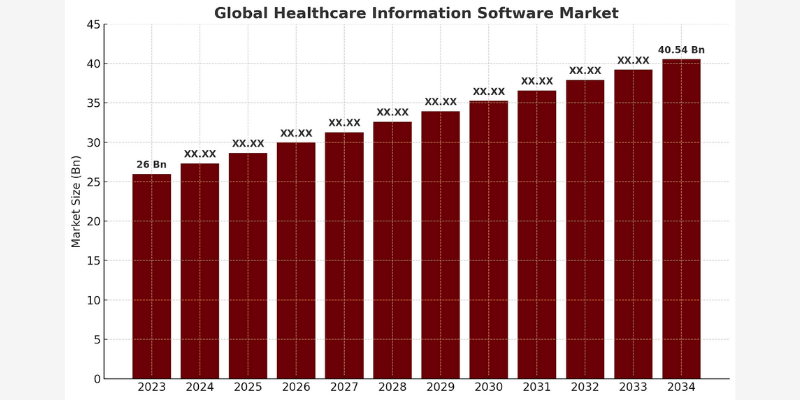
Source: Spherical Insights
- In the USA, the healthcare market is expected to reach $176.6 billion in 2025. It represents overall 63% of the global healthcare market of $279.5 billion.
- Electronic health records (EHRs) are being used in 96% of U.S. hospitals, and around 80% of office-based physicians have adopted EHRs.
- The telehealth market is expected to grow to over $55 billion in 2025. This shows sustainable growth even after a crisis like the coronavirus pandemic.
- Healthcare is adapting to AI very rapidly; around 90% of U.S. hospitals in 2025 will be leveraging AI-driven tools and software for monitoring and operational tasks.
All these numbers show how healthcare is relying on technology and justify the need to understand healthcare software types for building a good healthcare ecosystem.
What is Healthcare Software?
Healthcare software are online applications that are built to ease and improve medical operations. It can include admin work, wellness management, healthcare delivery, diagnosis, and much more. There is a wide range of solutions used by doctors, hospitals, and also by consumers for fitness and health management.
Healthcare Software Development Companies in USA are building healthcare solutions integrating AI, IoT, and blockchain. It is allowing them to create secure and intelligent systems capable of solving large problems with more personalization. There are diverse healthcare software types in the market, indicating an increasing need for specialized healthcare solutions.
Different Types of Software Used in the Healthcare Industry
There is high scope and demand for the various types of healthcare software. These are used to manage administrative workflow, enhance the precision level of diagnosis, and solve patients’ problems remotely.
In this section, we will explore different types of software for healthcare providers. An understanding of these tools enables providers to adopt new ideas and tools to fill the current gap, make better decisions, and create more value for the whole healthcare ecosystem.
Let’s understand the 20 most important healthcare software types in use in 2025:
1. Electronic Health Records (EHR) Software
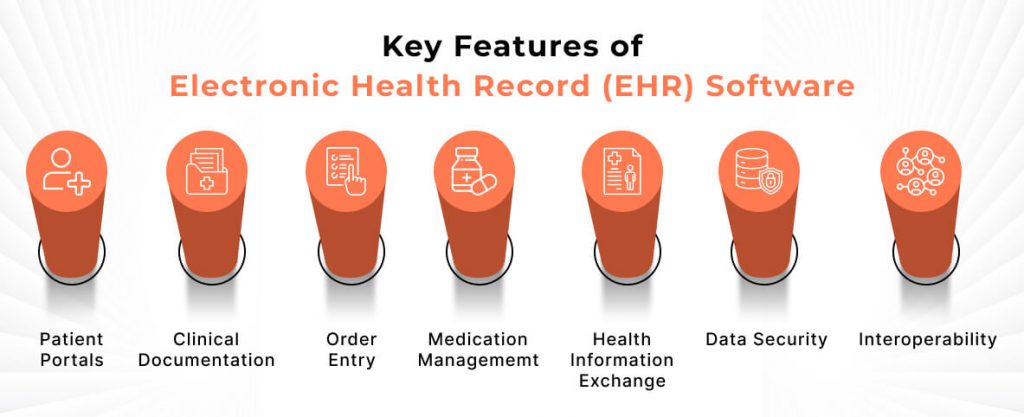
Medical EHR software makes patient data accessible across departments. It unifies and consolidates data like medications, diagnoses, and allergies into a real-time view for better communication and data storage. More than 96% of U.S. hospitals use EHR in their medical operations, showing EHR is a must-have software for health organizations.
Features:
- Interoperability using FHIR APIs and HL7
- Integration with clinical decision support (CDS) systems
- Natural language processing (NLP) for charting
- Patient engagement portal access for better engagement
EHR software development helps EHR platforms to integrate smoothly with billing, scheduling, and remote monitoring to build a unified patient record.
Companies looking for healthcare software development services should only consider partnering with service providers with a track record of delivering good healthcare products.
2. Electronic Medical Records (EMR) Software
Medical EMR Software is very similar to EHR software. Medical EMR systems collect patients’ data for a single provider only. It does not allow data to be shared across departments or organizations. It is well-suited for solo clinics and small physician networks.
EHR Vs EMR Comparison
- EHRs are broader and more interoperable, while EMRs are localized
- EMRs focus more on internal record-keeping
In 2025, most EMRs support basic interoperability and data export features. Many EMR vendors also offer upgrades to full EHR systems with EMR software development. This is to ensure small practices scale and remain future-ready.
3. Telemedicine Software
Software for telemedicine enabling virtual medical consultations, therapies, and disease management, all across geographies. After the pandemic, the telemedicine market accelerated, and it remains one of the fastest-growing types of software in healthcare.
Key Modules
- EHR and e-prescription integration
- HIPAA-compliant video conferencing
- Automating workflows for appointment, prescription, and more
- AI-based symptom screening bots
In 2025, telemedicine will be a strategic part of care delivery models. More than 80% of US adults have used it at least once. Telemedicine fills the crucial access gaps, mainly in rural areas. With multilingual capability and AI chatbots, modern healthcare enhances accessibility and satisfaction levels.
4. Medical Billing Software
Software for medical billing is used for managing the revenue cycle. From claim submission to payment posting and accounts receivable, all are handled through a medical billing software. It helps providers get paid accurately and in a timely manner.
Medical billing software for small businesses offers simple and cost-effective tools. It caters to the needs of independent clinics and solo practitioners. These tools have user-friendly dashboards and coding features, helping small providers have efficient billing systems.
Core Capabilities
- Denial analysis and resolution workflows
- Real-time eligibility verification
- Automated coding with ICD-10, CPT, and HCPCS libraries
- Claims scrubbing, batch submissions, and remittance processing
Medical billing software development helps integrate it with EHRs and management tools. This reduces admin work and improves financial outcomes. According to HFMA, well-developed and optimized billing can reduce claim rejection rates from 20% to less than 5%.
5. Healthcare CRM Software
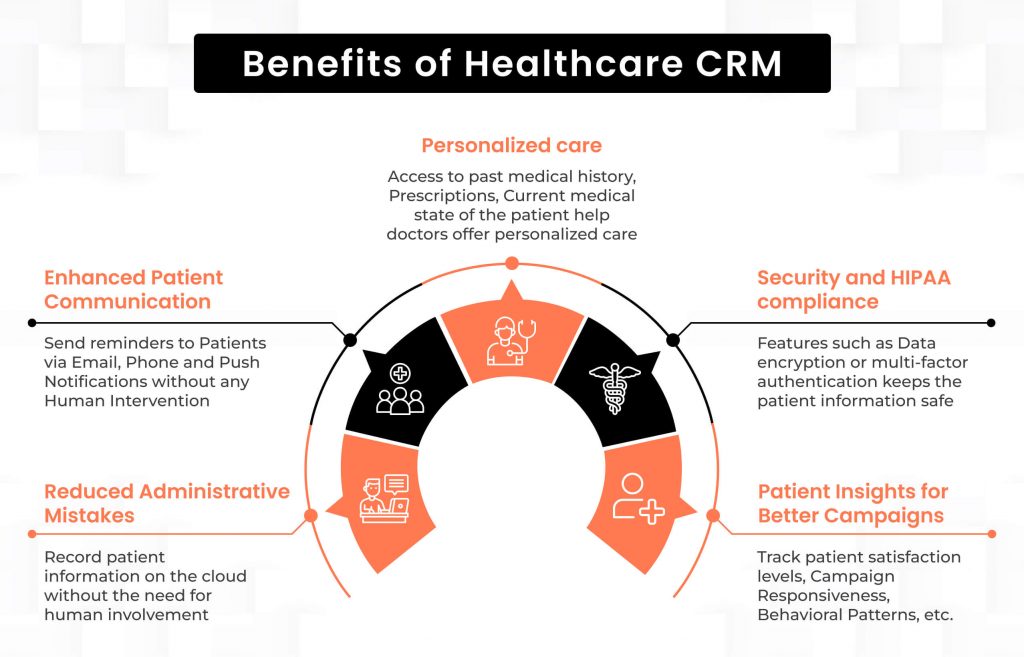
CRM software for healthcare industry is designed to fill the engagement gap between patients and healthcare providers. The gap includes marketing, operational outreach, and clinic visits to create better engagement.
Key Differentiators
- Patient segmentation based on conditions, engagement, and demographics
- Lifecycle management from lead generation to follow-ups
- Email campaign automation
- Automating workflows for the feedback surveys
- Omnichannel contact center integration
For value-based care providers, healthcare CRM software development is the approach to building a personalized and hyper-specific tool. CRM tools are basically types of healthcare software driving more personalization, satisfaction, and brand loyalty.
6. Appointment Scheduling Software
Medical appointment scheduling software is used to book and optimize appointments for patients.
There was a time when appointments were made with papers and phone tags, causing inefficiency and late bookings. The modern appointment scheduler software offers online appointment scheduling, automated reminders, and smart calendar management, benefiting patients and staff.
Features
- Online self-booking with specific availability of doctors
- Automated reminders via email, SMS, and app notifications
- Smart slot suggestions
- Integration with billing and EHR systems
According to MGMA, better scheduling software can enhance the visit utilization rates by upto 25%. This helps providers treat more patients with the same resources.
7. Medical Imaging Software
Imaging software caters to radiology, cardiology, orthopedics, and oncology workflows. In most hospital radiology departments, you can find advanced medical imaging software combined with PACS (Picture Archiving and Communication Systems) for better results.
Key Modules
- Voice-to-text radiology reporting
- Anomaly detection with the help of AI (e.g., tumors, lesions)
- 3D/4D imaging for surgical procedure
- Integration with RIS and EHR systems for contextual insights
Medical imaging software development helps providers with specialised systems that are advanced in complex data to produce more visible images. This allows teams across departments real-time access.

8. Hospital Management System (HMS)
Hospital management system software is an integrated platform that manages multiple hospital operations. It is like a digital operating system of a hospital, coordinating everything from patient admissions to discharge, all the admin and financial work.
It is also called Hospital Information System (HIS), a comprehensive solution unifying multiple healthcare software types.
One key element of Hospital Management Software is the hospital inventory management system, which helps track all medical supplies, including medicines, equipment, diagnostic machines, etc., in real time. This reduces wastage, prevents shortages, and ensures that important resources are always there when needed.
Key Modules
- Operation theater (OT) scheduling and ICU bed tracking
- Admission, Discharge, and Transfer Management
- Doctor and nurse rostering
- Insurance billing and financial reporting
- Lab and pharmacy inventory
Modern HMS provides interoperability, analytics, and mobile accessibility for clinicians and admin staff. HMS is a top-tier type of software in healthcare, ensuring hospitals work in proper coordination with maximum efficiency.
9. Remote Patient Monitoring (RPM) Software
Remote patient monitoring system tracks and keeps the patients’ data outside clinics, typically at home. By using IoT-enabled devices like wearables, blood pressure cuffs, glucose monitors, and even smart implants, RPM collects data, health signs, and transmits them to the healthcare centre. RPM is mainly used in chronic care, elder care, and recovery.
Device Examples
- Implantables and biosensors in cardiac treatment
- Smart glucometers and weight monitors
- Wearables for ECG, respiration, and sleep tracking
According to a report, Remote patient monitoring solutions can reduce hospital readmissions up to 45% for heart related problems.
10. Clinical Decision Support Systems (CDSS)
A Clinical Decision Support System is a software to help healthcare professionals in making informed decisions during clinical operations. It is like a smart assistant analyzing patient data and giving reminders or diagnostic suggestions.
In 2025, AI clinical decision support systems are using machine learning algorithms to detect patterns and forecast complications.
Applications Include
- Risk stratification using machine learning
- Evidence-based treatment protocols
- Diagnostic assistance for rare conditions
With the growing complexity in healthcare, CDSS is a healthcare software type that reduces clinical errors and promotes adherence to best care practices.
11. Pharmacy Management Software
PMS is designed to simplify pharmacy operations. Whether in retail, hospital, or online pharmacies, it helps manage everything from dispensing medications and tracking prescriptions to billing, compliance, and insurance coordination.
As the demand for more error-free software grows, pharmacy management software development continues to advance. One important feature is the pharmacy inventory management software, which allows real-time tracking of stock volumes, their expiry date, and automatic reordering.
Key Features
- Automated restocking and alerts for expiry
- Integration with EHR systems and insurance claims
- Prescription tracking and e-signature capture
Modern systems also support AI forecasting to reduce medicinal waste and improve accuracy.
12. Healthcare Analytics Software
There is an enormous volume of data generated by healthcare organizations every day. To make sense out of it, data analytics software for healthcare turns this data into clear and actionable insights.
With the growing need for more predictive analytics, healthcare analytics software development is rapidly evolving, bringing more AI-powered solutions to the healthcare systems.
Key Features
- Clinical performance benchmarking
- Predictive analytics for patient deterioration
- Population health management dashboards
In 2025, analytics is integrating into different types of software for healthcare providers, helping reduce readmissions and costs.
13. E-prescribing Software
E-prescribing software helps doctors send prescriptions to pharmacies digitally. There is no need for handwritten or printed prescriptions. This reduces errors, speeds up the proces,s and improves the patient experience.
As the demand for E-prescribing software grows, e-prescription software development is also evolving with features like formulary checks and refill tracking.
Benefits
- Immediate transferring details to pharmacy
- Formulary checks for insurance
- Drug interaction validation
14. Laboratory Information Management System (LIMS)
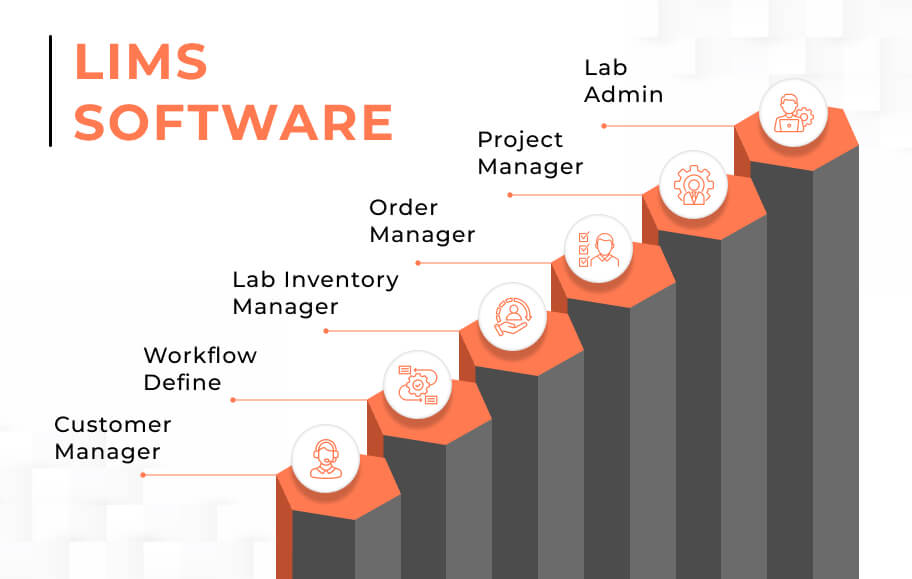
LIMS is designed to automate the operations of clinical and diagnostic laboratories. For example, if there are high test volumes, a LIMS ensures smooth and error-free processing from sample collection to test execution and results.
Modern laboratory information management system software supports quality control and data integrity at scale. With the rising demands for more speed and precision, LIMS software development is focusing more on AI driven reporting and real time integration with EHRs and other health IT systems.
Key Modules
- Barcode-based sample tracking
- Test validation and audit trail generation
15. Radiology Information System (RIS)
A Radiology Information System Software helps radiology departments manage the admin and logistical workflows. PACS handles image storage and retrieval, RIS handles things around the imaging process like scheduling exams, storing radiology records, coordinating doctors, and creating radiology reports.
As imaging volumes rise, RIS software development continues to advance. It brings smart features like automated reporting, analytics dashboards, and radiology task automation.
Key Features
- Radiologist worklists and reporting
- Exam scheduling
- Integration with EHR
16. Clinical Trial Management Software (CTMS)
CTMS is built for organizations that conduct clinical research. It can include pharmaceutical and biotech firms, contract research organizations, and academic medical institutions.
The platform streamlines all processes involved in testing new drugs or therapies on human participants.
Modern clinical trial data management software enables the research team to manage protocols, site monitoring, and event tracking, all in a centralized system. Meanwhile, clinical trial cost management software helps monitor budgets and ensure financial compliance across every phase of the study.
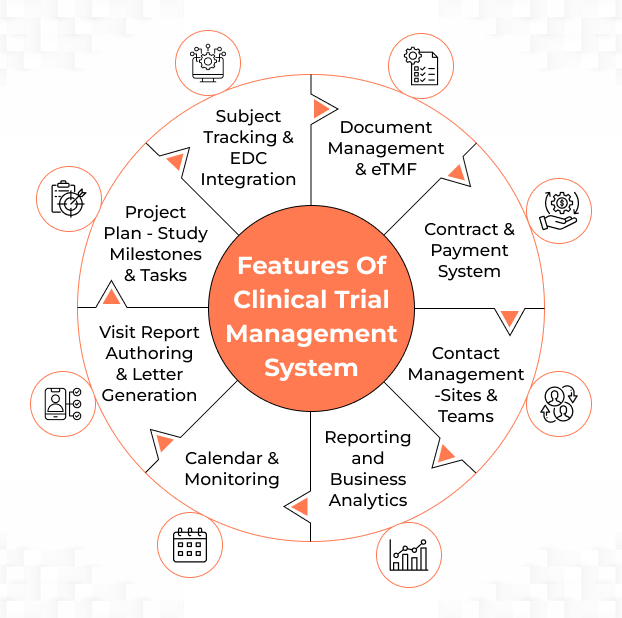
Key Features
- Study protocol setup and site management
- Patient recruitment and visit tracking
- Budgeting, regulatory documents, and audit trails
17. Healthcare Compliance Management Software
Healthcare is a heavily regulated industry in the world. Organizations follow strict rules to remain compliant, considering patient safety and data privacy. This is where Healthcare Compliance Software comes in. It helps healthcare entities stay organized when it comes to regulatory obligations.
As regulations become more complex, many healthcare providers choose healthcare regulatory compliance software to manage their workflows and reduce risks.
Key Features
- Policy documentation and attestation
- HIPAA and OSHA training tracking
HIPAA fines can reach up to $1.5 million/year, software-based compliance tracking is a must-have.
18. Medical Diagnosis Software
66% of U.S. physicians report using AI diagnostic tools. Medical Diagnosis Software helps clinicians and patients in checking health conditions with data-driven insights. It can include symptom checker apps to complex AI algorithms that analyze health data (like imaging, lab results) to identify diseases.
Examples
- AI-powered Symptom checker apps
- Diagnostic support for radiology and pathology
- AI and ML models for identifying a rare disease
19. Health and Fitness Tracking Apps
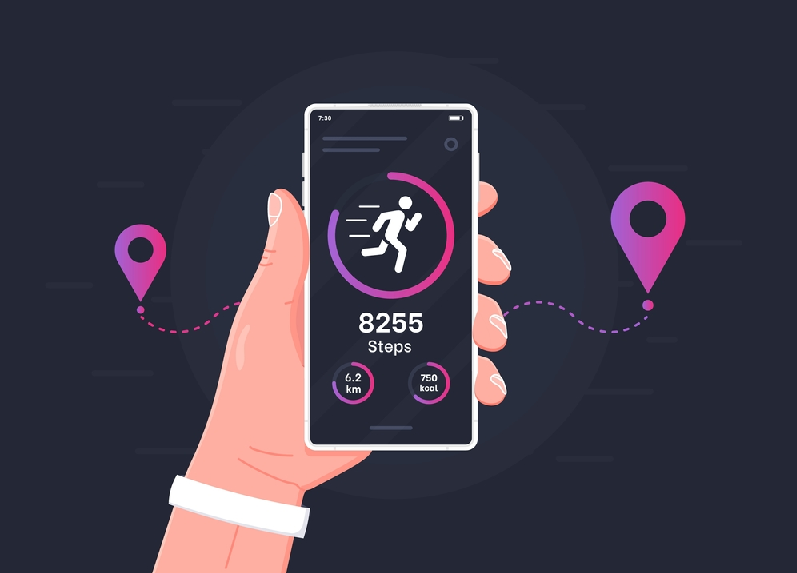
These are consumer facing software apps. These can be apps or wearable devices like a smartwatch that improve personal health, wellness, and fitness.
Examples
- Wearables track heart rate, steps, and sleep
- Diet tracking apps with nutrient analysis
- Challenges for behavior change
20. Mobile Health (mHealth) Apps
mHealth apps are one of the fastest-growing healthcare software types. It’s a broad category representing not just health and fitness apps but also apps for medical purposes and patient care.
Use Cases
- Telehealth consultations
- Mental health support (e.g., CBT apps, VR therapy)
Emerging Technologies and the Future of Healthcare Software
The healthcare sector is growing rapidly with advanced technologies. Here is what to expect:
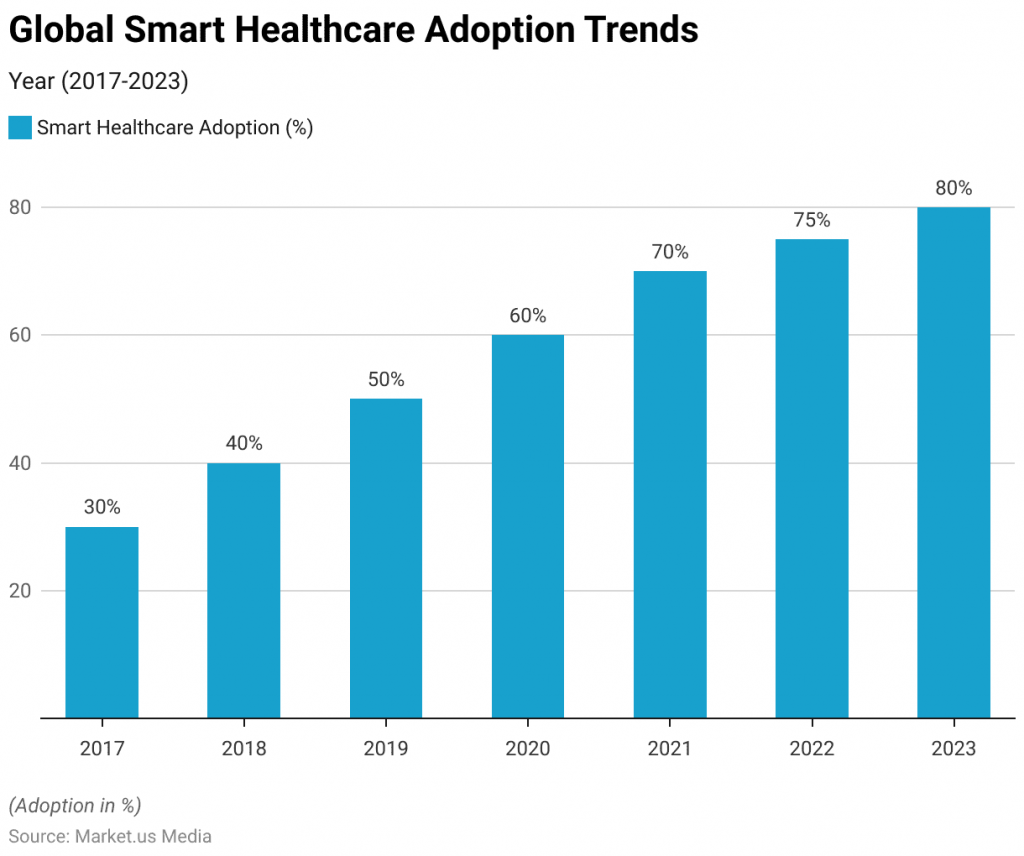
- AI & ML: The healthcare costs will be reduced by $13 billion globally with the help of AI. There will be deeper integrations in diagnostics, admin work, and patient engagement.
- IoMT (Internet of Medical Things): 87% of healthcare providers expected to adopt IoMT devices.
- Blockchain: To protect data privacy, blockchain is emerging in patient ID and health data exchange. Approx. 55% of apps will be leveraging blockchain by 2030.
- Cloud & Edge Computing: Using HIPAA-compliant cloud platforms improves scalability, while edge computing can support IoMT data processing.
- AR and VR: There will be new healthcare software types focusing more on therapy delivery, mental health sessions, and remote rehabilitation.
All different types of software for healthcare providers must have scaling capabilities and ethical AI governance.
A3Logics: Your Trusted Partner in Healthcare Software Development
Finding the right development partner can make or break your strategy.
A3Logics is a leading Custom Software Development Company with deep specialization in healthcare.
Why Choose Us?
- Expertise in EHR, EMR Software, RPM, mHealth apps, and CRM integrations.
- Advanced Tech Stack: AI, cloud, blockchain, and FHIR-based API development.
- Proven experience across telemedicine, diagnostics, and Hospital Management Software.
- Strong Focus on Compliance and Security: HIPAA, GDPR, HL7, and HITRUST readiness.
- 91% client retention with long-term partnerships in the U.S. and globally.
As one of the top Healthcare Software Development Companies in USA, A3Logics has delivered over 500 digital solutions that improve care delivery, patient engagement, and operational agility.
Conclusion
The healthcare software landscape in 2025 is more intelligent, integrated, and impactful than ever before. From Hospital Management Software that centralizes operations to AI-powered diagnostics and consumer mHealth tools, each solution plays a vital role in transforming care.
For organizations looking to future-proof their systems, understanding the types of healthcare software available is a strategic imperative. From managing records to predicting health risks, the healthcare software types discussed in this blog represent the digital foundation of modern medicine.
If you’re exploring what’s next in healthcare technology, we’re here to help you figure it out.
Connect with A3Logics today!