Food delivery is now a part of the restaurant business. With people valuing convenience more, the demand for fast and reliable meal delivery services has increased significantly. Due to this shift, numerous restaurant owners have had to adapt and introduce new services to cater to the demands of their customers.
There are so many things that have brought about meal delivery, including the emergence of smartphones, the emergence of mobile apps, and how social media influences what to eat. Individuals now anticipate being able to order the food they love and have it delivered to their doorstep with mere phone taps. Technology in food delivery has not only made the customers happier, but it has also provided restaurants with new avenues for generating income.
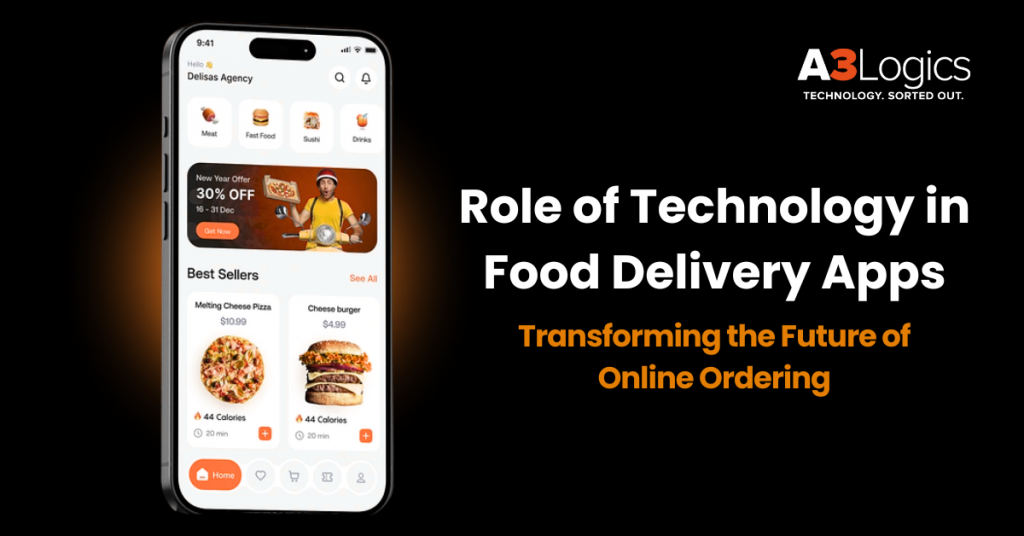
The role of technology in food delivery app is the foundation of this shift, redefining the way restaurants deal with orders, customers are engaging with food delivery services, and delivery partners are dealing with urban landscapes. In 2024, the global market for online food delivery services was approximately USD 380.43 billion. It is predicted to grow at the rate of 9.0% annually between 2025 and 2030.
From machine learning to artificial intelligence, IoT, and cloud computing, technology plays a central role in improving the efficacy, convenience, and customer satisfaction of food delivery services.
In this blog we have explored the role of technology in food delivery app and how restaurant owners can utilize these technologies to enhance their delivery operations. Restaurant operators can remain competitive in a market that is increasingly digital, meet customer expectations, and become long-term successful by becoming familiar with and employing these technologies. It’s no longer a choice to use technology in food delivery; it’s necessary to do well in today’s market, whether you’re a small independent restaurant or part of a larger chain. The role of technology in food delivery app is important.
Evolution of Food Delivery Systems
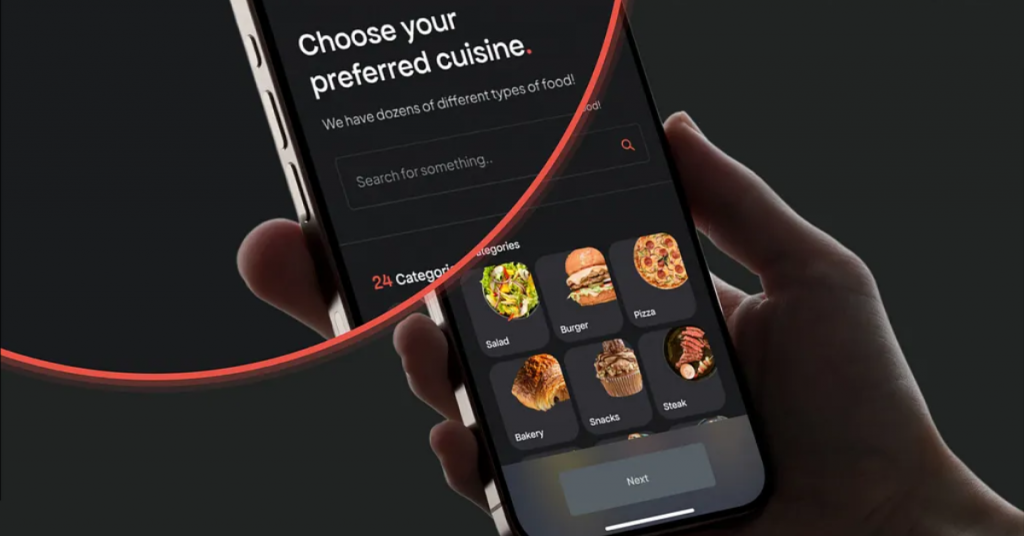
Over the decades we have seen an increasing usage of the role of technology in food delivery app. And as the use keeps increasing there is demand for better and improved customer experience and for these technologies are turning out to be the greatest assets. In this section we will take a closer look at how technology is changing food delivery.
> Traditional Food Ordering vs. Modern App-Based Delivery
In the past, food delivery was a straightforward process. Customers would call a local restaurant, place their order over the phone, and wait for a delivery person to arrive. As the internet and mobile technology advanced, so did the way people accessed food delivery.
The introduction of food delivery app technology revolutionized the process. With the ability to order food from a variety of restaurants at the tap of a button, users were no longer limited to the local pizza joint or Chinese takeout down the street. Additionally, the role of technology in food delivery app allowed for real-time tracking, multiple payment options, and personalized recommendations—features that were unimaginable just a few years ago.
> Timeline of Technological Advancements in the Food Industry
- Early 2000s: Online food ordering systems emerge, primarily as websites, with limited functionality such as menu browsing and order placement.
- 2010s: Mobile apps become mainstream, introducing real-time order tracking, GPS-enabled delivery, and personalized user interfaces.
- Mid-2010s: Artificial intelligence (AI) and machine learning (ML) begin to be integrated into platforms for personalized recommendations and predictive analytics.
- Late 2010s: Voice-enabled technologies and IoT-enabled kitchen appliances begin transforming the food industry, improving accuracy and efficiency in order fulfillment.
- 2020s and beyond: AI-powered automation, drone deliveries, and blockchain are shaping the future of food delivery, providing faster, more secure, and highly efficient services.
> Growing Consumer Expectations and How Tech Keeps Up
Today’s consumers expect food delivery to be quick, affordable, and personalized. They want a seamless, intuitive experience from start to finish. This expectation pushes food delivery platforms to leverage technology continuously. The role of technology in food delivery app for personalized recommendations, GPS for accurate delivery tracking, and machine learning for predictive analytics helps businesses stay ahead of the curve, meeting consumer demands for speed, convenience, and customization.
Core Technologies Powering Food Delivery Apps
Implementation of technology in food delivery is transforming the way it is done. Now it is all about convenience and quickness. Various food delivery app technology is playing a key role in this, let’s take a look at the types of core technologies that power food delivery apps.
> Artificial Intelligence (AI)
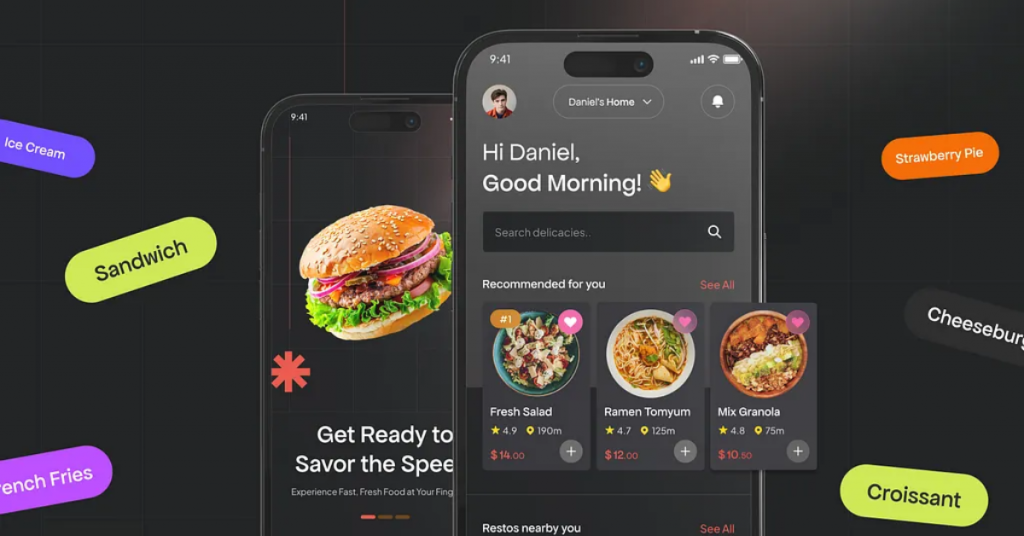
Artificial intelligence is a game-changer in the food delivery industry. It enhances both the user and operational experience by providing smarter, more efficient services.
- Personalized Recommendations: AI algorithms analyze past user behavior and order patterns to recommend dishes, restaurants, or cuisines that the user is likely to enjoy. This enhances user satisfaction and drives repeat business.
- Route Optimization: AI helps delivery partners optimize their routes, reducing delivery times, fuel consumption, and the number of vehicles needed. By analyzing traffic patterns, weather conditions, and other variables, AI ensures that deliveries are made as quickly and efficiently as possible.
- Customer Service Automation (Chatbots): AI-driven chatbots are now integral parts of many food delivery apps, helping answer customer inquiries, track orders, and resolve issues without the need for human interaction. This not only improves efficiency but also allows 24/7 customer support.
- Also Read: What is the Role of AI in Food Delivery Apps? (With Real Examples & Case Studies)
> Machine Learning (ML)
Machine learning, a subset of AI, is instrumental in improving operational efficiency and enhancing the customer experience.
- Predictive Analytics for Order Patterns: ML analyzes past orders to predict demand trends. For instance, it can forecast busy hours or days, allowing restaurants and delivery services to prepare in advance.
- Fraud Detection: ML can help detect unusual patterns in payment and user behavior, minimizing the risk of fraudulent transactions.
- Dynamic Pricing: Machine learning can enable dynamic pricing models that adjust delivery fees based on factors like demand, distance, time of day, and weather conditions, offering fair and competitive pricing.
Internet of Things (IoT)
The Internet of Things connects physical devices to the internet, enabling them to collect and share data.
- Smart Kitchen Appliances: IoT-enabled kitchen appliances help restaurants maintain consistency and quality. Smart ovens, for example, can notify chefs when food is done, improving the accuracy and speed of order preparation.
- Real-time Tracking of Food Temperature and Delivery Vehicles: With IoT sensors embedded in delivery bags, both customers and delivery partners can track the temperature of the food in real time, ensuring it arrives hot and fresh. Similarly, IoT-enabled vehicles help monitor delivery progress, providing accurate updates.
> GPS and Navigation
GPS technology is at the heart of food delivery apps, enabling real-time tracking for both customers and delivery drivers.
- Real-Time Tracking of Orders: GPS allows customers to track the status of their orders in real time. They can see when their food is being prepared, when it’s out for delivery, and when it will arrive.
- Accurate ETAs for Customers and Drivers: By integrating GPS with real-time traffic data, food delivery apps can provide highly accurate estimated arrival times (ETAs), ensuring that customers know exactly when to expect their food.
Cloud Computing
Cloud computing enables food delivery platforms to scale efficiently and store vast amounts of data securely.
- Scalability of Apps: Cloud-based systems allow food delivery platforms to handle millions of users simultaneously without compromising performance, whether during peak hours or special promotions.
- Data Storage and Security: Cloud storage ensures that sensitive customer and restaurant data is stored securely, protected by encryption, and backed up regularly. It also facilitates easy data sharing across various platforms and devices.
Key Features Enabled by Technology in Food Delivery Apps
One thing that gets clear as we go deeper into the role of technology in food delivery apps is that the more the technology, the more features the app gets. Here are some of the key features that technology is enhancing in food delivery apps.
1. User-Friendly UI/UX
A simple, intuitive interface is critical to retaining customers. Food delivery apps use modern design principles and responsive design to ensure that users can easily browse menus, place orders, and check out without hassle.
2. Real-Time Order Tracking
Thanks to GPS and IoT technology, customers can track the status of their order in real time. Whether it’s being prepared, out for delivery, or nearing arrival, customers have complete visibility into their order’s journey.
3. Multiple Payment Gateway Integration
Tech-enabled food delivery apps support various payment methods, including credit cards, digital wallets, and even cryptocurrency in some cases. This flexibility allows customers to choose the most convenient payment option for them.
4. Push Notifications and Promotions
Food delivery apps use push notifications to keep customers engaged, offering personalized deals and promotions. This feature is powered by AI, which analyzes past user behavior to send relevant offers.
5. Loyalty Programs and Digital Wallets
Loyalty programs, integrated into many apps, reward customers with points for every order they place, which can be redeemed for discounts or free items. Digital wallets make the checkout process faster, improving user satisfaction.
Impact of Technology on Stakeholders
As we have discussed above the role of technology in food delivery apps, another key role that this technological advancement plays is on stakeholders. This has a significant impact on the various stakeholders. How? That is one question we have answered below.
> Customers
Customers as end users have the main role to play in any app, it is important that any app developed should be designed keeping in mind the needs and satisfaction of the consumers. Let’s take a look at how the role of technology in food delivery app is making a difference in the overall customer experience.
- Convenience: Technology makes ordering food as easy as a few taps on a screen. Users can order from any restaurant, track deliveries in real time, and receive personalized suggestions.
- Customization: With personalized recommendations powered by AI and the option to modify orders, customers enjoy a highly customized experience.
- Faster Delivery: GPS and AI route optimization ensure that deliveries are made as quickly as possible, reducing wait times and improving satisfaction.
> Restaurants
Another key player in food delivery apps are the restaurants, technology has helped restaurants better serve their customers. Let’s take a look at how!
- Order Management: Technology helps restaurants efficiently manage incoming orders, ensuring that they are prepared and delivered on time. Integration with POS (Point of Sale) systems streamlines the order process.
- Inventory Tracking: IoT and AI-driven systems can track inventory in real time, alerting restaurant staff when stock is running low or when an ingredient is nearing expiration.
- Customer Insights: Data collected through food delivery apps offers restaurants valuable insights into customer preferences and behavior, enabling them to tailor their offerings.
> Delivery Partners
Another key role is played by delivery partners, the role of technology in food delivery app is making a huge difference for them, let’s see how.
- Navigation Assistance: GPS technology helps delivery drivers navigate quickly and accurately, reducing the chances of delays.
- Automated Payments: Payment automation simplifies the payment process for delivery partners, ensuring that they are compensated promptly and fairly.
- Performance Tracking: Delivery partners can track their performance metrics, such as delivery speed and customer ratings, helping them optimize their efforts and earn better tips.
Emerging Trends in Food Delivery Technology
The food delivery industry is evolving at lightning speed, driven by consumer demand for convenience, speed, and personalized experiences. Here are some of the popular emerging trends we can witness in food delivery technology.
> Deliveries by robots and drones
The last-mile logistics market is changing because of the rise of autonomous delivery technologies. More and more drones and self-driving robots are being used to make food delivery more efficient.
Drones can fly over traffic jams, which cuts down on delivery times by a lot, especially in busy cities or places that are hard to get to.
Ground-based robots with cameras, sensors, and AI deliver meals right to a customer’s door by traveling on sidewalks.
Not only do these technologies offer faster and cheaper delivery options, but they also encourage contactless service, which is very important in the world after the epidemic. A lot of organizations are already testing these solutions, which is a big step toward automating the food delivery industry.
> Using your voice to order (with Google Assistant or Alexa)
Ordering food is easier than ever thanks to voice technology. Top meal delivery apps are working with voice assistants like Amazon Alexa and Google Assistant. This lets consumers place or change orders by only saying a few words.
For instance, a consumer can say:
- “Alexa, order my favorite pizza again”
- “Hey Google, keep an eye on my last food order”
This hands-free feature is great for people who need to do more than one thing at once, people who need help getting around, and everyone who wants a faster, easier way to order. We should expect voice interactions to be even more tailored and conversational as natural language processing gets better.
> Augmented Reality (AR) Menus
AR technology is changing the way people look for and choose meals. Customers can use apps that work with AR or QR codes to:
- See 3D images of menu items that look real on their screen
- To observe the size of the portions, the plating, and the ingredients, rotate and zoom in.
- Picture how a dish will look before you order it.
This immersive experience helps people make better decisions, lowers buyer’s remorse, and gets people more involved. AR menus are a great way for businesses to market themselves since they can make dishes look more enticing and real, which can lead to increased sales and more upselling.
> Blockchain for payments and being open
Blockchain technology is becoming more popular for food delivery because it makes transactions safe, clear, and impossible to change.
Some of the most important benefits are:
- Better payment systems with lower fees and instant settlements
- Better security, which makes it less likely that fraud or data manipulation may happen
- Every stage in the payment and delivery chain is tracked clearly, which builds trust in customers.
Benefits of food delivery apps can make the businesses more accountable and efficient by using decentralized ledgers and smart contracts. This is especially true for businesses that do a lot of business or do business with people from other countries.
Challenges and Considerations
While technology has dramatically improved food delivery services, it’s not without its challenges.
- Data Privacy Concerns: Food delivery apps must ensure robust security measures are in place to protect customer information.
- Technical Glitches and User Trust: Bugs or downtime in the app can lead to frustrated users. Ensuring seamless service is crucial for maintaining customer trust.
- High Competition and Constant Innovation Needs: The food delivery market is highly competitive, with new entrants constantly emerging. This necessitates continuous innovation to stay relevant.
The Future Outlook
More advanced technologies will shape the future of food delivery apps. Imagine a scenario where your smart fridge automatically orders groceries and food based on your preferences, or a wearable device that tracks your health metrics and recommends meals accordingly.
AI-powered nutrition tracking and predictive delivery models will offer personalized meal suggestions and delivery times, making food delivery even more tailored to individual needs.
Conclusion – Role of Technology in Food Delivery Apps
In conclusion, technology plays a fundamental role in transforming the food delivery ecosystem. From AI and ML to IoT and GPS, technological innovations drive efficiency, enhance customer satisfaction, and streamline operations for restaurants and delivery partners alike. As the industry continues to evolve, businesses must understand the role of technology in food delivery app to stay competitive and meet the ever-growing expectations of consumers.
Food delivery is here to stay, and technology will continue to shape the future of this rapidly growing sector. If you want to make your food delivery dream into a reality you can get in touch with the leading food delivery app development company today!