AI in Food Delivery Apps: How many of us have ever thought about ordering something and hoping that it would somehow appear at our doorsteps! While we do have the option of ordering food with a multitude of apps at your disposal in the market, having to wait for the food is quite an inconvenience. Wouldn’t it be great if food just arrived at your doorstep without having to search for that perfect restaurant within your neighborhood that delivers? Consider how many customers you could make this vision a reality for. Investing in the development of a food delivery app can be a big deal for you and for your customers.
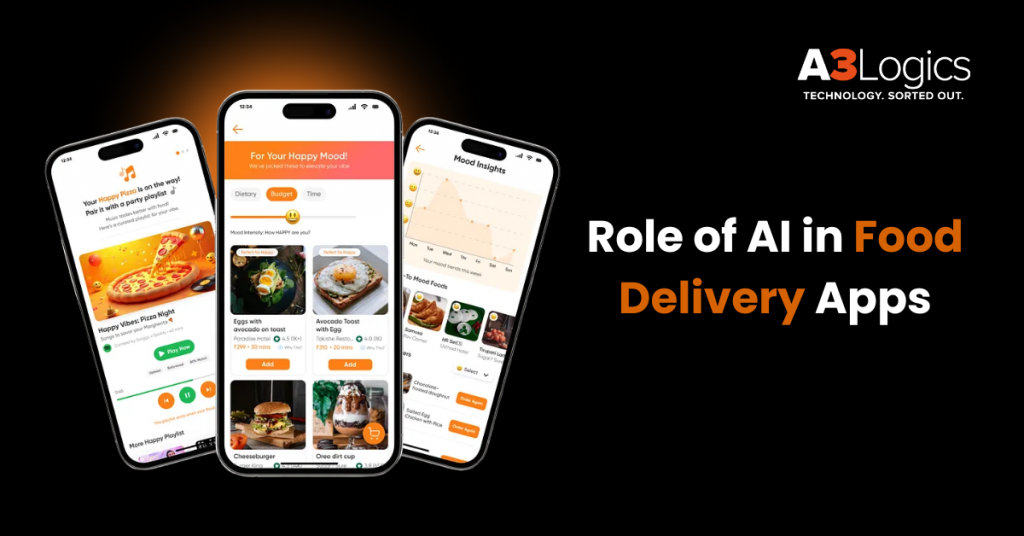
In 2025 we are witnessing a sharp growth in demand for food delivery apps with the appropriate technologies. Applying ML and AI in food delivery apps is transforming and enhancing the overall customer experience and simplifying operations. Due to this, we are witnessing growth in food delivery in which the market is anticipated to grow to $1.41 trillion by 2025.
The concept of an AI-powered food delivery app has gained popularity among entrepreneurs and business owners. Successful business owners understand that overnight success does not occur. Relying on the latest mobile technologies to – tactically navigate the competitive market space and discover a niche segment is crucial to success. Creating a food delivery app sets forth endless opportunities for growth and innovation, whether it is refining AI technology to provide personalized recommendations for optimizing logistical delivery.
AI has been a turning point in the development of food delivery apps, making it better for customers to order food, streamlining logistics, and maximizing the entire experience for both business and consumers. But what is AI in food delivery apps, and how can it streamline operations and maximize customer satisfaction? In this blog, we will learn all there is about AI in food delivery apps. We will examine the real-life examples and case studies so you’ll be aware of its significance and potential.
The Role of Technology in Food Delivery Apps
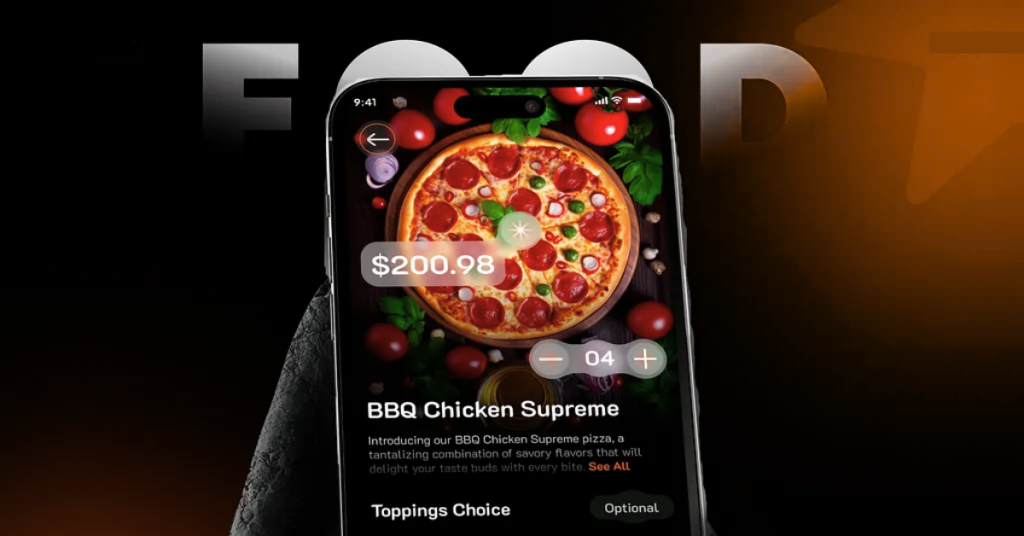
Automation, artificial intelligence, and machine learning – have dramatically transformed the food delivery sector over the past few years. Artificial intelligence in food delivery is increasingly becoming important with more individuals calling for faster, more effective, and tailored services. This is achieved to provide – smoother operations, improved customer experience, and increased profits.
Restaurants, aggregators, and logistics companies are transforming the way they – accept orders, manage resources, and interact with customers because of technology.
AI in food delivery apps helps companies achieve rising demand for quick service, personalized experiences, and better logistics. Meal delivery initially had basic qualities like choosing restaurants, ordering, and getting deliveries. But now, with AI, machine learning, and big data, apps in the current age are much more advanced.
Modern meal delivery platforms utilize technology attributes including predictive analytics, location-based capabilities, real-time tracking, and pay-as-you-go systems. The apps are now able to make smart choices based on data, enhance the seamlessness of operations, and provide a better consumer experience since they integrate AI.
From a commercial point of view, AI-based food ordering system help restaurants and food chains find the best delivery routes, predict the volume of customers they will have, and adjust their services to each customer. AI-powered capabilities guarantee more precise delivery times, more personalized suggestions, and enhanced customer experience in general. But as competition becomes increasingly fierce in this fast-changing industry, the role of AI in food delivery apps will remain a differentiator that separates the top meal delivery apps from the others.
Why AI is Important for Food Delivery App Success
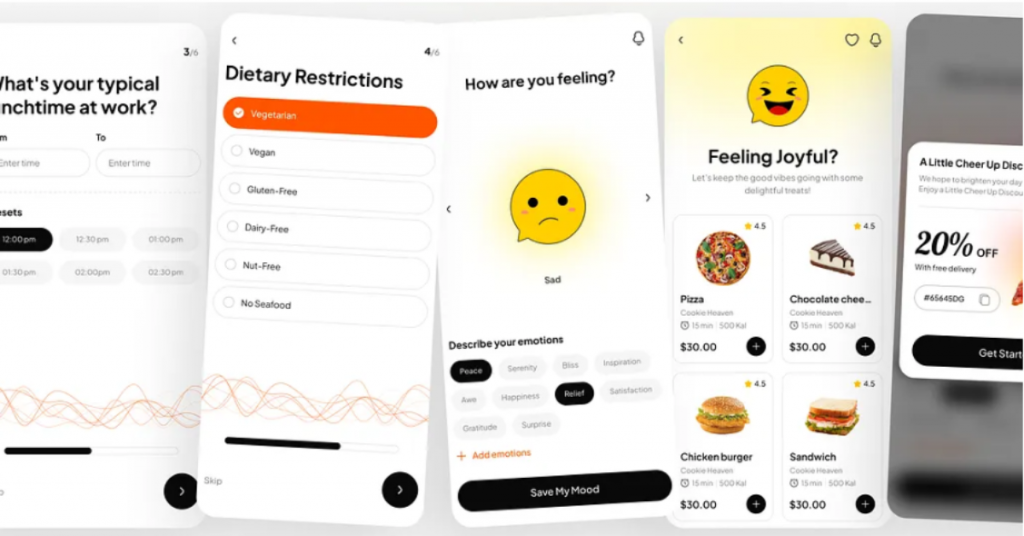
AI has soon become a game-changer in the food delivery sector. These are some of the key reasons why AI plays an important role in the success of food delivery apps.
1. AI-Driven Order Management and Demand Forecasting
Demand forecasting is a highly significant method food delivery businesses utilize AI for accurate demand forecast predictions. These machine learning algorithms consider history orders, weather conditions, and local events to estimate demand variations in terms of how humans behave.
How It Works:
- AI systems examine a great deal of historical and real-time information to identify patterns and peak hours.
- Restaurants receive automatic suggestions for how to balance their inventory so that they don’t overproduce food and have the correct amount of product available at the right time.
- Delivery platforms dynamically alter how resources are utilized in real time, which prevents things from piling up during peak periods.
Benefits:
- Less food waste due to improved planning of inventory.
- Modified staffing schedules to handle surges in demand.
- Improved order accuracy and contented customers.
2. Route and logistics optimization
In order to reduce delivery time and fuel expenses, route optimization is important in a manner that saves time and dollars. Food delivery app with AI features make use of GPS, machine learning, and real-time traffic information to determine optimal delivery routes in real time.
What AI methodologies were employed:
- Predictive Analytics: AI makes predictions based on real-time traffic, weather, and historical data to estimate when deliveries will be made.
- Dynamic Routing Algorithms: AI adjusts drivers’ routes in real time to bypass traffic congestion and maximize their fuel.
- Clustered Order Assignments: AI combines orders that are proximal to one another such that every driver doesn’t have to make as many trips.
Benefits:
- Speedier delivery means customers don’t need to wait as long.
- Food delivery systems have reduced operating expenses.
- Improved driver satisfaction and efficiency.
3. Personalization and AI-Powered Customer Service
The role of AI in food delivery has enhanced the customer experience by providing customers with relevant recommendations, personalized offers, and behavioral insights.
Key AI Features for Customer Experience:
- Personalized Food Recommendations: AI considers an individual’s preferences, order history, and consumption patterns to recommend the ideal meal for them.
- Dynamic pricing strategies adjust based on such factors as how many individuals desire the product at this instant, the loyalty of the customers, and even what your competitors are accomplishing.
- Monitoring Orders in Real Time: Artificial intelligence in food delivery enables you to monitor orders in real time and provides you with forecasted ETAs, keeping customers from becoming anxious about delays.
Benefits:
- Higher orders and higher customers retained.
- Increased money by upselling and focused promotions.
- Improved customer satisfaction with tailored experiences.
4. AI to Detect Fraud and Maintain Food Delivery Safety
Fraud against the food delivery business consists of fake orders, account takeovers, discount code misuse, and payment fraud.
Fraud detection solutions that employ AI utilize:
- Machine learning algorithms to identify suspicious-looking patterns in transactions.
- Face verification or voice verification are some examples of biometric verification that may prevent those who are not supposed to be there from gaining entry.
- Behavioral analysis may display unusual order behavior, such as a new account making a series of large orders.
Benefits:
- Fewer chargebacks and less loss of money.
- Increased trust and security on the site.
- Food delivery businesses will be at reduced operational risk.
5. AI-based chatbots and virtual assistants
There are already several meal delivery apps with AI-based chatbots to assist consumers in queries, order modifications, and complaints.
These chatbots:
- Employ NLP to understand what is requested by customers.
- Provide assistance in real time, which reduces the amount of time human agents spend waiting.
- Assist with order tracking, refund requests, and customized offers.
Advantages:
- Customer service is available 24 hours a day, 7 days a week, without the requirement for a person to be there.
- Faster reaction times and happier customers.
- Food delivery systems have lower operating costs.
6. Robots and self-driving cars in food delivery
Robots that use AI to deliver things are changing the last-mile delivery process. Companies like Uber Eats, DoorDash, and Starship Technologies are trying out:
- Autonomous Delivery Vehicles (ADVs): Robots that deliver items independently and are able to drive on sidewalks and roads.
- Drone Delivery: AI-operated drones can deliver food within minutes.
- Smart Kitchen Automation: AI-operated robots prepare food in cloud kitchens.
Benefits:
- This reduces delivery costs by making it less required to hire individuals to deliver items.
- Improved means of delivering without interaction.
- Improved scalability for food-delivery apps.
AI is driving innovation at every step of the food delivery supply chain, ranging from demand forecasting to route optimization to halting fraud to delivering food autonomously.
This provides the owners of food delivery apps with an opportunity to develop cutting-edge AI-based food ordering system that can improve food delivery logistics further, engage customers more, and secure things.
Key Features of AI-Powered Food Delivery Apps
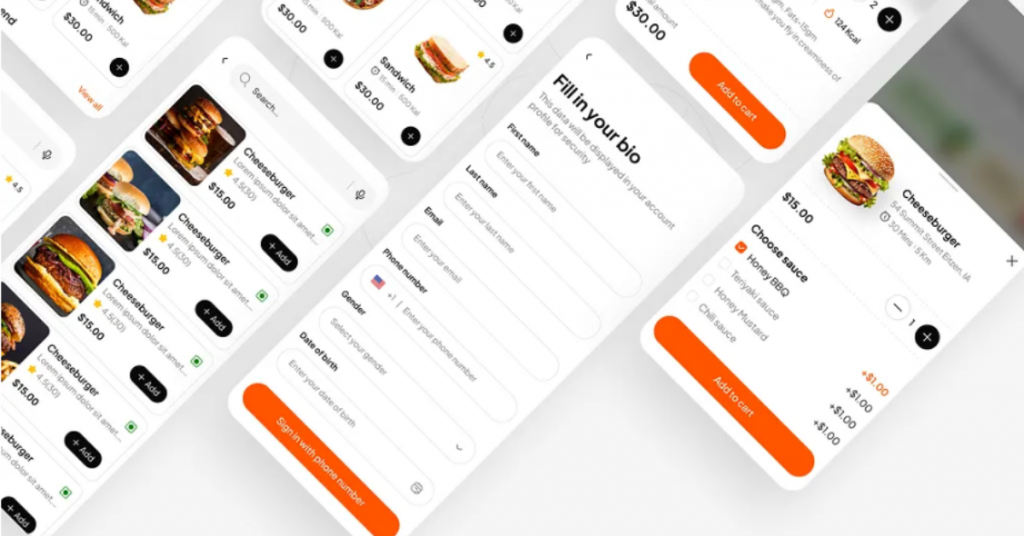
In comparison with traditional food delivery apps, a few important features distinguish AI-powered food delivery app. These are the most significant AI-imbued functionalities that make these platforms unique:
> Personalized Food Recommendations
The AI algorithms take note of customer behavior and tastes and suggest dishes that they will most likely enjoy. The longer the app has been in use, the better the recommendations become, making users discover new restaurants and food that they would otherwise not have tried.
> Dynamic Menu Adjustments Based on Inventory
AI in food delivery apps enables restaurants to change menus automatically based on real-time inventory levels. If a dish is out of stock, the app is automatically updated so that customers can’t order something that they don’t have.
> AI Chatbots for Ordering & Support
AI chatbots are able to help customers order, answer frequent questions, and resolve simple issues without human assistance. They can also track deliveries and provide an estimated time of delivery.
> Real-Time Traffic & Route Intelligence
AI regularly monitors traffic updates to provide real-time delivery estimates. It adjusts routes in real-time based on the fastest available routes, making deliveries quicker and balancing drivers’ workload.
> Predictive Delivery Time Estimates
By analyzing factors like traffic, weather, and order volumes, artificial intelligence in food delivery is able to predict delivery times more accurately than traditional methods. This informs the customer in a timely manner and enhances their overall experience.
> Forecasting High-Demand Time Slots
AI helps companies predict when demand will surge, say, during lunch hours or dinner hours, or during holidays. Through demand forecasting, food delivery apps can tailor staffing and delivery capacity.
> Smart Inventory & Waste Reduction
AI in food delivery apps helps restaurants optimize inventory management as it predicts what ingredients will be required and when, reducing food wastage. AI helps to track shelf life and also alerts restaurants when a specific ingredient is running out.
> AI-Based Fraud Detection Systems
AI can detect unusual ordering patterns, reporting potential fraudulent activity, such as stolen credit cards or large bulk orders. This adds an extra layer of security for restaurants and consumers.
> Automated Customer Query Resolution
AI is able to resolve simple customer questions by itself without the intervention of human assistance, eliminating the need for manual customer service. This accelerates the entire process and makes it more efficient.
> Surge Pricing & Smart Discounting
AI in food delivery apps can look at variables such as demand, weather, and distance of delivery to implement surge pricing or offer smart discounts. This helps businesses earn maximum revenue while offering competitive prices to consumers.
> Predictive Retention & Churn Prevention
Artificial intelligence in food delivery can look at user behavior to predict when a customer would churn and offer personalized discounts or incentives to retain them on the platform. This keeps users on the platform and makes them loyal.
> Gamification & Loyalty Optimization
AI can track user behavior and create specific loyalty programs or gamified products, encouraging customers to buy more and engage with the app.
Future Trends in AI for Food Delivery Apps
The future of AI-powered food delivery app is extremely exciting. Here are some upcoming trends predicted to dominate the space:
1. Drone Deliveries for Fast & Remote Areas
Over the next few years, drones will become a vital component of bringing food to remote areas. AI will be employed to oversee drone fleets, optimize flight routes, and make timely and secure deliveries.
2. AI Delivery Robots for Last-Mile Logistics
AI-powered delivery robots are already in the process of being piloted in multiple cities across the globe. These robots have the ability to deliver food directly to consumers, making delivery faster and cheaper.
3. Self-Drive Cars for Bulk/Multi-Order Delivery
With the progression of self-driving car technology, we can imagine a future in which entire groups of autonomous vehicles are used for bulk food delivery. AI will make sure that these vehicles drive along roads, steer clear of obstructions, and deliver multiple orders on a single trip.
4. Voice-Based Food Ordering through Alexa/Siri
Voice ordering will be more common as customers use voice assistants such as Alexa and Siri more and more. AI-driven voice assistants will enable customers to order just by saying a few words, making ordering easier.
5. Food Recognition through Image Upload
AI will enable users to photograph food and have the app tell them what it is. This will make ordering easier, with users being able to quickly find previously enjoyed dishes or find new ones.
6. Fully Automated, AI-Run Smart Kitchens
In the future, entire kitchens may be run by AI, with completely automated meal preparation. The role of AI in food delivery will maximize the cooking process, track food quality, and provide consistency on every order.
7. Real-Time Surge Pricing According to Demand
AI in food delivery apps will make it possible for businesses to dynamically change prices in real time according to shifting demand. This enables businesses to generate maximum revenue and yet provide competitive prices to consumers.
8. AI-Personalized Discounts & Rewards
AI will enable food delivery apps to provide users with individualized discounts according to their behavior. This can be used by companies to improve the retention rate and push people towards repeat purchases.
9. Blockchain & Decentralized Payments
AI can also be involved in the integration of blockchain technology, which allows for decentralized payment systems, safe transactions, and greater privacy for customers as well as companies.
10. Food Safety Monitoring using AI Vision
AI-driven cameras will track food preparation and packaging, with respect to hygiene requirements.
AI-driven vision systems will also be capable of detecting any kind of contamination or food safety concerns, and send real-time notifications to ensure that the food being delivered is safe to consume. This trend can heighten customer confidence, especially in the face of growing consumer consciousness about food safety.
Real-World Examples & Case Studies
Let’s take a closer inspection of some of the biggest food delivery platforms and how they’re using AI to improve their services:
> Uber Eats
Smart Route Planning: Uber Eats leverages AI to optimize its delivery routes in real time. By factoring variables such as traffic flow, weather trends, and time of day, AI can forecast the quickest routes and assist drivers in more efficient delivery of orders. This not only ensures faster delivery times but also enhances overall customer satisfaction.
Personalized Home Screen Recommendations: Uber Eats uses AI to tailor the customer experience. Depending on a user’s order history and preferences, the home screen of the app is dynamically modified to emphasize relevant restaurant choices, meal suggestions, and offers.
> DoorDash
Predictive Logistics: DoorDash employs AI-driven logistics to predict delivery times and allocate delivery drivers based on demand. By forecasting demand and analyzing data like restaurant popularity and order volume, AI helps ensure that drivers are dispatched efficiently and delivery times are minimized.
AI Retention and Loyalty Tools: DoorDash also employs AI-based tools to forecast customer churn. If the platform identifies that a user is about to discontinue the service, it initiates targeted retention activities like exclusive offers or price discounts, prompting the users to remain active within the app.
> Domino’s
Dom – The AI Voice Assistant: Domino’s has incorporated AI-driven voice assistants, including “Dom,” to enable customers to place orders with their hands free. The customer can just instruct the assistant with their favorite pizza or previous order, and Dom will execute the order in seconds, giving an easier and engaging method of placing an order.
Pizza Tracker & Delivery Automation: Domino’s “Pizza Tracker” is another shining example of the use of AI. The tracker, which gives customers instant updates on the status of their pizza, employs AI to better predict preparation and delivery times. The system also forecasts delivery routes for drivers, optimizing operations.
Final Thoughts
AI is fundamentally transforming the food delivery landscape. From making the customer experience more personalized and efficient to streamlining logistics and enhancing security, AI in food delivery apps is central to the evolution of these platforms. The potential of AI in food delivery extends far beyond what we’re already seeing, with emerging technologies like autonomous vehicles, drones, and AI-run kitchens promising to revolutionize the industry even further.
With increasing competition, food delivery app with AI features will be in a position to provide better experiences for consumers as well as businesses. Personalized suggestions, precise delivery estimates, route planning, and fraud protection are some of the advantages that AI has to offer. For companies, adopting AI technologies will not only enhance productivity but also boost customer loyalty and retention, so it is a must-have for success in the quickly changing food delivery industry.
Furthermore, with developing AI technology, we can look forward to even more revolutionary uses emerging. With AI-powered voice assistants, predictive analytics, or automated delivery systems, AI in food delivery apps is set to revolutionize how we conceptualize the delivery of food.
For businesspeople and companies wanting to create a thriving food delivery app with AI features, a partnership with a trustworthy development firm can prove to be the key. A firm with a background in both AI and application development will make sure that your site is not only scalable but also state-of-the-art, staying one step ahead of competitors.
Why Choose A3Logics for Build an AI-Driven Food Delivery App?
In building an AI-powered food delivery app, it is important to collaborate with a development firm that boasts an impressive track record in AI/ML app development as well as has an in-depth understanding of the food ordering sector.
Established Expertise in AI/ML Application Development:
A3Logics possesses a skilled team of AI/ML developers who are experts in developing bespoke solutions that address your business requirements. Having years of experience in providing quality AI solutions, we can assist you in incorporating innovative technology and state-of-the-art ML/AI into your food delivery solution.
Industry Experience with Delivery Tech:
Our team of developers has a wealth of experience working with companies in the food delivery industry, which provides us with profound knowledge of the industry’s challenges and opportunities. From demand forecasting to optimized routes and tailored suggestions, we understand what goes into creating a successful food delivery app.
Custom Solutions for Startups & Enterprises:
Whether you’re a startup or an established enterprise, A3Logics offers custom development solutions that scale with your business. We take a tailored approach to your project, ensuring your app is optimized for both user experience and operational efficiency.
Partner with A3Logics and take the first step toward building an innovative AI-powered food delivery app that exceeds customer expectations and drives business success.
For more details, check out A3Logics Food Delivery App Development.