
Medical imaging processes have grown complex, and diagnostic data has surged, making traditional systems increasingly inefficient. Moreover, healthcare providers now consider these outdated systems fragmented and unsuitable for modern demands.
Hence, hospitals, diagnostic centers, and radiology departments are in need of a comprehensive system that can intuitively reduce diagnostic delays and enhance patient care. The cornerstone of this change is the Radiology Information System, a dedicated and digital solution specifically designed for radiology departments.
The Radiology Information System (RIS) is the healthcare software types that digitizes the essential radiology operations including patient registration, appointment scheduling, diagnostic imaging orders, report generation, billing, and integration with PACS (Picture Archiving and Communication Systems). The solid contribution of transitioning to digital-first infrastructure in the healthcare sector is the emergence of the need for scalable, interoperable, and regulatory-compliant RIS platforms, both across the US and global healthcare markets.
The guide is a thorough, comprehensive, and up-to-date examination of the current RIS landscape, including key features, development strategy, and the best considerations for organizations analyzing or implementing their own Radiology Information System Software.
What is a Radiology Information System (RIS)?
The Radiology Information System (RIS) is the core element of the IT ecosystem of the radiology department. This database-driven solution specifically manages imaging workflows, tracks imaging orders, handles patient demographics, assigns tasks to technicians and radiologists, and generates final diagnostic reports.
Moreover, it enhances operational efficiency by streamlining each imaging step and accurately documenting every procedure.
Developers mainly design a RIS to meet the specific requirements of the radiology industry, integrating it with PACS for image storage and with hospital information systems (HIS) and electronic health records (EHR) to ensure care continuity. More advanced RIS platforms also include functionalities for billing, regulatory, and quality control.
Key functions of a modern RIS include:
- It supports the complete imaging workflow, from order placement to report delivery.
- It is integrated with both PACS and EHRs, allowing for seamless data exchange.
- It has role-based access controls and audit trails to ensure compliance with regulations.
- It offers automated alerts, dashboards, and analysis for the support of timely decisions and continuous improvements.
Radiology Information System Market Statistics
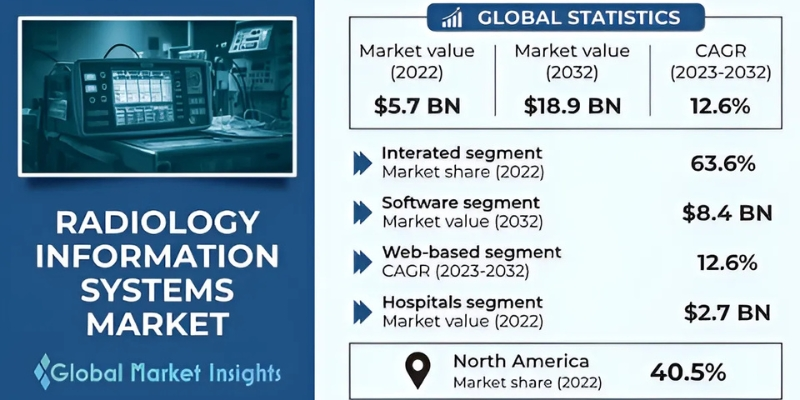
The rising number of diagnoses continues to drive the global success of Radiology Information Systems.
Furthermore, digital transformation accelerates adoption as healthcare providers demand integrated IT systems.
The global RIS market is currently valued at approximately $1.5 billion, but it is predicted to reach a milestone of $3.9 billion by 2034, reflecting a compound annual growth rate (CAGR) of approximately 9.7%.
In 2023, spending on RIS in the U.S. stood at approximately $465 million while a prediction says it is forecast to climb to $829 million by 2030. The largest slice of the market is occupied by North America, which has a well-developed imaging infrastructure, compliance with regulatory standards (e.g., HIPAA, HITECH), and widespread adoption of cloud-based RIS solutions.
Key Market Drivers:
- The increasing number of imaging procedures done around the globe.
- The need to automate workflows in radiology is also bound to increase.
- The requirement for integration with PACS and EHR systems.
- The application of data analytics in diagnostic decision-making is becoming more and more prominent.
Key Features of a Custom Radiology Information System
1. Patient Management & Registration
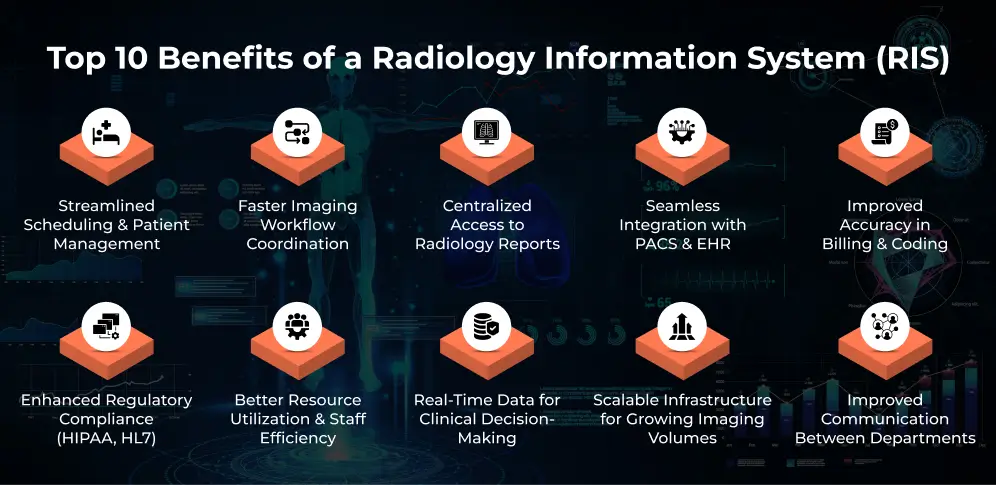
The headway that RIS has made is the healthcare provider’s ability to register and manage patient demographics, insurance details, medical histories, and imaging records in one centralized database. The time synchronization feature that EHRs provide is another advantage, giving all healthcare professionals up-to-date information.
2. Scheduling & Appointment Management
The advanced scheduling modules not only enable bookings based on the most available time for radiologists, imaging equipment, and rooms, but they also include automated reminders and a cancellation tracker. The system’s integrated optimization tools lower no-show rates and reduce idle times.
3. Order Entry & Exam Management
Physicians and technicians place imaging orders directly into the Radiology Information System Software, which then directs them to the appropriate modalities (CT, MRI, X-ray). The system integrates double-checking to ensure all protocols and insurance authorizations are in order.
4. Workflow Management & Worklists
The RIS platforms display various worklists from which radiologists and technicians can select a modality, location, or urgency. They can view and manage their task queues more easily. Overall, it is a win-win situation, as it not only decreases downtime but also prioritizes critical cases, ultimately enhancing throughput.
5. Reporting & Dictation
The Radiology Information System RIS comes with voice recognition software for dictation as well as with customizable templates for structured reports. A few of the RIS platforms make use of Artificial Intelligence in Medical Diagnosis to auto-fill data fields and identify mistakes.
6. Image Tracking & Integration with PACS
With the help of the tight integration with the PACS image files, RIS can track imaging files, retrieve prior studies, and link reports with associated images. Having a complete and ready imaging record for every patient is of great importance for assessing patient progress and for conducting detailed audits of quality.
7. Billing & Financial Management
RIS enables real-time coding, captures charges, generates claims, and integrates with medical billing systems. It includes additional validation to prevent errors in CPT/ICD coding, thereby accelerating the claims process.
8. Data Analytics & Reporting (Administrative)
The RIS platform now provides operational dashboards that offer heads of departments a comprehensive overview of utilization rates, report turnaround times, radiologist productivity, and patient wait times. Consequently, these real-time insights support better decision-making, streamline departmental operations, and improve overall patient care.
These insights are very important for making strategic plans and for conducting compliance audits.
9. Interoperability & Integration
RIS can integrate with external systems using the HL7, FHIR, and DICOM standards. The capability to easily communicate with EHRs, LIS (Lab Information Systems), and external imaging centers is a tremendous opportunity for better coordination of care.
10. Security & Compliance
The sensitive nature of medical images and patient data requires that RIS must adhere to HIPAA, GDPR, and other data protection regulations. It includes the provision of role-based access, encryption-at-rest and in-transit, user authentication, and audit logs.
Custom Radiology Information System Software Development – Key Steps
Creating a custom Radiology Information System (RIS) is a strategic direction that requires cautious and calculated planning, in-depth domain knowledge, and brilliant technical expertise. The emergent six steps echo the most successful routines established by experienced teams and software vendors providing Software Development Consulting Services in healthcare IT.
Step 1: Comprehensive Discovery and Requirements Gathering
A successful RIS project kicks-off with thorough discovery. As the first step, the implementation team conducts stakeholder interviews and observes workflows involving radiologists, technicians, schedulers, billing teams, and compliance officers. Furthermore, this approach helps identify pain points, align system functionality with real-world needs, and ensure that every user group’s requirements are considered from the outset.
This would involve mapping current operations and determining pain points. Requirements gathering would highlight the following:
- Workflow Mapping – Capturing existing processes from registration to report delivery, identifying bottlenecks or manual touchpoints.
- Feature Prioritization – Categorizing requirements into core features (e.g., modality worklists, scheduling, reporting) vs. optional enhancements.
- Integration Needs – Documenting required interfaces with EHR, PACS, LIS, and third-party tools using standards like HL7, DICOM, and FHIR.
- Compliance Mapping – Addressing HIPAA, FDA (if applicable), audit logging, and regional data protection laws.
- RFP Creation (if vendor-led) – Outlining volumes, users, response time expectations, and tech preferences to attract capable vendors with healthcare IT expertise.
This phase is designed carefully to avoid any ambiguities in the future and to keep both clinical and operational goals aligned.
Step 2: System Design and Architecture
Post the achievement of the discovery phase, the architectural formalization of the RIS system will be undergone. The solution architects delineate both the high-level and low-level designs that shall lead the development. Here are the main points included in this step:
- Tech Stack Selection – Determining the use of the latest toolkits (e.g. React for front end, .NET/Java backend), which indicates the requirement of infrastructure and scalability.
- Database & Performance Planning – The structuring of a schema for patients’ records, orders, reports, and bills is considered together with the possibility of enlargement and indexing.
- Module Architecture – The resolution is achieved not to create a monolithic application but by separating it into services: Scheduling, Order Entry, Reporting, and Integration which promotes the separation of concerns.
- Integration Design – Planning interoperability with the use of tools like Mirth Connect, HL7, parsers, and DICOM libraries as a means to the connection of external systems.
- Security Architecture – Laying down the role of access controls, audit trails, SSO support (OAuth/SAML), and encryption so that they are in compliance with laws and regulations.
- Deployment Strategy – This can be either on-premises, cloud-based, or hybrid, and the decision will rely on data residency, scalability, and operational flexibility.
This layout is the element that powerfully supports its scalability, interoperability, and security, irrespective of all possible scenarios of its use.
Step 3: Development and Coding
The assembly of a Radiology Information System, in common with a diverse range of systems, is carried out in an iterative method. Generally, in each cycle, indicative versions of newly developed applications are produced, while existing ones are improved in order to get the best product. The most important tasks are:
- Agile Sprints & Feedback Loops – Delivering ready modules like scheduling or reporting to the users at the beginning even if features are not fully finished in order to get the early feedback.
- UI/UX Design – Development of user-friendly interfaces that optimize the experience for radiologists and employees by enabling fast navigation, structured forms, and supportive high-efficiency workflows.
- Feature Implementation – Applying various functions such as real-time worklists, voice-enabled reporting, and billing automation.
- Third-Party SDKs – Taking advantage of globally accepted libraries for DICOM, HL7, and dictation to hasten delivery and lower custom code.
- Integration Testing – Testing connections with PACS, EHR, and devices through simulated data and real-life scenarios.
Adherence to the principles of documentation and good code quality is always in place to ensure that the maintenance and enhancement of the software are done properly.
Step 4: Testing and Quality Review
Because of scientific technological advancements in medicine, a Radiology Information System constitutes a basic necessity, and thus QA must be thorough. This stage includes:
- Functional Testing – Ensuring that all required parts from the order phase to the report phase to the billing phase are implemented as per the specifications.
- Integration Testing – Creating Live HL7/DICOM messages with system error handling and inter-system coordination as the two main subjects of focus.
- Security & Compliance Testing – Verification of the system’s compliance with HIPAA, encrypted communication, and strict access controls.
- Performance & Load Testing – A backward approach of checking the stability, database reactivity, and uptime of the system by high-load imaging employed for stress testing.
- User Acceptance Testing (UAT) – Users approve the system based on the experiences they had while testing it in a near-simulation environment.
Only after the completion of all the tests (like regression and user acceptance) can the system be assigned for deployment.
Step 5: Deployment and Go-Live
The transition to production from staging is achieved through a correct and timely process. The principal actions to be executed are the following:
- Data Migration – This process will focus on only the most critical patient records, moving them, along with older imaging data, while validating integrity throughout the operation.
- Production Setup – This will embody provisioning of either cloud infrastructure or on-premises servers, setting up of security layers, and switching of integration endpoints.
- Go-Live Execution – A decision on either a phased or big-bang rollout will be made based on project risks, while fallback strategies will be implemented to address any anticipated issues.
- Staff Training – This will comprise hands-on instructions for all user roles, cheat sheets, sandbox access, and channels of support.
- Transition Support – The transition team will provide 24/7 support to users, including issue handling and troubleshooting configuration access for all.
Communication within departments is crucial for both the smooth operation of the project and the quick acceptance of it.
Step 6: Post-Deployment Support, Maintenance, and Iteration
Post-launch ongoing support is the key to success. This phase covers:
- Helpdesk & Issue Management – Integrating ticketing and escalation processes for addressing bug-fixes and enhancement requests.
- Bug Fixes & Security Updates – Addressing post-launch bugs and applying regular security patches to be in compliance with the latest regulations.
- Performance Monitoring – Real-time dashboards are being used to check load, server health, query performance, and uptime.
- Iterative Enhancements – The introduction of new features like AI integration for preliminary diagnosis or patient portals using agile sprints.
- Scalability Planning – Getting ready for handling more medical imaging by adding infrastructure or services that could be required.
- Documentation & Handover – Updating admin guides, API specs, and user manuals while enabling internal teams around self-sufficiency.
Through a combination of the right Custom Software Development Company and a meticulously drawn-up roadmap, healthcare institutions can ensure that their RIS keeps pace with future demands.

Custom vs Off-the-Shelf RIS Solutions: What Should You Choose?
Healthcare providers must choose between custom-built RIS platforms and off-the-shelf solutions, each having distinct trade-offs in flexibility, cost, and time-to-market.
Custom RIS Development
Pros:
- Made for the exclusive operational processes of imaging, workforces, and reporting templates.
- Execution without any glitches through the combination of in-house EHRs, LIS, and billing tools.
- Full control over UI/UX, scaling, and compliance requirements.
- Embed AI-driven features to stay ahead of the game.
Cons:
- A long process.
- A high investment is required.
Off-the-Shelf RIS Solutions
Pros:
- This route leads to a speedy deployment and lower pre-costs.
- Vendor-specific pre-configured upgrades with PACS/EHR.
- Platform proven reliability with standard workflows.
Cons:
- Less customization
- The potential vendor lock-in.
- In some cases, it would require changing workflows or including additional third-party systems.
Commercial off-the-shelf RIS solutions may fit institutions with simple needs and tight budgets, but the long-term scaling may become a problem. As organizations evaluate different vendors and capabilities, decision-makers often request a demo to better understand how a radiology information system performs in real clinical workflows.
How Much Does It Cost to Develop a Custom Radiology Information System (RIS)?
The development costs for a Custom Radiology Information System Software vary based on scope, integrations, compliance, and team structure. On avg.:
| Component | Estimated Cost (USD) |
| Discovery & Planning | $20,000 – $40,000 |
| UI/UX Design | $15,000 – $30,000 |
| Backend & Frontend Development | $80,000 – $200,000 |
| PACS/EHR/LIS Integration | $25,000 – $60,000 |
| QA & Testing | $20,000 – $40,000 |
| HIPAA & DICOM Compliance | $10,000 – $25,000 |
| Training & Support | $10,000 – $30,000 annually |
Total Range: $170,000 – $425,000+
Types of Radiology Information Systems
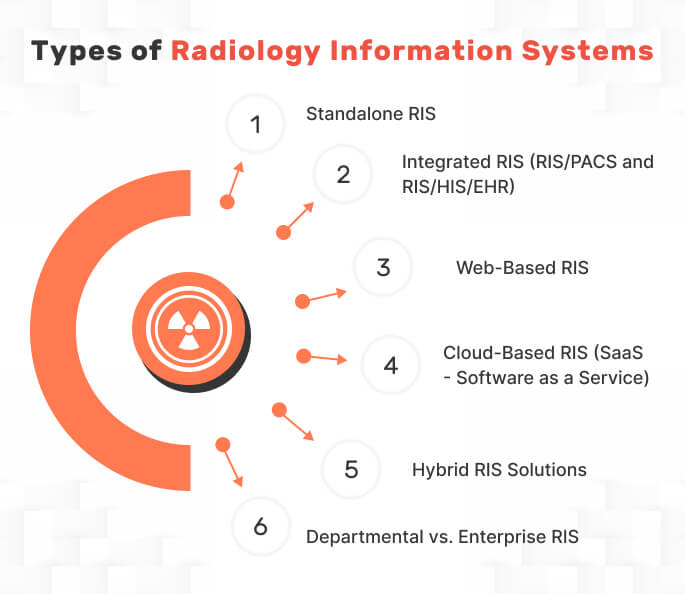
1. Standalone RIS
Standalone is the term we use for machines that are independent, mostly utilized within small to mid-size radiology clinics. Alone, they can manage everything related to scheduling, reporting, and billing; however, they are also likely to lack PACS or EHRs, which are helpful for native integration.
2. Integrated RIS (RIS/PACS or RIS/HIS/EHR)
Integrating RIS with other systems like PACS or EHRs makes it easier to exchange data. Manual data entry is no longer needed, which consequently increases the accuracy of patient records, reports, and images.
3. Web-Based RIS
Web-based interfaces offer browser access over secure intranet or internet connections, simplifying client-side IT management.
Moreover, these interfaces reduce infrastructure complexity and minimize ongoing maintenance for healthcare organizations.
4. Cloud-Based RIS (SaaS – Software as a Service)
A Cloud-hosted RIS has advantages such as on-demand scaling, easier management, and lower capital expenditure. It is a solution especially useful for multisite networks and teleradiology providers who need global access.
5. Hybrid RIS Solutions
The Hybrid model entails a mix of both on-premises storage and cloud features, such as analytics or remote access. This provides good performance and security, especially if the cloud is not subject to compliance with local laws.
6. Departmental vs. Enterprise RIS
A departmental RIS serves a single unit, while the enterprise RIS supports multiple departments or hospital networks and manages complex governance, billing, and reporting requirements.
Common Challenges in Building a Radiology Information System
The development and deployment of the Radiology Information System RIS are not without difficulties. Technical and administrative challenges form the core of the problems:
1. Complex Workflow Mapping and Customization
The variety of modalities, reporting styles, and diagnostic flows of each radiology practice makes them unique. The transformation of this complexity into a configurable system is hard going without stakeholder alignment and iterative design.
2. Data Management and Migration
Data cleansing, standardization, and transformation are involved in the process of modernizing the legacy RIS or paper-based systems. DICOM imaging data poses additional challenges due to the high volume and the varying formats it can have.
3. Interoperability and Integration Challenges
To third-party systems, integration means first becoming familiar with HL7/FHIR protocols, avoiding data conflicts, and ensuring that across vendors’ evolving APIs, versions remain compatible.
4. Security and Compliance
RIS holds sensitive PHI data. Ensuring role-based access, end-to-end encryption, and compliance with HIPAA, GDPR, or local variants is crucial, yet it presents a very tough challenge.
5. Performance and Scalability
The radiological case typically requires a system that supports multiple concurrent active sessions, provides fast image retrieval times, and features user-friendly interfaces. The requirements may even be higher when working with huge CT/MRI datasets.
6. User Adoption and Training
Although great care is taken in the design of RIS, it is inevitable that some clinicians will resist the introduction of the new technology unless it is simpler than their current routines.
A3Logics Driving Healthcare Transformation with Seamless RIS Integrations
Developers can integrate RIS solutions seamlessly, increasing compatibility, scalability, and compliance while providing custom interfaces tailored to multi-specialty imaging environments.
Here is how A3Logics integrates RIS with other healthcare systems:
1. Electronic Health Records (EHRs)
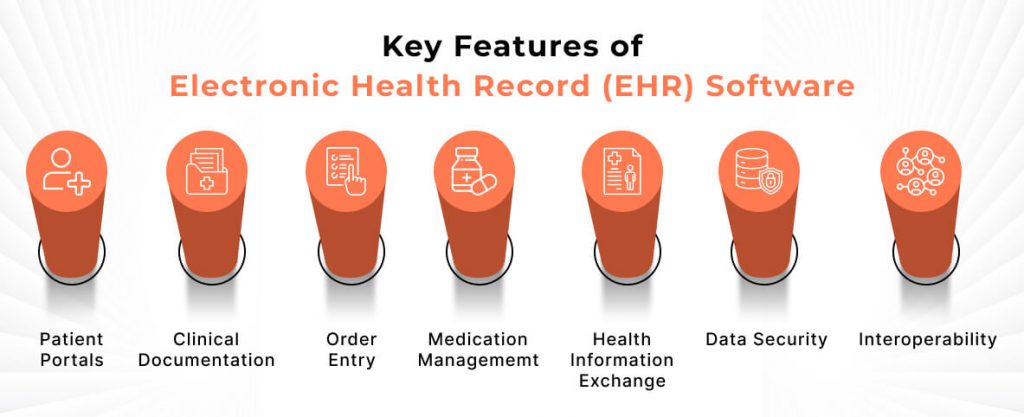
Bridge a way between RIS and EHRs via HL7 standards. This avoids redundancies and supports the continuity of care by real-time synchronization of patient history, prescriptions, and diagnostic results.
2. Laboratory Information Systems (LIS)
Linking RIS with LIS platforms enables uniform access to lab and imaging results, which are crucial in the multi-modal diagnostic workflow for oncology, cardiology, and infectious disease management.
3. Digital Imaging and Communications in Medicine (DICOM)
Complying with strict DICOM standards makes RIS platforms interoperable with PACS and imaging equipment. Thus, high-resolution images could be retrieved, tagged, and shared effortlessly.
4. Electronic Prescription (eRx) Systems
Integration with eRx modules enables radiologists to prescribe or follow up medications electronically. This also helps generate alerts for allergies or any contraindications.
5. Telehealth Platforms
By integrating RIS with telehealth video platforms and cloud storage, radiologists can review studies and submit reports from any location, thereby promoting remote diagnostics.
6. Picture Archiving and Communication Systems (PACS)
RIS-PACS integration is the primary service. You will receive a combined worklist and image-report viewer that enables radiologists to access patient records and DICOM images.
Best RIS Radiology Information System Development Companies in 2025
1. A3Logics

The ranking has A3Logics picking the first spot for Radiology Information System Development in 2025 because of its deep-rooted custom RIS focus on workflows that fit each provider. Besides, it has established itself as a go-to company for seamless middleware, tag protocols, and data transfer between EHR, PACS, LIS, and telehealth platforms with a strong track record in HL7, FHIR, and DICOM integration.
The company also manages other aspects of a full-stack solution, which in turn facilitates the creation of secure cloud infrastructures and responsive web portals, as well as delivering mobile-friendly interfaces to radiologists who access them through rigorous HIPAA-compliant development techniques. As a result, A3Logics is the first choice for hospitals that wish to create or update their RIS software.
2. Epic Systems
Epic dominates the U.S. Healthcare IT sector and includes the Radiant module within its Epic EHR ecosystem.
Moreover, the Radiant module targets large hospitals and delivers comprehensive radiology workflows and scheduling tools. It also manages modality worklists, advanced reporting, and analytics while ensuring diagnostic coordination between staff.
Additionally, this integration supports efficient embedding and management of diagnostic data across hospital departments.
The fact that it is associated with a wide range of products and also safeguards the unity of data throughout the enterprise makes it a fitting candidate for facilities already utilizing Epic’s package.
3. Oracle Cerner
Cerner is known as RadNet, which integrates easily with its Millennium EHR, covering nearly all aspects of a radiology department’s operations. Now that Oracle owns it, Cerner is directing most of its resources toward the development of new artificial intelligence features for RIS applications and the deployment of cloud-native RIS solutions.
The platform includes imaging orders, results distribution, and direct integration with Cerner PACS and third-party systems.
4. GE Healthcare
GE Healthcare recently underwent a major upgrade of its RIS as part of its imaging portfolio, transitioning from the Centricity brand to the Edison platform. It integrates its RIS with PACS and imaging hardware for a two-in-one solution.
Furthermore, the system enables AI-prioritized worklists and provides seamless multimodal data access for clinicians.
GE developed a solution for hospitals and diagnostic centers to streamline scheduling with advanced analytics.
Moreover, it integrates voice dictation and simplifies cross-site workflow management for better operational efficiency.
5. Philips Healthcare

ChatGPT said:
Philips Healthcare provides RIS through its IntelliSpace and Enterprise Imaging platforms with bundled PACS and visualization tools. Furthermore, Philips optimizes the RIS for radiology processes like critical results management and integrated scheduling.
It also includes voice recognition features and supports workflow efficiency across radiology departments.
In addition, Philips emphasizes design usability, making the system intuitive and effective for clinical teams.
Carestream’s HCIS acquisition has been a game-changer for Philips in expanding its RIS and achieving enterprise-level deployments.
The Future of Radiology Information Systems
1. AI-Powered Workflow Enhancements
The near-future RIS platforms will include developments of Artificial Intelligence in Medical Diagnosis, the parallel automation of triaging studies, pre-filling reports due to identified error codes, and warnings about missed critical results among other things.
2. Unified Imaging Ecosystems
Developers should merge RIS, PACS, EHR, and LIS into a unified, cloud-native platform with consistent interfaces. As a result, this integration reduces complexity, enhances interoperability, and significantly boosts clinician productivity.
3. Real-Time Collaboration
Advanced RIS solutions will undergo a phase of including real-time collaborative processes between radiologists, referring physicians, and subspecialists through secure messaging, shared annotations, and report co-authoring tools.
4. Predictive Analytics
The operational analytics with RIS-related software will include not only reporting through dashboards but also the ability to forecast equipment that needs review, radiologist workload saturation, and predictive analysis of turnover.
5. Privacy-By-Design
As data security becomes stricter, RIS systems will utilize stronger protection, including encryption of all data, secure logins, and tools to track system activity. This will help keep patient data safe and better control access to it.

Why Choose A3Logics as Your RIS Radiology Information System Development Partner?
A3Logics has over two decades of experience in healthcare IT, making it a premier partner for custom RIS solutions. A3Logics stands out for the following reasons:
- Domain Expertise: In-depth Knowledge of Radiology Workflows, Compliance Frameworks, and Integration Protocols.
- Agile & Scalable Delivery: Modular architecture that allows for phased development and future expansion.
- Security-First Development: HIPAA, GDPR, and DICOM compliance are integrated at every design stage.
- Full Lifecycle Support: Strategic consulting at the beginning, post-deployment maintenance, and upgrades.
- Interoperability Leadership: Successfully integrated HL7, FHIR, and DICOM with existing healthcare infrastructure.
Additionally, if you are a medium-sized diagnostic center or a multisite community hospital, A3Logics is a provider of high-quality, tailor-made, and/or operational RIS Radiology Information Systems that adapt to clinical, technical, and strategic considerations.
Final Thoughts
From imaging order management and patient scheduling to regulatory reporting and PACS integration, RIS is an indispensable part that facilitates efficient and high-quality radiology services.
Whether it’s prebuilt or custom-made, choosing the right approach depends on your structure, budget, and long-range vision. If you’re looking for RIS development, we’re happy to share the knowledge we’ve gained through our experience.
We at A3Logics partner with healthcare teams on similar projects. Feel free to reach out and explore what the future holds for your organization.