With the rush of office hours taking over, it is very common to leave the lights and fans on back in your house. But, doesn’t that consume a lot of energy? Also, it increases your utility bills which burns a hole in your pocket. The solution? IoT home automation systems.
With so much development in the IoT sector, people can simplify their daily routines. As remote access is now available, they don’t need to waste time doing mundane tasks. Everyone can now automate their tasks. The IoT home automation development offers improved convenience and control in daily lives.
The rise of IoT is revolutionizing how we carry on with our lives ahead. This plays a vital role in driving efficient solutions for modern-day home needs. If you’re planning to launch any such thing, IoT-based home automation development can be a significant roadway to success.
What is IoT Home Automation?
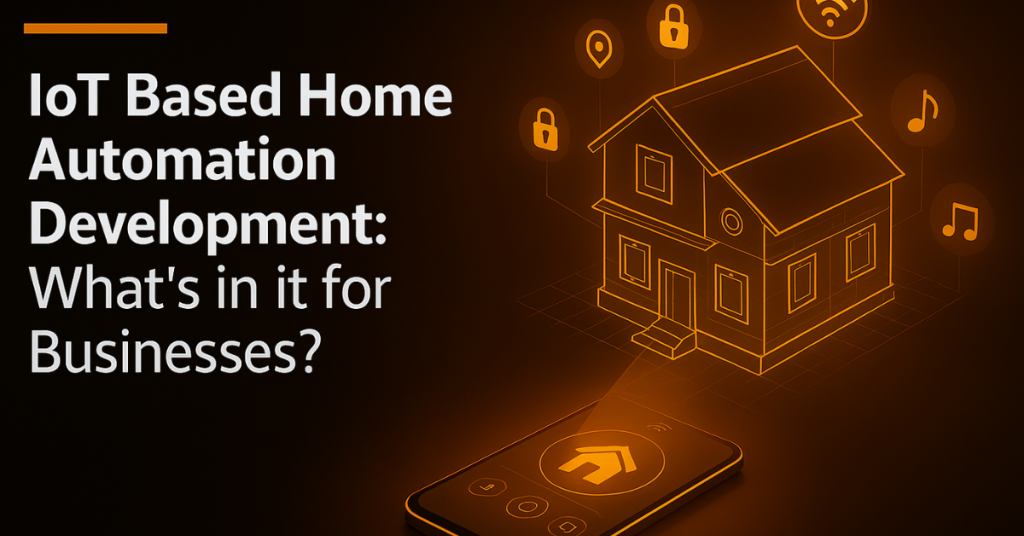
Home automation has been a trend for a very long time now. Over the decade, there have been significant advancements in this field. One of the major advancements has been the coming of IoT home automation systems. Through advanced automation technology, you can control every aspect of your house, from lighting to fans.
The IoT home automation development system has played an essential role in saving energy. This system allows you to turn off the morning alarm, control the temperature of the house, turn on the television and so much more with just one command. Therefore, IoT home automation systems not only lower energy consumption, but also play a key role in improving the quality of life.
With the help of IoT, you get remote access to your smart home solutions. You can keep a track of how much data is stored on the cloud. It also paves the way for cloud-based computing and better internet protocols. This innovative wireless technology, however, can often be complex for the individuals to understand. Nonetheless, it is easy to use. As you gradually adopt this system, it should help you know it, especially in terms of flexibility and feasibility.
Know More About IoT Home Automation
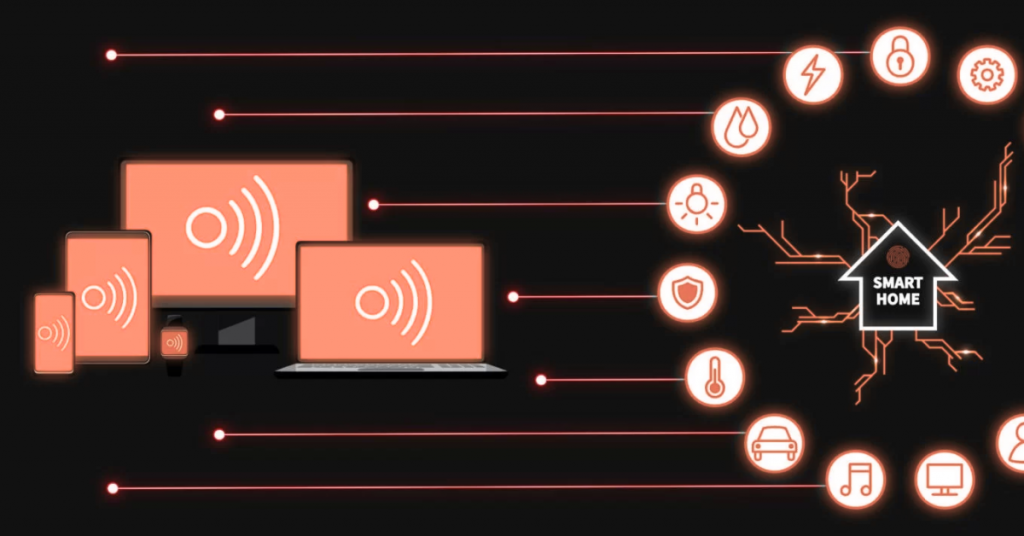
Home automation IoT applications are slightly different from the traditional approach. While the conventional approach offers hardware-specific features, one has to be present to use this. Moreover, traditional home automation systems were very device specific and followed a pre-programmed structure.
Smart home IoT solutions are however shattering these components. It offers remote access for most of the data stored in the cloud. Unlike the traditional approach, it is a software-first model that provides the benefit of clouds, apps, and APIs. Comparatively, it has a high scalability benefit for it comes with multi-device support across multiple platforms. Moreover, the IoT home automation solutions are AI and ML driven which paves the way for adaptive and predictive data analysis. Therefore, the home owners can eventually take action based on the generated data.
Unlike traditional home automation solutions, the IoT-powered software ecosystems have cross-platform compatibility. Therefore, it can be integrated via APIs and cloud services, which can surely be helpful in the long run, especially for controlling different devices like mobile apps, voice, and dashboard.
The difference between IoT home automation systems and traditional ones
It is regarding the core components. Some of the core components of these IoT home automation development solutions include the following:
- Cloud platforms: The cloud platform is the central component of the IoT home automation system where all the primary data is stored. From here, the data is passed forward. Different cloud platforms can be used in smart home automation solutions like Google Cloud, AWS or Azure. These cloud platforms offer the benefit of third-party integration and higher scalability. Comparatively, these have secure orchestration as well.
- Mobile apps & dashboards: These mobile apps and dashboards are the components through which the home owners will control, monitor and automate their smart home needs. The dashboard must have all the innovative features integrated such as device grouping, scheduling and remote access. The app offers real-time alerts to the owner and real-time data visualization regarding their energy consumption and if any item or equipment listed in the network needs maintenance.
- AI & ML algorithms for automation: The AI and ML-driven algorithms are crucial to monitoring, especially in determining growth. It must come with an intelligence layer that helps to make the system proactive and not reactive. Different components can be used for automation like predictive energy optimization, security anomaly detection and behavior learning. These algorithms can be integrated into the system to help keep track of everything.
How Does IoT Home Automation Works?
A basic setup is one of the main requirements of the complex IoT home automation system. The basic setup includes various key components like remote servers with sensors. These sensors are located in the cloud and help to manage multiple sensors. IoT sensors use different communication technologies like WiFi, Z-Wave or Bluetooth. The primary device in the system is referred to as gateway or hub, which is connected to the home router.
The sensor will send and receive the commands via the centralized gateway. Then, the gateway will transfer this communication to the cloud. Therefore, all the devices are interconnected during the IoT home automation development process. The interconnected system makes it easier for the homeowners to monitor and control their IoT devices remotely.
> Cloud Computing and SaaS Architecture
Cloud connection plays a vital role in IoT home automation development. All the data is stored in the cloud and maintained on the Internet ensuring that you can access your IoT devices remotely as long as you’re connected to the internet. Therefore, you get the option to send commands to the hub remotely. Once the command is received, the hub will signal the sensors, which will trigger the requested action. The hub will then provide you real-time device status updates.
> Real-time Data Processing and Monitoring
The hub will connect to the cloud network with the help of the internet. As the homeowner, you can control the hub, trigger the action, and monitor the updates. The hub sends the regular updates on a particular schedule. The cloud network gathers the inputs and forwards them to the hub, which is then sent to the sensor for triggering an action. Then, the homeowner is instantly notified about the changes based on the new updates. The updates about all the changes are regularly provided.
> API Integration
Different connectivity protocols in IoT home automation development are integrated as API integrations. Each of these work based on various factors. These popular API integrations include:
- WiFi: This provides high-speed communication and is directly connected to the internet. However, it is one of the easiest integrations with cloud APIs that offer direct internet access.
- ZigBee: ZigBee is small, fast and optimized to deliver fast and short messages. It works like a mesh network to forward requests. This is mostly integrated in various sensors such as lights, thermostats and motion.
- Bluetooth Low Energy: Bluetooth API integration would work inefficiently only for short ranges. Hence, it does not require to be connected to the internet. It can easily pair the devices and is primarily beneficial for locks, health sensors and wearables.
- Z-Wave: This is a highly secure specialized API integration. It is different from WiFi and ZigBee as it functions on different frequencies, has a strong focus on security, and offers reliability for various devices. This also supports mesh network benefits.
> Rule-based Decision Making
As the homeowner, you have the option to set up actions with the help of IFTTT technology (IF This Then That). These criteria will only work if the determined criteria are fulfilled. Apart from that, as a part of smart home IoT solutions, you can also rely on AI-driven decision making. The data gathered through AI can be of great help in making the right decisions.
> Orchestration Models: Hub-based or Cloud-based Software
Hub based models work with the help of gateway devices that act as the central controllers of all home automation IoT applications. These have low latency and can be executed efficiently. Since it is not connected to the internet, the data offers better privacy and security. A significant benefit of a hub-based system is that it works efficiently without being connected to the internet.
Cloud-based orchestration systems provide the benefit of remote control. Since all the data is connected to the cloud, it offers the advantage of high-scalability and cross-platform integration. It can work efficiently with advanced analytics through various processes like energy optimization and predictive analysis. However, there may be some latency and privacy issues in the long run.
The orchestration model that you choose for your house should depend on your preference. It is essential to consider latency, data privacy and ease of integration before finalising your choice.
Key Benefits of IoT Home Automation for Businesses
Below are some of the key benefits of benefits of IoT in home automation for businesses:
1. Enhanced Home Security
Businesses can focus on AI-enabled monitoring software and mobile-security apps. The software-driven platform, like the advanced security-as-a-service, can help detect any unusual activity patterns. Furthermore, these can also offer mobile-based security apps through which the customers can keep a track of real-time updates.
The cloud storage video will help with getting instant visibility and preventing the risk of break-ins if they’re about to happen. The predictive threat detection through machine learning can also help to detect any threats that may arise and how to prevent them.
2. Energy Efficiency & Cost Savings
Smart home IoT solutions are very energy efficient and play an essential role in saving costs too. These solutions come with IoT-powered dashboards that help track real-time energy usage. At the same time, the AI/ML algorithms work towards predicting energy consumption and then optimizing device usage.
Businesses can leverage these to provide energy-saving insights. These can be integrated into their service model to foster sustainability-driven SaaS solutions. It can also contribute towards energy analytics.
3. Lifestyle & Home Management Apps
IoT home automation development also helps to bring about numerous lifestyle and home management apps. Such a focused environment can go beyond convenience. The health and wellness monitoring apps can help to track the indoor air quality, or sleep patterns.
Most of these devices have mobile-first control benefits, especially regarding home management apps. Businesses can therefore use this to manage entertainment, cleaning, and all the kitchen appliances remotely. These smart home solutions can help create newer business opportunities that drive profit.
4. Remote Access & User Convenience
One of the significant benefits of IoT home automation development for businesses is the anytime and anywhere control feature. The cloud-based system paves the way for seamless orchestration. Therefore, you can control any of your home devices from any location.
Businesses can use this to create custom mobile apps or voice assistants to make user interactions easier. This will play an essential role in higher customer adoption thereby increasing the customer base. The convenience-driven SaaS model eventually helps in personalized digital experiences driving growth and profit for businesses.
Emerging Trends in IoT Home Automation
With technology overpowering every sector, the IoT home automation sector is likely to grow, too. In the past decade, there have been significant advancements in the home automation sector. From traditional to remote access, things have changed a lot.
Here are some of the emerging trends in the IoT-based home automation system to look forward to:
1. AI-Powered Smart Security
Security still is one of the major concerns for homeowners. With all the devices being interconnected, many homeowners think that there’s a cybersecurity threat. However, things are being changed to bring advancement. The security sector, therefore, brings a wide range of improvement.
The mobile apps will help homeowners control all the security devices in their house. IoT is playing an essential role in revolutionizing security. From transferring recordings of the security camera to accessing them anywhere and anytime, homeowners have a lot of leverage. The homeowners can remote control the locks too and detect any threat if that’s there. If required, the homeowners have access to putting the entire house to a complete lockdown.
2. Adaptive Lighting & Climate Control
Lighting consumes a lot of power. The smart IoT home automation development allows homeowners to control light remotely. Not only can the light be turned on and off, but homeowners can also set the light intensity as per their preferences. Therefore, the homeowners can adjust the light accordingly. The AI-driven smart lighting feature will automatically adjust the lights preventing the risk of high power consumption.
Ventilation and conditioning is also important around the house. The IoT-based home automation will help to adjust the conditioning of the house. It will detect the location whenever you’re nearby the house and adjust the temperature as per your preferred or pre-defined settings. Similarly, when you move out of the house, it will automatically turn it off to save energy.
3. IoT-Enabled Appliance Management Software
Smart appliances are the future. Appliances have always been a must-have around the house, from refrigerator to oven and so much more. Smart refrigerators are already on the market, and they are expected to develop more in the future.
The refrigerator can notify you if the milk is about to expire and tell you if any other food is about to expire. It can also inform you to bring specific food items when they’re about to be over. Other smart appliances can also notify you about the maintenance status. Switching to smart appliances can be a total game-changer, especially in terms of bringing change.
4. Next-Gen Entertainment Platforms
Smart TVs have already made their way into everyone’s house. However, now there are going to be more advancements, especially with IoT taking over. Home automation IoT applications can contribute significantly to changing how you perceive entertainment.
These next-gen entertainment platforms often include voice-controlled software like Alexa or Google Home. Whether you want to watch a particular show or play songs, you can instruct these smart home devices to do it, and they will take care of it. This can play an essential role in saving time while ensuring entertainment is accessible.
5. Personalized Lifestyle Automation
IoT-based home automation systems can help bring change to your personal life as well. Through AI-based habit learning, reminders and wellness apps, you can monitor what’s required and make changes accordingly.
These apps will help you wake up with a fresh mood and happy feeling every morning. You can use these wellness apps to bring small, yet routine changes in your lifestyle. While small, these can play an essential role in getting massive changes, through which you can evolve if you stick to them.
Market Growth & Business Potential
- The global smart home market size is expected to reach USD 537.27 billion by 2030 with a CAGR growth rate of 27%.
- The global smart home market revenue is expected to grow at an annual CAGR of 9.55% between the forecast period of 2025-2029.
- As of 2025, the subscription-based services for AI analytics and cloud storage exceed USD 3.2 billion.
- Around 93.59 million households are expected to integrate active Smart Home technology by 2027.
Challenges in IoT Home Automation Development
While IoT home automation development can help in numerous ways, there are still some challenges around it. Some of the notable challenges to be mindful of are as follows:
1. Data privacy & cybersecurity risks in connected systems
The IoT home automation development system will lead to a network of interconnected smart home devices, prone to the risk of cyberattacks. If any one of these devices gets hacked or is a victim of a cyber attack, it will lead to an expanded attack. Unencrypted data, weak authentication and transmission errors can make the systems prone to data breaches. The cybercriminals will gain access to personal data in no time, which will affect the homeowner’s privacy and security.
2. Scalability & integration challenges across APIs and platforms.
Depending on your house’s security requirements, you will go on to increase the number of home automation IoT applications. This is to bring about seamless scalability and integration across various devices. However, as the number of devices increases, the complexity will increase too. There are different hardwares which may further pave the way for compatibility issues across the expanded smart home network.
3. Software interoperability
Achieving cross-platform compatibility or software interoperability remains a key challenge. The devices and software from different vendors may not work as efficiently as you expect it to. The lack of standardized communication protocols and data formats may lead to complications, especially in a multi-vendor environment. Such irregularities in cross-platform compatibility can create an unpleasant user experience.
4. User adoption barriers: UX & accessibility challenges.
The smart home IoT solutions can lead to accessibility and complex user interfaces. These may be due to unintuitive controls or lack of instructions which may be difficult for the users to find, especially the ones who are not familiar with technology much. It is essential to ensure that the IoT solutions are easy to implement, which may bring a better adoption rate.
How Businesses Can Use IoT Home Automation?
While businesses are leveraging their profit through industrial IoT development services, it is essential to focus on home automation as well. Creating custom home automation IoT applications can be one of the best ways to take it forward. For example, multiple devices can be integrated into a single app to make it easier for the homeowners to adopt this feature.
While there are smart home IoT solutions in the market, it is essential to integrate user differentiation. Businesses must partner with experts that offer seamless and fast IoT home automation development solutions. While building in-house can be an efficient option, it may not be enough. For this reason, partnering with other IoT solutions providers helps build scalable software. It paves the way towards offering integration across multiple ecosystems to cater to the needs of the end-user.
A significant challenge, however, for businesses is to understand how to drive profit through this. When focusing on IoT home automation development solutions, companies must figure out different ways through which they can increase revenue.
Some of the key monetization models that could be helpful in the long run, for driving profitability include:
- Subscription-based smart home apps: Businesses can launch subscription-based IoT smart home apps. These apps can contain premium features like remote access, scheduling and AI-driven decision making. It can offer advanced alerts and remote video storage for growth. The subscription model can be renewed monthly or annually. As customers pay for these apps, it can drive profitability for businesses.
- Data-driven Insights: The IoT-based home automation solutions generate a huge amount of data. This can help to track behavioral or energy-consumption information. Businesses can therefore monetize on these data-driven insights. They can capture the data and provide information to homeowners on actions to take for reducing energy bills or predictive maintenance.
- Value-added SaaS ecosystem for end users: Businesses can now create an entire SaaS ecosystem for the end-users. In this regard, the users can get all the services under one roof. Therefore, instead of using a standalone app, customers can pay for various services like climate control, entertainment, and security. Not only does this increase revenue, but it also plays a vital role in customer retention.
Why Choose A3Logics for IoT Development Services?
If you need IoT development services, especially for home automation, you can always rely on A3Logics. The expert developers can assist you throughout the process in overcoming any security, scalability, and connectivity issues. Over the years, their expertise in SaaS ecosystems and IoT software platforms has given A3Logics a competitive edge to stay ahead.
A3Logics helps to transform your business with advanced IoT home automation development solutions. We offers IoT development services with cutting-edge technology to businesses across various dimensions, from industrial to customer preferences. A3Logics is heavily focused on building cutting-edge innovative IoT applications for streamlining operations and improving efficiency and eventually user experience.
Depending on the business’s needs, A3Logics focuses on customisation for IoT home automation development needs. This helps in getting data personalization, user-centric designs and low-latency operations in places. Through smart home IoT solutions, A3Logics aims to create a personalized living experience for all. Therefore, they assist across various domains like automated lighting, smart security, energy efficiency, assistant integration, voice control, and remote access.
Hence, A3Logics is available at all stages to offer end-to-end IoT development solutions. Therefore, they can assist the team with various components like consulting, development, deployment and support, especially for growth.
Conclusion
In the past few years, IoT smart home automation has become very popular. This popularity is growing with each passing day as more people want to improve the quality of their life. After IoT home automation development solutions, you can control what goes around every corner of your house. Therefore, you can control everything from lighting to fans and even temperature.
The integration of smart home IoT solutions helps to make your house more secure, innovative, and energy-efficient. Convenience, energy savings, and security are the three pillars of a smart home, and IoT can assist in achieving that in no time. Therefore, make sure to connect with experts like A3Logics who can help you create the perfect home that fits your needs.