Integrating the smart Internet of Things (IoT) into the latest horticulture has brought significant advancements. Moreover, the adoption of modern IoT technology in this field looks very promising and is expected to become much broader in the coming years.
Modern farms that are used to cultivating different plants in a controlled environment require careful monitoring. Only then can modern horticulturists successfully control different vital factors for planting. For example, these key aspects are temperature, humidity, soil moisture, light intensity, and air quality. Managing these factors manually is undoubtedly a daunting and inefficient task.
This is where the smart IoT-enabled horticulture automation system comes into play, offering the horticulturists proper and real-time monitoring. Here, IoT automation can successfully enhance the planting operations’ overall efficiency and sustainability.
How Does an IoT-enabled Horticulture Automation System Work?
A modern IoT-based automated horticulture system is a smart ecosystem where different sensors, actuators, connectivity, and data analytics work together. Here, they successfully monitor and control different crop environments. However, the overall process is broken down into some key steps:
- Sensors:
A network of sensors is placed in the environment where the plants are cultivated. These help to monitor the key parameters. These sensors help to collect data on:
- Temperature and Humidity
- Soil Moisture
- Light Intensity
- Connectivity:
When the data is collected from the sensors, which are wirelessly transmitted to a central platform, through which horticulturists can check and assess.
- Cloud Platform/Software:
The collected data is sent to a modern cloud-based system for proper storage and analysis. The IoT enabled horticulture automation system runs software that properly analyzes the data and compares it to the desired optimal growing conditions.
- Automated Adjustments:
If the monitored data differs from the predefined parameters, the system triggers some automated responses. These include – Irrigation, Ventilation, and of course, Lighting. All these play a vital role in modern plantations.
- Remote Monitoring and Control:
Horticulturists using the IoT enabled horticulture automation system can access the data successfully and control the system using a remote device. For example, a smartphone or a computer. They can also view real-time status, receive proper alerts, and manually adjust the settings.
Stats and Facts About the IoT-enabled Horticulture Automation System
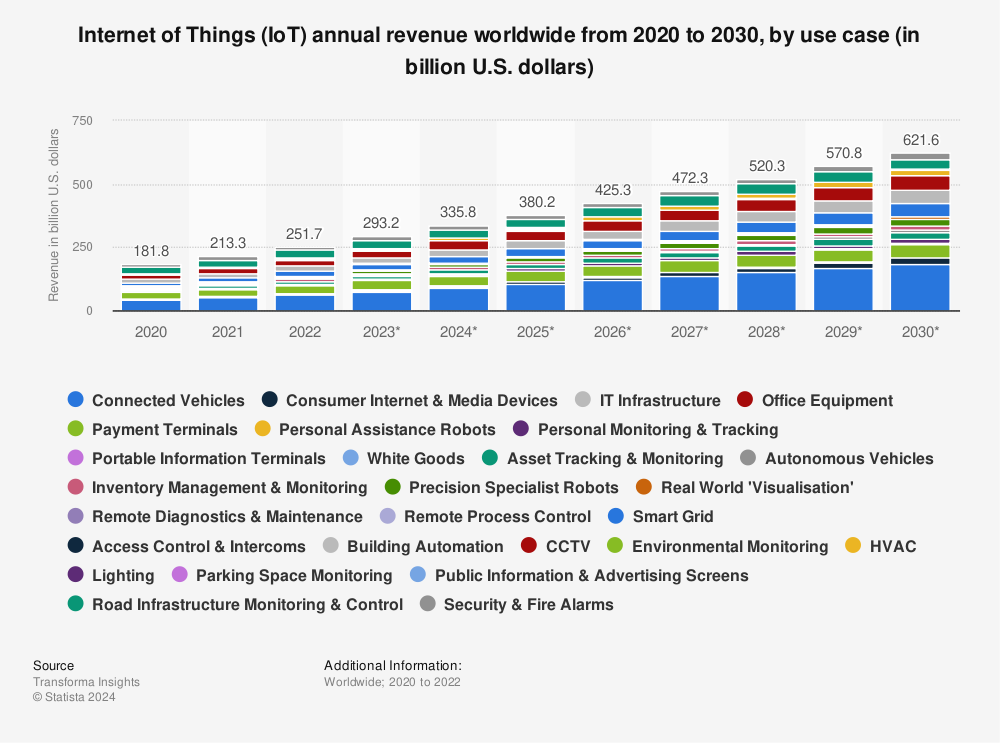
Find more statistics at Statista
- The global Internet of Things (IoT) in horticulture market size will reach around USD 40.24 billion by 2034.
- Automated irrigation systems, especially smart and drip irrigation methods, reduce water usage by up to 50%.
- IoT-powered horticulture farms report 30–40% higher yields than traditional farms.
- Precision Farming is projected to grow from 3.25 USD Billion in 2024 to 10.48 USD Billion by 2035.
- Precision farming could help feed an additional 2 billion people by 2050.
- Also, as a result of precision farming, a 70% increase 2050 in horticulture production through higher yields and more efficient resource usage is expected.
- According to the World Economic Forum, the global field could bring a drastic increase of 10-15% by 2030, smart farm gas emissions and water use could decline by 15-20% provided 15-25% of a region’s farms start adopting precision horticulture.
- Livestock Monitoring is expected to expand from 2.15 USD Billion in 2024 to 6.81 USD Billion by 2035.
- Furthermore, automation reduces manual labor in horticulture by 25–40%.
- Moreover, these are only ordinary numbers that highlight the economic benefits, but also the proof of how the AI in agriculture will bring global sustainability that significantly impacts the horticulture field.
What Are the Capabilities of an IoT-based Horticulture Automation System?
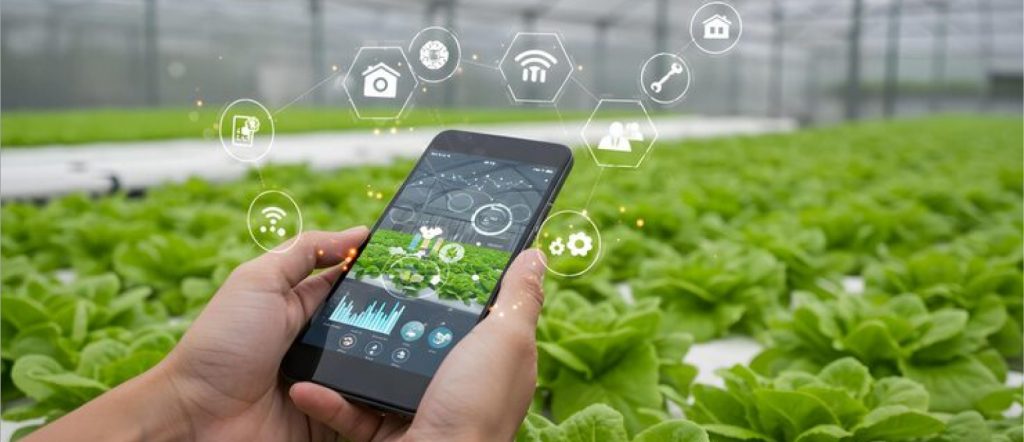
The IoT-based automated horticulture system shows intelligence, efficiency, and greater sustainability to the modern farming sector. By combining some superior sensors, automation, and AI, these systems allow horticulturists to go beyond basic monitoring. Thus, they can deliver proper predictive insights, focus on optimized resource usage, and work with remote accessibility Below, we mention some of the vital and key capabilities that make the IoT solutions much indispensable for smart horticulture operations.
- Automated Irrigation & Fertigation
IoT systems having the potential to automate the irrigation schedules, helps to check the real-time soil moisture data and even guide on the updated weather forecasts. Fertigation, on the other hand, integrates the proper nutrient delivery with ideal irrigation. Thus, the IoT & AI horticulture automation system always ensures the plants receive the right nutrients at the correct time. This eliminates the overall chances of guesswork, prevents issues of overwatering, and promotes healthier crop growth.
- Climate-controlled farming Operations
In case of smart farming, sensors continuously track the right temperature required for farming, humidity, and CO₂ levels inside the planting environment. Moreover, based on this data, an IoT-enabled horticulture automation system automatically regulates the fans, heaters, humidifiers, and ventilation units. These all together ensure a stable microclimate, protect the crops from extreme fluctuations, and improve year-round cultivation.
- Real-time Soil & Crop Monitoring
Soil and crop health needs proper real-time monitoring, which is done using moisture, pH, nutrient, and imaging sensors within an environment. Furthermore, high-resolution cameras and drones can properly assess crop growth and leaf color, and even ensure pest presence. Thus, using an IoT & AI horticulture automation system, horticulturists can receive real-time updates, enabling proactive interventions and even tackling different issues that may prevent superior crop production.
- AI/ML-based Predictive Crop Management
Advanced machine learning models can successfully analyze the correct patterns in handling the crop, soil, and climate data. Thus, they can predict growth stages or check any kind of disease outbreaks. Furthermore, the predictive recommendations guide on proper irrigation, fertigation, or even in ideal harvest planning. This ensures horticulturalists can make better decisions.
- Water, Nutrient, and Energy Optimization
A smart horticulture automation system ensures efficient water, fertilizers, and electricity use by adjusting supply based on real-time needs. Smart pumps, drip irrigation process, and some targeted fertigation reduce the wastage. Energy optimization from the automated climate controls further lowers the operational costs, enhancing greater sustainability while maintaining ideal plant growth conditions.
- Remote Monitoring & Control via Mobile/Web
Farmers can also get the chance to access different cropping operations remotely using the latest mobile applications or web dashboards. Thus, it helps to easily access the environmental data and control the settings, allowing farmers to adjust the irrigation, lighting, or ventilation from anywhere. This, as a result, helps to improve operational efficiency.
- Alerts for Disease, Stress, or Equipment Failure
IoT platforms send instant alerts when different issues occur. The issues include rising humidity, abnormal leaf conditions, dropping soil moisture, or even equipment malfunctions. By having the alerts, horticulturists can act quickly and prevent the chances of losses from plant diseases, stress, or system breakdowns. This proactive approach minimizes overall risks and reduces downtime.
- Data-driven Yield Improvement
The IoT-based automated horticulture system supports superior historical and real-time data. These are collected over multiple seasons and even help to identify crop performance. Also, different insights into the proper soil health, water use, and climate response inform some long-term strategies. With this knowledge, horticulturists can easily optimize practices year after year, achieving higher yields and ensuring improved profitability.
Top Five Smart IoT Horticulture Automation Systems Available in the Market
When it comes to the smart IoT horticulture automation system, there are a few options available in the market. However, these systems help in smart environmental monitoring, automated watering, AI-powered analytics, drone integration for proper field surveying, and comprehensive farm management. However, these systems using the data can properly optimize resource use, enhance crop management, and even improve overall farm efficiency.
- AeroFarms: Smart Environmental Control for Indoor Farming
AeroFarms uses a highly automated and superior IoT-powered system for its farming operations. The IoT-based automated horticulture system measures environmental factors by deploying some of the latest sensors. These include different factors, for example, humidity, temperature, superior light intensity, and even CO2 concentration. Thus, the system helps create optimal crop and planting conditions.
- Netafim’s IoT-Enabled Irrigation Control
Netafim is another smart automation system that integrates IoT technology into irrigation systems. Thus, the system helps to optimize the right amount of water use in modern farms. These smart irrigation solutions use modern sensors to monitor the accurate soil moisture levels in real time. This is a cloud based platform that processes the vast amount of data and adjusts irrigation schedules automatically.
- CropX – Precision Soil Intelligence
CropX specializes in proper soil data analytics. The sensors present within this automation system can capture accurate soil moisture and temperature, providing some real-time irrigation recommendations. Also, the cloud platform integrates the ideal weather data and crop models, helping to reduce water use while boosting yield.
- Arable Mark 3 – All-in-One Climate & Crop Sensor
Arable Mark 3 – an ideal example of IoT & AI horticulture automation system. The system offers climate, crop, and soil intelligence in a three-in-one device. It measures rainfall, accurate temperature for growing crops, sunlight, and even proper plant growth. Moreover, when paired with superior AI-driven analytics, it helps to predict yield and optimize harvest timing.
- AgriWebb – Connected Farm Management Platform
AgriWebb is a superior farm management platform integrating the latest IoT devices with ideal farm records. Horticulturists using this automation system can easily track the soil conditions, livestock, and even the ideal crop health in real-time. Its mobile-first design also simplifies the task scheduling, guides with ideal reporting, and ensures superior productivity analysis.
The Benefits of an IoT Horticulture Automation System to Farmers and Stakeholders
An IoT-enabled horticulture automation system transforms modern practices by automating and enhancing different environmental conditions. The system helps with real-time data collection and makes genuine decisions through interconnected sensors. Moreover, the IoT technology ensures optimal environments, which yield better results. Below, we explore the key benefits in more detail.
1. Increased Efficiency in Resource Management
Efficient resource management helps with modern cropping operations. So, integrating IoT & AI horticulture automation system ensures that proper resources such as water, energy, and nutrients are used optimally. This leads to significant economic savings and greater sustainability.
Water management is one of the vital aspects of smart farming. However, excessive water usage leads to some unnecessary expenses and waste. Here, the smart IoT-enabled automated irrigation systems allow farmers to precisely control watering using the real-time soil moisture sensor data.
Furthermore, authentic temperature regulation and lighting in farming help to consume significant energy. However, an IoT-based automated horticulture system helps to optimize and monitor both.
2. Improved Crop Yield and Quality
Maintaining some optimal environmental conditions within a smart farm is very necessary to maximize the yield and ensure the modern plant health. So, when the horticulturists opt for continuous monitoring of multiple variables, they create an ideal crop-growing environment.
Similarly, a modern and effective IoT-enabled horticulture automation system easily tracks and controls the overall temperature, humidity, soil moisture, light intensity, and even the CO2 levels. These variable factors also help to make an informed decision based on a specific humidity range and temperature to germinate and thrive.
3. Remote Monitoring and Control
With the advent of smart IoT Development, horticulture farm owners and managers no longer need to be physically present on-site to monitor different farming conditions or adjust automated systems. Through the latest IoT technology, real-time data can be accessed remotely. This provides significant convenience, especially for large-scale cropping operations.
Also, the remote monitoring capability of adopting the IoT in agriculture allows the farmers to track their farming operations easily from any location. Using different devices such as smartphones, tablets, or computers, helps to check live data such as temperature, soil moisture, and humidity, anytime and anywhere.
4. Cost-Effectiveness and Reduced Labor
One of the most significant advantages of implementing an IoT & AI horticulture automation system is reduced labor costs. By automating many routine tasks involved in crop management, such as irrigation and environmental control, farmers can reduce the need for manual labor, saving time and cost.
IoT systems eliminate the overall need for some frequent manual interventions. For example, these sensors automatically monitor the accurate soil moisture and smartly activate irrigation systems when required. Similarly, temperature and humidity sensors work on the climate control systems without additional human intervention.
5. Data-Driven Decision Making
Vast data collection is an essential aspect of an IoT-based automated horticulture system. This data is considered invaluable for making some genuine and informed decisions. This can improve different horticulture operations and ensure greater productivity of smart farming.
However, continuous data collection allows the smart farming operators to gain deeper insights into how crops respond to different environmental conditions. Thus, they can make some genuine improvements.
IoT systems can easily perform proper predictive analytics using accurate data collected from different sensors. This allows farmers to anticipate and prevent some potential issues before they arise. Also, horticulturists can make more informed decisions.
Hardware & Sensors Required for IoT-based Horticulture Automation System
An IoT enabled horticulture automation system using various sensors’ power can collect data on different environmental conditions, plant growth, and even focus on other variables. These sensors can be installed throughout the smart farms to monitor different zones in real time. Below, we are mentioning a detailed breakdown of some hardware and sensors that horticulturists can use:
- Sensors
Sensors are one of the primary devices in smart farming methods using IoT. While working with an IoT & AI horticulture automation system, there are various types of sensors available, including wireless and wired ones. Some options are very expensive and highly specialized gadgets. Yet, many other options are available, which are much more affordable and successfully help monitor multiple zones simultaneously.
- Base Unit
A base unit is another advanced device that collects the right amount of data from the sensors and then sends it to the cloud or a local server. It may connect to different sensors via the Internet, radio transmitters, or even transfer data through wired connections.
- Cloud or Local Server
The smart sensors also collect the data typically sent to the cloud or a local server for superior and smart processing. It also helps with storage and even proper analysis. Then, the IoT operators access this correct information, which helps to derive better insights from it, and ultimately improve some smart environmental conditions.
- Power Supply:
IoT & AI horticulture automation system provide great power to the microcontroller and sensors, often through a 5V adapter or solar panel.
- Relays:
Electronic switches allow the microcontroller to control some high-power devices like the water pumps or fans.
- Actuators:
Devices that perform some superior actions based on the correct sensor input. These are DC water pumps, ventilation fans, and even motorized shades.
- Connectivity Module:
A connectivity module works using Wi-Fi or GSM modems. These are used to send data to the cloud and receive proper and real-time commands.
| Category | Components | Examples / Details |
|---|---|---|
| Microcontrollers & Boards | Development boards for control and processing | Arduino Mega/Uno, ESP32/ESP8266, Raspberry Pi, STM32 |
| Communication Modules | Wireless/wired data transfer modules | Wi-Fi (ESP8266/ESP32), ZigBee (XBee), LoRa/LoRaWAN, GSM/GPRS (SIM800/900), Ethernet |
| Relay & Actuators | Devices for switching/control of operations | Relay modules (1/4/8 channel), Motor drivers, Solenoid valves, Pumps, Heaters, LED lights, Exhaust fans |
| Power Supply & Backup | Powering and backup systems | Solar panels, Solar charge controllers, 12V/24V batteries, DC-DC converters, UPS |
| Data Processing | Edge computing & cloud platforms | Raspberry Pi (local gateway), AWS IoT Core, Azure IoT Hub, Google IoT |
| Soil & Water Sensors | Monitoring soil and water conditions | Capacitive soil moisture sensor, Soil temperature sensor, Soil pH & EC sensors, Water flow & water level sensors |
| Environmental Sensors | Monitoring ambient greenhouse/farm conditions | DHT11/DHT22/SHT31 (temp & humidity), Light intensity (BH1750/LDR), UV/PAR sensors, CO₂ (MH-Z19B), Gas sensors (MQ-135) |
| Plant Health Sensors | Monitoring crop health | Camera modules (leaf disease detection), NDVI/Multispectral sensors |
| Automation Sensors | Supporting automation & control | Ultrasonic (HC-SR04), PIR motion sensors, IR sensors for security & detection |
Read More: IoT Based Irrigation System
How Much Does it Cost to Develop an IoT Horticulture Automation System?
The cost to develop an IoT enabled horticulture automation system varies widely. But, usually the price ranges from tens to hundreds of thousands of dollars based on the needs, complexities, what technicalities a smart farm wants to install and others.
There are also some key factors that an IoT development company always keeps in mind while giving the estimate. The factors include – the type of sensors, the level of automation (from basic monitoring to AI-powered control), the overall farm size, IoT sensor and seamless platform integration, and the development team’s expertise and location.
Small-Scale IoT Horticulture Automation System
- Custom IoT Platform with Sensors & Automation
- Developing a tailored platform for data collection, processing, and visualization: $10,000 – $50,000, depending on complexity.
- Incorporating IoT-enabled automated irrigation or fertilization: $1,000 – $10,000.
- Total estimated upfront cost for a small farm setup: $11,000 – $60,000.
- Additional annual costs:
- Cloud hosting: $50 – $200/month
- Device maintenance and calibration: $500 – $2,000/year
Enterprise-Scale IoT Horticulture Automation System
- Building an advanced IoT ecosystem—featuring cloud backend, mobile/web interfaces, AI analytics, and integration with enterprise workflows: $80,000 – $200,000+.
- Specifically:
- Mid-level IoT applications (cloud storage, remote control, analytics): $80,000 – $200,000
- Enterprise-level solutions (AI-driven automation, advanced security, big data): $200,000 – $500,000+
- Hardware infrastructure costs: starting around $30,000 for sensors, actuators, gateways, controllers.
- Connectivity and ongoing support costs:
- Connectivity: $4–$12 per device annually
- Maintenance, security, and analytics support: additional $10,000+/year
Why Cost Varies
- Scope & Features: Basic monitoring vs. AI-driven automation, data visualizations, and mobile access.
- Scale: Single greenhouses vs. multi-site horticulture operations.
- Tech Stack & Compliance: Choice of cloud platforms, proprietary protocols, or industry-specific regulations.
- Connectivity Options: LoRaWAN, NB-IoT, cellular, or hybrid networks—may influence hardware and recurring costs.
Tech Stack for an IoT-Based Automated Horticulture System
1) Edge Hardware (Sensors & Actuators)
- Sensors: soil moisture (capacitive/FDR/TEROS), soil temp, EC, pH, ambient temp/RH (SHT3x), light/PPFD (Apogee/TSL2561), CO₂ (NDIR), water flow, tank level (ultrasonic/pressure), leaf wetness.
- Actuators: solenoid valves, variable-speed pumps, misting/foggers, fertigation dosing pumps, fans, vents, shade screens, heaters, grow lights (PWM/0–10V/DMX).
- I/O & Power: relay boards, MOSFET drivers, RS-485 (Modbus), 12/24 V DC supplies, battery + solar (MPPT), IP65/67 enclosures.
2) Edge Compute & Firmware
- MCUs/Modules: ESP32/ESP32-S3, STM32, Arduino MKR; for heavier logic: Raspberry Pi 4/5, Jetson Nano/Orin for vision/edge-ML.
- RTOS & SDKs: FreeRTOS, Zephyr RTOS, ESP-IDF, PlatformIO, Arduino Core, MicroPython (quick prototyping).
- Device features: OTA updates, local buffering, watchdogs, secure boot, hardware crypto (ATECC608/TPM).
3) Field Networking & Connectivity
- Short-range: Zigbee, BLE 5, Thread; wired Modbus-RTU (RS-485) for robust greenhouse runs.
- Long-range/Backhaul: LoRa/LoRaWAN, Wi-Fi, Ethernet, NB-IoT/LTE-M, 4G/5G.
- Gateways: Multi-radio gateway (LoRaWAN + Wi-Fi/LTE) or Pi-based gateway with PoE.
4) Messaging & Protocols
- Protocols: MQTT (primary), MQTT-SN (sensors), CoAP (constrained), HTTP/REST, WebSockets; industrial: Modbus, OPC UA.
- Brokers: Eclipse Mosquitto (lightweight), EMQX/HiveMQ (clustered, enterprise).
5) Cloud / Device Management
- AWS: IoT Core, Greengrass (edge), IoT Device Management, IoT Rules → Lambda/Kinesis; data → Timestream/InfluxDB/S3.
- Azure: IoT Hub, IoT Edge, DPS, Stream Analytics; data → Time Series Insights, Cosmos DB, Data Explorer.
6) Data & Storage
- Time-series: InfluxDB, TimescaleDB, AWS Timestream, Azure Data Explorer.
- Hot store / caching: Redis.
- Long-term/Lake: S3/ADLS + Parquet.
- Metadata & configs: PostgreSQL/MongoDB.
7) Stream & Rules Processing
- Pipelines: Kafka/Kinesis/Event Hubs.
- Rules/low-code: Node-RED, AWS IoT Rules, Azure Stream Analytics (e.g., “if soil moisture < X & no rain forecast → irrigate zone A 10 min”).
8) Analytics, AI/ML & Optimization
- Tooling: Python, Pandas, scikit-learn, TensorFlow/PyTorch.
- Use cases: evapotranspiration (ET₀) models, irrigation scheduling, fertigation optimization, anomaly/leak detection, yield forecasting.
- MLOps: SageMaker / Azure ML / MLflow; model registry + CI/CD.
- Edge ML: TensorFlow Lite / TinyML for on-device decisions.
9) Applications (Web, Mobile, Dashboards)
- Web: React/Next.js, Vue/Nuxt; APIs with Node.js (NestJS), Python (FastAPI), Go (Fiber).
- Mobile: React Native or Flutter (offline sync for field use).
- Dashboards & BI: Grafana, Superset, Power BI; map layers (Mapbox/Leaflet).
- APIs: REST/GraphQL; auth via OAuth2/OIDC (Keycloak/Cognito/Entra ID).
10) Security & Compliance
- TLS 1.2+ end-to-end, per-device X.509 certs, mutual TLS for MQTT, JWT for APIs.
- Secure boot, encrypted flash, HSM/secure elements, role-based access, audit logs.
- Network: VPC/VNet isolation, private brokers, VPN/IPSec, firewall rules.
- Standards/best practices: IEC 62443 (industrial), OTA signing, SBOMs.
Barriers to IoT Horticulture Automation System Adoption
There are some barriers companies face during the IoT-enabled horticulture automation system. And, these barriers are divided into different parts – economical, technical, human, and organizational barriers. So, let’s have a look at the details.
High Upfront Costs:
The initial purchase and installation of IoT devices are high. Mostly for the sensors, actuators, and some related infrastructure can be a significant financial burden. And, this especially turns out to be a big thing for small-scale farmers.
Ongoing Costs:
Beyond the initial investment, there are also some recurring costs. These include – maintenance, software subscriptions, and even for real-time data management. An IoT development company can provide a proper idea on this.
Lack of Expertise:
To run the smart farms, farmers often lack the technical knowledge and skills to operate, manage, and maintain complex IoT systems.
Insufficient Training and Support:
There are farmers who often hesitate to adopt some new technologies without proper education and ongoing support. The reason behind this is they hesitate to become familiar with the IoT & AI horticulture automation system.
Low Awareness:
There are many farmers who are unaware of the capabilities and benefits of IoT in horticulture automation. So, they fail to integrate those on time. Lack of trust and thinking about the complexities prevent them from making the decision.
How Can A3logics Assist You In Developing a Customized IoT Horticulture Automation System?
When developing an IoT-based automated horticulture system, at A3logics, we always understand that every cropping farm or horticulture business has some unique needs. Our approach is to build a customized and superior IoT enabled horticulture automation system end-to-end that is highly tailored, ensuring an excellent and superior technology properly aligns seamlessly and meets the needs of crop modern requirements and business goals. Here we follow a few steps to bring a customized option.
- Requirement Analysis & Consulting – We at first begin the process by analyzing your farm’s size, types of crops, and the climate challenges and resources constraints necessary for your business. Our experts with skills and expertise can design a roadmap specifically that is tailored to your goals.
- Hardware & Sensor Integration – A3Logics integrates the latest and innovative IoT sensors (like soil moisture, temperature, and nutrient sensors) to gather some live data from the field.
- IoT Platform Development – Our team then develops some scalable cloud platforms and mobile/web dashboards. These are ideal for the proper real-time monitoring, remote control, and even for some genuine and automated decision-making.
- AI/ML Integration – Our team enables some smart features using modern predictive analytics. These include proper disease detection, yield forecasting, and even the correct resource optimization.
- Security & Compliance – We implement some robust data security protocols and also ensure superior compliance besides meeting global standards to protect sensitive farm data.
- Testing & Deployment – We provide latest prototypes and even the pilot testing procedure to minimize the overall risks before full-scale deployment.
A3Logics being the best IoT development company is fully committed to provide smart, superior, reliable, sustainable, and ROI-focused solutions that always help you to perform smart performance and empower you in modern farming.