Changing environmental conditions and increasing population growth are raising serious concerns about limited natural resources and their immense exploitation. Water scarcity is one of the top challenges we are facing today. Extensive and non-sustainable usage by industrial and agricultural practices is reducing the availability of consumable water. As per reports, approximately 700 million people worldwide do not have access to clean drinking water.
We have been using water harvesting and conservation technologies for a long ago. Various systems have been explored throughout time for storing water. For instance, filtration is one of the most prominent technologies that helps to remove pollution and purify water for personal use and production purposes.
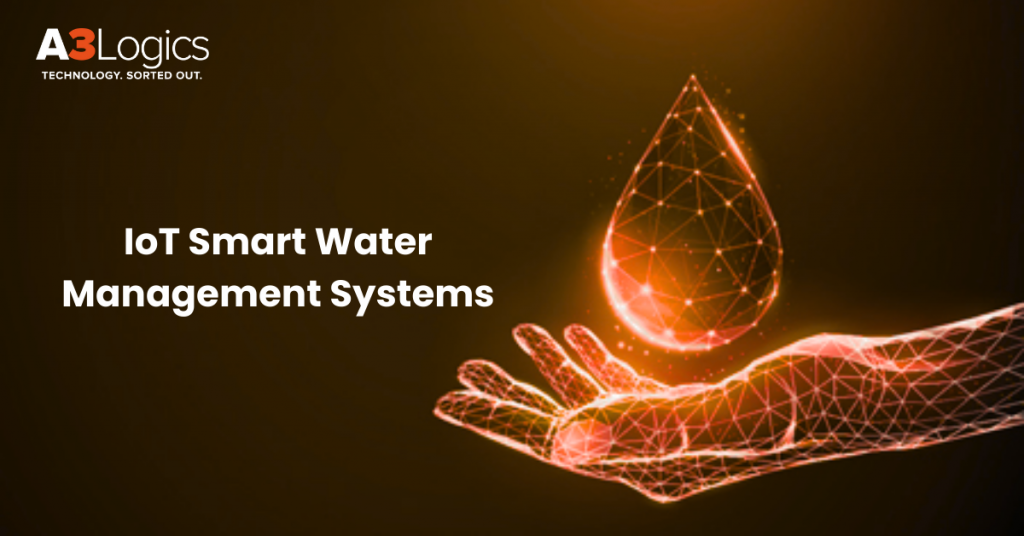
An IoT smart water management system is one step ahead in using technology for sustainable practices. Connected devices collect and analyse data, providing valuable insights about the reduced availability of the vital resource. It informs policymakers, communities, and relevant authorities about the urgency of sustainable water management initiatives. For instance, smart meters supervise the water supply networks, and automated tools control their distribution, ensuring equal access to this scarce resource.
According to statistics, there will be a gap of 40% between the demand and supply for fresh and drinkable water by 2030. In order to fulfill this gap in the coming years, desalination technology will be increasingly used to make seawater suitable for drinking or industrial use. Additionally, investment in other IoT water management solutions is increasing, as illustrated by Dubai Electricity and Water Authority’s initiatives of installing over 2 million smart meters for maintaining efficient water supply and usage in the city.
What is an IoT-Based Smart Water Management System?
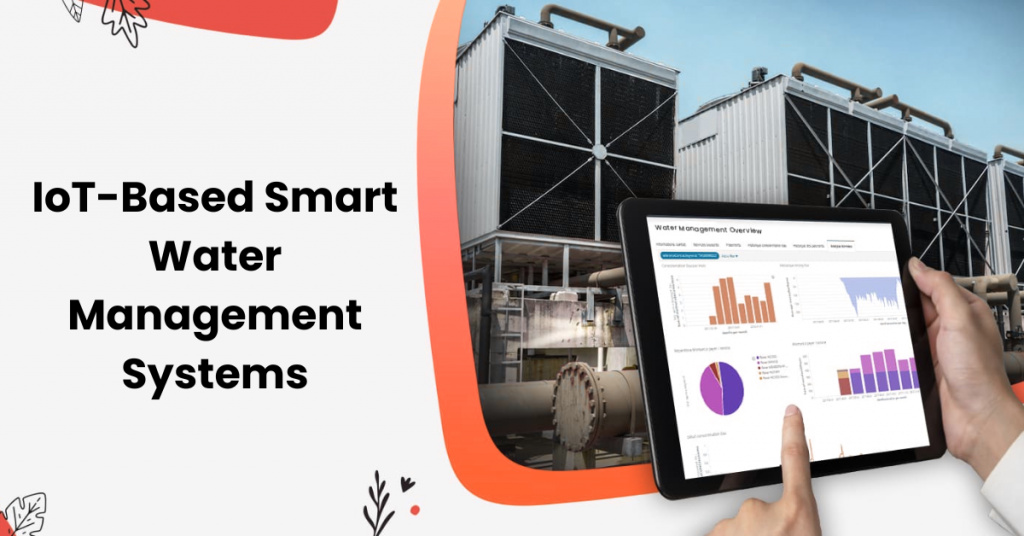
Intelligent water management using IoT leverages various modern tools and devices to monitor water supply, control its exploitation, and automate multiple aqua operations.
For this, suppliers attach IoT equipment to the pipes and pumps to keep track of the water distribution process. It transforms the traditional supply network into an advanced and data-driven system, and facilitates sustainable activities to save water for future generations.
Key Components
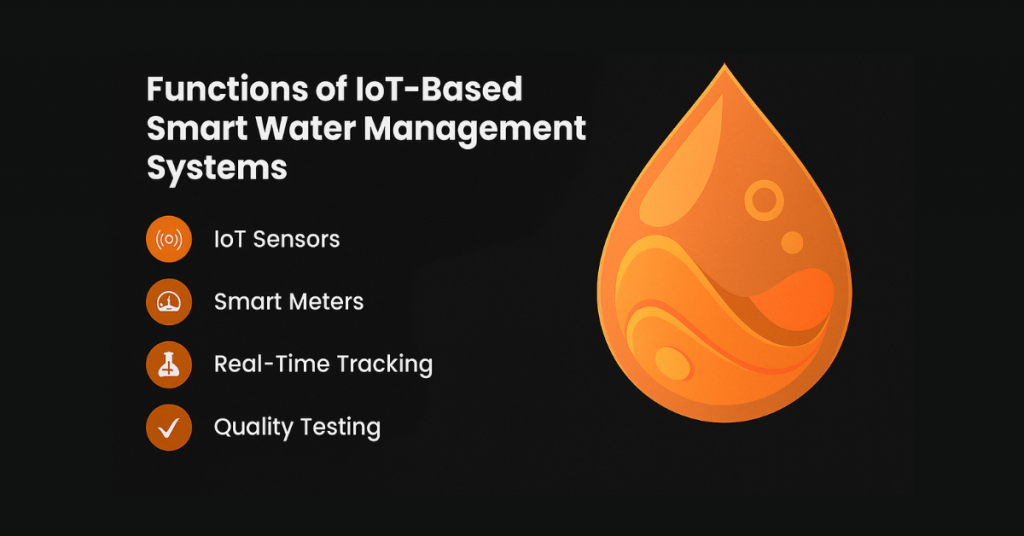
There is a number of connected equipment in the IoT smart water management system, which contribute to regulating the consumption and deterring practices. Key components include:
1. IoT sensors:
These are used to keep the record of water flow, temperature, level, and quality. IoT sensors regularly share data with the server on everyday water usage and help in monitoring the tank level.
2. Smart water meters:
They empower authorities to measure water consumption and detect wastage in a timely manner. Meters are installed at different spots in the network, conduct regular calculations, and help in identifying routine usage patterns, which facilitates the forecast of future consumption.
3. Automated valves & controllers:
Automated valves & controllers make sure that pipes and pumps are supplying the pre-defined volume of water and turn off the system once the desired amount has been discharged. Also, the wastage of water due to overflow and leakage can be monitored to make improvements.
4. Cloud platforms & mobile apps:
Cloud platforms and mobile apps make it extremely easy to monitor the distribution process and thus enhance the effectiveness of smart water management using IoT. At the same time, the overall system can be controlled using the device irrespective of the location.
Core Working Mechanism
IoT smart water management systems work in the process: Data collection → Transmission → Analysis → Action. Several connected devices, such as meters, sensors, and mobile apps, gather data on daily water usage, its quality, and the distribution network.
Then the collected data is transmitted for analysis purposes and determines the routine consumption patterns. Lastly, the insights derived from the previous step assist in planning sustainable practices and taking action against water wastage.
Core Functionalities of Smart Water Management Systems
1. Consumption Monitoring
Accurate water usage tracking at the household, industrial, or city levels
Smart water monitoring system development in the production process provides real-time, accurate tracking of water usage at the household, industrial, or city level. Multiple sensors and meters are attached to the pipes and pumps in different places, which daily measure the quantity supplied and identify water consumption patterns in specific areas.
Daily reports & long-term consumption forecasting.
Regular reporting of water supply and usage data helps in calculating the demand in different periods. It guides managers, policymakers, and authorities while forecasting future water requirements. Water industries use this data to set boundaries on their usage as the usable resource is available in only in limited quantity.
2. IoT Sensors Integration
Live monitoring of tanks, reservoirs, and pipelines.
Integrating IoT sensors in a water management system helps in real-time monitoring of the different points of the supply network, such as tank level, pressure, or flow in pipelines, and temperature. This live supervision empowers the managers to timely locate any issues related to water dispensing and maintain an optimum distribution routine.
Detect leaks, pressure drops, and irregular flow.
Smart sensors daily collect and share data on water circulation around the city or a specific location. It enables the managers to timely identify supply system failure, such as broken pipeline or inconsistent flow, creating water shortage or overflow.
3. Smart Water Meters
Real-time consumption insights.
Smart meters track the daily water usage in a particular community or area, enabling management authorities to measure the consumption rate and locate wastage. They can analyse the real-time insights derived from IoT meters to find accurate water usage patterns and anticipate future requirements accordingly.
Enables transparent billing and usage control.
Smart meters keep track of the daily water usage in homes, businesses, and for agricultural activities. Water companies use this technology for charging fairly on the basis of the amount used and maintain a clear billing mechanism. It not only facilitates fair charges according to the quantity of water used, but also assists in controlling consumption levels by setting an optimum limit on the supply.
4. Real-Time Tracking and Alerts
Detect contamination, leaks, or anomalies instantly.
Smart water monitoring system development enables real-time checking of the water quality and instant detection of chemical residue in it. IoT sensors are attached to the pipeline at different locations, which regularly monitor water quality, temperature, and flow. It facilitates water boards to detect chemical leakages in any channel and prevent contamination.
Automatic notifications for maintenance teams.
After detecting any risk of chemical leakage in the water supply channels, IoT sensors send instant alerts to the relevant authorities automatically and notify them about the situation. It also helps the maintenance team to calculate the quantity of chemical leaked in the water and take proper action accordingly.
5. Water Quality Testing
Monitoring parameters: pH, chlorine, turbidity, bacteria levels.
Water testing meters and sensors are employed to check on the quality of water and measure the amount of different aspects in it, such as pH level, chlorine, turbidity, and bacteria prevalence. The data on these factors helps the water boards to obtain water quality readings and use them for further filtration processes.
Ensuring compliance with health & safety standards.
Water companies need to be faithful as they provide the basic and regularly consumed product. Thus, they must ensure that the supplied water is up to the mark of safe and clean water parameters. By implementing a quality test and proper purification process, they can verify that water is consumable and does not contain hazardous substances affecting population health. It also helps them to comply with the regulatory standards related to health and safety.
Key Benefits of IoT-Powered Smart Water Management
IoT smart water management systems offer digital solutions to the water boards in keeping up their distribution operations professionally. The following are the major benefits of using IoT in water management:
1. Transparency and Visibility
Distribution systems involve various parties and network points, including water source, administration and circulation offices, filtration plants, regulatory organization for utility and clean energy, water buyer, and users. The key function of the IoT water management solutions is to run this entire circle with complete transparency.
Every partner in the distribution system is clearly accountable for specific activities and is continuously monitored through sensors and meters. It brings visibility to each spot in the network and its performance.
2. Timely Action
Smart water management using IoT enables a clear framework of different functions involved in the supply chain, and each partner is assigned specific responsibilities. Sensors and water testing devices continuously keep an eye on the quality, flow, temperature, and pressure of the water.
The regular data on the water supply helps the partners to trace even a small irregularity, potential leakage, or damage at any spot, allowing for faster response to the situation.
3. Optimal Resource Utilization
IoT-powered devices such as sensors, meters, automatic valves, and quality testing tools boost optimal resource utilization by providing real-time data on the wastage, leakage, or contamination. IoT product development services authorise the administrator department of water supply companies to run sustainable programs and water saving initiatives, such as smarter irrigation, distribution, and recycling.
4. Cost Savings
● Reduced operational expenses:
Smart water monitoring system development reduces the operational cost significantly by enabling automated and real-time visibility of different channels in the supply chain. It empowers the authorities to keep an eye on the entire system without employing professionals for this task.
IoT devices can supervise with minimal human intervention and provide live information on the whole distribution process. Hence, an IoT water management solution saves considerable operational costs spent on hiring, training, and maintaining human resources.
● Lower water wastage through predictive maintenance:
IoT smart water management systems collect data on a daily basis to check the performance of distribution channels, including pipelines, pumps, tanks, and treatment plants. These updates allow the water boards or companies to establish a maintenance cycle over a period of time and run predictive analysis over it to identify specific patterns. It helps them to forecast upkeep requirements in advance and arrange for the timely repair of the distribution channel.
Proper functioning of network routes reduces water wastage in the form of leakages, overflow, or excessive usage, and ensures optimal utilization of scarce resources.

Industry Applications & Use Cases
IoT smart water management systems are transforming the water projects and industry with their automation and high performance. Industries employed in the water distribution business are shifting towards applying innovative solutions in their daily functions, which can enable them to make informed decisions on the basis of data analytics.
The key application of IoT in water management is discussed below:
> Smart Cities: Leak detection, automated billing, and efficient supply
Authorities such as Municipal Corporations or Urban Local Bodies look after the proper distribution of consumable water all over the city. They are generally responsible for ensuring equal access to water for residential or industrial use, monitoring the supply network, calculating the consumption rate, and maintaining the pipeline system. By installing IoT smart water management systems, city admins can gather real-time data on water supply chain performance and automate the billing process as per usage.
For instance, placing sensors over the different spots in the network can track water movement and instantly detect anomalies like leakage or irregular flow. In the same way, smart meters collect the data on consumption rate and assist the respective authorities to charge prices accordingly, as well as forecast the future demand for water supply.
> Agriculture: Precision irrigation, soil moisture monitoring.
Demand for crop production and agricultural activities is peaking due to increasing food consumption by the growing population. Traditional farming and irrigation methods are no longer viable for handling the current pressure of meal production, while complying with food safety standards. Increasing water requirement in the agricultural sector is one of the main reasons for raising concern around water scarcity.
The IoT in agriculture helps farmers to enhance farming practices, such as precise irrigation, and monitor soil moisture. Smart meters enable water boards to consistently supply water to the agricultural area, ensure optimal utilization, and turn off the valve after discharging the required amount, eliminating wastage or overflow of the limited resource.
> Industrial Usage: Process water optimization, safety compliance
Water is one of the main energy sources for several industrial operations, and thus, regulatory compliance is strict for water management in this sector. Entrepreneurs need to ensure proper wastewater management and comply with safety standards to safeguard the surrounding environment and minimize water pollution.
IoT water quality monitoring devices are placed at the filtration process to detect chemical residue in the water, before discharging it into nearby rivers or other sources. Thus, IoT technology helps businesses to achieve their sustainability targets and improve their regulatory compliance on the local and global levels.
> Residential: Smart home water meters and conservation tools
A smart home meter allows the residents to track their water consumption in household chores and thus explore as well as adopt sustainable practices. Also, IoT-enabled conversation tools help in reusing the grey water collected from the AC and water purifier for several tasks like cleaning and watering the plants.
> Utilities & Municipalities: Infrastructure efficiency and reduced losses
Municipal corporations discharge a large amount of water daily through their supply network, which is spread across a wide area of a city. Manually supervising the multiple channels and maintaining an efficient water supply is a very costly and time-consuming process. Inability to detect leakages and pipe bursts due to high flow pressure contributes to severe losses in terms of wastage of natural resources as well as high repair costs.
IoT smart water management systems facilitate the installation of sensors and meters in the pipeline network at different locations. It helps the water companies to actively monitor the water pressure in real time and identify excessive usage, potentially indicating leakages at any spot. At the same time, they also assist in repairing the broken part and prevent further wastage.
- Also Read: IoT Polyhouse Monitoring System for Agriculture: Benefits, Use Cases & Implementation Guide
Future Trends in IoT Water Management
Latest innovations like AI, ML, cloud-based platforms, and many others are improving the future of IoT development services. The following are the key future trends that will complement IoT water management solutions, bringing sustainability and cost effectiveness:
1. AI & Machine Learning for predictive analytics
Integrating AI and machine learning in IoT water quality monitoring, authorities will be able to detect anomalies and chances of contamination based on past leakage data, even before the actual leak happens at any point.
Artificial intelligence empowered sensors will employ predictive analytics to identify the risk of supply failure, blockage, water shortage, or pipe bursts, allowing for the readying of a plan for proactive actions and preventing a crisis in real time.
2. Blockchain for transparent billing & usage records
IoT sensors are capable of identifying the irregularities and anomalies in water flow by actively monitoring leakages and faults in the pipeline. High water usage generates high bills, even if it is due to failure of the supply network.
Companies can track and store all the water supply and usage records in immutable ledgers offered by blockchain technology. These saved data work as a source of evidence in calculating charges per usage, making billing transparent and enhancing customer satisfaction.
3. Integration with renewable energy & sustainability initiatives
Water industries, as well as common people, are becoming more conscious of carbon footprint and the environmental impacts of using limited resources for energy generation. Thus, companies are increasingly aligning towards sustainable means and eco-friendly infrastructures.
IoT smart water management systems are increasingly incorporating renewable energy sources such as solar or wind energy for their core operations. These power channels are available in unlimited quantities and also generate minimal pollution in the entire water management process. Other than the energy sources, companies are adopting sustainable practices, such as the recycling process for grey water to reuse it.
4. Expansion of cloud-based monitoring platforms
Cloud-based platforms are expanding new opportunities for real-time data collection and storage, predictive analytics, and tracking diverse locations. These feature, when embedded in IoT water quality monitoring and management, allows the water boards to supervise their various supply points and network with the help of a centralised interface.
These cloud systems can scale efficiently with the growing data needs and enhance overall water distribution efficiency.
Challenges in Implementation
Every new technology comes with several benefits as well as associated hardships, which you need to cross to fully leverage its capabilities. Likewise, implementing IoT smart water management systems contains the following challenges:
> Initial infrastructure cost
The larger the water supply network, the higher the infrastructure cost. Installing IoT water management solutions is an expensive investment, specifically for new companies or in countries with low budgets. To get the proper advantage of IoT in water management, multiple devices such as sensors, meters, automatic valves, and many more are installed at various locations, which is a costly deployment. These infrastructure expenses create a barrier to smart water monitoring system development throughout the supply network.
Data security & privacy concerns
IoT devices collect and share a massive amount of data on a daily basis, which contains personal information related to consumers as well. These data are vulnerable to cyber attacks or unauthorised access, creating security and privacy concerns. Other than this, failure in maintaining transparency in the billing system can lead to theft of water without permission or paying for the same, generating losses for the water agencies.
Connectivity challenges in rural or remote areas
Many rural and remote areas still lack proper internet connectivity and infrastructure, making it hard to install IoT in water management. Poor networks can not collect real-time data on water supply and also struggle to share it with the centralised office, hindering the supply process.
Also, the local technicians in rural or backward areas do not possess the required skills to work with smart devices, which prevents them from harnessing the full potential of IoT devices.
Need for government regulations & standards
Government regulations and standards work as guidelines for maintaining smart water management using IoT. Whether it is about data security and privacy threats or integrating the intelligent devices with existing infrastructure, these rules mandate the quality of operations and proper alignment with critical measures.
Thus, any company or board seeking to implement IoT in a water management system must align its framework with the government’s benchmark.
Conclusion
Increasing population and limited availability demand for an efficient water management system, which can ensure proper access for every user without wasting the scarce resource. Contemporary solutions can no longer handle the modern issues and require automation in the water distribution networks. An IoT smart water management system serves well in this regard and provides innovative tools for efficiently supplying water across different locations within a city.
Sensors, meters, and other devices not only monitor the water movement but also facilitate the timely detection of failures. These real-time insights enable the water companies or supply partners to take proper action within time, preventing any major crisis and excessive loss of water due to leakages or pipe bursts. Additionally, the increasing risk of contamination is also tracked by the IoT devices, alarming the relevant authorities to carry out purification and treatment of chemical residues.
In short, IoT water management solutions are not a luxury but crucial for current water bodies to provide consumable water and maintain the availability for a long time. Modern technologies such as AI and ML are further amplifying the IoT smart water management systems by offering predictive maintenance and a proactive approach.