
The construction industry is one of the sectors that calls for huge amounts of investment. Whether it is materials or labour or even getting approvals. And a mistake in construction estimation can cause a huge amount of loss.
Artificial intelligence applications in construction project management grow every year. From data management with AI to the remote monitoring of the projects, AI in construction industry is implemented for a wide variety of purposes in construction.
More recently, AI technologies entered the fray in pre-construction estimating solutions-construction estimating software development is helping contractors estimate project costs prior to bidding. In this article, we discuss how AI in construction estimating amplifies estimating efficiency to help you submit winning bids.
What is AI in Construction Estimating?
Generally, the AI in construction estimation is an operation of the artificial intelligence algorithms that analyze the project plans, the data of the past costs, the market trends, and other variables to create accurate cost estimates in less time and with fewer mistakes. In fact, it is doing much more than just traditional spreadsheets and manual takeoffs because it even finds the data patterns and keeps upgrading its project model.
Implying AI in construction estimating is not an overhaul of the entire workflow, but rather a combination of technologies like BIM (Building Information Modeling), CAD (Computer-Aided Design), and project management systems. For instance, a BIM model may be the source of quantities, dimensions, and object metadata; the AI engine then consumes this data and, along with cost history and market intelligence, generates estimates. This union signifies that estimators have access to a more comprehensive set of data and can utilize analytics on the work that was done manually before.
Key Technologies Used
i. Computer Vision
AI systems review blueprints or BIM models to locate the elements (walls, windows, doors) and figure out the quantities by themselves, thus they completely do away with manual measuring.
ii. Natural Language Processing (NLP)
Systems that process requirements, contracts, and other documents aim to understand them clearly. They ensure the materials, standards, and components in the estimate are correct. This reduces mistakes caused by specification and cost assumption mismatches.
iii. Machine Learning
ML models use past project data, cost data, risk events, and design changes as inputs. They then predict costs and identify risk factors. Over time, they also improve estimate accuracy.
Market Statistics, Insights & Emerging Trends
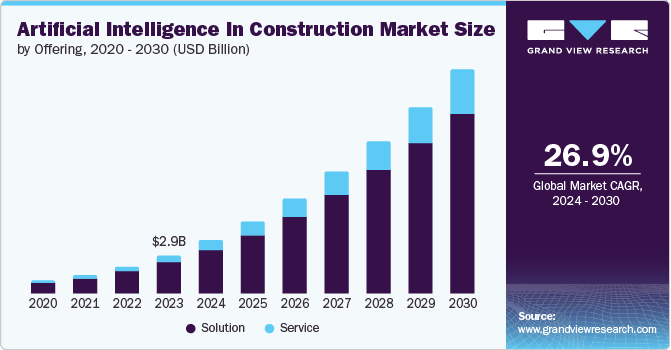
The use AI in construction estimating has sped up as firms try to gain a competitive advantage in bidding and project delivery. Industry reports reveal that AI instruments are employed to lessen mistakes, shorten bid cycles and productivity of estimators. For example, a research finding emphasizes that AI automated quantity takeoff devices can cut labour in takeoff processes by nearly 30%.
The construction companies are struggling with labour shortages, increasing costs and decreasing margins. The AI estimating tools which are used in the construction industry can do away with these problems to a certain extent by the means of automation of routine tasks and provision of data-driven insights instead of relying on expert judgment alone.
Common Challenges in Traditional Construction Estimating
1. Human Errors in Measurements
Misinterpretations of scales, symbols, and failure to update changes in design due to variations in the process are common mistakes by estimators when they manually measure areas or volumes from drawings. These errors most of the time have a deep root in the whole process and budget of the project.
2. Outdated or Incomplete Data
Many estimators rely on cost databases that are outdated or contain old pricing information. They often fail to update estimates when designs or materials change, which creates budget variability.
3. Lack of Real-time Collaboration
Estimators, architects, and contractors are using different tools and data sets which separate them. This separation results in the wrong incidences of assumptions, not seeing the changes, and slow communication of the changes.
4. Inefficient Takeoff Processes
The manual quantity takeoffs are sometimes very long to such an extent that they need hours or days to be completed. Due to manual steps, there is a big chance of missed components, and double counting, especially in complicated or large projects.
5. Unforeseen Site Conditions and Cost Fluctuations
Traditional estimates might not be sufficient to provide for real-world limitations like difficulties in accessing a construction site, bad weather, or sudden material price increases—these are the main reasons for change orders and cost overruns.
How AI Transforms Construction Estimating
AI simplifies estimation and changes the entire workflow. It supports digital takeoffs and predictive analysis. It also powers collaboration platforms across teams. In each case, AI automates tasks once done manually. These tasks were slow and prone to errors. To understand this shift, let’s explore how estimating workflows are changing today.
1. Automated Digital Takeoffs
Manual inspection of 2D drawings or 3D BIM models that is the basis for most of the traditional work of estimators can be very time-consuming. AI does away with all that by using computer vision and pattern recognition algorithms to examine digital blueprints and determine automatically the project elements such as walls, doors, windows, or structural components.
Example: AI tools such as Autodesk’s Takeoff module and Togal.AI are capable of scanning the entire set of the drawings, understanding the geometry, and creating the exact quantity takeoffs within a short period of time. In this way, digital construction estimating reduces the chances for mistakes to be minimized and the recording of all the design changes is ensured without any human intervention.
2. Intelligent Specification Matching
Construction estimating covers not only the number of required items but also their correct specifications and materials. Moreover, Natural Language Processing (NLP) greatly improves this process by helping teams interpret and validate these details accurately.
Such AI systems can decipher complicated technical manuals, project specifications, and vendor catalogues and moreover, they can do the automatic linking of these documents with the corresponding cost items in your database.
Example: In case a specification talks about “fire-rated gypsum board” or “Grade 60 reinforcing steel,” AI would be able to provide a direct connection of these requirements with the most suitable cost codes and pricing. In short, this removes the problem of the mismatch between materials in design documents and those in the estimate.
This level of automation ensures more than numerical accuracy. It also improves the quality and compliance of cost elements. Moreover, it strengthens the correctness of each estimate component.
3. Real-Time Cost Estimation and Updates
Construction designs change very often—minor changes in the drawings might have significant cost implications. Large-scale, up-to-date, and quick AI-driven construction analytics is the answer to this where a design change or a modification in the quantity triggers a recalculation of costs without any delay.
Once estimators update the drawing or receive the revised BIM file, AI systems immediately begin their analysis. Moreover, they calculate the delta (difference) and determine how it affects the estimate.
Example: If the steel quantity is raised by 10% in the newest series of drawings, the construction cost estimation using AI changes material costs, labor, and overhead in a matter of seconds. It means that the estimators are free to instantly figure out the budget influence and timelines reforecast.
4. Data-Driven Decision
Using AI makes project historical data that were once sitting idle into valuable insights. By using machine learning algorithms, it correlates past instances of project costs, durations, risky events, and market situations to detect recurring themes and forecast eventualities.
Example (SharpeSoft): AI-driven construction analytics can figure out early on that there will be budget overruns based on the first project metrics or they can pinpoint underestimated scopes by comparing them with previous projects of the same kind.
The move from estimation done by intuition to precision backed by data is what helps construction firms to stay competitive and make good profits even in unstable markets.
5. Collaborative Cloud Platforms
AI-powered construction estimating solutions run on the cloud, allowing estimators, architects, project managers, and subcontractors to work on the same live dataset.
In fact, decision-makers are always on the latest and most exact data with coordination getting better and project turnaround time shortening as a result of every revision or adjustment being tracked in real time.

Benefits of AI in Construction Estimating
AI in construction estimating generates real, strategic benefits that can be seen in a company’s precision, its performance, and its ability to compete.
1. Higher Accuracy
AI in construction estimating helps to reduce human mistakes that occur when extracting quantities, matching specifications, and updating prices. For example, Buildxact has shown that systems powered by automation can raise the accuracy of estimates by 25% and thus, the rework and variation of budgets get reduced.
2. Faster Bidding Process
The work that used to require a full week is now completed in only a few hours. The utilization of AI in automating the performance of repetitive duties has made it possible for estimators to dispatch concurrently numerous tenders in less time, thereby gaining an indispensable competitive advantage in the tendering process.
3. Cost Savings
Accurate forecasting of needs and prompt detection of errors areas from which benefits flow, namely through a reduced number of change orders and quicker stages of procurement. Projects become less prone to cost overruns, and there is better budget control.
4. Enhanced Collaboration
With cloud-hosted platforms, team members in different locations can edit an estimate together and view updates in real time. This setup eliminates version conflicts and keeps decision-making fully aligned.
5. Predictive Insights
AI-powered predictive analytics help estimators spot cost factors and risks that might arise later in the planning stage. As a result – they get the power to make decisions based on solid data and to take steps to prevent or lessen the impact of upcoming challenges.
6. Competitive Advantage
Businesses that are equipped with AI-driven construction analytics can submit bids that are – quicker, precise, and empirically confirmed by data. Through this, they increase both their success rates and the trust that their clients have in them.
Real-World Use Cases
AI is quickly gaining rapid popularity, especially in the construction industry. Some of the top use cases of AI in construction estimating include automation, predictive maintenance, resource optimization and others. Let’s understand them in depth.
1. Automated Quantity Takeoff from Blueprints
An AI-powered estimating tool uses computer vision and pattern recognition techniques to comprehend 2D drawings, PDF blueprints, and 3D BIM models. Such AI Takeoff Software can automatically locate constructions elements – walls, beams, fixtures, or flooring, and convert them into accurate, detailed material and quantity lists.
By performing these operations, the system eliminates the requirement of manual measurement, a task that is not only time-consuming, but also prone to errors. Automated quantity takeoff tools let estimators finish a week’s manual work in a few hours, and they ensure every line item is captured accurately.
2. Predictive Cost Estimation
Machine learning models use the past and local data of the projects to come up with forward-looking cost insights. To enhance budget accuracy, contractors incorporate Construction forecasting software to model future project costs, analyze budget trends, and improve financial planning throughout the project lifecycle. The algorithms take into consideration a large number of factors—material prices, labour costs, project size, location, and seasonality—and based on this information, they can provide a quite accurate forecast of the expenses to come.
AI achieves this by detecting trends and relationships in huge datasets, which, in turn, allows estimators to spot even the slightest cost fluctuations at the earliest stage, thus they can plan their finances better and submit attractive bids. In addition, the system can compare the current project’s costs with similar projects, giving teams a reality check and turning the bid into a data-driven decision rather than a speculative one.
3. Change Detection and Version Control
Construction projects change frequently, and sometimes the design updates are so minor that teams hardly notice them; however, these small changes can significantly impact the estimates. AI in construction estimating facilitates this process by automating change detection, which means it checks out the latest versions of the drawings and compares them with the former ones. Smart construction estimating solutions identify differences such as new structural components, changed room sizes, or updated material specifications, and the software quickly highlights these changes for the estimator.
Because the software removes manual comparison work and reduces the risk of missing design changes, AI records, reviews, and links all updates to new cost estimates. As a result, the entire workflow—from execution to control—stays transparent and fully version-controlled.
4. Resource Optimization
AI-powered simulation tools help planners visualize different resource scenarios. Moreover, they allow teams to choose the lowest-cost plan. These tools consider workforce size, machinery use, work hours, and supplier schedules. As a result, AI creates an efficient plan that boosts productivity and reduces costs.
For example, AI might advocate for the redistribution of the workforce across different shifts or suggest purchasing materials from another vendor to lower the cost without cutting down on the time required for completion. A data-supported approach helps construction companies optimize resource use, reduce worker and machine idle time, and ultimately increase project profitability.
Implementation Strategy: How to Adopt AI in Estimating
Implementing AI in construction estimating is a technical challenge and requires the cooperation of the whole company. Following a planned construction estimating software development approach ensures a smooth transition and the return of the investment will be at its highest level.
Step 1: Identify Estimation Pain Points of Present
First, you must examine your workflow to identify the errors, bottlenecks, and inefficiencies that frustrate you. For example, if you perform manual takeoffs and your data sources aren’t connected, these areas will create the most errors, bottlenecks, and inefficiencies.
Step 2: Decide on the Right AI Tool or Partner
First of all, the vendor you choose should provide the following:
- Easy integration with BIM, CAD, and ERP systems
- Construction AI solutions with good customer references
- Strong support for training and customization
By partnering with veteran construction software development services providers like A3Logics, you get not only the easy implementation of the software but also the scalability, and upgrading of the model continuously.
Step 3: Prepare and Integrate Data
AI cannot work without high-quality data. Therefore, ensure your cost databases stay updated and accurate. Moreover, convert old drawings into digital formats. Finally, normalize your data to give AI the best environment for deep learning.
Step 4: Work Only on Pilot Projects
They can deploy AI for a small project first. Moreover, they can measure the benefits carefully. Then, they can gather user feedback before expanding the strategy.
Step 5: Train Teams and Expand Your Business
By the intervention of the necessary training, estimators and project managers will be able to interpret AI outputs effectively. Experts should also enhance AI by providing it with new data to ensure that a system is constantly optimized.
Challenges and Considerations
Though the advantages are quite large, the use of AI in construction estimating also raises some practical and cultural issues.
i. Data Quality & Standardization
Artificial Intelligence in construction accuracy depends a lot on that the data are consistent and well-structured. Messy drawings, changing units, or partial cost histories – can mislead the whole process.
Solution: Standardize the formats of the files – for example – IFC for BIM and keep the cost data in one place for the AI to learn from.
ii. Initial Software Investment & Training
The setting of AI tools is not for free, there are subscription and learning costs. Small businesses may consider the initial investment as a barrier.
Solution: Use modular AI platforms that can grow with your requirements, and get vendor-supported onboarding for a smooth start.
iii. Resistance to Change among Traditional Estimators
Experienced estimators may be more comfortable with manual methods and perceive AI as a factor that will eliminate their jobs rather than a tool to support them.
Solution: Explain AI as a helper—expertise will be strengthened, not taken over. Demonstrate early successes to get the commitment.
iv. Human Oversight is Still Necessary
Not even the smartest AI can fully substitute professional judgment. Human intervention is always necessary to confirm assumptions, evaluate risks, and interpret results.
Solution: Let AI do the automation and analysis work, but keep the expert estimators as decision-makers.
How A3Logics Can Help?
A3Logics provides construction and real estate companies with full-cycle AI software development and integration services. Our construction software development services are specifically designed according to the unique operational requirements of these companies. By using our profound knowledge in the creation of custom AI models – we develop smart systems for understanding blueprints, predicting costs, and managing workflows automatically.
Ranging from AI consulting services to construction estimating software development services our offerings are compatible with the tools that are currently in use. Therefore facilitating quicker decision-making, higher precision in project estimation, and better resource utilization. By having A3Logics as your AI development company, you will be able to use AI to save time, lower the chances of something going wrong – and be one step ahead of your competitors in a fast-changing market.

Conclusion
Spreadsheets, manual takeoffs, and subjective judgments have been the main tools of the construction industry’s pre-construction and estimating phases for a long time. With AI, contractors and estimators now have tools that provide greater accuracy, productivity, and a deeper understanding of strategy. AI through the integration of computer vision, NLP and machine learning with BIM, CAD and project data is enabling companies to make their bids faster, more accurate and with greater assurance.
Nevertheless, the achievement is dependent on data preparation, tool selection, change management and human supervision. A company that uses AI in its early stage of estimating is setting itself up for a competitive advantage, easier performance, and higher profits in a time and accuracy-sensitive industry. Get in touch with the leading custom software development company like A3Logics to get started on your construction estimating software development.