Stock prediction can be a complex task, as markets change rapidly and are influenced by numerous factors. With AI in stock trading, traders can use advanced algorithms to study a vast amount of market data. Capitalizing on this technology, there are dedicated AI stock prediction software that let users input parameters. Based on the data that the user inputs, the software identifies patterns and delivers fast and accurate stock forecasts.
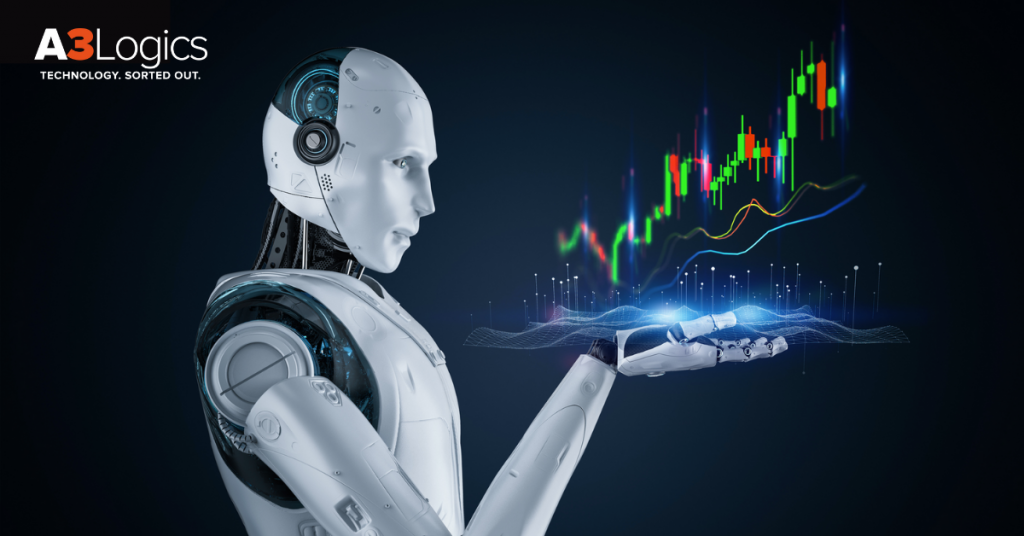
The rise of AI stock prediction software can be ascertained by the fact that such platforms generated $2.15 billion globally in 2023. The market is expected to grow at a rate of 10.24% by 2033. This blog provides valuable insights into AI stock prediction.
How Does AI Predict Stock Movements?
First, let’s explore how AI in stock trading software predicts stock movements. In this section, we’ll go through the basics first, and then we’ll have a look at how AI stock prediction tools take in account historical data to predict outcomes –
> Explanation of AI technology in finance
AI stock prediction depends on deep learning and machine learning to study large datasets. These models analyze factors like volatility, price trends, and market correlations to help investors make the right trading decisions. Technologies such as NLP (Natural Language Processing) monitor market sentiment by understanding earnings reports, financial news, and social media posts in depth. Stock prediction AI tools use these insights to enable AI-powered stock analysis.
> Use of historical data, technical indicators, and market sentiment
To predict future trends, AI stock prediction software uses historical market data to train models based on past price behaviors. The data includes daily stock prices; trading volumes, and economic details like interest rates and other aspects. It also uses technical indicators such as RSI, moving averages, and MACD to spot price trends. Based on these investors can make decisions and further, make profits instead of losses.
> Role of predictive models and algorithmic trading
Stock prediction AI tools come with predictive models, including neural networks to forecast stock price changes. By combining algorithmic trading strategies with AI-powered stock analysis, artificial intelligence stock market prediction systems can make data-driven decisions. Thanks to data driven decisions, these platforms can reduce emotional bias.
Key Features of AI Stock Prediction Software
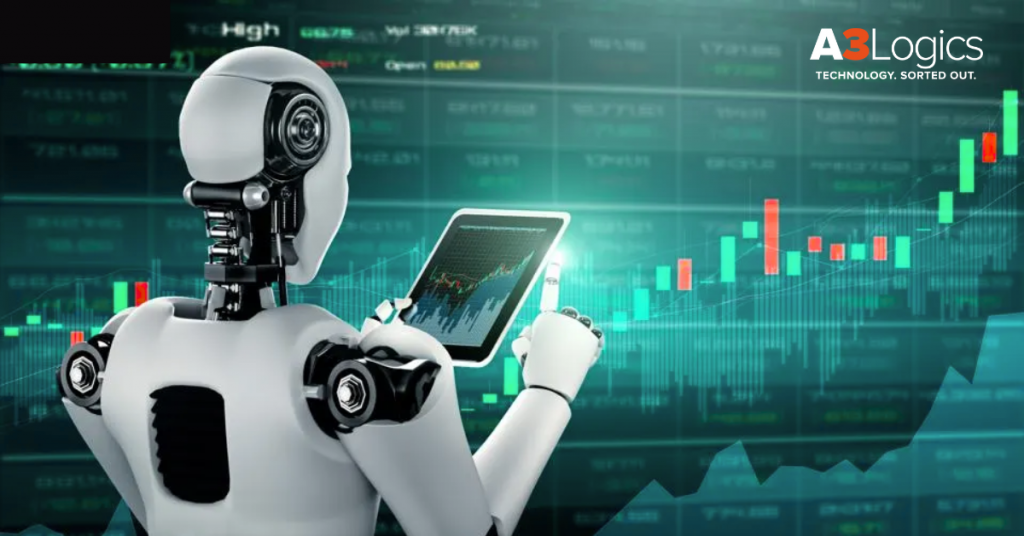
So far, we have established the valuable contribution of AI trading software for stock price prediction. In this section – we’ll discuss some of the key features of an AI stock prediction software that make investing easier and effective for all levels of traders, whether entry level traders or those who have spent a considerable amount of time in the stock market –
1. Real-Time Data Processing
AI systems are known to process vast amounts of data. The same goes for AI stock prediction software; It doesn’t just process vast amounts of data but also provides users with access to real-time data from a variety sources, ensuring they receive the most up-to-date market information for timely and informed decision-making. Artificial intelligence stock prediction systems are also quick, implying that these systems process vast information quickly, assisting users in making informed decisions.
2. Machine Learning Algorithms
Stock prediction AI tools use ML for trading that analyzes vast amounts of data to predict market trends and movements. It does this since algorithms continuously learn from new data. At each instance, they improve their predictive accuracy. Based on this data, investors can make strategic decisions and reduce risks by aligning trades with accurate, data-driven market forecasts.
It’s the machine learning algorithms in the software that can help identify complex relationships within the data, something that the humans can’t identify.
3. Sentiment Analysis
A lot of times, the performance of stocks or other trading aspects is ascertained by the market sentiment i.e. the attitude of investors towards a particular asset or market. In AI-powered stock analysis, the sentiment analysis feature allows AI tools to combine emotional trends with market data.
This further helps track whether the market mood towards a stock or the market in general is positive, negative, or neutral. Natural Language Processing (NLP) and machine learning are used to gauge sentiments. AI can help reflect the collective psychology of market participants.
4. Customizable Models
AI stock prediction tools keep aside the one-size-fits-all approach. With AI stock prediction tools, users can customize their software according to market conditions. They can take into account decisive factors such as investment goals, risk tolerance, and specific investment requirements and adjust the software functionality.
Let’s see how customizable models can help investors with the help of an example – If an investor wants to invest long-term, they can customize the software to focus more on stable stocks rather than focusing on short term market.
5. Risk Management
AI trading software can help investors identify stocks with high risks by analyzing past market behavior using advanced ML algorithms. Based on this data, they can save themselves from making poor investments. With an AI algorithm for stock trading, investors can monitor markets in real-time and detect emerging risks. They can predict potential losses and read the market mood.
The Role of Data Quality in AI Stock Predictions
The quality of data that is fed and that is used to train the stock prediction AI tools is critical to their performance. Here, we’ll discuss how clean data and how poor quality data can impact decision making. Where relevant data helps prevent investors from misleading patterns; poor quality data in AI-based stock predicting systems can lead to wrong or biased predictions –
> Importance of clean, relevant, and updated data
For AI stock prediction software to deliver reliable results, the data it receives must be clean, relevant, and up-to-date. To start with, clean data ensures the AI does not pick up false or misleading patterns. In addition, storing only relevant information such as trading volumes, economic reports, and other critical market indicators keeps the analysis focused on meaningful factors.
> How poor-quality data affects prediction accuracy
If the data quality is poor – If it includes outdated prices, missing values, irrelevant indicators, or wrong figures, then AI stock prediction can give inaccurate results. It won’t just end here; poor data can create biases or false confidence in forecasts as well.
Is AI Stock Prediction Software Suitable for Beginners?
An AI based stock prediction software can be a great tool for those who have just started trading and here are some reasons why –
Ease of use for non-technical users
For non-technical users who have no programming knowledge, or those who are new to stock trading, an AI stock prediction software offers intuitive and no-code interfaces and a lot of scope to learn. To begin with, there are several AI stock prediction platforms that help interpret complex concepts into user-friendly insights. For non technical users, this can be a great start, where they can get a feel of the market and understand terminologies that are commonly used in stock trading predictions.
The software also feature assistants and a drag-and-drop setup to make the tool easier to use. With the help of AI stock predictions, users no longer have to deal with underlying algorithms that are mostly a part of the backend.
Availability of pre-built models and educational resources
Many AI stock prediction platforms have ready-made models that make it simple for beginners to test strateges. Since these platforms are traned on large historical datsets, they also offer practice environments to test strategies with past data, and learning resources to understand AI-based trading. Similarly, these platforms also feature built-in guidance and learning resources, allowing users to grasp trading tactics using a variety of AI tools.
Users can make use of tutorials where they can first get a grasp of concepts. They can then conduct trade offs in a simulated rading environment.
Types of Investors Who Can Benefit
As we said, AI trading software that utilize AI algorithms can benefit traders of al levels. Let’s have a look at who can benefit from these tools –
1. Active Traders
The active trader’s goal is to make informed financial predictions based on short-term price movements. Based on these predictions, they perform trades in response to short-term and very short-term price fluctuations. An AI-powered stock analysis tool can help them save time that they would otherwise spend on spotting patterns. With the help of one such tool, they can comprehensively conduct trend analysis in real-time.
2. Long-Term Investors
Long-term investors aim to hold investment vehicles such as stocks, derivatives, or bonds for several years. For them, a company’s potential is more important than just short term fluctuations. With Artificial Intelligence in stock market prediction, investors can predict future movements, explore historical trends, and create data-backed strategies that align with long-term portfolio goals. AI algorithms in stock trading used by AI stock prediction software automatically filter out any short-term noise as such long-term investors can match their choices with personal goals but wisely.
3. Quantitative Investors
Quantitative investors can reduce their reliance on manual analysis and use AI stock prediction software to process massive datasets. AI identifies the market indicators, and hidden patterns in historical prices. Quantitative investors can use this ability to refine their trading strategies. They can combine statistical methods with AI-driven insights and spot profitable opportunities well in advance.
4. Beginners
Beginners are new investors who can maximize the benefits of AI stock prediction software by leveraging it to gain market insights and simplify predictions. Using one such platform, they can understand the stock market and use AI-generated recommendations to understand market trends and make more informed decisions.
The Future of AI in Stock Price Predictions
1. Advancements in predictive accuracy
AI for stock price prediction is becoming accurate with the use of reinforcement learning, deep learning, and natural language processing (NLP). These help models analyze complex datasets, capturing those market patterns and shifts that are otherwise impossible to see through. Through predictive accuracy; investors can make better-informed decisions and reduce risks of losses, even in highly volatile and fast-moving financial markets.
2. Integration with blockchain and other emerging technologies
By incorporating blockchain and AI for stock price prediction, transparency and security can be improved since blockchain can help strengthen trust through real-time updates and immutable audit trails. Another emerging technology is IoT. Devices such as social media tracking tools and sensors can be used to collect real-time data from diverse environments. The live data from these devices can be used to make stock predictions.
3. Potential regulations and ethical considerations
One of the ethical concerns surrounding AI for stock price prediction is how those with wrong intent can manipulate the stock market. Considering that AI systems are capable of executing thousands of trades in milliseconds, dishonest traders can manipulate markets and harm small investors.
Why? By using high-frequency trading. They can fake orders by misleading algorithms about the demand and supply. That’s the reason, as AI models become increasingly sophisticated, questions arise about the data used to train these models. Authorities need to establish regulations to ensure ethical use of AI for stock prediction.
For instance, enforcing stringent data protection protocols, promoting transparency in AI-driven decision-making process, etc.
A3Logics Role in AI Stock Prediction Software Development
Expertise in AI and ML-based financial solutions
A3Logics is a leading AI development company that has expertise in AI and ML-based financial solutions. We are experts in developing intelligent, scalable, and secure AI-based stock prediction software that can help make infomed trade decisons. We can help you implement an automation-enabled secure trade execution system and incorporate real-time market data and trading APIs.
Custom software development for trading platforms
At A3Logics, we help you either develop custom AI trading software from scratch or tweak your current trading software. We have a team of experts who analyze your specific needs; market trends, and regulatory requirements and design AI stock prediction platform that aligns with your investment goals.
Conclusion – AI in Stock Prediction
AI is changing the way people conduct trades. With an AI stock prediction software, investors can easily identify patterns, gauge sentiments, and customize models accurately. They can utilize AI-powered stock analysis to generate profits. And, while all this may sound complex and something that only professionals can do, an AI stock price predicting software helps beginner users grasp the concept of stock trading with the help of reinforced learning models and historical data.
If you are planning to drive a change and develop an AI stock prediction software, you can partner with A3Logics and bring your vision to reality.