The on-demand revolution has transformed entire industries. One of the industries that has performed the best as a result of the shift is food delivery. Individuals are now able to buy their meals in a completely new manner due to services such as GrubHub, Uber Eats, and DoorDash. They can get their food brought directly to their doorstep. But with all that growth, the huge question comes to mind: how much does it cost to build a food-ordering app like GrubHub that allows individuals to purchase food?
This article will examine what impacts the cost to build a food-ordering app like GrubHub, and the features, tech stack, and business models involved. When you complete this blog, you’ll understand a great deal about what it takes to build an app like GrubHub and why it might be a worthwhile investment.
In the past decade, the food delivery industry has expanded significantly. Millions of people currently utilize apps such as GrubHub to obtain food from their favorite restaurants. Food delivery apps are extremely popular nowadays because it’s convenient to browse through lots of local restaurants, order, and have the food delivered within an hour.
The more individuals desire something, the more opportunities entrepreneurs and businesses have to capitalize on it. Establishing a meal delivery application could prove to be very lucrative for new and existing businesses alike. You must have an understanding of how much it would cost to build an app like GrubHub before you begin working on the project.
In this article, we’re going through the most important parts, features, and technologies you should use to build an app like GrubHub. That way, you’ll get a better picture of what to anticipate in terms of technology and cost to build a food-ordering app like GrubHub.
Market Overview & Industry Statistics
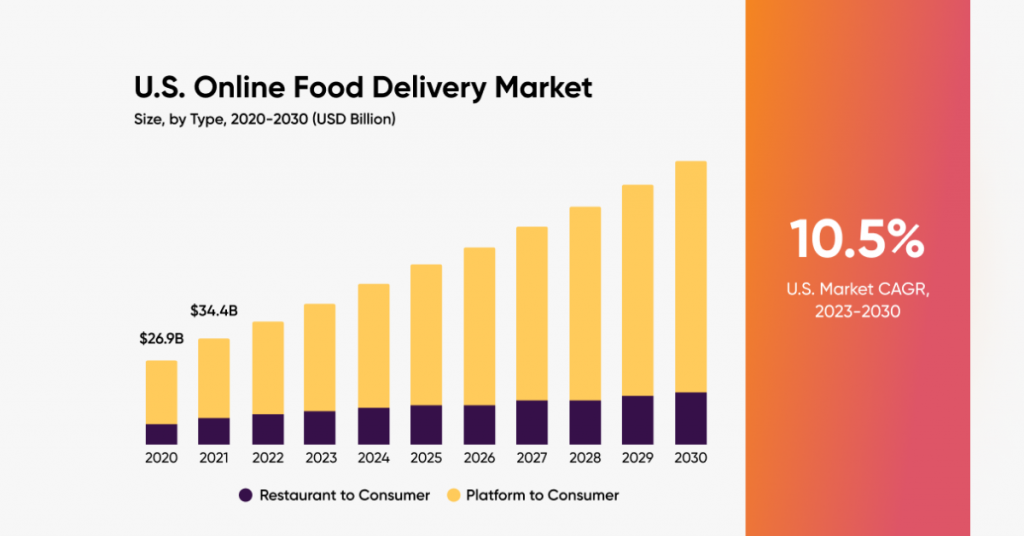
Restaurants also employ their own restaurant apps now because of the benefits of an online meal ordering system. But these days, food delivery services don’t only bring you food. People now order groceries, tea, raw foods, and other kinds of meals. A lot of meal delivery companies are now putting money into cloud kitchens to help them serve food.
Food tech start-ups these days want to make different kinds of apps for services that let people order food on demand. Because of this, there are now a lot more meal delivery applications than there used to be.
> Key Market Trends and Growth Projections
With the demand for food delivery apps on the rise, it is important that we take a look at some of the numbers that influence this demand, here are some of the market growth trends that are influencing the need to build an app like GrubHub.
Mobile App Usage: More consumers are using their smartphones to place food delivery orders. By 2025, mobile apps are expected to account for more than 70% of all food delivery orders.
Increased Consumer Spending: As disposable incomes rise and delivery services improve, consumers are spending more on food delivery apps.
Expansion of Services: Food delivery companies are diversifying their offerings, including partnerships with groceries, alcohol delivery, and even meal kits.
> Competitive Landscape
The food delivery space is highly competitive, with major players like GrubHub, Uber Eats, DoorDash, Postmates, and Deliveroo dominating the market. GrubHub like app development has its own unique offerings, business models, and customer bases.
- GrubHub: Known for its extensive restaurant listings and seamless user interface.
- Uber Eats: A major competitor leveraging Uber’s vast network of drivers and users.
- DoorDash: Focuses on offering delivery for local restaurants and fast food chains.
- Postmates: Provides a broader delivery service that includes food, groceries, and alcohol.
The competitive landscape means that to build an app like GrubHub requires innovative features, smooth user experiences, and robust business strategies to stand out.
What is GrubHub?
The GrubHub platform is a well-established food delivery service that connects users with eateries in their immediate vicinity. With the help of the GrubHub app, residents of the United States are able to place orders for meals online and have it delivered to their homes. During the year 2004, Michael Evans and Matt Maloney established the business in the city of Chicago, Illinois. By now, GrubHub has expanded to more than 4,000 cities across the United States, making it one of the most successful food delivery programs in the country.
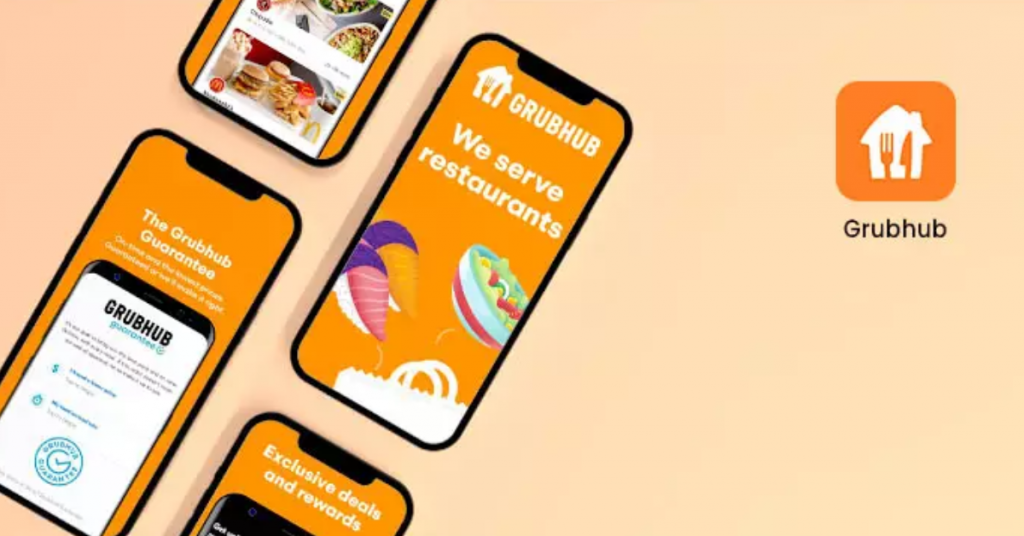
It is especially in the United States that GrubHub has established itself as the most important participant in the market for meal delivery. Users are given the ability to peruse the menus of restaurants, place orders, and make arrangements for delivery or pickup.
> Company Background and History
GrubHub started as a simple online platform for ordering food. It quickly expanded by acquiring smaller competitors and integrating more restaurants into its ecosystem. Today, GrubHub offers services in hundreds of cities and boasts millions of active users.
> Target Audience and User Base
GrubHub caters to urban dwellers, busy professionals, families, and anyone who desires the convenience of food delivery. The app is particularly popular in cities where time is of the essence, and traditional dining options may not be feasible.
> App’s Role in Revolutionizing Food Delivery
GrubHub’s success lies in its ability to bring together various stakeholders—users, restaurants, and delivery drivers—into a single ecosystem. The app has revolutionized how consumers approach dining, making food delivery accessible at the touch of a button.
GrubHub’s Business Model
The cost to build a food-ordering app like GrubHub is deeply affected by its revenue model. Understanding the revenue model can help you create a similar, profitable platform. Here’s a breakdown of its revenue streams:
Revenue Streams
1. Delivery Fees: GrubHub charges delivery fees to users based on the order size and distance.
2. Commissions from Restaurants: GrubHub takes a commission from restaurants for each order placed through its platform. Typically, this is around 10-30%.
3. Advertising: Restaurants can pay GrubHub for better visibility and to appear at the top of search results.
4. Subscription Services: GrubHub+ is a subscription service that offers benefits like free delivery for a monthly fee.
Partnerships with Restaurants
GrubHub partners with thousands of local restaurants, providing them with a larger customer base. These partnerships often include marketing and analytics services to help restaurants optimize their sales.
How Does the GrubHub App Work?
GrubHub’s app is designed to be user-friendly and seamless. Here’s an overview of how the process works:
> Browse Restaurants
Users can search for restaurants based on location, cuisine type, or specific dishes. The app displays restaurant profiles, menus, and customer reviews.
> Select Food Items and Place Order
Once users find a restaurant they like, they can browse the menu and select items. They then add the items to their cart, specify delivery or pickup, and proceed to checkout.
> Restaurant Receives Order Notification
The restaurant receives an order notification through its partner dashboard, allowing the restaurant to prepare the food and confirm the order.
> Delivery Personnel Assigned
Once the order is confirmed, a delivery driver (or “rider”) is assigned to pick up the food from the restaurant.
> Order Pickup and Delivery
The rider picks up the order and delivers it to the customer’s location.
> Payment & Feedback
Users can pay through various payment options such as credit cards, debit cards, or digital wallets. After the order is complete, users are encouraged to leave feedback and rate their experience.
Core Features of a Food Delivery App Like GrubHub
One of the most important parts of making a meal delivery app is picking the correct collection of features. To make your app a big hit, you need to think about the correct features. We have included some important characteristics below that can help you make a meal delivery app like GrubHub that works. One more thing that needs to be understood is that the cost to build a food-ordering app like GrubHub can be impacted by the features that are added to the app.
Here’s a detailed look at the key features:
A. User Panel Features
Keep your users engaged by implementing the following features in the user interface of the food delivery app like GrubHub.
- Sign Up/Register: Users can create an account to personalize their experience and save preferences.
- Homepage with Restaurant Listings: The homepage displays a curated list of nearby restaurants.
- Advanced Search & Filters: Filters for cuisine type, price range, ratings, and delivery time help users find the best options.
- Add to Cart: A shopping cart feature allows users to add multiple items from the menu.
- Address Management: Users can store multiple delivery addresses for convenience.
- Multiple Payment Options: Support for credit/debit cards, PayPal, and digital wallets like Apple Pay and Google Pay.
- Order History: Users can view past orders and reorder quickly.
- Offers and Discounts: Special offers and promo codes enhance the user experience.
- Push Notifications: Real-time notifications keep users updated on the status of their orders.
- Real-Time Delivery Tracking: Users can track the status of their order, from preparation to delivery.
B. Restaurant Panel Features
The restaurant panel calls for features that are comprehensive and streamlined. Let’s take a look at some of the features that app developers can inculcate into the restaurant panel while food delivery app.
- Restaurant Dashboard: A comprehensive dashboard for managing orders, menu items, and performance.
- Accept/Decline Orders: Restaurants can accept or reject incoming orders based on their capacity.
- Account & Menu Management: Easy management of menu items, prices, and restaurant information.
- Payment & Transaction History: Restaurants can view earnings, payout schedules, and financial reports.
- Order Notifications: Instant alerts for incoming orders.
- In-App Communication (Chat/Call): Direct communication between the restaurant and the customer.
- Real-Time Order Status: Restaurants can update the status of orders (e.g., preparing, ready for delivery).
- GPS-Based Tracking: Allows restaurants to track the delivery status.
- Google Maps Integration: For accurate location services and route planning.
C. Delivery Personnel (Rider) Panel Features
Let’s take a look at some of the must-have features for the delivery personnel to make it easier for them to access the app.
- Secure Login: Riders log in with secure credentials to access delivery requests.
- View and Accept Delivery Requests: Riders can see available orders and choose which ones to accept.
- Order Pickup and Drop-Off Workflow: Riders follow a clear, step-by-step workflow for picking up and delivering food.
- In-App Communication (Chat/Call): Allows riders to communicate with customers and restaurants for clarifications.
- Payment Status Updates: Riders can track their earnings, including tips and commissions.
- GPS Navigation: GPS functionality for efficient route planning and navigation.
- Delivery History: Riders can view past deliveries and track their earnings.
- Route Optimization via Google Maps: Ensures the most efficient delivery routes.
Advanced Features
Almost all food delivery apps offer similar features, to stand out from the rest it is important to have some unique features that can draw consumers to your app. However, know that these advanced features can deeply impact the cost to build a food-ordering app like GrubHub. To stay competitive in the market, a GrubHub-like app should include some advanced features:
1. Coupons & Vouchers
Special discounts for users to encourage repeat orders or attract new customers. These can be used for specific restaurants or across the platform.
2. Referral Reward System
A referral program incentivizes users to invite friends to the app in exchange for rewards like discounts or free delivery on their next order.
3. Real-Time Analytics Dashboard
A backend dashboard for restaurant owners and delivery managers, offering real-time data on order volumes, delivery times, and customer preferences. This helps businesses make informed decisions.
4. AI-Powered Chatbot Support
To enhance user support, an AI chatbot can assist customers with their queries, guide them through the ordering process, and resolve common issues. This improves efficiency and customer satisfaction.
5. Social Media Integration
Allow users to share their favorite restaurants, meals, or orders on social media platforms like Facebook, Instagram, or Twitter, boosting organic growth and brand awareness.
6. Table Booking for Dine-In Restaurants
For restaurants that offer dine-in services, integrating a table reservation feature would provide a more holistic experience, giving users a one-stop solution for dining needs.
7. “Friends Are Ordering” Feature
This feature allows users to see when their friends are ordering and possibly join them for group orders. This can lead to more orders and a fun social interaction within the app.
Cost Breakdown: How Much Does It Cost to Build a GrubHub-Like App?
Building a food delivery app like GrubHub involves multiple factors that can influence the total development cost to build a food-ordering app like GrubHub. Here’s a breakdown of the different elements that contribute to the overall budget.
1. App Platform (iOS, Android, Web)
Choosing the platforms to build on is one of the first decisions you’ll need to make. Each platform has a different cost to build a food-ordering app like GrubHub:
- Native iOS and Android apps: These apps are developed specifically for each platform using languages like Swift for iOS and Kotlin for Android. Native apps provide the best user experience but come at a higher cost because you need to develop two separate versions.
- Cross-platform development: Using frameworks like React Native or Flutter, you can build a single app that works on both iOS and Android. This can reduce costs but may sacrifice some platform-specific features.
Cost Estimate:
The cost to build a food-ordering app like GrubHub can be made on the basis of the various platforms, it can include native GrubHub like app development or cross platform app development.
- Native apps: $80,000 – $150,000 per platform
- Cross-platform: $60,000 – $120,000
2. UI/UX Design Complexity
A good design is essential for a seamless user experience. The complexity of the design can affect the cost. A simple, minimalist design will cost less, while a more complex, feature-rich design will increase the cost to build a food-ordering app like GrubHub.
Cost Estimate:
- Simple design: $5,000 – $10,000
- Complex design: $15,000 – $30,000
3. Technology Stack (Backend, Frontend, APIs)
The backend and frontend technologies you use will influence the cost. The backend manages the server, database, and logic for the app, while the frontend is what users interact with. Some common stacks include:
- Backend: Node.js, Python (Django), Ruby on Rails
- Frontend: React, Angular, Vue.js
- Database: PostgreSQL, MySQL, MongoDB
- APIs: Google Maps API (for navigation), Stripe API (for payments)
Cost Estimate:
We can assume that the cost to build a food-ordering app like GrubHub can vary on the basis of:
- Backend development: $20,000 – $40,000
- Frontend development: $20,000 – $40,000
- API integrations: $5,000 – $10,000 per integration
4. Core and Advanced Features
The core features (user, restaurant, and rider panels) are a must, but adding advanced features like real-time tracking, AI-powered chatbots, and route optimization can increase development time and cost to build a food-ordering app like GrubHub.
Cost Estimate:
- Core features: $30,000 – $60,000
- Advanced features: $20,000 – $50,000
5. Third-Party Tools & Frameworks
Often, third-party tools are integrated into the app to handle payments, maps, analytics, and messaging. These services can be costly, especially if they require subscriptions or licensing fees.
Cost Estimate:
- Third-party tools: $10,000 – $20,000 annually
6. Development Team Structure (In-house vs Outsourcing)
The choice between hiring an in-house development team or outsourcing to a development company will significantly impact costs. Outsourcing is typically more cost-effective, but in-house teams offer better control over the project.
- In-house team: $100,000 – $250,000 annually for salaries.
- Outsourcing (e.g., A3Logics): $50,000 – $150,000 depending on complexity and location.
Total Estimated Development Cost
- Basic app: $100,000 – $150,000
- Feature-rich app: $250,000 – $500,000
Why Choose A3Logics to Build Your Food-Delivery App?
When it comes to building a food delivery app, selecting the right development partner is crucial. They can help you find the right tools and technologies that are going to work best for your app and provide you with a dedicated team that helps you round the clock.
This is where app development companies like A3Logics come in. Here’s why A3Logics is an excellent choice:
1. Experience in Building Similar Apps
A3Logics has a proven track record of developing food delivery apps and other on-demand service platforms. With deep industry expertise, they know how to tailor the app to suit your business model and target audience.
2. Skilled Development Team
A3Logics employs a skilled team of developers, designers, and project managers who can take your vision and turn it into a fully functional app. From UI/UX design to backend integration, their team is equipped to handle all aspects of development.
3. Customized Solutions Tailored to Your Business
A3Logics understands that every business is unique. They offer customized solutions based on your specific needs, whether that’s building a GrubHub-like app or something more specialized.
4. Post-launch Support & Maintenance
Building an app doesn’t end with launch. A3Logics provides ongoing support and maintenance services, ensuring that your app remains updated, bug-free, and optimized for performance.
For more information on their services, visit A3Logics Food Delivery App Development.
Conclusion – Cost to Build a Food-Ordering App Like GrubHub
If you want to make money by making a food delivery service like GrubHub, you need to plan carefully and know how much the GrubHub app will cost. Every part, from the development platforms to the advanced features, adds to the total GrubHub app cost.
You can make an app that not only satisfies the demands of your consumers but also stands out in a crowded market by thinking about the features that are most important to your business and collaborating with an experienced development team like A3Logics.
In the end, the return on investment (ROI) from starting an app like GrubHub depends on things like how well you get and keep users and how well you can grow. There is a huge chance of success in the meal delivery sector if you do it right.