Blog Purpose
This blog brings to you a detailed overview of what are Managed RPA (Robotic Process Automation) Services and how they work, and also covers aspects like its key components, advantages, challenges, and future trends. It aims at helping businesses understand the way managed RPA stands apart from old-school RPA models, and highlights why its more efficient and cost-effective. Moreover, it also brings into light how A3Logics is a trustworthy and experienced provider of Managed RPA Services, and how it supports companies in various industries in automating their process with modern solutions.
Introduction
While Large Language Models (LLMs) like ChatGPT have brought artificial intelligence into the spotlight, another technology is quietly transforming business operations—Robotic Process Automation (RPA), especially through Managed RPA Services that offer scalable, end-to-end automation solutions.
So, what is robotic process automation technology?
RPA mostly deals with day to day, rule-defined tasks like data entry, order processing, and report creation, to save time and reduce errors. By putting these processes in order, businesses can boost their overall efficiency and allocate precious resources to high-value objectives.
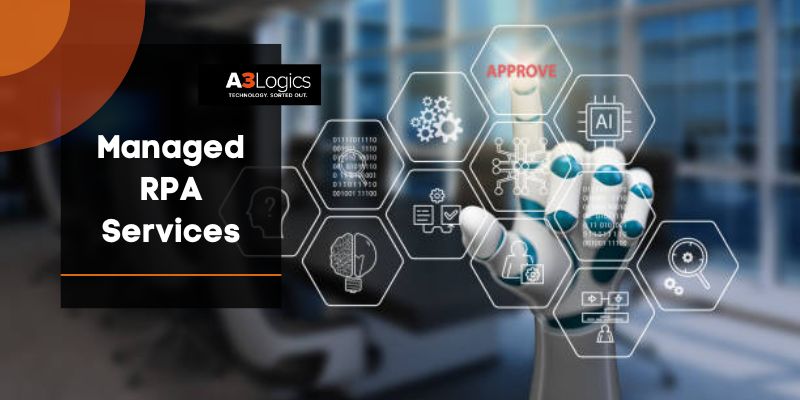
With RPA, also tag along a wide range of challenges related to its implementation. These could be particularly troublesome for companies that don’t have enough technical resources. This is where Managed RPA Services step into the scenario. It covers all the aspects that are related to the automation process, from development to maintenance, enabling businesses to focus on their core objectives while experts handle the automation lifecycle.
Emergence of Managed RPA Services
The primary reason why so many businesses switch to automation is because they want to cut costs and multifold efficiency. In the beginning, RPA calls for in-house resources, which sometimes becomes tricky for small-scale businesses. With time, this is exactly what made Managed RPA Services rise to the occasion.
Thanks to managed services, companies don’t need to stress about laying down plans to leverage automation tools. Everything from planning and development to post-launch support, is handled by a 3rd-party provider. This makes RPA all the more accessible, especially for businesses that can’t seem to have an in-house team to deal with it.
Market Trend of Managed RPA
The RPA managed services market is growing rapidly. Recent industry reports project the global RPA market to reach USD 30 billion by 2030, with managed service systems playing a significant role in driving this growth.
Many companies are shifting from in-house automation to managed services because they offer faster implementation and lower costs. Industries like banking, healthcare, and retail are leading this trend, using managed RPA to streamline back-office operations.
Understanding Managed RPA Services
Managed RPA Services basically mean outsourcing RPA (robotic process automation) to a 3rd party that can handle it from an end-to-end perspective. This generally includes elements like figuring out suitable processes, designing, creating, and checking software bots, integrating them with legacy frameworks. But that’s not all, the process continues with active surveillance, regular updates, and support for what’s been built. With the help of expert-led services, businesses can aim for better efficiency, cut down operational costs, and focus on complex business activities without having to think about the RPA is being carried out in-house.
Components
Before we get into the details, remember that Managed RPA services are not all about developing bots. There’s a lot more to them than that. They include the development of a framework which makes sure that the models operate the way they were meant to. That being said, it’s actually a framework which has a variety of important components that work in sync to deliver dependable automation outcomes.
Bot Development
Managed RPA service provider develop bots designed to automate repetitive, rule-based tasks within a business. These bots are programmed to replicate manual processes accurately, reducing human error, increasing speed, and improving consistency in everyday business operations across departments.
Deployment
Once the bot development is complete, they are synced with the legacy systems of the businesses (think frameworks like CRM or ERP). This integration is carried out to ensure that the bots can access and process information seamlessly. Thus, aiming at achieving smooth workflows and fine-tuned performance across interlinked departments.
Monitoring
Routine monitoring of bot performance is one of the most important components of Managed RPA services. This is the process where providers keep a record of bot movements and resolve any type of issues that are encountered. This in turn, helps in avoiding disruptions and ensures that the process meets the expected business standards.
Maintenance
Regular updates and adjustments are made to bots to ensure they remain aligned with evolving business processes and systems. Providers take care of all maintenance tasks, ensuring that automation continues to function optimally, keeping the business workflow uninterrupted and effective.
Service Models
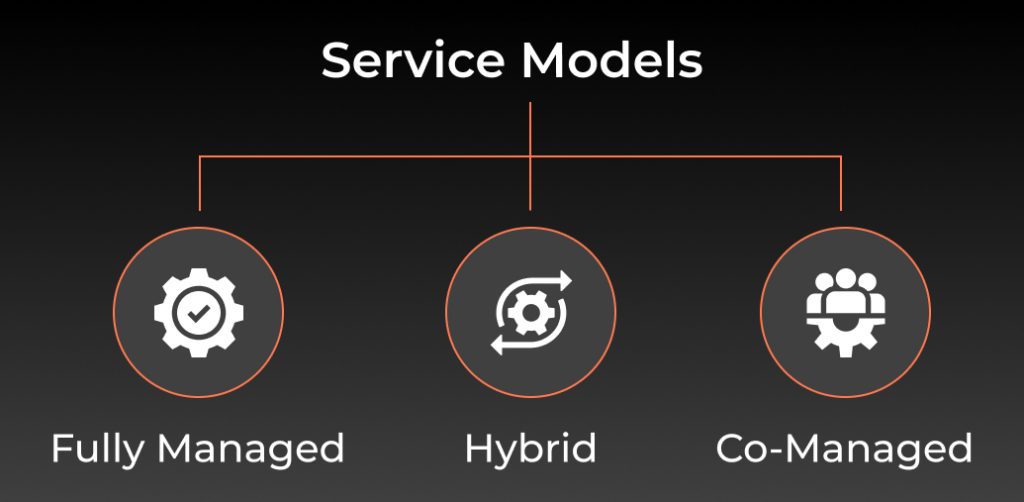
Now, which model to choose? That brings us to the next component of Managed RPA services – Model types. Selecting a suitable service model is critical to ensure the automation project is successful. Managed RPA Services are supposed to be flexible and dynamic so that they can entertain unique business needs, resources, and levels of internal expertise. Different businesses may desire different amount of control, and the service delivery model which is finalized, depends exactly on that.
1. Fully Managed
In this model, the provider handles the entire process of RPA managed services, from initial design through development to ongoing maintenance. This happens to be the perfect approach for businesses that want to keep their focus on their primary operations, leaving everything else to the provider.
2. Co-Managed
The co-managed model is all about a collaboration between the business owner and the Managed RPA service provider on a shared responsibility basis. This is ideal for businesses that desire to be involved in the process and want to contribute to the overall execution of the automation.
3. Hybrid
This is a model which is a combination of both internal resources and external expertise. It brings more flexibility to the table and helps in maintaining relatively more control over some aspects of automation. This, in turn, makes RPA managed services more scalable and promises a better balance between 3rd party plans and business goals.
Key Benefits of Managed RPA Services
Value generation before implementation – that’s what the motto shall be for anyone who’s planning to managed RPA implementation. The benefits that managed RPA services bring to a business are not just about automation of routine tasks. From correcting faulty operations and multi-folding productivity, to helping achieve complex business goals – the benefits of managed RPA services are endless:
1. Cost Efficiency
Outsourcing automation through managed RPA eliminates the need for large upfront investments in infrastructure and internal teams. Service providers streamline the performance of bots and bring down the overall downtime, promoting additional cost savings.
2. Scalability
Managed RPA services offer flexibility to scale automation quickly in response to changing business needs. Whether handling rapid growth or seasonal demand fluctuations, businesses can easily adjust their automation capacity without the need for additional hires, maintaining efficiency at all times.
3. Focus on Core Business
If you’re a business that wants to free up some time and in-house teams so you can focus better on high-value tasks, outsourcing RPA managed services is the best idea. This shift leads to better overall productivity and improved business outcomes, boosting core operations.
4. Reduced Risk
Seasoned RPA providers always stick to the best practices, industry benchmarks, and compliance rules to avoid the risk of project failure. They also handle robust data security measures, reducing the chances of data breaches and ensuring businesses remain compliant with relevant regulations.
5. Access to Expertise
Managed RPA services also equip businesses with the cutting-edge information that they have related to modern technologies. This expertise helps companies maximise the effectiveness of their automation efforts, ensuring optimal results from their investments in RPA technology.
Core Components of Managed RPA Services
When it comes to automation, who doesn’t like long-term and reliable results?
Managed RPA is known for following a well-defined and structured process – which is important to ensure that automation goals align with the constantly changing business goals. That being said, let’s check out the core components of Managed RPA Services.
1. Process Analysis and Selection
Step one in Managed RPA is finding out which business processes are the ones that actually need automation. This typically includes repetitive, rule-based tasks that require high accuracy and are time-consuming. Choosing the right processes for automation is more critical than most businesses believe for achieving top-class outcomes.
2. Bot Development and Testing
Once you’ve picked the processes you aim to automate, bots are developed and rigorously tested. The testing phase ensures that bots work as intended across different scenarios, data formats, and conditions. This helps in spotting any flaws in the process and ensures that bots meet the quality standards before they get deployed.
3. Deployment and Integration
After having all the scheduled tests carried out, bots are deployed in live environments. They are synced with legacy systems such as ERP and CRM to channelize information flow and ensure consistent performance. This integration guarantees that the automation is completely aligned with business systems.
4. Monitoring and Support
Ongoing monitoring is essential to ensure that bots are performing correctly. Managed RPA service providers continuously track bot performance, identifying errors or issues quickly. Timely support and troubleshooting help resolve any disruptions, ensuring the automation runs smoothly and efficiently in the long term.
5. Maintenance and Updates
Just like every other technology-enabled platform, bots also call for routine maintenance. This helps businesses keep them aligned with the constantly changing systems. Managed RPA service providers handle updates, bug fixes, and adjustments, ensuring that automation remains effective and responsive to changing business needs and technological advancements, maintaining long-term functionality.

Challenges in Implementing Managed RPA Services
No technology, including Managed RPA services, comes without its set of challenges. Yes, it offers a wide range of benefits to businesses, but first, they must proactively address several key challenges. Having said that, let’s check out some of the most common challenges that businesses face with the implementation of Managed RPA services:
1. Security and Compliance
When you’re carrying out the RPA implementation, there’s nothing more important than dealing with the related security loopholes. Providers need to follow the industry regulations such as GDPR, HIPAA, and PCI-DSS to protect sensitive information, dodge breaches, and reduce legal complications.
2. Change Management
Introducing RPA can create uncertainty among employees, who may fear job displacement or process changes. Along with communication being the key factor, proper training and support shall also be available for employees during the transition so there’s a positive growth environment.
3. Process Complexity
Some business processes are too complex or poorly documented for easy automation. In such cases, to guarantee a successful RPA implementation, a business should focus on a thorough documentation of the process. This way, it becomes easier to keep a check on automation and prevent basic flaw from occuring.
4. Vendor Dependence
Over-relying on a single vendor can lead to challenges like vendor lock-in. To deal with this issue, businesses should get into collaborations with providers who are transparent and honest with exit plans. This proves to be useful when a business calls for some changes in its structure and demands flexibility.
5. Cost Overruns
Without proper planning and scope management, RPA implementation can exceed budget expectations. This is why businesses should work closely with their technology partners to establish realistic goals and track deliverables to avoid cost
Companies should collaborate closely with their providers to set realistic goals, define deliverables, and monitor project progress to keep the budget in check at all times.
Strategies to Overcome Implementation Challenges
Like all the experts say, “There is no hurdle that can’t be overcome with the right strategy”. This holds true for almost all kinds of challenges in the worlds, including those related to the implementation of managed RPA services.
The right strategies not just tackle the problems but also help in building control, thus, guaranteeing long-term success. With that in mind, let’s explore some of the most effective ways a business can overcome common implementation challenges.
1. Solid Governance Framework
When it comes to defining roles and responsibilities, it’s required that you implement a rock strong governance framework. This structure helps monitor bot performance, resolve issues efficiently, and maintain alignment with business goals, leading to smoother RPA implementation and improved outcomes.
2. Stakeholder Engagement
To speed up the automation process, build trust with key stakeholders and actively involve managers and employees for their input. Open communication helps teams understand how RPA benefits their work and addresses concerns, improving acceptance and smooth integration within the organization.
3. Comprehensive Training Programs
When you expect employees to adapt to the new system, it’s needless to say that they need to be provided with the well-structured training programmes. This reduces resistance, minimizes errors, and enhances user confidence, ensuring a seamless transition to automated workflows and maximizing RPA’s impact.
4. Regular Audits and Assessments
To ensure that your bots are functioning the way they were supposed to, routine audits and analysis needs to be carried out. This proactive approach helps identify inefficiencies, optimize performance, and make necessary adjustments to improve overall results.
5. Flexible Contracts
It’s always a great idea to get into contracts that bring along flexibility regarding the cost, scope, and technology. This allows businesses to adapt as their needs evolve, ensuring that the automation solution can scale and evolve in response to changing market conditions or internal requirements.
Future of Managed RPA Services
As more and more businesses and organizations in the world embrace what Managed RPA services have to offer, the future of it is only becoming brighter. Emerging technologies and broader access for smaller businesses will redefine automation, streamlining operations and improving efficiency even further.
Let’s talk about some of the key areas and what they hold in the future for Managed RPA Services:
Integration with AI and ML
Integrating AI and ML with RPA allows bots to go through unstructured information, make decisions faster, and manage complicated tasks. This in turn, boosts automation process and makes it reach a level of operation that conventional automation never could.
Expansion into SMEs
Managed RPA is becoming more accessible to small and medium-sized enterprises as Managed RPA service providers offer more affordable, user-friendly solutions. Without having to invest in upfront ways, these businesses can now enjoy the benefits of automation – turning RPA into one of the best platforms for cutting costs and improving efficiency.
Cloud-Based Solutions
Cloud platforms provide businesses with easy access to robotic process automation tools, enabling remote bot updates, instant scalability, and cost savings on infrastructure. Through a cloud-based system, RPA offers a lot of flexibility for businesses that are looking to scale automation process without cost-heavy on-premise investments.
Focus on Hyper-automation
Hyperautomation is a growing trend that combines RPA, AI, machine learning, and analytics to automate entire business processes. It’s an all-inclusive approach that makes sure that automation for several workflows can happen simultaneously, which makes the project run on the fastest speed possible.
Regulatory Evolution
As RPA adoption increases, governments are likely to introduce new regulations to address automation-related risks, such as data privacy and security. It’s important that businesses and Managed RPA service provider keep an eye on the latest changes related to regulatory or compliance to dodge legal or functional problems.
Selecting the Right Managed RPA Service Provider
Selecting the right managed RPA services provider is a critical step in ensuring that your automation efforts are successful. An ideal provider not just understands your custom requirements but also builds tailored solutions that match with your business goals. Here are some of the main factors to consider when picking a Managed RPA service provider:
Experience and Expertise
Choose a provider with a solid track record of successful RPA implementation across diverse industries. Your technology partner shall not only have experience with a wide range of industries but also have a proven track record for having solved a variety of complex problems for its clients.
Customization Capabilities
Look for a provider that offers tailored solutions to suit your unique business processes. For example: A technology partner should be able to figure out a way to not just create bots, but develop them in a way that it’s easy to upgrade them later for alignment with business objectives.
Support and Maintenance
Ensure that the Managed RPA service provider offers comprehensive ongoing support and maintenance. This basically is supposed to cover important aspects like bot updates, performance tweaking, and proactive troubleshooting. The teams dedicated to the process shall be super-responsive and resolve any challenges along the way in a way that it cuts downtime and boosts productivity.
Scalability Options
With the growth of a business, tag along additional requirements for automation. That being said, your partner should be able to develop solution that meet the ever-evolving needs of a business that’s scaling. This ensure that automation process doesn’t cause any hindrance in the growth of a business – instead, supports it.
Cost Transparency
A pricing model that’s transparent, is a pricing model that’s worth signing for. While you’re negotiating the contract with a technology partner, always make sure that there are no hidden costs that may surprise you later. Ask for an in-depth breakdown of the cost model, to understand what’s there in each package.
Why Choose A3Logics as Your RPA Development Company
A3Logics is one of the most reliable and experienced technology partners when speaking of managed RPA services. Our team has successfully delivered a wide range of RPA solutions across domains like healthcare, finance, logistics, and more. We follow a step-by-step process that includes problem assessment, bot creation, deployment, and post-launch support.
We offer tailored automation strategies that match your goals and workflows. Whether you’re a large enterprise or a small business, we help you gain maximum value from automation with minimal risk.
We also stay aligned with the latest trends in technology, and combine our services with AI, cloud, and analytics to ensure that you get top-class performance. From tasks of a basic level to complex frameworks, A3Logics makes sure that your automation projects run efficiently, while being cost-effective. With a commitment to innovation and client success, A3Logics is your ideal RPA development company.

Conclusion
If a business asks for automation of chores that are repetitive in nature, Managed RPA Services is the best way forward. It helps in more ways that one can imagine by bringing down costs, increasing efficiency, and helping the existing teams focus on objectives that demand a human-touch. If you’re working with the right technology partner, staying ahead in a competitive market becomes a piece of cake.
In case of business expansion, which is what a business always seeks, collaborating with a seasoned IT partner like A3Logics, makes things easier and faster. From creating initial strategies to providing post-launch support, managed RPA guarantees a smooth ride along the automation process. If you’re running a business and want to increase the output levels without stressing out the inhouse teams – Managed RPA is the smart solution.