
Software systems are always changing and being updated. Codebases can get complicated, harder to understand, and harder to keep up with especially when new features are introduced and errors are corrected. This is when code refactoring becomes necessary. So, what is refactoring code, and why is it so vital for making software? Well code refactoring is a strict process of modifying the structure of current code without changing how it works on the outside.
Refactoring is a basic part of software engineering that is very important for keeping code quality, flexibility, and the long-term health of software. This complete guide goes over what refactoring is, what code refactoring is, and why it is an important step for development teams.
What is Code Refactoring in Software Development?
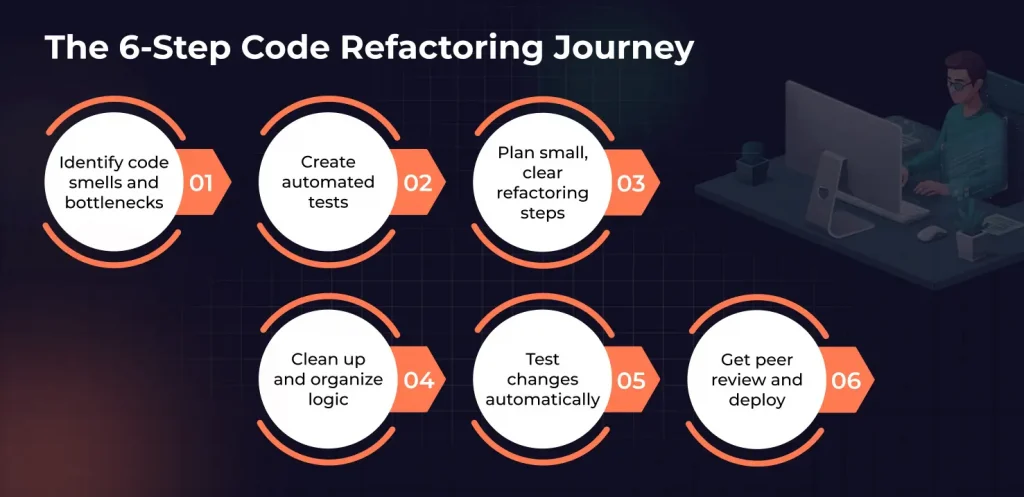
What is refactoring exactly? Well? Refactoring is the process of changing the structure, design, and readability of code in software development without changing how it works or what it does. The basic goal is to lower technical debt and make code easier to read, maintain, and add to.
What exactly is code refactoring? It means a group of methods and best practices that programmers employ to make code cleaner, logic simpler, and code quality better overall. This technique doesn’t introduce new features or address issues; instead, it makes the codebase stronger and healthier for future development.
What does it mean to restructure code? It’s the process of changing the code’s structure to make it easier to work with while making sure that the software’s behavior stays the same.
What is Code Refactoring – Key Statistics
- 60% of a developer’s time is spent reading code, which shows how important it is to have codebases that are easy to maintain.
- Businesses lose $85 billion every year because of bad code quality and technical debt.
- Teams that make code restructuring a priority in their development process get their products to market 30% faster.
- After systematic code reworking projects, bugs in production often go down by 50%.
- Most software developers say that restructuring code is one of the most important things they can do to make sure their projects are successful in the long run.
These numbers show how important it is for modern development teams to know what software restructuring is and why they can’t skip it.
Key Benefits of Refactoring Code
What is refactoring code if not a building pathway to a healthier, more sustainable codebase? The code refactoring process delivers a host of significant benefits that positively impact both the development team and the overall quality of the software.
1. Improves Code Readability
One of the most immediate advantages of code refactoring is enhanced readability. When code is organized, uses clear naming conventions, and follows a logical structure, it becomes much easier for developers to read and understand.
This not only shortens the onboarding time for new team members but also reduces the risk of misunderstandings or errors during development. Readable code encourages collaboration, as team members can more easily review, discuss, and troubleshoot the codebase together.
2. Simplifies Complex Logic
Over time, software projects can accumulate convoluted or tangled logic that makes the codebase difficult to maintain or extend. Refactoring breaks down this complexity by restructuring large, complicated functions into smaller, more manageable pieces. This simplification makes the code less error-prone and much easier to test, allowing developers to identify and resolve issues with greater speed and confidence.
3. Reduces Technical Debt
Technical debt arises when developers take shortcuts or malpractices to meet deadlines. While sometimes unavoidable, unchecked technical debt can make future changes costly and risky. Code refactoring systematically addresses and pays down this debt by cleaning up the codebase, removing redundancies, and improving structure. As a result, the software becomes more stable, easier to upgrade, and less prone to bugs.
4. Enhances Performance in Some Cases
Although the primary goal of code refactoring is not always performance improvement, it can lead to faster and more efficient software. By eliminating redundant code, optimizing algorithms, and improving data structures, refactoring can streamline operations and reduce resource consumption. This can be especially valuable in performance-critical applications or as systems scale.
5. Makes Future Development and Debugging Easier
A well-refactored codebase is inherently more modular and testable. This modularity makes it easier to add new features, as developers can work with smaller, self-contained components. Debugging is also simplified, as issues can be isolated and resolved more quickly. Ultimately, refactoring empowers teams to innovate and evolve their software with confidence, knowing that their foundation is strong and maintainable.

What are Common Code Refactoring Techniques?
Understanding what code refactoring is also involves knowing the practical techniques that make it effective. These techniques help developers systematically improve code structure, readability, and maintainability. Here are some of the most widely used code refactoring methods:
1. Red-Green Refactor
This is a foundational technique in test-driven development (TDD). The process consists of three steps:
- Red: Write a test that fails because the desired functionality isn’t implemented yet.
- Green: Write just enough code to make the test pass.
- Refactor: Clean up and optimize the code while ensuring the test still passes.
This cycle encourages small, incremental improvements and ensures that code remains functional throughout the refactoring process.
2. Inline Method
The inline method technique involves replacing a method call with the method’s body. This is useful when a method’s implementation is straightforward or the method is no longer needed. Inlining simplifies the code, making it easier to follow and maintain.
3. Moving Features Between Objects
This technique involves shifting methods or fields from one class to another to improve cohesion and reduce coupling. For example, if a method in one class is used more by another class, it might make sense to move it. This aligns the code structure more closely with business logic and helps maintain a clean, modular architecture.
4. Extract Method
When a method becomes too long or complex, it can be broken down into smaller, well-named functions using the extract method technique. This improves readability, simplifies testing, and promotes code reuse. Each extracted method should have a single, clear responsibility.
5. Refactoring by Abstraction
Refactoring by abstraction involves creating abstract classes or interfaces to centralize common functionality and reduce duplication. This technique is especially useful when multiple classes share similar behaviors. By abstracting shared logic, you promote code reuse and make future changes easier to implement.
6. Compose
The compose technique is about organizing code by combining smaller methods or classes into larger, more meaningful units—or breaking down large components for better modularity. This helps manage complexity and ensures that each part of the codebase has a clear, focused purpose.
Best Practices of Code Refactoring

To fully realize the benefits of code refactoring and minimize potential risks, it’s essential to follow established best practices. Here’s a detailed overview of the most effective strategies for successful code refactoring:
1. Work in Small, Incremental Steps (Tiny Commits)
Break down refactoring tasks into small, manageable changes. Making tiny, reversible commits allows you to quickly identify and isolate issues if something goes wrong. This approach also makes code reviews more efficient and less overwhelming for your team.
2. Always Have a Solid Suite of Automated Tests
Automated tests are your safety net during refactoring. Ensure you have comprehensive unit, integration, and regression tests in place before making changes. These tests help verify that your refactoring hasn’t altered the external behavior of the code and that existing functionality remains intact.
3. Understand the Code Before You Change It
Before refactoring, take time to thoroughly understand the existing codebase. Analyze dependencies, logic flow, and potential side effects. This preparation reduces the risk of introducing bugs and ensures that your changes are well-informed and safe.
4. Refactor When Adding New Features or Fixing Bugs
Incorporate refactoring into your regular development workflow. When you add new features or fix bugs, use the opportunity to clean up and improve related parts of the code. This continuous approach keeps your codebase healthy and prevents technical debt from accumulating.
5. Prioritize Code Deduplication (DRY Principle)
Follow the “Don’t Repeat Yourself” (DRY) principle by eliminating duplicate code. Consolidate similar logic into reusable functions or classes. This not only simplifies maintenance but also reduces the likelihood of inconsistencies and errors.
6. Use Descriptive Naming
Choose clear, meaningful names for variables, methods, and classes. Good naming conventions make code more readable and self-explanatory, which is especially helpful for onboarding new team members and during code reviews.
7. Collaborate and Communicate
Refactoring is most effective when done collaboratively. Communicate your plans with your team, involve QA and testers, and seek feedback during code reviews. Collaboration ensures that changes are safe, well-understood, and aligned with team standards.
8. Use IDE/Editor Refactoring Tools
Modern IDEs and code editors offer powerful refactoring tools that automate repetitive tasks such as renaming, extracting methods, and moving classes. Leverage these tools to increase efficiency, reduce manual errors, and maintain consistency throughout the codebase.
What Are The Challenges of Code Refactoring?
While code refactoring offers significant long-term benefits, it is not without its challenges. Understanding these obstacles is crucial for planning and executing effective refactoring strategies. Here’s a detailed look at the main challenges associated with code refactoring:
1. Lack of Comprehensive Automated Tests
One of the biggest risks in code refactoring is making changes without a robust suite of automated tests. Without these tests, it’s difficult to ensure that the refactored code still behaves as expected. This increases the likelihood of introducing undetected bugs, which can affect the stability and reliability of the software. Automated tests act as a safety net, giving developers confidence that their changes haven’t broken existing functionality.
2. Understanding the Existing Codebase
Refactoring is particularly challenging in legacy systems, which often lack up-to-date documentation and may have been developed using outdated practices. Developers may struggle to understand the intent and structure of the existing code, making it risky to make changes. This lack of clarity can lead to mistakes or missed dependencies, increasing the potential for errors during refactoring.
3. Time and Resource Allocation
Refactoring requires dedicated time and resources, which can be difficult to justify when there is pressure to deliver new features or meet project deadlines. Teams may deprioritize refactoring in favor of visible progress, leading to the accumulation of technical debt. Balancing the need for refactoring with ongoing development work is a constant challenge for software teams.
4. Risk of Introducing New Bugs
Even with careful planning, refactoring can inadvertently introduce new bugs or regressions. This is especially true when changes are made to complex or poorly understood code. Without thorough testing and code reviews, these issues may go unnoticed until they cause problems in production.
5. Managing Dependencies and Side Effects
Modern software systems are often highly interconnected, with components that depend on each other in subtle ways. Refactoring one part of the system can have unintended ripple effects on other areas, especially in tightly coupled codebases. Identifying and managing these dependencies is critical to ensure that refactoring does not disrupt the overall system.
Tools and Resources for Code Refactoring
Modern development environments offer a wealth of tools to support code refactoring:
- Integrated Development Environments (IDEs):
Tools like IntelliJ IDEA, Eclipse, and Visual Studio provide built-in refactoring features such as renaming, extracting methods, and moving classes.
- Code Quality and Static Analysis Tools:
Tools like SonarQube, SonarLint, and ReSharper help identify code smells, complexity, and maintainability issues, suggesting refactoring opportunities.
- Version Control Systems (VCS):
Git and similar systems allow for safe experimentation and rollback if refactoring introduces issues.
Why Choose A3Logics for Refactoring in Software Development?
A3Logics is a trusted partner for code reworking projects that stands out. We are a top provider of Software Development Consulting Services and specialize in code refactoring, which improves the quality, performance, and maintainability of code without changing how it works. Their team finds places where things may be improved, applies best practices, and the newest tools to make sure that refactoring is done quickly and safely.
A3Logics Offers:
- Being able to look at and update old systems is a skill.
- Ways to divide apart monolithic applications into smaller parts.
- Full documentation and help whenever you need it.
- As part of the refactoring process, security and compliance will be improved.
- Combining AI and automation to boost productivity.
A3Logics is a proven alternative for a custom software development agency that can future-proof your program by restructuring it expertly.

Final Thought
For every company that wants to grow its software in a way that lasts, it’s important to know what refactoring, code refactoring, and software refactoring are. Refactoring isn’t something you do once; it’s something you do all the time to keep your codebase healthy, easy to maintain, and able to change.
By spending money on code reworking, you make it possible for your team to deliver faster, with fewer defects, and have a better time developing. Regular refactoring is the key to long-term software success, whether you’re updating old systems or adding new ones.